Sermon 2 - 15th Annual Bible Conference
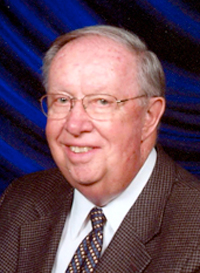 Dr. James Grier Sunday PM Building A Christian Worldview For Life - 15th Annual Bible Conference March 15, 2009
Main passage Genesis 3
📖 Read the Scripture passage (ESV)
Genesis 3
Transcript
Did God the Spirit use His servant this morning to minister His Word? Then you need to praise God for that, for His faithfulness to you. Some of you have asked me, was that like your classes in school? And the answer is yes, except for one major difference. I was tested on the content. Some of you said, was he always this kind and gracious?
And I would say, yes, he was. The blue books were a little different. You know, when you opened up your exam and you saw what he wrote about your answers, that was a little merciless at times, but that was okay. That was all right. but let me just say this to you you have a more difficult task and that's reflecting the truth that you've reflecting on the truth that you've learned and reproducing it not on a test but in your life and your worship and so let me encourage you to reflect on the content of what you're hearing and to earnestly make part of your reflection the idea of I need to change in my thinking.
I need to change in every way in order to conform to the content of what we're hearing. So Professor Greer, come and minister the word of God to us again. We're anticipating God's blessing. Well, tonight will be a little bit more like the classroom because we'll use slides and I won't use the homiletical structures I used today. What I'd like to do is say what we did this morning was to put down the first unit of a Christian worldview.
That is right thinking about God and about creation. Tonight I want to go ahead and build on that, but before I do that, I'd just like to share with you some pictures. This is Charles Haddon Spurgeon. This is, hey, good Paul. I'm doing this just for you. This is an infrared photograph of the oil of Spurgeon that hangs in the vestry at Metropolitan Tabernacle in London.
As you can see, he's a strikingly good-looking man. This was still fairly early in his ministry. He took his first church at the age of 19, and in the 39 years he was at Metropolitan Tabernacle, he baptized 16,000 people who had come to faith in Jesus Christ. And God used this man in amazing ways. Now this is from a newspaper article. It was done with the old photographic equipment and then it was engraved.
And this was the tabernacle in Spurgeon's Day. there's a balcony above this one this is the first floor these are the boys from the orphanage and Spurgeon never used a pulpit he just used a small table and it was in this mezzanine area you can see the stairs over here this room seated between 8 and 10,000 people and his sermons were sold out on the street by Monday noon That's how popular his preaching was. They still have that table. It survived the fire.
It survived the war. The amazing thing about the table is it has a wind-up countdown clock that Spurgeon set for 30 minutes. And I hate to tell you this, but at the tab today, there's also a digital clock that counts down your time. and three lights, green, orange, and red. And you best pay attention to them. So Spurgeon, although he was a master preacher, if you read his sermons, they are not long.
If you read the Puritans, I mean, you can't get through it in two hours. But when you read Spurgeon, you realize he didn't speak that long. This is what the front of the tabernacle looks like today. This was built before World War II. It's the only part of the tab that survived World War II. You can see how dark it is right there, and how dark it is right there.
There's no building behind that facade at that point. So the present tabernacle is a good deal smaller, but this facade is just amazing. This is right on the site where the Southwick martyrs were burned at the stake. This church was started in 1645, the very year that Parliament banned Baptists in England. And the cornerstone of this church reads, the blood of the martyrs is the seed of the church.
But there it's a very literal kind of statement. So it's still a beautiful place. It's not in a nice part of town. That's a bus stop you see there in front of it. This is what it looks like inside. It has a set of balconies.
It has a very high pulpit. And it's a very strict place. There's no song leader, no choir, no special music. The organist sits behind a screen so you can't tell who's playing the organ. Everything centers on the pulpit and it 21 steps up from the floor of the sanctuary to the pulpit And I preached there a number of times and this is one of them I in the pulpit there I'm reading, obviously, from the book of Revelation when I look at the Bible.
And while I'm reading, a flash went off. And the stewards, if you arrived to worship there and you had a camera, it would be taken from you at the door. You weren't allowed to take a camera into the sanctuary. And the chief steward, his name was Ted. Afterwards, I said to him, Ted, what happened? Oh, he said, I apologize.
I said, I want to meet those people, Ted. He said, I hope you tell them what you think. Well, I met him and I said, could I have a copy of the picture? So that's how I got a copy of myself in the pulpit at the Metropolitan Tabernacle. I'll be there in May again. I think I've preached in Spurgeon's church 20 times now.
God has been so gracious to me, especially since retirement, in providing me just incredible opportunities to minister on behalf of the church. Okay, I'd like to put the Bible together for you in one single structural pattern. I think it's a pattern that the Spirit used. Now, I know what you want to say. what in the world is a chiasmus? Well, we'll see it here pretty soon.
This is what we did this morning. We looked at creation when it came from the hand of God and it was perfect. Was Adam created righteous or was he created morally neutral? We've had a tendency to say he was created innocent. No, he was created positively righteous. He was rightly related to God.
He was rightly related to fellow image, rightly related to the animal kingdom, the plant kingdom, and the earth. So what we have here is a gift of righteousness for man at creation before grace ever comes. So that's where we start. That's where the Bible starts. Tonight we're going to look at sin and judgment. this is Genesis 3 and 4 Genesis 3 is the corruption of man Genesis 4 we have the corruption of society once sin comes Genesis 3 all special revelation becomes redemptive in its orientation now everything is going to be geared toward redeeming what was lost as a consequence of sin in the Old Testament we have a redemptive event It is by blood and by power when the children of Abraham were freed out of bondage in Egypt.
And in the wilderness they were formed into the people of God. They had covenant with God. God was their God and they were God's people. He presenced himself with them. We'll talk a good deal about that tomorrow night. Okay?
And then you come, of course, to the new covenant redemptive event. This is the incarnation. This is the person and work of Jesus Christ. Now, we have had a tendency to limit the redemption of the New Testament to Christ's death, burial, resurrection, and ascension. Excuse me. We never include the ascension.
It's always Christ's death, burial, and resurrection. May I say to you, no ascension, no church. Is that right? When he ascended, he was coronated. Do you realize that in heaven today, seated at the right hand of the Father, there is a man in our flesh? It's incredible to contemplate.
Not only has he been coronated, but on the days after his ascension and coronation, he sent the Spirit on the day of Pentecost, and he formed the new covenant community of the redeemed. Do you consider Pentecost a part of Christ's work? Apostle Peter tells us in the book of Acts that Christ is the person behind Pentecost that it's a Christ event he sends his spirit and it's amazing so we have had a tendency to limit those redemptive events and not to see their scope now I suspect on Easter Sunday you'll have special music to celebrate the resurrection I suspect on Christmas Sunday you'll have special music to celebrate the birth of Christ.
I suspect on Pentecost Sunday you'll do nothing. Is that right? We won't have any special music on Pentecost Sunday. We won't have a cantata. We won't even celebrate it. It's a little perturbing to me.
Is it to you? You know, Pentecost is a very important event. Well, the time period of the redemptive event goes all the way through the New Testament until you get to Revelation 18 through 20. And we come now to judgment. But this time, judgment is going to remove sin from the world. Back in Genesis 3, sin comes and judgment comes.
This time judgment comes and sin goes. Yeah? Yeah There coming a day when sin and all of its effects will no longer be here I know you can't even begin to fathom what that would be like. Because quite frankly, what we have today we call normal. May I ask you, is death normal or abnormal? It is abnormal.
Where did death come from? Sin. Is sin going to be removed? Yes. Is death going to be removed? Yes.
We have become so used to. Iowa. There's some place called Iowa, isn't there? Iowa, that's like Galilee. But you look at that soil, and I've preached in Iowa often. And it's such rich and productive soil.
And I've heard Iowa farmers say, just like God created it. No, you've never seen soil just like God created it. Because what was cursed in Genesis 3? The ground. So you've never seen the ground as God created it. In point of fact, you've never seen anything in the perfection of God's creation.
And with all the presence of sin here, this place is still beautiful, isn't it? My goodness. So here we face the removal. It comes in stages. The first judgment comes to Babylon. And we all want to say, hooray, Babylon, that's in Iraq, right?
No. Babylon is Leroux. Babylon is every city of man in rebellion against God. If you think the stock market's shaky now, in that day, all commerce is going to collapse. Fractional banking will be over. And all of the people who have lived deliciously, eating the goods and having the toys of Babylon, will be mourning the collapse of the consumer society and everything that goes with it.
It's a terrible picture when you read it in Revelation 18 of the mourners at the death of Babylon. Then the lawless man is captured, the false prophet, finally the red dragon. So Revelation, have you ever thought about the fact that Genesis 1 through 4 in Revelation 18 through 22 are the bookends of the Bible. Perfection, lost, judgment, judgment, removal of sin, perfection.
It's just an amazing way to put the Bible together. And of course it ends with a consummation. It ends with new heaven and new earth. Hopefully we'll get to that on Wednesday night. But what I want you to begin to think about is that rather than me doing a worldview structure with you that is just geared to the philosophical domain, I'd like to put it into the redemptive history domain.
I'd like to put it in overt biblical categories, even though we will use some philosophical categories for our understanding. Now, do you see what a chiasmus is? It's a literary device in which first and last are parallel, second, second, third, third. And that literary device, we find it very often in the scripture. Now when we talk about worldview, Albert Walters in his wonderful little book, Creation Regained, says that your worldview is the comprehensive framework of your basic belief about things.
Hmm. Author Holmes, in his book, Contours of a Worldview, says your worldview unifies your thought, it gives meaning and hope to life, it guides your thought, and it guides your action. Can I tell you something? Every single one of you in this room have a worldview. The question isn't do you have a worldview, the question is does your worldview fit God's revelation?
That's the question. So we're out to change worldviews. No one waits until they get to a service to somehow choose a worldview. It starts formation before the child can even begin to manipulate language. It is imbibed from the environment, the value set of the home, and everything else. All right.
Walsh and Middleton, they call it a model of the world which guides its adherence in the world. Notice how the word guide is starting to come out. Kraft, who's a missiologist, said, it's a system of conceptions of reality to which a culture ascends and from which comes their value system. Your values come from your worldview. Your values are the stuff that direct your life.
Your values stand behind your choices. And then finally, Gary Phillips and Bill Brown, who is the president of Cedarville wrote this book And they say it an explanation and interpretation of the world and the application of this to life So when we talk about worldview, it's those concepts we have in mind. And we're going to develop them. First, I'd like to share with you how I think a worldview functions.
I'm suggesting to you that a worldview begins with faith commitments or properly basic beliefs or presuppositions. And from that starting point, you develop, oops, wrong button, you develop everything about how you understand reality, what makes something truthful, what you ought to do, how you give meaning and significance to things and the values that guide your life. Whatever this starting point is, it sets the parameters for all of this.
And then, of course, all of this is intended to be lived out in life experience. So it's a way to think about the presuppositions of our Christian theism and how it affects our view of reality, our view of knowledge, our view of ethics, our view of values, how we interpret things. Our worldview is like the pair of glasses we wear. It's the grid through which we see everything.
And, you know, we need to grind the lenses of our worldview from Scripture, not from the culture we're in. Our problem is that we have baptized the culture, and we think the culture and the church are pretty well the same. And whatever goes on in the culture, especially in America, we have taken to be the blessing of God because this is God's country, right?
Wrong. America has no standing with God. You won't find the United States of America in any aspect of the scripture. It just isn't present. There are lots of other sections of the world that are. So we have lived with this kind of notion.
Now that I've got your attention, oh, I wanted to say one more thing about that. You try to live that out in life, but sometimes life experience doesn't fit your worldview, and you have what? Emotional trauma and conflict. And sometimes that trauma and conflict will become so great that you'll actually go back and question your very belief in God and in his son Jesus Christ.
You ever hear this statement? If you ever doubt, it probably means you're not saved. I would say to you, if you never doubt, you'll lie to me about a lot of other things. The question isn't, will we doubt? The question is, what do you do with doubt when it comes? That's the question.
Remember John the Baptist in prison, Matthew 11? This is the guy who said, behold the Lamb of God who takes away the sin of the world. He sends his disciples to Jesus and tells them to ask, are you the coming one or should we look for another? It's utterly amazing. I'll tell you an anecdote here. When I first came to Grand Rapids, there was a teacher in the college.
He had a son in the seminary and one in high school. And his wife died almost immediately from long-term battle with cancer. And about three months later, his 26-year-old son in the seminary went from being apparently perfectly healthy to well-developed leukemia, and in two weeks he was dead. So I went to the funeral home, and I sat down with Wilbur and Daryl to try to comfort them, and they said to me, Oh, everything's fine, Jim. the Lord gives and the Lord takes away.
Blessed be the name of the Lord. I thought to myself, wow, these guys are terrific. It's probably not what I'd be saying. I'd be saying, this is no way to run the world. I'd be like the psalmist questioning God and Job. So I left there very impressed.
After the funeral, a couple of weeks had passed, my office door flew open and there stood Daryl, the high school brother. And he looked at me and he said, Jim, this hurts like hell. I hate God. He was honest. Can God take that and bring you back to perspective? I met with him three times a week for two weeks.
We weren't making much progress. His emotions were frayed. He was having an awful time at school. And he came in one day and he was really frustrated and he was frustrated with me. And I said, Daryl, it's time for us to get down on our knees. And you need to tell God you hate him.
And you need to tell him what he's done to you and how it has affected you. And he looked at me shocked. He said, I never expected the dean of the seminary ever to tell me to do that. I said, Darrell, God can take it. We've got to find perspective. And until you lay this out, it's not going to happen.
Well, I'm glad to tell you he's teaching in a Christian college today. But I want you to know that was one tough experience for that young man. So when you see it, you know, it's very easy to move from left to right. But when life changes and you start moving from right to left and you have questions and doubt, is it wrong to raise those? Is it wrong to raise the complaint?
Is it wrong to lament? well that's how I think a worldview functions comes out of our starting point our presuppositions it's developed from there it's lived out in life and when life experience doesn't match our worldview then we have some questions about it I want to talk about the noetic structure nous is one of the Greek words for mind and this means the structure of your mind Okay? And here I'm just talking in general kinds of terms. I have in mind the sum total of what you believe.
I mean, you couldn't sit down and write it out, could you? Everything you believe? It would take you forever. Right? I mean, we just have an enormous amount of things we believe. The sum total of it we call the noetic structure.
The beliefs in our noetic structure are not random. They are related. It's important to think that. Third, these beliefs are held with differing degrees of certainty. Now, I know what you want to say. How do you have degrees of certainty?
Either it's certain or it's not, right? Well, I don't know what else to call it. I'll show you my theological foibles tonight. When it comes to the scripture and the fact that it is God-breathed, there is so much exegetical material there that I hold that with a very high degree of certainty. In point of fact, if the scripture isn't dependable, my whole worldview is going to collapse.
That's just how simple it is. But when I look in the scripture and I listen to the discussions about whether Jesus is coming before the tribulation, in the middle of the tribulation, after the tribulation, or whether there is no tribulation and it's happening now and we're just waiting for the consummation, or whether we're supposed to be taking control of the world and bringing the consummation by superimposing Christian values, when you get into that detail of trying to answer in detail every one of those questions, there isn't enough material in the text that can bring us high levels of certainty. So my eschatology, I don't have the certainty about that I do about the nature of scripture.
Now if that bothers you, I'll be glad to leave, and you can get somebody else to come for Monday, Tuesday, and Wednesday. But what I'm saying to you is you all have those things. You have things that you believe that you hold so strongly that if they were gone, life would collapse. You have other things you're not real sure about, but you still believe them.
And then finally, these beliefs differ on the basis of the influence or control that they have over the other things you believe. All we're doing is describing them. They include everything you believe. They're related. We hold them with different degrees of certainty. And some of the things we believe have enormous control over the other things we believe.
Now, if we stopped right now and I said, would you write down the beliefs that control most of your other beliefs? I wonder what you would write down. See, but that's the reason I'm here, is to try to help us think that through. So, from there, I would suggest something like this. We have certain beliefs, call them presuppositions, call them properly basic.
These are beliefs we don't argue to, they're beliefs we argue from. I don't have to demonstrate them. They are at the very foundation of life. these are the ones that are held with the highest possible conviction. They are deeply ingressed in my belief system. And they have a high degree of control over everything else I believe. Wow.
You say, do I have beliefs like that? Yes, you do. You have beliefs that control your other beliefs. That you hold with high levels of conviction. And they are deeply ingressed in your mind. If you looked at it like a spider's web, you look up here, you can see that first ring and how all the rest of the web is dependent upon and comes out of that.
So that when you get out here, it is supported here, here, here, here, here. and here you get back to what is the most deeply ingressed. Here you get back to that which has the control over everything else. It's just a visual way to try to help you think it. Well, I'd like to suggest to you what I think our properly basic beliefs are. All right? I think they go like this.
We believe in a self-contained God. Is that true? Does God have dependency on anything outside of himself Or is he completely self Does he need me I'd like to think he does, but he doesn't. Jesus said it this way, As the Father has life in himself, even so the Son has life in himself. When you go backward and say, where did you come from? Well, my mommy and daddy, where did they come from?
Well, grandma and grandpa. Well, where and where, and you get back to Adam. And where did they come from? They were created by God. Right? God is a self-contained, self-governing, triune being.
He is not dependent on anything outside of himself. And we start there. and we start there with the full knowledge that the only reason we know it is because he has chosen to reveal it. So that God's self-revelation is at the heart of my knowledge about God. If he hadn't revealed himself, guess what? We'd know nothing about him. In fact, we wouldn't be here because we're revelatory beings, aren't we?
No? Is there a revelation of God in us as the image of God? Absolutely. So that when we think in these categories, we cross a boundary that's hard to work with. Here's a belief that has control over everything else I believe. And that is this triune, self-existing, self-contained God has revealed himself.
Who is the agent of revelation? Who is the logos? The sun. So when we come down here, now we're talking about God's self-disclosure in three general categories. In nature, the heavens declare the glory of God. in the incarnate Son, who was the effulgence of his being, as we read in Hebrews 1 in Sunday school this morning, and in the inscripturated revelation of the 66 canonical books.
Why is scripture in the middle? Question. Has sin affected the revelation in nature? why isn't the incarnate Son in the middle? Is he presently here? And therefore everything I know about him, I got it where? From Scripture.
That's why Scripture's in the center. I can't understand the nature, the revelation of the glory of God in nature independent of Scripture. I wouldn't know that we started out with no death and things were perfect if it wasn't for God's self-disclosure. I wouldn't know the redemptive work of Jesus Christ if it wasn't for God's self-disclosure in Scripture.
Scripture is that aspect of God's self-revelation that has the most control over everything else I believe. If I believe something that's contrary to this, I need to repent. I need to change my mind. Now, beliefs are like habits. you've been believing and doing that for a long time and sometimes it's hard to break it out and to replace it. That's what Luther meant when he said the Christian life is a life of perpetual repentance.
There's that cognitive element. So now I have committed myself to the understanding that scripture is the primary source whereby I can rightly interpret nature even though nature does reveal the glory of God and I am locked up to it to know about the incarnate son. And scripture is complete and it is final and until the consummation, special verbal revelation will not again be open.
So that's why the pulpit is the central piece of furniture in a Baptist church. That's why you spend all the years in school, Tim, to become competent to handle this word for the people of God. It's scary. When Tim said this morning that I have influenced his life probably, only one person more his own dad. That's scary. no not because I have any qualms about Tim but I know my own corruption I know the corruption that still is here and I shudder to think of what would have happened and what would happen if you wrongly imaged God to your students who then will wrongly image God to their congregation so that's what the key is and I make no bones about it The most compelling, deeply ingressed belief that has control over everything else I believe is God's self-disclosure in the word of God.
Just absolutely. Well, that's as much philosophy as I want to do. I just want to remind you of this so you see it one more time But I like to take this morning and put it together and then add to it tonight if I could The days of creation we looked at them this morning Three days of forming. Day three had land and plants. Then we have three days of filling.
Now when you lay it out this way, can you see the parallelism? What came on day one? And what came on day four? The lights and the firmament, right? What came on day two? Water and sky.
What animals come on day two? Birds and sea life. Land and plants. Now we get land, animals, and mankind. It's such a beautiful piece of symmetry. It is laid out in such wonderful language.
I hope you've come to appreciate it. This is what it suggests. However else we think, there are only two levels of reality. There's the unchanging, eternal, independent domain of God. He is the only member of that class. Bell and Dagon and Marduk and Ashtaroth are pretenders.
There's only one God. Right? And his name is Yahweh. And he's a creator of heaven and earth. And therefore he is the God of all men. As the creator.
Then we have the created, temporal, changing, dependent domain. Angels. Man. Animals. Plants. All belong to the created domain. heaven and earth, so that we do not ever find a mixing of these two domains.
I never ever will enter the uncreated eternal domain of the living God. I will always be a creature. I will never be omniscient. That bothers me, because I would really like to be omniscient. And Shirley says, worst part of it is, Jim, you think you are. I'm sorry you're not going to get to meet Shirley, because she's a lot of fun.
So that answers the basic questions up front. We talked about image this morning. This is just a review of it in written form. What makes man different than the animals? His image. is the whole man created or only part of the man? Is part of the man eternal and the other part created?
Or is the whole man created? Answer? So man is not an eternal spirit put in a temporal body. We got that from Plato and from the Greeks. That's not Christian. The whole man is created.
His spirit is as created as his body. And he is viewed holistically. He lives in irreducible life relationships. He has the capacities we talked about. He is like God to rule. You won't be surprised on the new earth we're going to rule and reign with him forever.
That's what we were created for in the first place, right? And there's a moral dimension to image. That rightness, that right relationship aspect of it. and therefore we assert that the whole man is the whole image. We ended this morning in Genesis 2 and we got a look at that wonderful passage about the creation of the woman. She's going to be a suitable help.
There's going to be attraction. That's why I use that wonderful little phrase, wow. Okay? and there's going to be cherishing. A man's going to leave his father and his mother and be glued unto his wife. Before marriage, you stick close to your parents. After marriage, you're glued to each other.
It means to grab hold, to pull close, so that they become one. It is never two people on different tracks living under the same roof. It isn't you go your way and I go my way. Companionship is at the heart of marriage. Shirley's not only my wife, but she's my absolute best friend. Intimacy. we got a look at how the triune God stands behind all of this now tonight we had read to us Genesis chapter 3 we are introduced to a serpent he is called the most sophisticated form of animal life that God made right he was more subtle, please note, than any beast of the field.
He wasn't a creeping thing when he was created. He belonged to the category beast of the field. He was capable, but we learn from Paul in Timothy that behind the serpent there is the evil, malign, fallen creature, Satan. who is speaking through the serpent to the woman Isn it interesting that the attack comes at the point of the husband relationship And he comes to the woman and he comes with a question Has God said you can eat of the trees in the garden?
Well, you would have to answer that question, wouldn't you? Because he's got a wrong understanding. That's not what God said. God said we can eat of the trees of the garden, except the tree in the middle of the garden, he said, don't eat it, don't touch it. Well, notice how subtle he is. He approaches the woman with a question.
He already knows that the question implies an answer that is false. She's unable to detect the presence of the tempter behind this question that came from the serpent. and you want to say, well, if I was there, I would have. Most of you can't detect the presence of the tempter on your own TV set or your own DVDs or any of the rest of it. We have become so used to the presence of the tempter, we call it entertainment anymore.
That's sad. Well, she didn't. Paul tells us she was deceived. and of course, once she has straightened him out, now he has the right to straighten her out. He said, oh, you won't die, because God knows the day you eat of it, certain good things are going to happen. Your eyes will be open, you'll know good and evil, and you'll be more like God. That couldn't be bad, could it?
Be more like God? Know good and evil? So we read that she looked at the tree, and the sequence here is amazing. The serpent sowed doubt and doubt led the woman to being deceived and deception led to desire. She looked at the tree and she said, wow, it is aesthetically beautiful and she said it's desirable. It's something that will make us wise.
And desire led to disobedience. And disobedience led to shame, guilt, and fear. What did they do? They hid under the trees. Can you catch the irony of this? What are they wearing?
Leaves of the trees. Where are they hiding? under the trees, what did they eat? Fruit of the tree. Now they're naked. Isn't it interesting? The first obedience produced shame immediately and it was experienced as a barrier between husband and wife because up to now they've been naked and they knew no shame.
Now here comes shame. Here comes guilt. Here comes fear. voice of Christ in the garden, they're hiding. Adam, where are you? The critics say, what kind of God do you have? Doesn't he know where he is?
Of course he knows where he is. These are pedagogical questions. They're made to teach. But the shame and the guilt and the fear led to covering, hiding, and blaming. What have you done? Who told you you were naked?
Don't yell at me. The woman you gave me. If you hadn't given me that woman, I wouldn't be in this mess. Boy, I thought that thought a few times. Right? But notice the woman you gave me.
Blame. That's not what you do in your sin, is it? You don't hide it. You don't cover it, do you? You don't blame others for it, do you? I mean, how can we be so dumb?
We fall for this thing from Satan's hand constantly, don't we? Oh, it's a different setting. But this is prototypical, ladies and gentlemen. This is how Satan works. And, of course, the end product of this is that it led to a life of nothing but scrambling. it's just amazing to contemplate now relationship with God has been fractured harmony between husband and wife relationship to the animal kingdom to the plant kingdom and to the earth the consequences of this rebellion when you read the text you can too easily blame Esha for everything.
It says, she took the fruit and she ate it. And she gave it to her husband who was with her. He was right there. This is a preposition of geography. He wasn't out having dominion in the garden. He was right there.
He wasn't deceived. And he took it and he ate it. He didn't do it because he was gallant. He didn't do it because if he didn't, she would have to go and he'd be alone. He did it in willful rebellion against God. We're told, therefore, as by one man, sin entered the world and death by sin, so death passed upon all men.
It's a terrible scene. The judgment comes. First he speaks to the serpent. You're going to be cursed above every beast of the field. You're going to go on your belly, you're going to eat dust. Please note, only two things are cursed, the serpent and the ground.
I have no idea what the serpent looked like before sin. After sin, it goes on its belly. You say, is it just for God to judge an animal? Well, answer, yes. The woman is going to have increased pain and increased conceptions. I will greatly increase your pain and your conceptions.
In pain you will bring forth children. Your desire will be to your husband, but he should rule over you. Now, ladies, don't faint. But women, creation to the flood, were fertile from the age of 75 to 650. Can you imagine how many children you could have had? I'm sorry, ladies, you're like the old gray mare.
You just ain't what you used to be. I mean, it's just amazing. When you look at the genealogies, guess how old they are when they have their first kid? Ninety. Puberty came later in those days than when it comes today. So it's going to affect the woman and the procreation to fill the earth with the image of God.
There's spiritual and physical death. They also lose dominion over the animals. but the ground is the second third that is cursed. Its fertility is lost. Now it's going to produce things that aren't good for food, and it's going to have to be torn up with a plow. The weeds will have to be fought in order to get an adequate supply. The animals were freed from man's control. they were made subject to death and they became carnivorous for up to now the animals were given the grass and the herb of the field for food The saddest is that they were driven from the garden The garden where the presence of Christ was Text says this, he drove them.
It's the word for a herdsman driving his cattle. He drove them out of the garden. And at the edge of the garden, he put two cherubim. Any of you ever see Raphael's painting of the cherubim? Never seen it? It's just beautiful.
You'd like to go up to them and take their cheek and go, kitchy, kitchy. The Hebrew word means terrible fighter. A cherubim is a terrible fighter. He's responsible to preserve the holiness of God. It was one on each side of the Ark of the Covenant. So the terrible fighters are there, and the flaming sword is there to keep the way of the tree of life.
Now life is going to start out in the garden. Excuse me, outside of the garden. And I need to quit. I do want to stop. We'll do Genesis 4 tomorrow night. Please note the Proto-Evangelium, the first announcement of the Gospel.
Please note that while pronouncing judgment, God says to the serpent, enmity will I put between your seed and the woman's seed. There was no enmity between them. Look at them. There's Ish and Esha. There's the serpent and Satan behind him. All three of them are in collusion and rebellion against God.
There was no enmity between them at all. The enmity was between the three of them and the living God. And God said, purely by his grace, I will take the steps to put enmity. You should be glad he didn't say, Oh, I hope the day comes when you wayward children will stop your waywardness and you'll come back to me. If God hadn taken the steps for enmity we all be under the judgment of damnation Right from Genesis 3 the initiative of God in salvation is clear in the text Enmity will I put Wow.
It's going to be a price, though. The woman's seed is going to crush, excuse me, the serpent's seed is going to crush the heel of the woman's seed, and the woman's seed is going to crush the head of the serpent's seed. And Adam responded to this, didn't he? He changed her name. Why did he give her a different name? She already had a name.
What was her name? Esha. He calls her Eve. Eve. Hebrew like Greek has two words for life in Greek we have the word bios, biology and we have the word zoe or life in fellowship with God this is the word for life in fellowship with God right so Adam believes God's promise of enmity and marks it by changing the name of his wife because she will be the mother of all who truly live in fellowship with God.
Isn't that amazing? I mean, we don't have time to look at New Testament texts, but here's the first glimmer of redemptive light and mercy. And I haven't been very merciful, so I will be quiet. actually I actually thought I could do Genesis 4 as well so you know about me now. If you don't get Genesis 1 through 4 right you don't get the rest of it right.
Here are the first two units of that great chiasmus. Perfection, now sin and judgment. Which prepares everything for the fulfillment of the promise of redemptive mediasy, the crushing of the serpent by the woman's seed. Father, we know all of this. We've heard it before. But to be very honest with you it not how we think It looks to us like evil in charge It looks to us as if the red dragon, Satan, is in charge.
And it's very hard for us to believe that our brother in our flesh, the Lord Jesus, is seated on the throne with you right now in heaven. And he has been coronated, and he has been invested, and he is working out your purpose in history right now, even in the United States as well as in the rest of the world. It's easy for us to talk about our self-contained God, our dependency on scripture, but somehow we find it very difficult to weave it into the structure of daily life so that our thought process follows biblical patterns and the judgments and the values we choose come from the very self-disclosure of the living God.
We ask you to forgive us. We ask you to help us to root out of our belief system everything that is contrary to your self-disclosure. And to so saturate our minds with your truth that it becomes the interpretive grid for all of life. And we don't want that, our Father, so that we'll be a cut above other people. But we want it because we believe that if you're granted your name and your fame and your reputation would grow in the world.
And above all else, your name, your kingdom, your will, your reputation is number one with us. So grant us the ability to think this through and grant us, as we spend these days together, to effect some change in our worldview, to get on a better pattern, and to continue working on it so that all of our thinking will be brought into captivity to our precious Savior, Jesus Christ, in whose name we pray. Amen.
Also referenced in this sermon
Other passages mentioned, beyond the main text.