Sermon 3 - 15th Annual Bible Conference
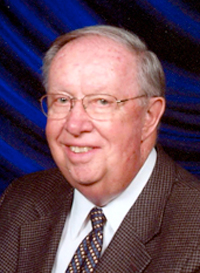 Dr. James Grier Special Service Building A Christian Worldview For Life - 15th Annual Bible Conference March 16, 2009
Main passage Genesis 4
📖 Read the Scripture passage (ESV)
Gen 4
Transcript
It is good to see you here again, and I pray that you have come ready to learn some more. And again, not just fill your head with knowledge, but that word that you hear tonight would transform your thinking. We all have a tendency to think that when we were in school, that was the golden age. and I confess that when I look back at my college days I would say those were the golden days of Cedarville College but the reason why I say that is I came out of school I thought at least not with a bunch of compartmentalized fragmented bits of knowledge history here, bible there, philosophy but because of the classes I had, primarily with Jim Greer and Jim Goldrick, I came out of school with, I think, a unified way of looking at life and saying, you know what, there's a way of looking at life that is consistent with the scriptures and that helps me understand the world.
And I have never forgotten that. That has been what I cherish the most out of all my college education. And Dr. Greer was a major part of that. And so I'm glad he can share much of what we learned then. And more, I might add, than what I got.
With you, I was... Well, I don't know about the golden era. it sure wasn't as far as finances were concerned. When I left the pastorate to go to Cedarville, I took a $7,000 pay cut. And now that I'm old, I know what the golden years means. It means you give all your gold to the doctor. Last night, we tried to put together creation and the corruption of man.
And let me just help you think how that applies. You know, I was driving today and went past this place and there are the horses and the cattle. And then I came by one that had llamas. And just kind of interesting. And I know, do you ever think this thought when you see them? There's the creatures of God.
Do you ever think the thought that they have been affected by Adam's sin? That they, with all of creation, are in a bondage of corruption, and they're groaning, and they're waiting with anticipation for something to happen. It's not how we see the animal kingdom, is it? What we have talked about is intended to help us interpret reality through the grid of scripture.
Now, you won't like this one. Wow. It's okay. It's okay. Did the atonement cover the animals? is Christ's death as embracive as Adam's sin? Has he reconciled all things to God?
Or only some things to God? On the new earth, will there be animals? I mean, these are questions that are at the heart of thinking biblically about creation. Now, last night we saw the fall of man. We saw how easily he got duped by Satan, consequence of which tonight I need to build on that and do the corruption of society. But before doing that, I thought I'd have a little fun.
This is from a book entitled Wild Animals in the Kingdom. You see this fellow? Cute, isn't he? Notice he is on cowboy boots. He has a Scofield Bible. He has a pointer.
And each tuck of his tummy is a dispensation. Isn't that wonderful? Well here's a second animal. Notice he has his hands up. Notice the little one in the pouch. with the hands up. And this is called the holy hopper that heals.
Or this is the charismatic animal. His Latin name is Hibishibi Hidziwaza, for which there is no known translation. But here comes my favorite animal. Guess who that is? that's the Calvinist happy fellow isn't he count the points on his rack look at what he's eating tulips and there's his Amaraldian cousin over here with only four points and there's his hyper cousin up on the hill with so many points you can't even begin to count them.
Right? And his Latin name is Consumus Tulipius. If you ever come across that little book, pick it up. It called Wild Animals in the Kingdom And it uses animals to spoof every kind of theology every kind of theology Teacher was published by Zondervan It's out of print, but if you come across it, there are so many wonderful things to laugh at in it. The man had an amazing ability to spoof theology.
Okay, we've been working with a paradigm model of how a worldview functions. We have said a worldview functions from our properly basic beliefs, and last night we talked about what those were and how that develops our whole understanding of reality, our whole understanding of what makes something true, and our whole understanding of ethics and conduct and values. The intent is to live it out in life experience.
And when life experience is in conflict with our worldview, it shakes us at times to the very core of our existence. That's not bad. I said to you last night, the question isn't, if you doubt, you probably aren't saved, right? The question is, we all doubt. What do we do with it? How do we handle it?
You know what we normally do when we start to doubt? We stop reading the Bible. You ever notice that? And we stop going to worship. And there's only one cure for doubt, and that's the words and works of Jesus Christ. So the very thing that can help us is what we tend to ignore once we start down that pattern.
We talked about the proto-evangelium, the fact that right away God took the initiative to restore creation to its intended purpose. Enmity he would put between the serpent's seed and the woman's seed. We saw how Adam responded by changing the name of his wife. Now she's called Eve, because she'll be the mother of all who live life truly in fellowship with God.
So you get the first hint, way back in Genesis 3.15, of the nature of redemption, and the nature of the mercy of God, and the initiative of God in salvation. Now in chapter 4, we come to that wonderful story of the birth of the first two children. You remember that the woman got pregnant after they were driven from the garden. And she no doubt wondered what was coming because she could hear ringing in her ears the judgment of God.
In pain shall you bring forth children. She couldn't go talk to her mother to find out what it was like. This is the first birth in the human family. God had intended procreation to be delightful and pain-free so that his image would fill the earth. But now the judgment has come. I don't know if it changed the morphology of the woman.
I have no idea what happened. But this lady, while she was pregnant, and while she must have wondered if this would ever happen successfully, when the child was born, she called his name Cain. Now in Hebrew it's a play on words. In Hebrew the word is kanah. She said, I got him, kanahed him with the help of the Lord, Therefore, I'm going to call him Cain.
If I did it in English, it would be like this. I got this man with the help of the Lord. Please note, she acknowledged that without the Lord's help, this childbirth wouldn't have worked. And she said, because I got him with that help, I'm going to call his name Gott. So every time she called the little boy, she was reminded of how she got him. Then we read that Adam knew his wife again and she conceived and she bare a son and she called his name Hebel.
Abel. It's not a nice word. It means vanity, vaporishness. by now Adam's been coming back from tearing the soil sweating trying to get adequate food supply for his family struggling against the animals because he's lost dominion and life and its futility as compared to what it was like in the garden has now become very very clear and this young man is named as a consequence of the vaporishness and the futility and the struggle that now belong to life.
These two boys were raised in the same home, were influenced by the same parents, were taught the same things. I don't know if it ever strikes you. It's a scary thing to say and to think. but any of us could bear a cane. Could come in any family. And when it does, most believing couples think that they did something wrong. My brother who was 10 years older than I am spent the first 55 years of his life as an alcoholic.
Raised in the same pastor home with the same influence my father it just broke his heart Unfortunately my father died before the Spirit rescued him So when you look at it, you think in those terms. Did they fail when it came to Cain? No. What was the difference between these two boys? Without what is it impossible to please God? And who is a man of faith? and who was devoid of faith.
So apparently Adam had developed a form of worship so that they would bring minkahs to the edge of the garden where the cherubim were and the flaming sword was. And the Hebrew word minkah means a thank offering. They didn't bring an atonement offering. They brought a thank offering. Aminka. And Cain was a tiller of the ground, and Abel was a keeper of the sheep, and they each brought from their vocation.
And on a given day when they brought something as Aminka to Yahweh, Yahweh used that time to indicate that Abel was accepted and Cain was rejected. How it was done, we don't know. What transpired, I don't know. You say, well, if Cain had brought a lamb, he too would have been accepted. No. Without what, it's impossible to please God?
Now, guess who the first member of the serpent seed is? Cain that's a terrible thought isn't it we know that from 1 John 1 John tells us that Cain was of his father the devil so we have two boys one devoid of faith the other a man of faith and God uses that time to differentiate between them and the consequence of that was intended to cause Cain to reverse the pattern of his life, but rather than doing that, it made Cain angry. The Hebrew text says it burned inside.
And God graciously broke into his life. Remember? He came to Cain and he said, Cain, why is your face cast down? And why is it burning inside? Don't you know if you do what is right, you too will be accepted? And you need to know that sin, like an ugly beast, is crouching at the door of your tent.
And its desire is to pounce on you and to master you, but you should rule over it. Wouldn't you think that a direct intervention by Yahweh would have produced repentance? would have made that man realize the consequences of the pathway he was walking on? No response. He gets his brother out in the field, and he rises up against his brother, and he kills him.
Yahweh again breaks into his life. He says, where's your brother? Cain says, what am I, a keeper? He's a big boy. Your brother's blood is crying out to me from the ground. Do you get the irony here?
What was man created from? The dirt. And what is he? Image. and now the blood of the image of God has been violently shed and the dirt has had to drink it in. Can you imagine how the ground in the world today cries out to God from the blood of his image that has been shed generation after generation, being shed in abortion clinics and flushed down toilets and embryo form and everything else?
I don't think we have any notion as to what that must be like when it comes to God's response to the violence. So God says to Cain, Cain, I'm going to curse you. Here's the first curse on the image of God. I'm going to drive you away from the ground. It's not going to yield its strength to you. and you're going to be a fugitive and a vagabond. You're going to stray about.
And you would have thought again, wouldn't you? That Cain would have turned in repentance. This is what he said to God. My punishment is greater than I can bear. If I were God, I would have said, good. Good.
You can be glad I'm not God, because if I was, you probably wouldn't be here. I would have said, good. But what did God do for Cain? He set a sign for Cain. Cain says, anybody who finds me will kill me. Isn't it interesting that the killer's afraid that he's going to be killed?
So he set a sign for Cain. Now, I don't think the sign was put on Cain. I think the sign was made in nature. So that every time Cain saw this, he would be reminded of divine protection, and that he would indeed if anyone killed him he would be avenged sevenfold Yahweh made the promise And as we move on in that chapter we read that Cain left his parents he and his wife Where did he get his wife?
Right? Right? Well, Genesis 5 tells us that Adam had many sons and daughters. So this is either a sister or a niece. I don't know. She must have been an interesting girl to cast her lot with a man under the curse of God.
Interesting choice. And they go out. The text says, they went to the land of Nod. Now, many of you go to that land on Sunday morning between 11 and 12. You ever been to that land? Well, Nod is a Hebrew word.
It's not a country. The word Nod means to stray about. What happens when you nod? Your head strays. Well, the text says, they went to the land of their wandering. And we're told that Cain knew his wife, and she conceived.
I don't know about you, but if I was God, Cain would have been sterile. He wouldn't have reproduced. Who wants them? But when we come and we look at this, ladies and gentlemen, There's a great deal here to be learned. Cain is going to have a progeny. This progeny is going to go through seven generations and it's going to break down into a three-fold pattern.
Now some of those names you recognize from the line of Seth. You remember Enoch in the line of Seth, the seventh from Adam? He was not because God took him. This is a different Enoch. Lamech is the same name as Noah's father. And Noah had how many sons?
Very similar breakdown. So we have a typical Hebrew structure in order to explain the development and the corruption that brought about the flood. Now the first thing we're told is that when Cain's wife was pregnant, he began to build a city. Here's the origin of man's city in the line of Cain. Now, of course, it wasn't skyscrapers. There weren't hundreds of thousands of people.
But he had been judged that he would not be able to get adequate food. And he decided that he could do this. He would find a way to barter food for animals and all the rest. And he set up the first little simplistic kind of gathering where they could barter and trade goods and everybody could have life and have it a little easier. In point of fact, guess what he named the city?
You know the name of the city? He called the name of the city Enoch. You know what the word means? To inaugurate, to initiate. If I could say it in terms of what God is doing, it would go like this. God had his beginning in the beginning, but I don't give a rip about that.
I've got a new beginning. I'm going to make this environment over to suit me, to meet my needs. We'll get away to be able to barter and do all the things that we need to do to increase the quality of life. Isn't it interesting? Cain thought he could get security on his own terms, independent of God, by building a city. May I ask you a question?
Do you feel secure in men's cities today? Do you see the irony of this? No? So here we have the first city. You say, well, these are a godless bunch, aren't they? Yeah, but look. they still use Elohim on the end of the names.
See that? So although they're a godless bunch and although they have no desire to acknowledge the existence of the creator and they're making everything over they aren't exactly abandoning the use of the word. So when you come to the seventh generation you come to Lamech. And Lamech has three sons, Jabal, Jubal, and Tubal-Cain. These three sons were inventive geniuses.
Jabal was the father of recreational vehicles. He learned how to build a portable domicile. Because the land wasn't yielding and they had to move their cattle and they needed to be able to take home with them. So he architecturally developed a tent as a portable domicile that would increase the quality of life and still let you carry on your vocation. his brother, right, his brother Jubal, he's the father of music.
Now I know you're not going to like this, but music came on earth through the line of Cain. He took gut and he stretched it and he found by plucking it and changing where you were holding it in the length of it, you could change pitch. And he took a reed and he hollowed it out and he put holes in it and he would blow in it and get sound and learn that he could change pitch by using his fingers on the holes.
Life's getting better, right? it's not quite rock it's not quite what we're used to but look how inventive these people are because music came from the line of Cain does it make it illegitimate to use in the worship of God? absolutely not but it's Tubal Cain who was the one who set the stage. Tubal-Cain learned how to take ore out of the earth and how to smelt it and how to forge it into useful implements. Now, I know we think that these are the anti-Diluvian, the dumb prehistoric people, and we have all the smarts.
I mean, these people lived for 900 years. Could you imagine what you could know in 900 years? I mean, just incredible to contemplate that. But he also learned how to forge swords, weapons of tyranny, whereby you could control and manipulate the image of God. And his father, Lamech, is the first recorded person to break the creation pattern of marriage.
He took two wives. He was a bigamist. Their names were Ada and Zilpah. Right? And here's the first piece of poetry in the Bible. It comes from Lamech.
He's talking to his wives. Ada and Zilha, hear my voice. You wives of Lamech, listen to what I say. I have killed a man for wounding me, and a young man for even striking me. If Cain was going to be revenged sevenfold, Lamech will be revenged 77-fold. You get what's going on here?
He says, I am stronger than God. I suggest to you, this was probably a poem written with two swords in his hands. Now that these weapons have been developed by Tubal-Cain, there is no end of what he can do. If someone wounds him, he'll kill them. And if they even bruise him, he'll kill them. And he has now more power than Yahweh.
He can outdo Yahweh's revenge 70 times more than Yahweh can do it. Wow, the arrogance of it, huh? Say, how did it happen this quickly? Well, then at the end of chapter four, we are introduced to the substitute seed. His name is Set, which means substitute. He is the one who has come in the place of Abel. and his birth is not covered in any kind of interesting way.
His naming isn't developed. But he had a son, and he called his name Enosh. And what makes that so important is that when his son Enosh was born, the inauguration of public worship took place. Because we read this phrase, then people began to call upon the name of Yahweh. So now in the line of set, the public worship of Yahweh, even in the development of city and weaponry and violence, is now going on.
And when you go ahead and read the rest of the account, it's utterly amazing. Chapter 6, we hear God say, I repent that I ever made man, for the thoughts of his heart are evil continually. He says, violence fills the earth. How many people do you think were alive at the time of the flood? Well, I already said to you last night that when you look at Genesis 4, you find that a generation is 90 years.
They had their first babies when they were 90 years old And if you allow for gaps even in these stylized genealogies it probably no more than 2 years from creation to flood And we're not talking B.C. We're talking about time between creation and flood. If that's right, then there's 18 generations. If you had six children per family, there'd be 770 million people in the world at flood time.
It's incredible to contemplate. We have the notion there was this little population in one little part of the earth. Actually, the earth was rather full. It was about the size of the population just before the 20th century, late 18th century, 19th century. So that now the earth is full of violence. And guess out of all of those people, how many righteous people there are?
Eight. And he only found one, Noah, who was righteous, perfect, who walked with God. And we're going to have a new beginning. We all remember the flood story. we don't tend to think about the magnitude of this catastrophe. The animals, the unclean kind, one pair. The clean kind, three pair plus one.
The eight images of God in the ark. We're told the fountains of the deep break up. The flood began with earthquakes that released water stored in the earth's crust. That was the primary source of water for the flood. And then the water above the firmament was released. So when you contemplate the flood, you are talking about a catastrophe, the proportion of which we have never experienced.
We've seen what tsunamis do. Just think about it in these categories. all of that to get us to after the flood. And after the flood, they come out of the ark, and Noah is so grateful for the provision of God that he takes that supernumerary clean animal, that seventh one, and he builds an altar. This is the first use of the word altar in the Bible. He builds an altar and he offers all of those single clean animals on the altar.
It's called an olam. It's just a general word for sacrifice. It's not the word kapur. It's not atonement. He offers them and we understand from Moses that that sweet smell of that sacrifice and gratitude rose up to the face of God, and God determined he wouldn't again ever destroy the earth by water. And he set a sign for that.
Right? The rainbow. I hope you don't teach your children pot of gold. Here's the first covenant God enters into with man. it's a covenant of promise that he will never again destroy the earth by water. Do you realize that when you read Revelation 4 that right now at the throne and around the throne is a great rainbow that looks like an emerald. So that right there in the constant presence of God is the sign that he has established that he will never again destroy the earth by war.
Unfortunately, as we read the account, Noah became intemperate, drank too much wine, lay in his tent and kicked off his garment and he was naked. And we are told that his son Ham went in and gazed with satisfaction on his father's nakedness and came out and told his two brothers. And his two brothers took a garment and went in backwards and covered the nakedness of their father.
Here's the first inclination in the Bible of any form of same-sex attraction. When Noah woke up, the spirit of prophecy upon him, he said, Cursed be who? Canaan. How many sons did Ham have? Or, Canaan, where did he settle? What were his progeny called?
Canaanites. Who inhabited Sodom and Gomorrah? Canaanites. who, when their iniquity was full, God would drive from the land and give it to the sons of Shem. So no matter how you look at this it wasn Ham that was judged It was one of Ham sons Because of the propensity in Ham is going to come to its fullness in that son And in the program of God, that's going to be the basis for the destruction of the Canaanites and for the people of God to take over the land.
And now we're going to move very, very fast. Okay? They moved down from the plain of Shinar, remember? And they said, we're not going to scatter abroad. God said, scatter in Philly earth, we're going to stick together. And guess what they did?
They built the city. We heard that before? And the city was going to have a ziggurut, a tower. that would come all the way to heaven. And God sees the beginning of the rebellion and he says, they all form their words the same way and as a consequence with mutual communication and understanding and unity, nothing will be withholden from their hand and they're going to enter into a unified rebellion against me again, therefore we must act.
Kind of fascinating to see it. If you don't believe in irony, here it is. Where is this tower reaching to? Heaven. And God says, I don't see it. Anybody see it?
Come on, let's go down. Let's go down and see the city and the tower. And he confused their understanding, and they left off building the city. here's the beginning of multi-cultures multi-languages up to now there was one language now we have pluriform culture and pluriform languages do we have them today? was the Bible given in a post-Babel language? actually in three of them right?
You really can't understand a culture if you don't learn their language. Because language is the basis for culture. So if you say multiculturalism, that's God's intent. Why did he do it? To keep man from a unified rebellion. Now we have the Hindu rebellion.
We have the Shinto rebellion. We have the Muslim rebellion. We have all of the different religions and cultures and their rebellion. but nobody agrees on one final rebellion. Is there coming a day in the future when there is going to be one final rebellion? Is there going to be another judgment, this time by fire out of the same heavens from which the water came?
So what we have here is an understanding so we can interpret why we have all these cultures, why we have all these languages. And we need to see it not only as a judgment but a manifestation of God's grace to keep man from a unified rebellion which would necessitate another judgment like the flood. There was a man who picked up what was left of Babel.
Remember his name? His name was Nimrod. now if you're a hunting man he's your patron saint because the text says he was a mighty hunter before the Lord and the Lord had his eye on him and everybody thinks that means he was a good marksman it means he hunted men he was an untrustworthy killer and he was in rebellion against God and God kept his eye on this nefarious character. And he went out and he built Nineveh.
Can you imagine that? Calnah. And then a very interesting one, Rehobothir in resin. You know what the word resin means? A bit that you put in a horse's mouth. he developed the ability to control the horse and to use him for military purposes. See the tyranny beginning to build again.
He's frankly the father of the Assyrian Empire. All of this is going on. God breaks into the life of an idol worshiper on the other side of the river. Remember his name? Abram. He was a good fellow, right?
No, he was an idol worshiper. Well, he really deserved God's grace, didn't he? No, he didn't. He was a rogue who hated God and suppressed it, and he worshipped idols. Why did God break into his life? Grace.
Same reason he broke into yours. And he says, get up and leave. Father's house, your wealth, everything, and come and I'll show you a land that I'm going to give it to you, and are going to make your seed as numerous as the sands of the sea and the stars of the heaven. And we all know the problem with that, right? When he died, he owned one piece of the land, the cave of Machpelah, where he buried his wife.
And we all remember that he had no children. And Sarah had an idea of how to remedy that, so she sent Hagar in and he had a son Ishmael by Hagar. And boy do we still reap the consequences of that decision in the Arab conflicts The child of miracle comes Isaac laughter It is in Isaac that the seed will come. Isaac has two sons, Jacob and Esau. Neither one of them are very good guys.
Jacob deceived his father at his mother's behest and got the blessing Esau didn't care much about it a bowl of pottage was as valuable to him as the blessing of his father Jacob ends up and gets a wife over and paid an arum ends up with two wives and two concubines and twelve sons what a mess everybody's pleased with that guy that's my namesake James is the Greek Jacobus is the Greek of Yaakov Jacob and the name means treacherous person right well he was and where did he die and how were they able to survive in the famine Joseph died in Egypt. Pharaoh came that didn't know Joseph, put them in slavery. God breaks in and calls Moses.
And there they are in slavery. And God promises deliverance. And every time Pharaoh agrees, he reneges. And the plagues and everything happens. And the difficulty of making the bricks gets worse and worse and worse. and they're wondering if this is ever going to work out. And finally, by blood and by power, God releases them out of the tyranny of the bondage of Egypt.
The lamb is slain, the blood is on the doorpost, the angel of destruction comes through the land, Pharaoh lets them go, and as we read tonight, the armies of Pharaoh drowned in the sea. And when they got to the wilderness, they were going to meet their God in a very distinctive way. You get all 11 out of your tents. You don't have sex for three days in your family.
And on the third day, Yahweh is going to come down on the mountain and meet with you. They came out that morning and they were petrified. The ground was shaking. there was fire and lightning and thunder and darkness in this fiery theophany and they stood there, they know if they went through the barrier they'd die and if an animal went through they would die and in their fear they stood there and the ram's horn sounded and it got louder and louder and louder until it almost broke your ears and finally it all stopped and in the silence no form appeared But these words came.
I am Yahweh, your God. I brought you up out of the land of Egypt, out of the house of bondage. You shall have no other gods before me. You shall not make a graven image. You shall not take my name for useless purpose. Remember my Sabbath and keep it holy.
Honor your father and your mother. No killing. No stealing. No adultery. No bearing false witness against your neighbor. No covenant.
And they said, oh, Moses, don't let him come down again. We're scared to death. You go up. And you hear him, and you come down and tell us, and we'll do whatever he tells you. So he went up. And guess what they did?
They made a golden calf. and Moses came down and it was sound in the camp and Aaron had brought that golden calf out and said behold the God who brought you out of Egypt violation of the second commandment and God said to Moses have the Levites strap on their swords and three thousand men died in the camp that day and that golden calf was ground up into powder and put in the water supply and they drank it. Moses went back up on the mountain. God had given him instructions about a place for God to dwell in the tabernacle.
God said to Moses, if I come down and dwell in the midst of these people, I will destroy them. They are stiff-necked and stubborn. So here's my plan. I'm going to send my angel before you. I love these words from Moses. We're in Exodus 33.
Moses said, if you're not going to die, you're not going to be saved. What a beautiful word. And God said, okay. Tabernacle was finished, and the glory of God came down. And it filled the tent of meeting. It was so overpowering that no one could go near it.
There the redeemed people, the glory of God in their midst, the presence of God with them, whenever the pillar of cloud or the pillar of fire moved, the tabernacle was struck and they followed it and they set it back up again. And God dwelt in their midst. And they got to the land. David wanted to build God a permanent house, but he was a man of blood.
So Solomon built the house in all of its beauty. And on that great day when he saw That prayer of dedication, the glory of God, the presence of God, came down and filled the entire temple. The priests couldn't get near the place. The people rebelled over and over and over. He sent them prophets. He called them back.
Over and over, same pattern. Here we see that wonderful chariot with the wheels spinning. And the cherubim are on there and their wings are out. And the glory of God is on top of their wings. And it comes out of the Holy of Holies. And the chariot moves through the holy place. and it moves through the court of the priests and the court of the Jews and the court of the women and it goes to the east gate of the temple and there it stops and hovers as the glory of God is there.
And then the glory and the chariot move out over the city and it stops again and it hovers over the city. you get the feeling that God really doesn't want to abandon his people. And it moves from the center of the city up over the mountain, and it stops again and hovers, and then it's gone. And over the temple you write Ich kabod the glory of God Going to have 400 silent years without a word from heaven.
Or they'll rebuild the temple. Or they'll go back to the land. But the glory doesn't return. the old covenant ends with the presence and the glory of God. Tomorrow night I'll try to cover a lot more material than I did tonight, I'm sorry. I'm keeping you way too late. It's already ten after.
I promised I'd be through by eight o'clock and I didn't make it. I'd like to take time for questions, but I shouldn't, so let's just pray. presence and glory our father are things we don't often think and talk about what a great day it was when you came down on the mountain and you met with your redeemed people that you redeemed by blood you entered into covenant with them and Moses killed the bullock and put the blood in a basin and went out through all of the people and sprinkled them with that blood and said behold the blood of the covenant we can miss your grace in all of this in the midst of their rebellion you still came and presenced yourself with them your glory filled your house you came into Solomon's temple with all of the bright prospect of being settled in the land and being a people who under Abraham could be a blessing to every nation of the earth. And they worshipped Bel and Marduk and Dagon.
And you graciously called them back by prophet after prophet after prophet. They would not receive and heed your word. and when we think of the glory departed, we could leave. Sometimes we're not much different than they are. We have this sure word of prophecy. You have presenced yourself with us by your spirit. Your glory dwells in our midst. doesn't seem to have a lot of effect upon us.
Whatever we should learn in interpreting the understanding of the old covenant people of God and your mercy and grace in their failure, may it be for our learning. May we walk circumspectly before you May it never be written over this church Ichabod over the life of any families in it. Your glory, your name, your kingdom, Your fame and your reputation.
Above all else, our Father, that's what's important to us. So may we, this night, glorify you. Transcribe your glory in the world. Thank you for the time we have shared. Use it to help us, we pray in Christ's name. Amen.
Thank you. Thank you.
Also referenced in this sermon
Other passages mentioned, beyond the main text.