Hope Helps
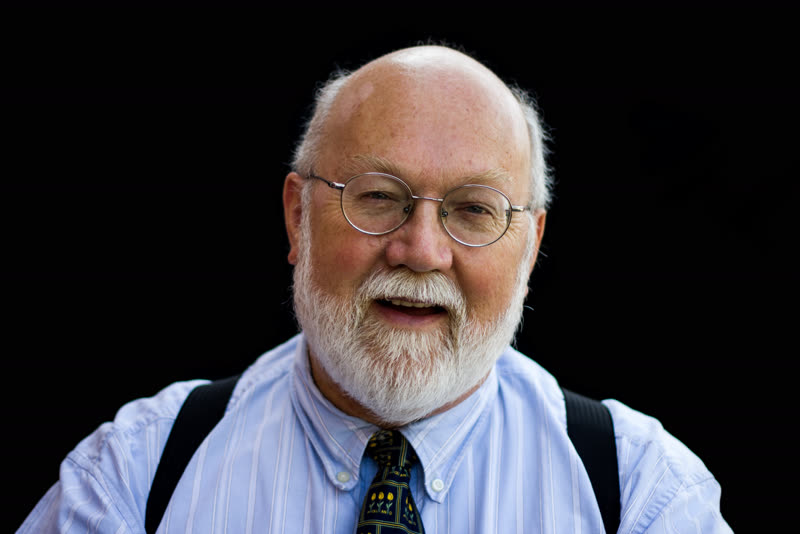 Tim Pasma Sunday AM Revelation March 14, 2010
Main passage Revelation 1:4-8
📖 Read the Scripture passage (ESV)
Revelation 1.4-8(ESV)
4 John to the seven churches that are in Asia:
Grace to you and peace from him who is and who was and who is to come, and from the seven spirits who are before his throne, 5 and from Jesus Christ the faithful witness, the firstborn of the dead, and the ruler of kings on earth.
To him who loves us and has freed us from our sins by his blood 6 and made us a kingdom, priests to his God and Father, to him be glory and dominion forever and ever. Amen. 7 Behold, he is coming with the clouds, and every eye will see him, even those who pierced him, and all tribes of the earth will wail on account of him. Even so. Amen.
8 “I am the Alpha and the Omega,” says the Lord God, “who is and who was and who is to come, the Almighty.”
Transcript
Take your Bibles this morning and turn to Revelation chapter 1. Revelation chapter 1. Before we look at the text this morning, let me just say a few words. some of you have appeared lost as I have been reading and preaching from this text. It's because I'm preaching from the English Standard Version now. All right? So if it seems the wording is a little bit different than yours, it's pretty close to the same, okay?
So don't panic. If you want to buy an ESV, we can probably get them for you cheap as well. But be that as it may, I just want to say that because I think some of you have kind of been going, what is he doing? Well, it's a different version, okay? It seems to be the version that's going to be the new standard among evangelicals. And it's interesting, even this weekend, Levi and I went to a conference at Westminster Seminary in Philadelphia on science and the Bible. and lo and behold, the Westminster professors are all using the ESV now.
In fact, some of them translated. We're involved in the translation. So I'm preaching out of the ESV, so don't panic. It's pretty close to the NIV. There's a few differences, but it's essentially the same, okay? All right, having said that, let's pray and ask God that he would teach us, that he would lead us into a fuller understanding of this revelation of our Lord Jesus.
Father, we have come here today, we have gathered together to worship you because of all that Jesus has done for us. And part of that worship is to listen to you speak to us in your word. We've heard you speak already in the reading of the scriptures. now we more fully want to hear you as we explore and investigate this text of scripture which are your very words intended for us Father my prayer is that again you would set the tone for us in understanding what this book is about and help us to understand more of our God whose word we now read and hear We thank you for the privilege we have of open ears that have been given us by the Spirit of God that we might hear and be blessed by our Father.
Do that now, we pray, in the name of Jesus. Amen. Years before Hitler unleashed his fury on Europe, Winston Churchill sounded the warning. He saw the storm clouds gathering on the horizon. He knew war was coming, and his was the lone voice in a time of danger, and no one would really listen. We must prepare, we must rebuild our military forces or we shall be overcome by evil.
We will be defenseless against the danger that is surely coming. And so as he saw the storm clouds gathering, as he saw the war, the inevitable course of events, he raised his voice in warning. Now the Apostle John, as we begin this book, is looking out, not very far into the future, not far at all, and is seeing that storm clouds are gathering, and he writes this book, this revelation from Jesus Christ, in order to prepare God's people for the onslaught.
We face an oppressive, wicked system, with its hostility and great persecution, and in light of that we could give up. We could walk away. We could deny Jesus. At the same time, that wicked oppressive system provides prosperity, comfort, and ease and we are in danger of being drawn away from Jesus. And so the Apostle begins to lay a foundation of preparation for us.
How, notice, how does the apostle begin to prepare God's people in this time of danger? He begins with a note of hope. He begins with words of hope rather than dire predictions and warnings Part of the preparation for what we face and what we will face is a good foundation in hope. You follow as I read these verses. Revelation chapter 1 beginning in verse 4.
John to the seven churches that are in Asia. grace to you and peace from him who is and who was and who is to come and from the seven spirits who are before his throne and from jesus christ the faithful witness the firstborn of the dead and the ruler of kings on earth to him who loves us and has freed us from our sins by his blood and made us a kingdom, priests to His God and Father, to Him be glory and dominion forever and ever. Amen. Behold, He is coming with the clouds, and every eye will see Him, even those who pierced Him, and all tribes of the earth will wail on account of Him.
Even so, amen. I am the Alpha and the Omega, says the Lord God, who is and who was and who is to come the Almighty. Now, as we begin this, we notice that this is a salutation. This is the salutation of a letter. The opening greetings of a letter that's addressed to these seven churches with whom John is familiar in Asia Minor. And in this salutation, even in this greeting, John gives you hope for the hope necessary for the dangerous times that are upon us.
John communicates the revelation he received from Jesus in a letter that he expects to be circulated among these seven churches. Remember, this book is one letter. This book is one letter addressed to seven churches. Remember, it's not seven letters and then the revelation. The revelation is indeed the entire book is a letter written to seven churches.
The question is, is it just written to those seven churches, or is it written to us? That is to say is it written directly to us or is it only to us as we understand the situation of those seven churches and then apply it to us Well I believe that this citation gives us hope because it directly addressed to us Jesus directly addresses us. This is his open letter to his church through all the ages.
This whole book is an open letter of Jesus to his church through all the ages. Why do I say that? Well, he talks about seven churches. Now, remember that this book uses symbols to communicate truth. And in the Bible, seven is a highly symbolic number. In fact, as we proceed through this book, and I hope you've been reading through the book in preparation for coming to worship, as you read through the book, you see seven all over the place.
There are seven trumpets, seven bowls, right? There are seven all over the place. Seven is a highly symbolic number. In the Old Testament, seven was used to denote fullness. that is, the time necessary for something to be done effectively, or it was a general designation of completeness or thoroughness. It originates in Genesis chapter 1 with the six days of creation that are then consummated in the seventh final day of God's rest.
You see it through the Old Testament. For example, if we go back to Leviticus 26, I want you to turn there. Turn to Leviticus 26 for a moment. We'll see just one example of this. Leviticus 26. I'm just going to skip through this chapter and just note a few times where you see this.
It's talking about, God is talking about His punishment for those who do not keep the covenant. And we find in verse 18, or verse 17, I will set my face against you, and you shall be struck down before your enemies. Those who hate you shall rule over you, and you shall flee when none pursues you. And if in spite of this you will not listen to me, then I will discipline you again sevenfold for your sins, or seven times for your sins.
Look down at verse 21. Then if you walk contrary to me and will not listen to me, I will continue striking you seven times or sevenfold for your sins. Verses 23 and 24. And if by this discipline you are not... turn to me, but walk contrary to me, then I also will walk contrary to you, and I myself will strike you seven times or sevenfold for your sins, verses 27 and 28.
But if in spite of this you will not listen to me, but walk contrary to me, then I will walk contrary to you in fury, and I myself will discipline you sevenfold for your sins. Now, God isn't saying he's going to punish Israel seven times, all right? If you do this, then start counting them off seven times. That's not what he's saying. And even when to translate it sevenfold, he's not saying it's going to be seven times worse than normal.
He's merely saying that this will be a complete, full, and thorough chastisement. Okay? And they understood that when they heard that. Okay? It's all about that. If we would turn to Leviticus 16, and we won't for now, but just take my word for it.
You read there where the high priest goes into the Holy of Holies and he takes his finger, well, I'm not sure it's his finger, but he sprinkles the mercy seat seven times. And then he comes out and he goes to that great big altar in the court and he's to take his finger, put it in the blood, and sprinkle that altar seven times. Now, what did that signify to those people?
That this was complete, full, thorough atonement. that this was a complete consecration of those things, set-apartness of those things. So when they saw him do it seven times, they understood that it meant complete, thorough. The job is done, if you will. And so when we read of these seven churches, they are seven churches that existed at that time, but I think this also reflects the fullness of the church.
These seven are representative of the church as a whole. It represents us. that is, all of God's churches. And so these seven churches stand for us as well. Besides that, after chapter 2 and 3, you see that the church worldwide comes into view. And then note that for each of the churches in chapters 2 and 3, you will notice, and we will see this in a few weeks, that as he writes each church, in every one of those sections, he says, He who has an ear, let him hear what the Spirit says to the churches.
Alright So this revelation is communicated to us So even in this salutation John gives you hope that necessary for dangerous times and necessary for your obedience. Now, let's look at this, shall we? God gives you hope in the resources promised. God gives you hope in the resources promised. What does he promise you? Note, grace to you and peace.
Grace to you and peace. God promises you grace. Grace to persevere in your faith in the midst of tribulation. Grace to stand firm rather than compromise that faith for the ease and comfort of this world. None of us has the ability to stand against the sharp edges of persecution or the soft seduction of prosperity. And so we need God's grace.
I don't know if you understand that. I think if you've lived in the Christian life long enough, you understand. I desperately need the grace of God, the help of God, in order to stand firm in the midst of trial, in order to stand against the seduction of what that system is always beckoning me with. We don't have the ability to stand alone. We need God's grace.
And he promises peace. In the midst of external turmoil, you need peace. You need inner peace. And this inner peace can only come when in the midst of persecution and hardship, you know that God is for you and not against you. When you know that in the midst of tribulation, God has a purpose in it. Those things then give us that inner peace that's necessary.
Without that peace, we will crumble under the pressure of persecution. So God promises to us grace and peace. But here's what's interesting. Here's what's fascinating. As God gives us hope by promising grace and peace, we're tempted to say, but how do I get it? How do I get that grace and peace?
I desperately need it, but how do I get it? And what you find here is that the entire Trinity stands behind this promise of grace and peace It says grace to you and peace notice grace to you and peace from Him who is and who was, and who is to come, and from the seven spirits who are before His throne, and from Jesus Christ, the faithful witness, the firstborn of the dead, and the ruler of kings on earth. That grace and that peace are ours through the work of the entire triune God.
God, the whole total totality of his person, stands behind this promise. He is the one. Our triune God is the one who delivers to us, notice, from God the Father, from God the Spirit, and from God the Son. Grace and peace are yours through the sovereign power of God the Father. He says the God who gives you grace and peace is the God who was and who is and who is to come.
Now, this speaks of the nature of his existence. He who was, he who is, and he who will yet act. Now, this grows out of the Old Testament again. It starts in Exodus chapter 3. You remember the story? Moses is on the mountain, and he comes to this burning bush.
And the burning bush talks to him. You remember? Take your sandals off. You're on holy ground. And the conversation he has with God, God says, go to my people. I'm going to what?
I'm going to deliver them. And Moses says, who should I say is sending this message? You remember? Here's what it says. Then Moses said to God, if I come to the people of Israel and say to them, the God of your fathers has sent me to you, and they ask me, what is his name? What shall I say to them?
God said to Moses, what? I am who I am. And he said, say to this people of Israel, I am has sent me to you. Now what is that all about? It's about I am the eternal self-existent God. God exists.
He is. He is the God who is sovereign. He is the great I am who I am. the eternal self-existent sovereign God. Now later the prophet Isaiah reveals to his people the nature of the God who has no equal and who says he going to accomplish his purposes All right turn to Isaiah 41 for a moment Isaiah chapter 41. Now here in the context, he's talking about idolatry and so forth, and he's saying whose purposes are going to stand, Isaiah 41, verse 2, who stirred up one from the east whom victory meets at every step?
He gives up nations before him so that he tramples kings underfoot. He makes them like dust with his sword, like driven stubble with his bow. He pursues them and passes on safely. By paths his feet have not trod. Who has performed and done this, calling the generations from the beginning? I, the Lord, the first and with the last, I am he.
Now do you notice? He's saying, I'm going to accomplish my purpose. Well, how can you accomplish your purpose? Because I, the Lord, I'm the first, I'm the last, I'm the present. I am He. I am the one who accomplishes His purposes because I exist over all of history.
I'm the first, I'm the last. I'm the one who is. Again, jump over to chapter 43. Same situation. God is declaring His sovereignty and the fact that His purposes will be accomplished. And he says in Isaiah 43, verse 8, Bring out the people who are blind, yet have eyes, who are deaf, yet have ears.
All the nations gather together in the people's assemble. Who among them can declare this and show us the former things? Let them bring their witnesses to prove them right and let them hear and say it is true. You are my witnesses, declares the Lord, and my servant whom I have chosen, that you may know and believe me and understand that I am He. Before me, no God was formed, nor shall there be any after me.
How is God going to accomplish his purposes? Because I am he. In fact, before me there was no God, and after me there will never be any other God. I'm it. There is none other. No one exists before God did, none after him, and he is. however let's turn back to revelation now john does say something a little bit different than the old testament the he says that we receive and peace from the God who is, who was, who is, and who is to come.
Not is to be, but who is to come. Now when the scripture speaks of the God who comes, it means the God who comes to judge and to save. For example, Isaiah chapter 40, verse 10, behold, the Lord God comes with might and his arm rules for him. Behold, his reward is with him and his recompense before him. The God who is to come, Isaiah says, is the one who comes with might, with a ruling arm, and he's going to judge.
So John says that this God will certainly come with power to judge and to save. That is, the future is his. The God who was, who is, and who is to come. This eternal God is not controlled by the events of history. It is not as if He is in history, controlled by the events of history, but instead He controls all of history because He is the God who was, who is, and who is to come.
He is the Lord of history. And so there's real hope. The God who was, who is, and who is to come can deliver the grace and peace that you need to stand. That's not all. Grace and peace are yours through the effective work of the Holy Spirit, says John. Now you look at that and you say, and we're going to come across this in the book of Revelation, seven spirits?
Oh, wait a minute, wait a minute. Okay, is God triune or is he nine? all right what's with the seven spirits what is that all about well it's a reference to the holy spirit here's one reason why it's a reference to the holy spirit because whenever the term for the spirit and that term is pneuma now we all know that if i were to transliterate it it would be p-n-e-u-m-a now now it looks familiar that's where we get the words like pneumonia, right? Not penomia, but you know it the Greek word for spirit P We get words like pneumonia or pneumatic you know where air is used That the word for spirit But it's interesting that that word, whenever it's used in the rest of the New Testament with God and Christ all put together, it's always a reference to the Holy Spirit.
So John here is referring to the Holy Spirit. But keep in mind again the use of seven. it signifies effectiveness, thoroughness, fullness, completeness. He wants us to understand that about the Spirit. Plus, he probably has, and we're going to see this later in the book, he probably has Zechariah chapter 4 going through his mind. Zechariah chapter 4, verses 2 through 7.
I want you to turn back there. You're going to see something again that you ought to be able to see a connection. All right? Zechariah 4, verse 1. And I said to the angel who talked with me, What are these, my Lord? Then the angel who talked with me answered and said to me, Do you not know what these are?
I said, No, my Lord. Then he said to me, This is the word of the Lord to Zerubbabel, not by might nor by power, but by my spirit, says the Lord of hosts. Who are you, O great mountain? Before Zerubbabel you shall become a plain, and he shall bring forward the top stone amid shouts of grace, grace to it. Now, those seven bulls on the lamp are what? Are the Spirit.
And notice in this passage, what does the Spirit bring? Grace. Grace. Okay? Those seven lampstands are the one Spirit who brings grace to Israel. Now, John says he is before the throne of God.
There he draws for us a picture of an emissary waiting before the throne of his king, ready to carry out the bidding of his sovereign Hear then hear what John is saying Hear then His real hope for you God the Spirit in obedience to the Sovereign God to His Sovereign God, will thoroughly, completely, and effectively communicate grace and peace to His people. How can you be sure you're going to have grace and peace? Because the Holy Spirit of God, ready at a moment's notice to do what God the Father says will completely, fully, thoroughly, and effectively deliver that grace to you.
Grace and peace are yours, finally, he says, through the empowering example and work of Jesus. Oh, wow. You want grace? You want grace in this time of need? You want grace now in the troubles that you face? He says, look to Jesus.
He is the faithful witness. Jesus persevered as a faithful witness to his father even unto his death. Not once did he compromise. Not once was he unfaithful to his father. And by his faithful witness and suffering, Jesus encourages you in your suffering. You can have confidence that Christ has suffered the same thing and overcome it.
And so you are empowered to do likewise. If you contemplate Christ, you receive grace and peace that's necessary in the midst of suffering. Hebrews 12.3, you remember? consider him who endured from sinners such hostility against himself. Why? So that you may not grow weary or faint-hearted. That's what John is saying here.
Look to Jesus, the faithful witness. He overcame suffering even to death. Later on, as we see the address to one of the churches, as we read of Antipas, who was a faithful witness to the end. So look to Jesus the faithful witness Look to Jesus who the firstborn of the dead Jesus not only suffered to death but he conquered death as well And what's true of Jesus will be true of us, right?
That's the whole pattern of the New Testament. What's true of Jesus will certainly be true of those who are in him. And so it says to us, look to Jesus. He's the firstborn from the dead. He not only suffered unto death, but he conquered death and occupies an exalted position. Now when it says he's firstborn, It's not just saying he's the first one chronologically out of the dead.
Okay? It goes beyond that. When you see that word firstborn, most of the time it's speaking of an exalted position. And only some of the time does it talk about the first one. Okay? For example, the president's wife is called what?
The first lady. Does that mean she's the first lady there ever was in the country? All the rest of you aren't ladies yet. Right? No, no, no. It's a position or it's a title of honor.
It says you occupy a particularly exalted position. All right? Jesus, because he was raised from the dead, occupies this exalted position of firstborn. He fulfills what was said about the Davidic king in Psalm 89. Now notice, Psalm 89. I want you to turn there.
You know, I've become convinced more and more and more that, and I think we need to start thinking this way. I've got to start thinking this way, which means, you know, if you're following, you know, you've got to come after me. Because I've been leading you down one way. We need to start changing our minds a little bit. We need to start thinking of the Bible as this whole fabric, this whole story this I don't mean fable I mean this whole narrative this whole story a story that we need to indwell and participate in we're part of that big story and as the story progresses through the bible you start seeing these connections like for example like we just saw the holy spirit in the old testament in Zechariah is represented by what these seven lamps that give grace.
Now we come to Revelation. What do we see? The sevenfold spirit communicating grace. It's all one long narrative. And part of it is, here's this Davidic king, for example, in Psalm 89. Now I want you to see, you can see the connections.
Psalm 89 verse 20, I have found David my servant, with my holy oil I have anointed him, so that my hand shall be established with him, my arm also shall strengthen him. The enemy shall not outwit him, the wicked shall not humble him, I will crush his foes before him, and strike down those who hate him. Now, Are you starting to think of somebody else right now as I'm reading through this?
You ought to. That would be to start thinking about a future Davidic king, right? Whose enemies are all going to be crushed. There's lights that ought to be going off. Let's keep going, okay? I think I'm on 24.
My faithfulness and my steadfast love shall be with him, and in my name shall his horn, shall his might or power be exalted. I will set his hand on the sea and his right hand on the rivers. He shall cry to me, you are my father, my God and the rock of my salvation. And I will make him the firstborn, the highest of the kings of the earth. Okay? So here is this Davidic king, and David didn't quite get all that.
That didn't quite all happen to him, so we start looking for another one that that's true. And now we find here this one who is the firstborn as this exalted position. And what's the next phrase that John says? Now, the psalmist just said, he's my firstborn. He's going to rule over everything, right? What does it say here?
He's the ruler of the kings of the earth. He's the ruler of the kings of the earth. He fulfills that Davidic picture. Jesus is the sovereign over all the rulers of this age and the satanic forces that stand behind them. No matter how they come against his people, those powers are still subject to him. As we go through this book and we see these powers raised up against us, what must we remember?
We must remember that yet, even though, okay, Even though on the surface it looks like we are being beaten up badly by these powers, what must we remember? Jesus still rules over them. He still rules over them Those powers that come against us are still subject to his rule No one can stop him from accomplishing his purpose with his people So we look to Jesus.
Do you want this grace? It comes from Jesus, who is the faithful witness, the firstborn out of the dead, and the ruler of the kings of the earth. Now our triumph with the Lamb begins with grace and peace guaranteed by our triune God. Now, it's interesting. There's going to be warnings that come. We're going to find warnings.
We're going to find predictions. We're going to find things that are going to warn us. And yet, John begins by saying to you, grace and peace to you. From whom? From the Father and the Spirit and the Son. Now, all of this then causes John now to erupt into this doxology, into a hymn of praise to Jesus.
And as we sing along with him, we find again a foundation for our hope. Second part of verse 5. To him who loves us and has freed us from our sins by his blood and made us a kingdom, preach to his God and Father. To him be glory and dominion forever and ever. God gives you hope in the redemption accomplished by Jesus. Right?
Now notice, the one who is our example. the one who occupies this exalted position of firstborn and ruler over all the kings of the earth, he is the one who loves you. It is this powerful, powerful personage that loves you. And how does he express that love? He expresses his love by his death. Note, He has freed us from our sins by His blood. By His violent death, He has freed us from our sins.
He expresses that love by dying for you, not as a friend for a friend. And this is what we have to see about what Jesus accomplished at the cross. This is why I believe in a particular atonement that Jesus died for His people. Why do I say that? Because by His death, He freed us from the grip of sin That not true of everybody is it By His very death He has freed us from our sin He did not die as a friend for a friend.
His death actually produces results. That death frees you from the guilt and power of sin. Just as the Passover lamb, Just as the Passover lamb delivered the people of God from the powerful grip of the Egyptians, right? So this one who died has freed us from the enslaving, powerful grip of sin. God's people are God's people by virtue of the sacrifice of the spotless lamb of God. and now they're able to serve him no matter what the circumstances, no matter what the tribulation, no matter what the trial, no matter what the temptation, his blood has freed us from the enslaving grip of sin.
We can stand. And that death actually accomplishes God's grand purpose for his people. What you see here is an echo, an echo again. Well, I tell you, when you get in the book of Revelation, it's gonna seem like we're in an echo chamber. You're going to hear these, bong, bong, bong, bong, bong, Old Testament just coming at you left and right, echoing all over the place.
This echoes Exodus 19, verses 5 and 6. And there we read this. Now, therefore, this is at Sinai. These people now are constituted there, the people of God, the nation. And it says, here's what God said to them. Now, therefore, if you will indeed obey my voice and keep my covenant, You shall be my treasured possession among all peoples, for all the earth is mine.
And you shall be to me a kingdom of priests and a holy nation. These are the words that you shall speak to the people of Israel. You see, God had this grand design for his old covenant people. You know what it was? It was this. I'm going to take you.
I'm going to deliver you. I'm going to ransom you. I'm going to set you apart from all the other nations. You're going to be different from all other nations. and I'm going to set you out here and I'm going to put you on display and you're going to be my big billboard. I setting you on display and your job is to display the glory of God to all the nations And you will be for me first a kingdom and then you will be priests for me Now notice this wasn addressed to one tribe.
It was addressed to all the people. You say, well, I thought only Aaron's family could be priests. No, he's saying something here. Here's what I want you to look like. I want you to be a kingdom of priests or a kingdom and priests. God intended them to exhibit to the nations and draw them to God.
God intended them to exhibit to the nations the glorious, joyful rule of God. And then he says, I want you to be priests. that is to say, I want you to be a nation that presents God to the world and presents the world to me. You see, opening to Gentiles access to the one and the only true God. They were to be on open display and that's what they were supposed to do.
Well, what does it say in Exodus 19? Did you catch that? If you obey, then that will happen. What happened? They did not obey. They broke the covenant.
And thus they never were this kingdom and priests that would draw the nations to God. And yet, what does God say here? What does he say here? he says that this death has freed us from our sins and what made us that kingdom and those priests but there is something noticeably absent you know what it is he does not say if you obey then that will happen no what he says is the death of jesus actually accomplished what their obedience never did.
The death of Jesus has constituted you, that kingdom and those priests. It's not your obedience that did it. It is the death of Jesus Christ and His obedience to the Father unto death that constitutes you now, that kingdom and the priests. The grand design of God is accomplished in our lives. through the death of Jesus. And so by the death of Jesus, we have been constituted that kingdom.
We now must exhibit to the nations the glorious, joyful rule of God. By His death, Jesus has constituted us His priests. We are the ones who bring God to the nations and the nations to God. We are fulfilling what Paul described as his ministry, and I've changed the verse a little bit because it's true of us as well. It's found in Romans 15-16. We are ministers of Christ Jesus to the Gentiles in the priestly service of the gospel of God, so that the offering of the Gentiles may be acceptable, sanctified by the Holy Spirit.
We serve in that capacity, notice, in submission to the Father of our Lord Jesus Christ. We are that kingdom and priests in submission to God the Father. And so the powerful death of Jesus frees us from sin's grasp so that in this evil world we display the glory of God's rule and offer Him to those who need Christ and offer them to God when they come to Christ.
And then he says, to Him be glory and dominion forever and ever. God's glory has reached its climax. through Christ's work in the service of his people as kings and priests, and God alone must receive the glory for the magnificent work he's accomplished in Christ Jesus. You see, because of that powerful redemption, we have hope. We have hope. We can face.
We can face this evil world. And then last, we find in verses 7 and 8, there should be a paragraph break between verses 6 and 7 7 and 8 go together behold he's coming with the clouds and every eye will see him even those who pierced him and all the tribes of the earth will wail on account of him even so amen I am the alpha and the omega says the Lord God who is and who was and who is to come the almighty God gives you hope in his sovereign salvation God gives you hope in his sovereign salvation Now the Apostle John reveals Jesus dominion and sovereignty in salvation by combining the messages of two Old Testament passages. When you look at verse 7, he has taken a little bit of Daniel 7 and a little bit of Zechariah 12, and he put them together to give us a message.
All right? He begins with Daniel 7. Behold, he is coming with the clouds. Now that is a phrase you read to the New Testament and always has a reference, most of the time has a reference, to Daniel 7. All right? So turn there.
We heard it in our scripture reading this morning. Daniel 7. And I just want you to look again at verses 13 and 14. I saw in the night visions, And behold, with the clouds of heaven, there came one like a son of man. And he came to the ancient of days and was presented before him. And to him was given dominion and glory and a kingdom, that all peoples, nations, and languages should serve him.
His dominion is an everlasting dominion which shall not pass away, and his kingdom one that shall not be destroyed. Now, here's the context. As God defeats the kingdoms of this world, there's this end time figure. All right? Let's get used to a word here. Eschatology or eschatological.
All right? I feel like right now like being Mr. Rogers and saying, say with me, eschatological. Okay. When we use that term, it means end times. Okay?
The end. eschatological, things that have to do with the end. Well, in Daniel 7, you see this eschatological figure. He is the son of man. Do you wonder why the Pharisees got really mad? Now, look, here's something. I'm going to get off the path here a minute.
Okay, let's run off the path. You wonder why in some of those passages where Jesus claims to be the son of man, why the Pharisees get really mad and they want to kill him? And we say, well, he's just saying he's the son of a human being. No, he's not. No he not That exactly what he not saying When you see that phrase son of man most of the time it a reference to this eschatological figure of power and dominion the one whom God himself gives the rule and the last age over all the earth.
And so when Jesus says, when he's standing at his trial, he says, you will see the Son of Man coming in the clouds. He's quoting Daniel 7, and you remember what the high priest does? He tears his clothes! And you go, what are they getting so mad about? He just said he's the son of man. Exactly!
He's saying, I am that figure of power who has dominion over the earth. That's me! That's why they got mad. You see? Can you see that? And we're going to see this son of man, we're going to see Daniel and this son of man going through this book.
Why? Because Jesus is that one. He is that end time ruler. He's that end time figure who approaches God and He's called the Son of Man. And God gives Him the authority to exercise end time rule over the world. Now this of course is whom?
It's the Lord Jesus. Who, note, because of His death and His resurrection, receives from God that end time dominion. now it says something to you about the end time too do you know that all of the New Testament is eschatological the entire not just the prophetic parts and what we're finding out is revelation is not just intended for the end of the end of the end it's intended for the end times which began when Jesus came and when Jesus ascended. He received the authority from God.
He is the Son of Man who will exercise this dominion in the end time. We are in the end time and we are under the rule of this end time powerful ruler called the Son of Man. Okay? Now, note this, that he comes on the clouds. But when I read Daniel, he's coming on the clouds into the presence of God. So when the Son of Man comes in the clouds, it's not always referring to the Son of Man coming in the clouds of glory at His second coming Many times it referring to the Son of Man coming to the Father And so here he quotes Daniel And essentially he saying the Son of Man he is coming with the clouds.
All right, well, that happened at his death and resurrection when he was invested with all that authority. He came into the presence of God and was invested with all that authority. That is why Jesus can say at the end of Matthew, What did he say, remember? All authority in heaven and in earth has been given to me. Why? Because he is that figure.
He is the son of man. Now, what John does is take that, and he connects it to a passage from Zechariah 12. So let's look at Zechariah 12. Do you know where Zechariah is? Yeah, it's near the end somewhere, isn't it? pastor. Zechariah chapter 12.
Now, I'm not going to read the whole passage, but it goes from Zechariah 12, 10 through 13, 1. So I'm just going to read a little bit of that. It says this, and I will pour out on the house of David and the inhabitants of Jerusalem a spirit of grace and pleas for mercy, so that when they look on me, on him whom they have pierced, they shall mourn for him as one mourning for an only child and weep bitterly over him as one weeps over a firstborn.
On that day the mourning in Jerusalem will be as great as the mourning for Hadad-Rimon in the plain of Megiddo. Drop down to 13, verse 1. On that day there shall be a fountain open for the house of David and the inhabitants of Jerusalem to cleanse them from sin and uncleanness. Now, God's people in Zechariah are identified as the inhabitants of Jerusalem.
And note, they are mourning in what? Repentance. They are not mourning because they are being judged. They are mourning in repentance and thus when you get to the end of the passage in chapter 13, verse 1, they are cleansed from their uncleanness. And so, when we come to Zechariah, notice, they will look on him the way he looks. One whom they have pierced and they will wail and they will mourn is not talking about judgment, it's talking about salvation.
They will look upon the one whom they have pierced and they will mourn in repentance. And then chapter 13, verse 1, they will be cleansed from all their uncleanness. Okay? So that's a salvation passage. Now note here, John does something a little bit different with that passage. He says, and every eye will see him, even those who pierced him, and all tribes of the earth will wail on account of him.
He expands that. He's saying, you know, when Zechariah was talking, he wasn't just talking about the inhabitants of Jerusalem. Now we understand he's talking about everyone who looks upon the one who's been pierced for them. Okay? He expands it. It's more universal.
It's all peoples without distinction now. And after looking on the one pierced, they mourn and they are saved. Now, it's very interesting, and you heard that today, that looking on the one pierced had already started. It already started. Did you listen to the reading, the New Testament reading from John chapter 19 this morning, the story of the crucifixion?
Did you hear what it said? It said there that they were breaking the bones of the men on the cross. But they came to Jesus and they didn't break his bones. Well, is he dead or is he alive? A soldier takes a spear, a Gentile soldier takes a spear and pierces his side and out comes water and blood. And he concludes that he's dead.
Don't break his legs. And these are to fulfill the scripture. The first one, not one of his bones will be broken. And then the second one, chapter 19, verse 37. And again, another scripture says, they will look on him whom they have pierced. He quotes that passage from Zechariah.
So looking on the one who's been pierced has already started. John isn't saying here, they're going to look on the one who's pierced as he comes in glory for judgment and mourn because they're in big trouble. Instead, he is saying here, what? They will look on the one whom they have pierced and they will repent. This Son of Man, this one who's been given end-time dominion, is going to reveal himself to people they will look on him whom they have pierced John says to you here this powerful Savior the Son of Man exercising rule in this last age using his authority to reveal himself as a pierced, dying one, bringing about repentance and faith.
In this last age, the age of the church's trial, Jesus reigns, bringing people under his saving rule. And notice how John responds. He goes, yes! That's kind of a paraphrase. That's what he means when he says at the end of verse 7, even so, amen! He goes, yes!
Do you have the same reaction? You say, no, we're in church. We can't yell like that. Only you have permission to yell. But that ought to be our reaction. We have this sovereign, this ruler who's been given dominion by His Father, who has power to reveal Himself as the One who's been crucified and bringing people to repentance.
And if that weren't enough, verse 8, look who stands behind Him. Who stands behind Him. The Alpha and the Omega. Now, we're going to see this periodically. The Alpha and the Omega. What is that?
Alpha is the first letter in the Greek alphabet. Omega is the last letter. in the Greek alphabet. So it says, I'm the A and I'm the Z. What's that all about? Well, you ever go to a store and you say, they got everything here from A to Z. What do you mean?
I mean, they got everything. There is nothing missing. Everything's here. So the Alpha and the Omega is this complete everything God. And there's nothing he's going to miss. Nothing.
He's the Alpha and the Omega. What? The first and the last. he is the first and the last he is the eternal sovereign God he is the Alpha and Omega that is the first and the last who is and who was and who is to come the one who has control of all history and if that's not enough what does he say? the almighty the one who has all the power of heaven and earth harnessed the one who has every single bit of power that he needs to get the job done folks we prepare with hope this is where we start If we going to stand we have to have hope.
We have hope because we have promised resources, grace and peace, guaranteed by the triune God. We have hope because the redemption accomplished by Jesus is not some weak, dying, it's a dying that's produced incredible results. We have hope because we have a sovereign God who is sovereign over the salvation of people. We have hope in the midst of trial.
Some of you may know Mark Schuter. Mark was here with us some months ago. He's a young man serving as a missionary in the Arab nation of Bahrain. And for some of us who are keeping in contact with him, he wrote us concerning his Arab friend whose name is Abraham. Abraham had come to faith in Christ. And because of his conversion, Abraham's wife determined, this just happened in the last two weeks, Abraham's wife is determined, has determined to divorce him.
And if she divorced him, in a Muslim court now, he loses his wife, he loses his children, he loses everything. Right? And so we're wondering, what's going to happen? The first letter we got from Mark said the judge didn't show up. So we all got a little bit of hope. And then just the other day, he wrote us this.
I'm going to read it to you. Abraham's wife never changed, and so she still forced Abraham to divorce her and pay thousands of dollars in fines. He arrived at court last week. his wife announced to the judge and all who were present that Abraham had apostatized and converted to Christianity. Abraham was shocked because his wife had told him that she would not say anything during the court hearing.
She has also contacted all of Abraham's family, friends, and co-workers to tell them about his conversion. To Abraham's amazement, he still has the support of his relatives, because of Abraham's godly conduct and his kindness toward his wife, even in the midst of this divorce. His family is not turning against him. I was talking with Abraham for a long time last night He told me how for the first three days or so after the divorce he was so hurt He said he was overwhelmed with sadness and was crying a lot But now he has been filled with deep and even overflowing peace and joy.
He said he's never been so happy in all his life. He told me he was walking the other day and talking with the Lord. He said, God, why are you so good to me? I'm nothing. I'm rubbish. Yet you have given me so much peace and love and joy.
I thank you so much. You are too good to me. Abraham rarely stopped smiling. Thank you so much. Thank you so much for your prayers for Abraham. They are being answered.
Abraham has such a deep love and commitment to the Lord Jesus and he has joyfully accepted he has joyfully accepted the confiscation of his property because he knows he has a better and lasting possession and praise God the news of Abraham's conversion to Jesus has gone out to all in Bahrain. So, he now has no fear. Everything is in the open. Everyone knows he's a follower of Jesus.
And we're praying that God will draw some to Abraham and find the forgiveness of sins found in the gospel of Jesus Christ. You see, Abraham knows what Jesus is talking about. in the midst of tribulation he's experienced the grace and peace guaranteed to him by his triune God by the powerful redemption of his Savior he's been freed from sin and now displays as part of God's people the joyful rule of God seeking to bring others to him and He knows the joy of Jesus' sovereign rule and salvation. May the hope that comes through the work of our God prepare us in the same way.
Lord God. we have heard words of great hope and encouragement. And they can just be that. They can just be words. Make them more to us than that, I pray. Lord, we pray that grace and peace will be ours, that we will see the effects of the redemption of Jesus in our lives, and we'll praise you for your sovereignty and salvation. Father like Abraham we pray that we would be those who know the reality of hope work that in us as we come to this table now we ask that you would indeed minister to us grace and peace as we come to the Lord Jesus in faith as we look to Him who was pierced for us and see Him as our powerful Redeemer.
Thank You, Father, for the hope that is ours in Christ, ministered to us by the Holy Spirit. We pray this in His name. Amen.
Also referenced in this sermon
Other passages mentioned, beyond the main text.