Among The Lampstands Pt1
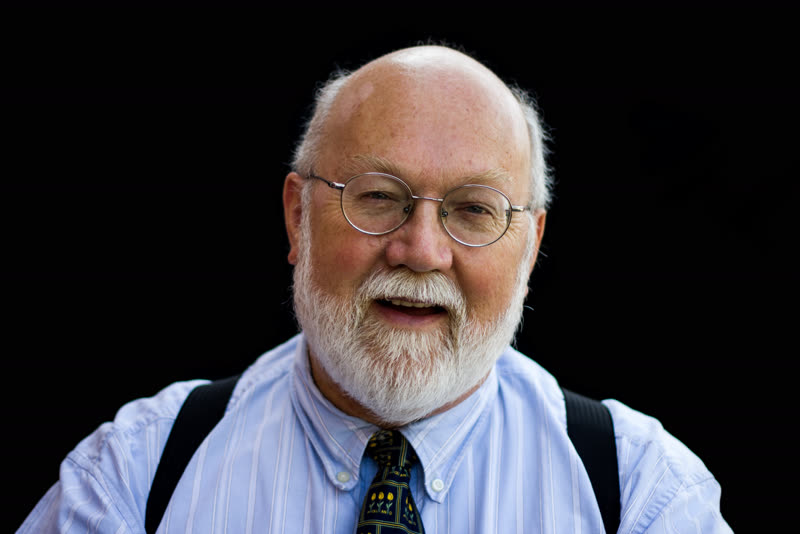 Tim Pasma Sunday AM Revelation March 21, 2010
Main passage Revelation 1:9-20
📖 Read the Scripture passage (ESV)
Revelation 1.9-20(ESV)
...
12 Then I turned to see the voice that was speaking to me, and on turning I saw seven golden lampstands, 13 and in the midst of the lampstands one like a son of man, clothed with a long robe and with a golden sash around his chest. 14 The hairs of his head were white, like white wool, like snow. His eyes were like a flame of fire, 15 his feet were like burnished bronze, refined in a furnace, and his voice was like the roar of many waters. 16 In his right hand he held seven stars, from his mouth came a sharp two-edged sword, and his face was like the sun shining in full strength.
Transcript
Take your Bibles now and turn to the book of Revelation. Well, we've not gotten very far into this book. I have loved studying it up to this point. I think I will probably love it all the way to the end. I better. I'm anticipating the blessing that God has promised in verse 3 of chapter 1 as we continue our study.
Would you bow with me now and ask that God would truly open our eyes to the realities that are in this text. We would see this not just as a text to study, but as the living word of God. Join me now in prayer. Father, we enter into the mysteries of this book. and yet mysteries not unknowable but mysteries explainable and life transforming. Would you please, Lord, help us to see now the truth that we must know in this dark age.
Father, we are your people. We desperately need your word. Give it to us this morning now, we pray. In Jesus' name, amen. As a child, I recall seeing church commissioning services. They were called commissioning services because they were to commission missionaries to go into the foreign field.
There would be a sermon talking about the duties of these missionaries as they would go, and then part of that sermon would be addressed to the congregation about its responsibility to those missionaries as they were on the field. After that and certain other things, the missionaries would come to the front of the church to the platform and the leadership of the church would gather around them and they would sit or kneel and the church, the leadership of the church, would place their hands on their heads and pray over them. And when it was over, these missionaries were officially commissioned to carry out the work for which God had called them.
Now as a kid, of course, growing up in church, you see these things and it causes all kinds of questions in your mind. And as you observe these things, you start learning some truth What does it mean to commission somebody Well we were told it means you set them apart to do a particular thing In case of these missionaries that particular thing was to preach the gospel in another land Why do these leaders pray over them and why do they put their hands on them? What's that all about?
Well, that's all about this. The church, the leadership represents the whole church. and the church now is, in its authority, is saying, you now have the right, you now have to go out, and you need to preach the gospel. And we have, this church has authority over you, and when you go out, you represent us. And so, as we watch these commissioning services, we learn some things.
We learn some things about the church. We learn some things about missions. There was all kinds of things that you would learn as you observed these kind of ceremonies and so forth. Well, in our text this morning, which is chapter 1, verses 9 through 20, the Apostle John recounts for us his commissioning service. When God commissioned him to write this book.
To write the book of Revelation. Where God commissions him to write everything that he sees, and then to send it to these seven churches in Asia Minor. So far, the Apostle has told us, you know that this revelation of Jesus is given for your blessing. And he's told us, and you know that God has promised grace and peace to you. And that all this comes about through the powerful work of Jesus Christ and his death.
And he says, now, let me tell you how this all came about. Let me recount for you how God commissioned me to write this book. And so as we sit here and we observe his commissioning service, if you will, If we observe how the Apostle John is commissioned to write this book, we learn some things. We start learning some things that we need to know. Learning some things about the church and about the church's Lord and about what that Lord does.
All of that involved in this commissioning service. As you watch it unfold, you learn these things. So let's go to that service now. You follow along as I read Revelation 1, verses 9 through 20. I, John, your brother and partner in the tribulation and the kingdom and the patient endurance that are in Jesus, was on the island called Patmos on account of the word of God and the testimony of Jesus I was in the spirit on the Lord day and I heard behind me a loud voice like a trumpet saying write what you see in a book and send it to the seven churches to Ephesus, and to Smyrna, and to Pergamum, and to Thyatira, and to Sardis, and to Philadelphia, and to Laodicea.
Then I turned to see the voice that was speaking to me, and on turning, I saw seven golden lampstands. And in the midst of the lampstands, one like a son of man, clothed with a long robe and with a golden sash around his chest. The hairs of his head were white, like white wool, like snow. His eyes were like a flame of fire. His feet were like burnished bronze refined in a furnace.
And his voice was like that, the roar of many waters. In his right hand, he held seven stars. From his mouth came a sharp two-edged sword, and his face was like the sun, shining in full strength. When I saw him, I fell at his feet as though dead. But he laid his right hand on me, saying, Fear not, I am the first and the last and the living one. I died, and behold, I am alive forevermore.
And I have the keys of death and Hades. Write, therefore, the things that you see, those that are and those that are to take place after this. As for the mystery of the seven stars that you saw in my right hand and the seven golden lampstands, The seven stars are the angels of the seven churches, and the seven lampstands are the seven churches. What do we see here?
John is on this little island called Patmos. It's about 40 miles off the coast of what we call Turkey today, about 60 miles from Ephesus. It's a Sunday morning, and he's quite possibly in worship, when all of a sudden the earth sinks away from his feet and his soul is liberated from the shackles of time and space and he is alone with God. And while this is happening, he hears a voice.
And when he turns to see who is speaking, he sees this incredible, terrifying figure among a group of seven lampstands. This figure is clothed with power and majesty. His hair appears white like wool, white like snow, so white that it hurts the eye. He has penetrating eyes of flashing fire. His feet glow white hot as if it this really fine bronze just taken out of the furnace There this loud reverberating voice like the waves breaking over the rocky shores of Patmos itself And he has this sharp, long, heavy, broad sword with two biting edges.
His entire appearance is like the sun shining in all its power. and it is so intense that hardly any human eye can look at it. This vision is so terrifying that John faints. It's as if he's dead. And the person whom he sees reaches down with his right hand and reassures him and again tells him to write what he sees. And then we learn this, that this terrifying yet reassuring figure is none other than Jesus himself. now while we observe John's commissioning much truth truth which we must know becomes apparent here's the first learn what you are learn what you are learn what the church is now we learn that through John John himself you see in verse 9 calls himself a brother and a partner in the tribulation in the kingdom and in the patient endurance that are in Christ in fact he is suffering tribulation because he's in exile in this little island of Patmos in the middle of nowhere for the testimony of God and for Jesus Christ, for the word of God and the testimony of Jesus.
He is there because of his stand for the gospel. He knows what it is to suffer. And he is a partner with us. That is, we share the same sort of experience. And so that is to say then that what's true of John is true of us. And what he says here tells us about the church.
What is the church? Well, he indicates to us here that the church is a body of people incorporated in Jesus and suffering, enduring, and ruling the way Jesus did. All right? John and all of us, all who claim the name of Christ, all who believe the gospel, John and all like him, are in Christ. And therefore, we suffer like he did. we endure like he did, and we rule like he did.
Now, John already told us that we look to Jesus as the one who persevered in his suffering. You remember, we talked about that last week, that he points us to Jesus as the faithful way. the one who endured in the midst of suffering, and the one who overcame that suffering, even dying at the end of all that suffering, dying and then overcoming death by his resurrection. Look to him, he told us.
And he told us that we have been constituted his kingdom by his death. And now he says, it is in Christ that we share in his rule. now this is the kingdom that was unanticipated by the jews we all know that right when jesus came as the king no one he he didn't fulfill anybody's expectations but jesus began his rule as he faithfully endured suffering in his lifetime jesus began his rule as he faithfully endured suffering in his lifetime we go to the book of Matthew. We look at Mark and we see these phrases where it says the kingdom of God is near.
Not near as in almost here, but near as in the forces have landed on the beach. Okay? There's more forces coming. The kingdom is here. All right? Jesus began his rule even in the midst of suffering and his patient endurance of it.
And in Jesus, we do the same. We exercise rule in this kingdom presently. We're already ruling. We're ruling as we faithfully endure tribulation. As we faithfully obey in the midst of tribulation. The passages that pop into my mind and seem to make more sense to me are those, for example, in Ephesians 2.
What? We have been raised with Christ and we sit with Him in the heavenly places. Right? You ever wonder what that means? It means we're ruling with Him. Well, how are we ruling with Him?
Well, we're ruling with Him as He did when He was here. We are ruling in our patient suffering of tribulation. And we are ruling with Him Just as Christ ruled in a veiled way when he was here, so do we. And just as he will rule universally and publicly when he comes again at his second coming, so will we. But as for now we rule in a veiled way like Jesus Like Him we conquer by not compromising our faithful witness in this dark world We are ruling and we are conquering when we do not compromise We rule in this veiled way in ruling over the powers of evil and defeating sin in our lives.
Not on our own. Note, please note, in the tribulation and the kingdom and the patient endurance that are what? In Jesus. We are ruling in a veiled way as we defeat the forces of evil, even in our own lives, as we are in Christ and receive the power to do that. By ruling, we rule. By ruling over death and Satan in our identification with Jesus.
We rule as we do not curse our enemies, but love them. You ever thought about that? Who's really the conqueror? Who is really the conqueror? Those who suffer at the hands of persecutors, or those who stand in the midst of persecution and love their enemies and do not crumble and forsake Jesus. You tell me, who's the conqueror?
You know, it's easy, folks. It's easy to return evil for evil. It's conquering when we love our enemies. When we forgive others. That is the conquering rule of Jesus. because we're in Jesus we have the ability to endure patiently tribulation and to rule with Christ Mark Twain is one of my favorite authors he wrote a book called the prince and the pauper where these two little boys looked exactly alike one's name was Tom Candy he was a pauper the other was Edward VI the son of Henry VIII somehow they met each other and they switched places Edward goes through the horrible life that Tom knew and all the time he saying I the king in the midst of this story Henry VIII dies So Edward supposed to become king And he is mocked he is abused he is ignored All right?
And no one believes that he's the king. He keeps telling people that. They don't believe him. We're much in the same situation. We do not look like kings. The Apostle Paul in one of his letters calls us the off-scrapings, the scum, the bottom of the pot in the view of the world.
But we are in reality the rulers. And we rule in a veiled way as we patiently endure tribulation and obey Jesus in the midst of the darkness. This is what else he says to us. You are the empowered witness in the world. Look at verse 12. Then I turned to see the voice that was speaking to me, and on turning I saw seven golden lampstands.
If we go down to verse 20, we're told that the seven golden lampstands are the seven churches. Okay? The seven lampstands are the seven churches. The figure, this terrifying figure, speaks to John and identifies those lampstands as the seven churches. Now, that vision is formed, if you will, by the Old Testament. the Old Testament picture of the temple and the tabernacle and that vision from Zechariah.
Now you would find the lampstand in the holy place. When you walked into the tabernacle, right before the curtain, before you entered the Holy of Holies, was the altar of incense. Over on your right would be the table of showbread. Over on the left would be this seven, we all know it as the menorah, right? that's got seven points to it, seven points of light on it, was over here on the left.
It represented the light and the presence of God. Just like the cloud led them, so this represented the light of God. That's what he sees in this vision. He sees not one, but he sees seven of them. Each one represents those churches. Okay?
Now in Zechariah, let's turn there. Zechariah chapter 4 we've been there before because Zechariah is one of the is another one of those books like Revelation and John draws on that or I should say the Holy Spirit draws on that as he reveals this to John But in Zechariah chapter 4, beginning in verse 2, here's what we read. Remember Zechariah? Maybe you don't remember Zechariah.
Zechariah was paired with Haggai. People returned and they were to rebuild the temple. Zechariah and Haggai were the prophets that preached to the people when they'd given up hope of building the temple, and we studied Haggai. He's one of the prophets, along with Zechariah, who preached and energized the people to accomplish the rebuilding of the temple.
That's the context of this. Verse 2. And he said to me, What do you see? And I said, I see and behold a lampstand, all of gold, with a bowl on the top of it and seven lamps on it with seven lips on each of the lamps that are on the top of it. And there are two olive trees by it, one on the right of the bowl and the other on its left. And I said to the angel who talked with me, What are these, my Lord?
Then the angel who talked with me answered and said to me, Do you not know what these are? I said, No, my Lord. Then he said to me, This is the word of the Lord to Zerubbabel. Not by might, nor by power, but by my spirit, says the Lord of hosts. Who are you, O great mountain? Before Zerubbabel you shall become a plain, and he shall bring forward the top stone, the top stone of the temple, and shouts, amid shouts of grace, grace to it.
Then the word of the Lord came to me, saying, In the hands of Zerubbabel have laid the foundations of this house. His hands shall also complete it. Then you will know that the Lord of hosts has sent me to you, for whoever has despised the day of small things shall rejoice and shall see the plumb line in the hand of Zerubbabel. In Zechariah, this vision assures Zerubbabel that by the powerful spirit of God, he would accomplish the task of rebuilding the temple.
He introduces here the power of the spirit in that lampstand. Thus, as we come to Revelation, here is the lampstand, here is the church, the Spirit-empowered witness of God's presence and light in this dark world. Fulfilling the purposes that God had called His people, right? He had called His people. Old Testament, we saw last week, to display His glories.
He says the same thing to us, echoes again of the Old Testament. We are to be that lampstand. the lampstand that stands in this dark world. We are the Spirit-empowered light and presence of God in the world. That is what each of those churches is. All right? We are the recipients.
As a church, we are the recipients of this revelation. Verse 11. Okay? Saying, this is what this voice had said, write what you see in a book and send it to the seven churches. We are the recipients of that revelation. Verse 19, look at it.
Because of who Jesus is, he says, write therefore the things that you see, those that are and those that are to take place after this. Now, on the basis of the authority of this figure, John is commissioned to write this revelation and send it to the churches, to the seven churches of Asia Minor. Now, again, remember what we learned last week. Seven is a highly symbolic number.
It refers to thoroughness and completeness. And so I think that he's not just saying send it to these seven churches. He's saying send it to my church. Send it to all the congregations of my people. Okay? Now, certainly, each one of those churches got this letter.
One letter circulated among all seven, probably starting in Ephesus. But they represent us as well. Now, as recipients of that revelation, does it have anything to say to us today? Is this talking to us? Now, I want to take a little bit of time on verse 19, because I think sometimes it's a source of misunderstanding. Is verse 19 an outline of the book?
Okay? Many have misunderstood verse 19 as an outline of the book. In fact, just this last week, I heard someone who is starting a series on the radio on the book of Revelation. Okay? Steve mentioned to me, he says, man, this must be the season for Revelation because everybody on the radio is preaching on it. Okay?
Don't listen to your radio. No, I'm just kidding you. Listen all you want. I'm sure you're going to see some differences. But this one speaker said, when we come to verse 19, we have an outline of the book given to us. Okay?
It's an outline. It says, Write therefore the things that you see. Okay now my translation others have have seen That not right It should just be the things that you see Because of the tense of that verb it's not talking about past, present, future. It's just talking about what you see. Okay? So, what you see means everything that he's going to see, what he's already seen, what's yet to be seen.
So it says, right therefore the things, and here's what some folks say, right therefore the things that you have seen, those that are, and those that are to take place after this. So they say, here's the outline of the book. They say, write about those things that you have seen. That's chapter one. Write about the things that are. That's chapter two and three.
The church is today. And then, write about those that are to take place after this. Well, that's from chapter six all the way to the end of the book. That's the future. That's the outline of the book. And with that kind of an understanding then, the book has very little to say to us.
Because we read up through chapter 3, it's all about what is, and then from that point, the church is gone in some kind of a rapture. The church now is gone, and then all the rest of the book happens when we're gone. So pretty much the book of Revelation doesn't have much to say to us. It doesn't have much to say to us, because we're not going to be here.
All it does is satisfy our curiosity about the future. That is not what this verse is saying. You say, why do you say that? Well, I think that what he's saying is he's saying, this is what Jesus says to John. Write what you see in this revelation, what is and what shall be true in the latter days, which have already begun and will continue until I return.
Now, all right, I'm going to get technical on you here. All right, but this is important. It's okay, you know, stretch. If you're starting to fall asleep, stretch. Have your spouse slap you on the thigh. Do something to stay awake here, because this is important.
This is important. John quotes here. John quotes here from a couple of references in Daniel. In fact, Daniel 2, our scripture reading this morning, Daniel 2 is key to this whole book of Revelation. Right? Now, here's what you need to see.
Remember, first of all, I'm sorry, I missed a point there. First of all remember this that most Hebrew people no longer spoke Hebrew But everyone of that time, including the Jews, all spoke Greek. Greek was the universal language of New Testament times. When I go overseas, okay, and if I'm alone, I've learned this. If I'm alone, I don't know what's going on.
Here's what I do. I find a young Romanian, and I tap him on the shoulder, and I say, look, I'm trying to find the train station, because I'm pretty sure that if it's someone who's about 20 on down, they're going to know English. Why? Because English is the universal language today. English is the universal language today. If you want to make it in business on the international scene, you have to know English.
And these young people know, if we're going to make it, we need to know English. English is going to get us someplace because it's the universal language right now. All right? Now, the Greek was the universal language of that day. And the Hebrew people of that day didn't know Hebrew anymore. Okay?
My grandfather came from Holland. Do you know how much Dutch I know? How's this? Pasma. That's it. Well, maybe one other word.
I mean, the name Pasma came from Pasmarop, which means be careful. All right? that's all the Dutch I know now I'm my dad knew Dutch he knew some Dutch my grandpa he could speak Dutch so I'm a Dutchman's grandson I don't know Dutch well the Hebrew people have been spread all over the world they don't know Hebrew anymore they know the language of the country they live in and they know Greek so what does that mean it means then that they're reading their Bibles in Greek, which means they're reading Greek translations of the Old Testament. So oftentimes when John quotes the Old Testament, he's not quoting a Hebrew text, he's quoting a translation of the Hebrew text, a Greek translation.
Are you with me so far? So, the Hebrew people are reading. The people in the churches, when they don't have the complete New Testament, they have the complete Old Testament, and it's in Greek. So when he quotes an Old Testament passage, he's probably quoting in Greek. So when you read his quotations here it may not be like the Daniel in our English Bibles because that based on Hebrew He talking to people who are reading Greek translations All right, now, it seems that John used a couple of different Greek translations.
That's not unusual. It's like in this very auditorium. Sometimes people come up here and they read scripture and they read it from the NIV. Sometimes they read it, that's the New International Version. Sometimes they read it from the English Standard Version. Every once in a while, someone comes up here and reads from the King James Version.
There are a number of different versions here. John probably had a couple of Greek translations that he used, and it seems that's what he did here. Now, John used at least two translations. Now, I could go into all the details about what they're called, but I'm going to give them their own names, okay? We'll call one translation the King John Greek Version, okay?
Let's call it the King John Greek version. And then there's the new improved Greek version, okay? You got the KJGV and the NIGV, all right? So here's a couple translations. Now, Daniel 2 is very important. Daniel chapter 2, verses 28 and 29, and verse 45.
Those verses that begin the interpretation of that image of the statue, okay? Now, here's what Daniel 2.28 says in the KJGV. what things must take place in the latter days. But the other version reads it this way. What things must take place in the latter days. Saying the same thing. Same translation, okay?
When you come to 29, KJGV says, what must take place in the latter days. Same thing. But the new improved version says, what must take place after these things. Now what's going on here? After these things is what? Is the same thing as the latter days.
Except he's using different words. Instead of saying the latter days, this translation said after these things. Verse 45. King Nebuchadnezzar, these are the things which will be in the latter days. Whereas the other version says what must take place after these things. Now, what does after these things mean?
The latter days. It's a different way of translating that. So when you see that phrase, after these things, if we're looking at the translations that John had, then what we see is that it means the same thing as the latter days. It's the same meaning. Different words, same meaning. Now look at Revelation 1.1 again.
The revelation of Christ, which God gave him to show to his servants the things that must soon take place. Now here he's beginning and he's using phraseology from Daniel 2.28, except he's changed it. Daniel said what must take place, what? In the latter days. John says, or God says through John, the things that must soon take place. John quotes the older version here, but he changes it.
He says this, the latter days have arrived. Daniel was saying these things are going to take place way off in the future. And John is saying the future is now. We are in those latter days. The future is now. It's not a distant future. what Daniel was talking about is happening or beginning to happen right now.
Now, when you look at verse 19, what do you see there? John, God tells him, write what you see, those things that are, and those that are to take place after this. That is, you're to write what you see, the things that are, and the things that Daniel was talking about. He's using that phrase to mean those latter days. The kingdom of which Daniel writes in Daniel 2, for Daniel's way off in the distance.
John says, the future is now. It's here. And so this revelation, all these visions, everything in this book, is what's going on from when Jesus ascended to when he returns. So the book is not about something far off in the end of the latter days It about now It about now And I know I labored that I going to labor just a little bit Please bear with me Look at Daniel chapter 2 You remember the reading today?
King Nebuchadnezzar, there is a great God who reveals mysteries. Now look at our text in Revelation chapter 1. What do you see in verse 20? these are well, I better look at it. As for the what? Mystery of these stars and lampstands. I'm going to tell you what they mean.
King Nebuchadnezzar there is a great God who reveals these mysteries. We come to Revelation chapter 1. People, there is a great God his name is Jesus who reveals these mysteries. Okay? Don't miss the parallelism there. There is a great God who reveals these mysteries.
And now we find that great God is none other than Jesus Himself who's going to reveal those mysteries. Oh, that's so important to see. That's so important to see. This is about us. This is about now. This is about now until Jesus comes again.
This whole book is for us, folks. Who are we? We're the recipients of that revelation. This isn't meant for some people who are going to come after us when we're gone. We will be here. It's all about us.
It's all about what's going on now until Jesus comes again. By the way, might I note for you, chapter 4, verse 1, he hears a voice that says to him, come up here and I will show you what? What must take place after this? There's that catchphrase again. What must take place in the latter days, which are now, and then once more, I can't resist, turn back to the end.
22, verse 6, And he said to me, These words are trustworthy and true, and the Lord, the God of the spirits of the prophets, has sent his angel to show his servants what? What must soon take place? that is that catchphrase for the latter days. By the way if you turn back to Daniel 2 verse 45 and again I going off the Hebrew here but notice in verse 45 a great God has made known to the king what shall be after this There's the phrase that you also find in these verses.
Revelation 22, verse 6, what Massoon takes place. Notice, the dream is certain and its interpretation is true. Revelation 22, verse 6, what does it say? It switches the order of the words. but it says, like Daniel, these words are what? Trustworthy and true. Do you hear the echoes?
Do you hear the echoes? Listen, Daniel 2. Revelation is taking Daniel 2 and saying, you know that kingdom that comes along and destroys all the other kingdoms until they just blow away and that kingdom grows? That's what Revelation's about. The triumph of the Lamb in destroying all the powers of the earth and His kingdom taken over. That is what it's about.
Well, folks, I have not done this for years and years and years. But I'm only halfway through this sermon. I'm starting to melt. I'm sure you are too. So we're going to stop here. We will pick this up again in three weeks.
Oh, now, don't sigh too much. I'm trying to be merciful to you. Next week is Palm Sunday, and the week after is, thank you, Easter. However, however, what follows could be a very, very fitting, could very well fit into Palm Sunday about our king. So we're going to pick it up there next week, all right? We're going to pick it up there next week.
I hope you're sensing the excitement of the fact that Revelation isn't just dropped on us as some kind of wild predictive fantasy but is in actuality an unfolding of this marvelous plan of the kingdom of God that was revealed in the Old Testament and sealed up until Jesus comes and unseals it and opens for us the richness of what's the reality of this world. because when we pick it up next week, we're going to see something about Jesus that people don't think about. They don't think about the reality of this one who walks among the golden lampstands, who walks among the congregations of his people. And how he's described ought to give us incredible hope in that description of what he's like. so next week we're going to really see what this king is like as he reveals it to John let's pray shall we Father this was by your appointment all of this was by your appointment the time we took in digging in and seeking to understand this And so we thank you.
Father, I want to thank you for just what we've learned today. Who we are. Oh, Lord God. We thank you that we are rulers in Christ. That even as we suffer, we rule. If we obey the commands of our king. we rule as we forgive those who've wronged us we rule as we patiently endure not with complaining not with drooping heads but we patiently endure the tribulations we rule and father we thank you that it is all in christ we could not do this if it were not for jesus we would not even understand that much.
But because we're in Christ, we patiently endure and we rule. And we are the recipients. You have given the church, you have given us this revelation so that we can live in a dark age against all the power of God. of the kingdoms of this earth that come against your people. We will stand because the Lamb will triumph and His kingdom will destroy all earthly powers, grinding them to dust until nothing remains but the everlasting dominion of Jesus.
Father, help us to leave here this morning with those visions in our minds. We ask it in Jesus' name. Amen.
Also referenced in this sermon
Other passages mentioned, beyond the main text.