Gaining The Lamb's Perspective
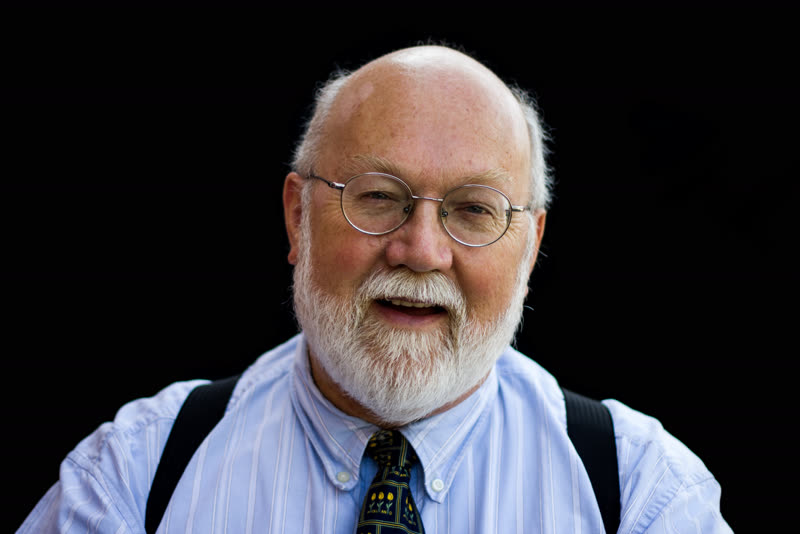 Tim Pasma Sunday AM Revelation October 24, 2010
Main passage Revelation 6:1-8
📖 Read the Scripture passage (ESV)
Revelation 6.1-8
Discussion Questions:
1.What does the first seal symbolize? How do you see it today?
2.What does the second seal symbolize? How do you see it today?
3.What does the third seal symbolize? How do you see it today?
4.What does the fourth seal symbolize? How do you see it today?
5.What kind of perspective does this give you? How does that perspective help you?
Transcript
Let's ask God now to open the word of his word to us. Again, let's pray that he would give us hope in the world in which we live as we seek to persevere in this age. Let's pray. Father, what a joy it is to gather together with your people, as your people, as the house of God, as the temple in which the Spirit lives, as the congregation of God's people.
We pray, Father, that you would give this congregation hope as this book intends. And Father, we pray that it would form our minds so that we would think properly about our Savior, about our world, and about us. Father, we commit this time to you. We are here to worship you by listening. And yet, Father, nothing will happen unless your Spirit works. And so we ask that your Spirit who dwells in this congregation would work among us and give us the truth of the Word of God.
Help us now, we pray, to give ourselves to you in tension and in listening. And we thank you in Jesus' name. Amen. We must persevere in this age, this age of persecution and seduction. That's what we've learned so far as we've been through this book of Revelation. Oh, but that is so difficult.
It's hard to persevere when perseverance means poverty and losing jobs, when an outward focus of winning others to Christ brings more persecution, when a little compromise makes things easier, but it's especially hard when perseverance means death. And it's really hard to persevere when the world seduces with comfort and ease, a full belly, an abundant entertainment, more money and more friends, an easy, comfortable, calm, relaxed and affluent lifestyle. Then it's hard to persevere as well.
And to congregations wrestling against persecution and seduction, Jesus gave the book of Revelation. He gave us this book so that we would see beyond the surface. He gave us this book so that we would gain heaven perspective and see the reality behind the persecution and the seduction If we embrace that perspective we will persevere If we see beyond the surface and get God's point of view, we will remain faithful.
And so persevering in the age in which we live requires that this congregation gain the perspective of the Lamb. And you will find that perspective, this perspective of the Lamb, in Revelation chapter 6, beginning in verse 1, and going through chapter 8, verse 5. Now, that perspective, of course, builds on the previous chapters, chapters 4 and 5, where we have this heavenly perspective of what's going on.
Jesus has showed us in this book, in chapter 4, that our God is holy and sovereign. And so with that in mind, with His holiness and His sovereignty in mind, we will be able to withstand the seductions of this age and the persecutions of this age. But then we noted that God holds a scroll in His hand. In the persecution and seduction that we face, God has an ordered plan of judgment and deliverance.
But the question is raised, who will break the seals and unroll the scroll? Who will break those seals and execute the purposes of God? And what we saw was it's only the Lamb who has been slaughtered. Only the one who by his death has conquered is worthy to accomplish the judgments that are recorded in that scroll. And so in Revelation chapter 6, beginning in verse 1 and going through chapter 8, verse 5, you find described those judgments as the Lamb, one by one, breaks the seals of the scroll and unrolls that scroll and accomplishes God's purposes.
In chapter 6, let me give you the overview very quickly. In chapter 6, we find the first six seals broken. and the scroll revealed up to that point. When we come to chapter 7, we find an interlude between the 6th and the 7th seals. And in this chapter we find described how God protects and gives rest to those who conquer And then in chapter 8 the first five verses the seventh seal is open So that's kind of the big view.
Now, we want to look at chapter 6. We're going to read through chapter 6 this morning. And then we're going to look at the first four seals. Now, I have to tell you, by Thursday, I was absolutely intent, determined to cover the entire chapter of Revelation 6. By yesterday, it became obvious that it wasn't going to happen. So we'll get through the first eight verses today.
But let's read through chapter 6, and let's see what is described for us there, the breaking of the first six seals. Now I watched when the Lamb opened one of the seven seals, and I heard one of the four living creatures say with a voice like thunder, Come! And I looked, and behold, a white horse, and its rider had a bow, and a crown was given to him, and he came out conquering and to conquer.
When he opened the second seal, I heard the second living creature say, Come! And out came another horse, bright red. Its rider was permitted to take peace from the earth, so that people should slay one another, and he was given a great sword. When he opened the third seal, I heard the third living creature say, come and I looked and behold a black horse and its rider had a pair of seals scales in his hand and I heard what seemed to be a voice in the midst of the four living creatures saying a quart of wheat for a denarius and three quarts of barley for denarius and do not harm the oil and wine when he opened the fourth seal I heard the voice of the fourth living creature say come and I looked and behold a pale horse and its rider's name was death and Hades followed him and they were given authority over a fourth of the earth to kill with sword and with famine and with pestilence and by wild beasts of the earth.
When he opened the fifth seal, I saw under the altar the souls of those who had been slain for the word of God and for the witness they had borne. They cried out with a loud voice, O sovereign Lord, holy and true, how long before you will judge and avenge our blood on those who dwell on the earth? Then they were each given a white robe and told to rest a little longer until the number of their fellow servants and their brothers should be complete, who were to be killed as they themselves had been.
When he opened the sixth seal I looked and behold there was a great earthquake and the sun became black as sackcloth the full moon became like blood and the stars of the sky fell to the earth as the fig tree sheds its winter fruit when shaken by a gale The sky vanished like a scroll that's being rolled up, and every mountain and island was removed from its place. Then the kings of the earth, and the great ones, and the generals, and the rich, and the powerful, and everyone, slave and free, hid themselves in the caves and among the rocks of the mountains, calling to the mountains and rocks, fall on us and hide us from the face of Him who is seated on the throne and from the wrath of the Lamb. For the great day of their wrath has come and who can stand?
Now, as we seek to understand chapter 6, specifically the first eight verses, keep three things in mind. Keep three things in mind. First, keep in mind the already not yet nature of this book. It describes the events of the age between Jesus' ascension and Jesus' return. The whole book of Revelation covers this era. Okay?
Now, why do I say that? Let's review very quickly. Remember that Revelation is one letter written to the seven churches of Asia, and thus to all of us, to help them resist the forces of evil. So God intended the entire book to help his congregation resist both persecution and seduction. All right? And so when we keep that in mind, when we keep in mind that the whole book is one letter to all the churches, then we will understand that this book is not about some faraway, distant future.
It's about what is going on in the life of the congregation now and what the congregation has to do in order to resist. But it also, as we see here, is dealing with the return of Jesus. Now, these first four seals sound much like what Jesus said describing the age that was to come after he ascended. And we heard about that in Luke 21. There we find Jesus describing what was going to happen in the age that was to come.
And we see a lot of the same things going on in this chapter. And then last of all, why do I say this is all about now and a little bit in the future, is that these events that we find in chapter 6 are inaugurated by the conquering death of Jesus who ascends to his throne begins his rule. We see the Lamb on the throne. He is ruling. And so these things are happening as he rules or during the time of his rule in heaven.
Which would include what? Now. I mean, Jesus isn't going to wait until later to ascend the throne. The Lamb is on the throne now. And all of these seals are broken while he's on that throne. All right?
So these events are the result of his rule. So that's the first thing to keep in mind, the already not yet of this book. Already things are happening. There's still some things to happen. Second, these seals reflect the judgment of God. We have to remember that this is the judgment of God.
Now, why do I say that? Well, did you hear the Old Testament reading this morning? Did you notice the color of the horses in Zechariah? They were white, red, black, and a dappled one. They're the same horses, the same colors as the ones we see here, except that the dappled has become green or pale, a pale horse. Otherwise, they're all the same.
And those horses in Zechariah represent the judgment of God against the nations who have oppressed his people in Judah, who have oppressed Jerusalem. and he sends them out to patrol and he sends them out to bring judgment on those nations. Now that imagery is used in this chapter. That same imagery is used in this chapter to show God's judgment on a universal scale, not just around the nations around Judah, but now the picture has been blown up, if you will, to include all of the earth.
So this is God's judgment on a universal scale against those in the world who oppress the new people of God, who are us. We are the people of God. And then thirdly, here's a third thing to keep in mind as we come into this chapter. All of these seals, all of these judgments come from the throne of the Lamb. You will notice, I hope you've noticed, that they all originated at the throne of the Lamb.
The command for each of the four destructive horses and their riders originates from the throne room where Christ opens each seal. That is to say, Jesus is ruling over everything that is described here. This is not chance All the horrible things described in these first four seals are not chance They not just chaotic suffering in the world They come from the throne of Jesus He is sovereign over all of these things.
All right? Now this morning, like I said, we want to examine the first four seals. And in them, see the judgment of the Lamb displayed. See the judgment of the Lamb displayed. Standing in the throne room now, we see the Lamb looking as if he's slaughtered on the throne, breaking that first seal and beginning to unroll the scroll. As he does, one of the four creatures, one of those four guardian angels that stands around the throne, shouts with a voice of thunder, come.
And suddenly, there appears a white horse with a warrior on it who carries a bow and who has been given a crown. Now notice, the crown was given to him. Again, the sovereignty of Jesus. Given a crown by the Lamb, which is a symbol of rule. What he resembles is a mounted Parthian warrior. The Parthians had an empire to the east of Rome.
They were on Rome's eastern border. The empire's eastern border. And they were scared to death of these guys because they had this cavalry of mounted bowmen. Have you ever thought about how hard it is to shoot a bow and arrow on the back of a horse? That's incredible. To have that kind of skill is unbelievable.
And the Parthian warriors had that. And the people in Rome were frightened to death of these people. All right? So it resembles a Parthian warrior, the feared enemies on the eastern border. What do we see here? Here you see the Lamb's judgment in the conquests of this age.
The Lamb's judgment in the conquests of this age. Part of the judgment of the Lamb is this unending international strife that just plagues the world and always has. It's the bloody ambition of rulers to conquer. You see the Lamb displaying His judgment in the march of the conquering legions of Rome as they just keep swallowing up nations and bloodily conquering other nations.
You see it 400 years later when barbarians come and topple the entire Roman Empire as these barbarians sweep in with all their conquering We see it in the attempt of Napoleon to conquer Europe We see it in World War I We see it in World War II We even see it in the Cold War that many of us grew up in. Right? We stood against the conquering evil forces of Eastern Europe, although you'll get a different story when you're in Romania and Moldova.
All right? But even the Cold War was a time of great fear because of what could possibly have been a nuclear holocaust, at least that's what many people thought. And it reminds me of what Jesus said. Nation will rise up against nation in this age that is going to come. And that has characterized every century since Jesus has ascended to heaven. The destruction of homes and families, the relocation of entire populations, the reduction of cities to rubble, the starvation of millions that come from rulers that want to conquer, is the judgment of the Lamb.
It is the Lamb of God expressing his judgment on sinful men. Now you say, how is that judgment? How is that a judgment of the Christ? Well, I want you to think for a moment. Think for a moment. What brings God's judgment on man?
Think of the whole course of the history in the Bible. What constantly brings the judgment of God? It's the idolatry of man. It's his attempt to use means other than God and his Christ for security, for salvation, for hope. Anything but God. Right?
When you see that through the whole course of biblical history, that's what's happening. What brings the judgment of God upon His people? In the Old Testament, they're always trying to find their security with another nation, with another God, with someone else, anyone other than God. And so, this is the judgment of Christ upon a world that is constantly seeking its security, its salvation, its hope, and other things. no international law, no great military forces, no ingenious diplomacy can ever save men.
He will always be plagued by the scourge of conquest a constant judgment on his ungodly schemes That is the judgment When we see nations rising up when we look at North Korea and South Korea when we look at all these times in history and even now when there's this unbridled ambition to conquer someone else, it is the judgment of the Lamb upon a sinful world. Now once more, having seen that rider disappear over the horizon, and we turn again to the throne room as the lamb breaks another seal and unrolls the scroll a bit further. Now the second creature that guards the throne calls out in response to the breaking of the seal, Come!
And a second rider appears on a red horse. And notice, and again, don't miss what it says, and a sword was given him. Do you see that? Where does he get the sword from? From the Lamb on the throne. This Lamb is sovereign, folks.
This Lamb is sovereign, even over the red horse and its rider. And he's given us a sword and he takes peace from the earth as people begin to slaughter one another. Here you see the Lamb's judgment in the bloodshed of this age. The international strife and the civil unrest that tears nations apart produces unbelievable and horrific bloodshed. This age from when Jesus ascended to his throne to when he returns is an age characterized by unbelievable shedding of blood.
There was terrible bloodshed in John's day. In the days in which John was writing, there was terrible bloodshed. As you read the history of the Roman Empire, soon after this, you see constantly these civil wars as rival armies of the empire's forces would square off against one another. Each army supporting rival contestants for the emperor's throne. And there was this unbelievable amount of bloodshed as soldiers killed soldiers and citizens in the process.
I mean, we can just look at this history. What popped into my head was the English in the 14th century. You know what happened in the 14th century? The English developed this incredible weapon called the longbow. It's a bow. It's about seven feet tall.
It had incredible power. showed up at the Battle of Agincourt with their bowmen. And from that moment on, warfare changed because they could kill people from a great distance. And they ended the era of the mounted knights where knights would go into battle. Now they could just kill whole swaths of people with this longbow. And guess what? Man's ingenuity didn't stop with the longbow, did it?
It didn't stop with the longbow. Now we have what? We have weapons that can wipe out entire cities with one bomb, right? One missile. Our ingenuity is incredible. A generation ago, we saw the extermination of 6 million people by the Nazis.
Less than a decade ago, a million people were slaughtered in Rwanda without sophisticated weapons. as Hutus and Tutsis turned against each other and just slaughtered one another. Yesterday, I heard of 150,000 people who have died in Iraq. 150,000 people who have died in Iraq since our country invaded it. Most of them civilians. Friends, this is the judgment of Christ on an unbelieving world.
No matter how sophisticated we become in solving conflicts, from the individual level of anger management courses to the macro level of international peacemaking bodies, we will never escape the judgment of bloodshed. It will always be with us. man puts his hopes in his methods while ignoring the prince of peace and reaps judgment as a result he experiences the judgment of the lamb now again the red horse disappears over the horizon we turn back again to the throne room and we see the lamb breaking the third seal and further unrolling the scroll the scroll This time the third guardian creature says again come And we see another one another horse only this one is black And on the back of this horse is a rider who holding some scales to measure things But this time now we hear the voice of Jesus It says that a voice you hear a voice from their midst. Well, who is in the middle of the four creatures? is none other than Jesus.
And it is Jesus then who says, and I heard what seemed to be a voice in the midst of the four living creatures. This is Jesus saying, a quart of wheat for denarius and three quarts of barley for denarius and do not harm the oil and wine. Again, what do we see here? This is the sovereignty of the Lamb. He is the one who is determining the price of the wheat.
Here he speaks, and he commands the rider to charge only so much for wheat and barley and to leave the wine and oil alone. What do we see here? We see the lamb's judgment in the famines of this age. In the famines of this age. A quart of wheat was one day's supply for a soldier, and a denarius was typically one day's wages for a laborer. And so a worker's entire day's wages would be spent on a loaf of bread, if you will, on his bread allotment for the day.
It's all he got. I read that what he's talking about here is an inflation rate of about 800%. this is eight times what a quart of wheat should have cost and then the three quarts of barley is one day's provision for one family all right or i'm sorry three days for one man or one day for a family and the cost for these necessities is so much that no one will be able to afford the wine or the oil. Wine and the oil are beyond reach.
You can't even buy that because you're spending all your money on what barely gets you by. He's talking about famine here. You know that within the one year of the writing of this book, there was a famine that struck the Roman Empire. Incredible famine You need to understand that in that day Rome could not grow its own food It had to get its food from Egypt its wheat and everything from Egypt in that area of the world.
That was their bread basket, if you will. And it was struck in AD 92 with incredible famine. They had an incredible famine in the empire. We're no strangers to famine, are we? We see famine in Darfur in Sudan. We see a famine in North Korea today that's just unbelievably devastating.
A whole nation starving to death except for its leaders. We're no stranger to famine. And again, no one can escape the judgment of the Lamb. It's not as if our ingenuity is going to get us out of it. Our ingenuity will never get us away from the judgment of the Lamb. I heard this great story just the other day.
I was listening to NPR. And I heard this story about wheat. Let me just read kind of a summary of it. Last summer's drought in Russia pushed wheat prices to their highest level in years, and the fallout is a reminder of how much humanity depends on the rain. Now, scientists are searching for novel approaches to make wheat less vulnerable to drought. Some efforts are trying to replace the genes that made possible the dramatic boost in wheat harvest in the latter half of the 20th century in India, known as the Green Revolution.
Few people can see the accomplishments of the Green Revolution more clearly than Colvinder Gill, who grew up in a village in India where, half a century ago, some predicted catastrophe because food production wasn't growing as fast as the population. Quote from Gill, It was a common belief that this world is going to end because of the starvation. People are going to fight for food and kill each other.
But scientists such as Orville Vogel at Washington State University bred new varieties of wheat that included a mutant gene that kept the plant short. When you gave these plants lots of fertilizer and irrigated them, they didn't just get tall and fall over like ordinary wheat. They produced more grain, a lot more. These dwarfing genes came in almost tripled yields, at least in the Punjab area, Gill said.
I say, wow, you know what? That's a gracious gift of God, isn't it? So 50 years ago, or 60 years ago, when they were saying, you know what? We going to be killing each other another 50 years But then God in His grace allowed them to or brought about through His providence this means of producing grain. So they didn't starve to death. They weren't killing one another.
But lest we think that that means we're going to escape the judgment of the Lamb on the throne, think again. Guess what? When drought occurs, this wheat has to be planted deeper in the soil in order to get to the moisture. But since it's a dwarf kind of a wheat, it can't come up through the extra soil. And so famine is still an issue. And you know what?
The story goes on to say that they're coming up with more genes, and they're crossbreeding these wheats, so they're going to come up with something that may be drought resistance. I have news. It's not going to help. You can't escape the judgment of the Lamb for your unbelief. and you're trusting in your own ingenuity and schemes that leave God out of the picture, you're never going to escape it.
This is going to be the judgment until Jesus returns. It will always be visited upon humanity. Well, let's turn again to the throne room. We see the lamb now breaking the fourth seal. The fourth living creature calls out, come. and in response there appears a pale, or more literally, a green horse. And the rider's name is Death.
And he has a companion that's running behind the horse. His name is Hades. Hades is the realm of the dead. It's as if Death goes out and does its thing and Hades comes up behind and cleans up the mess, picks up the dead. Now, the horse is green and in Greek like English when you say someone appears green, you're saying he looks sick or he looks dead. That's why the horse is green.
It looks like death. And you remember the opening vision in chapter 1 reveals that the Son of Man is the one who has the keys of death and Hades and so has the authority to summon and notice to limit the activities of death and Hades. Here it says only over one quarter of the earth. or one quarter of the earth. It's restrained. Here you see the Lamb's judgment in the death of this age.
Now this seal... if you will, kind of sums up everything else that's gone before. Because conquest and bloodshed and famine are all death producers. Okay? And notice that it says here that death is given authority over the fourth of the earth to kill with sword and with famine and with pestilence and by wild beasts of the earth. So it includes all those things.
Now someone might ask, wait a minute. Wait a minute. What about those wild beasts? You know what? I can go out my door and I don't see any lions running around in my streets. So what's that all about?
All right. Some would say there's coming a future day when there's going to be this incredible reproduction of wild beasts. So in this supposedly great tribulation period, there's going to be wild beasts running around killing everybody. Those are the sort of things I heard growing up. But what is that wild beast thing all about? Well, he's using biblical language of judgment.
Again, this is a symbolic book. It's a very literary book. He uses literary figures of speech. Why do I say that? Because you go all the way back to the beginning almost. Go back to the book of Leviticus.
Leviticus 26 is where I want you to go. Now, you remember that under the old covenant, God said, made a covenant with his people, and said, here's the deal. If you do this, then I will do that. If you obey, you will have blessings. If you disobey, you will have curses. And so Leviticus 26 is one of those passages that enumerates the blessings and the curses.
Now, we want to look at Leviticus chapter 26, beginning in verse 14, and it goes for a long way. So I'm just going to hop, skip, and jump. You try to follow, try to find the verses. I'll tell you where they are. All right? And you see what we find there.
Look at Leviticus 26, verse 14. But if you will not listen to me and will not do all these commandments, if you spurn my statutes, and if your soul abhors my rules so that you will not do all my commandments but break my covenant, then I will do this to you. I will visit you with panic, with wasting disease, pestilence, fever that consume the eyes and make the heart ache, and you will sow your seed in vain for your enemies shall eat it.
There's conquest and famine. Do you see it? Alright drop down to verse 21 Then if you walk contrary to me and will not listen to me I will continue striking you sevenfold for your sins and I will let loose the wild beasts against you which shall bereave you of your children and destroy your livestock and make you few in number, so that your road shall be deserted.
All right, drop down to verse 25. If you walk contrary, verse 25, and I will bring a sword upon you that shall execute vengeance for the covenant. And if you gather within your cities, I will send what? Pestilence among you. And you shall be delivered into the hand of the enemy. When I break your supply of bread, ten women shall bake your bread in a single oven and shall dole out your bread again by weight and you shall eat and not be satisfied.
What do we see there? What do we see there? We see death in the form of sword, famine, pestilence, and wild beasts. Covenant curses of God. These are covenant curses of God. If you break my covenant, I will bring these curses upon you.
Now turn over to Ezekiel. Turn over to Ezekiel. Now we're going over, oh, 700 years later. Prophet Ezekiel. Now the prophets preached from their Bible, the old covenant. And here again you see in Ezekiel the same covenant curses.
Ezekiel chapter 14. All right, beginning in verse 12. And the word of the Lord came to me, son of man, when a land sins against me by acting faithlessly, and I stretch out my hand against it. What's he saying? If they break my covenant, right? What he said before.
Break its supply of bread and send famine upon it and cut off from it man and beast. Even if these three men, Noah, Daniel, and Job were in it, they would deliver but their own lives by their righteousness, declares the Lord God. If I cause, note, wild beasts to pass through the land and they ravage it and it be made desolate that no one may pass through because of the beasts, even if these men were in it as I live, declares the Lord, they would deliver neither sons nor daughters.
They alone would be delivered, but the land would be desolate. Note, verse 17, or if I what? Bring a sword upon that land and say, let a sword pass through the land. Verse 19, Look at verse 21 For thus says the Lord God how much more when I send upon Jerusalem my four disastrous acts of judgment, sword, famine, wild beasts, and pestilence to cut off from it man and beast.
This is covenant curse language. Right? Right? Famine, sword, pestilence, beasts. What is that about? That's what stands behind these words in Revelation.
Don't be looking for the reproduction of lions to the point that they'll be overrunning America. It's as if a car dealer would have an advertisement on television and he says, our cars say the flag of baseball and apple pie. You don't go to the dealer saying, I'm not interested in the car, but I sure would like the apple pie. No one's going to do that.
Why? Because they know the flag, baseball, and apple pie is all about what? America. It's shorthand way of saying, these cars are American to the max. So this is saying, hey, I'm serious about this judgment. This is going to happen.
I am going to bring death. This is a curse. So he's using this covenantal curse language to speak of Jesus' vehicles of unrelenting death, emphasizing that the curse of God falls on mankind, not just on his old covenant people, but now on mankind as a whole. Again, you see the judgment of Jesus here. within a century of this writing during the reign of Emperor Marcus Aurelius he was the philosopher emperor of the Roman Empire in the 160s I believe within a century of the writing of this book a smallpox epidemic struck the Roman Empire and wiped out one quarter to one third of the entire empire including the emperor and you know what, we don't have to look very far and most of you probably, you know, your history of the 14th century isn't exactly, you know, yeah, I really love the 14th century, but many of us would know when I say this in the 14th century the Black Death swept across Europe and wiped out one of the entire population And lest we think that our ingenuity is going to make us get away from that, the judgment of the Lamb is continuing to be poured out in this age as His wrath is displayed.
You know, I just heard, and you heard it too, tragic as it is, cholera now is sweeping through Haiti because of the earthquake. And they think it's going to spread into the Dominican Republic. Again, the lamb displays his wrath in this judgment of death that visits every nation and every people through famine, war, and pestilence. Now, you say, okay, that reorients me a little bit to the book of Revelation, but so what?
That's a good question, so what? So we know that. Why is this here? It's so that we gain the perspective of the Lamb, so that we will persevere, that we will see below the surface to the reality so that we will see and gain heaven's perspective on what's going on around us. And having heaven's perspective, have the ability then, by the grace of God, to persevere.
What is that perspective of the Lamb? Well, you now have the perspective that these judgments in this age is the Lamb's providential prejudgment justice. These first four seals are the Lamb's providential prejudgment justice. That is, His wrath displayed before He... He displays His wrath before He pours it out on the last day, which we find in verses 12 through 17, the not yet. when there's no restraint at all.
When he directly, not providentially, pours out his wrath on unbelievers. These are providential. They're happening in all the events that we see around us. But they are not the final, ultimate, direct judgment of God. The fourth seal, notice it says it's restrained. Only a quarter of the earth.
I believe that since this is kind of the summary of the other ones, this kind of wraps all of them up, if you will. I think all these seals have the same characteristic, and that is this. This is restrained judgment, limited judgment. It does not reach all people all the time, right? A quarter of the people. Now, again, we're in a book of symbols.
He's not saying if we took a survey and got an accurate count of the entire world population, we'd find that 25% have died. What he's saying is this is a limited, restrained judgment. The Lamb is not pouring out all His wrath yet. And folks, let me say something right now. If this is just a display and not the pouring out, how awful will it be when His judgment and His wrath is unrestrained?
It's going to be so bad that people are going to say, let the mountains fall on us, let us die so we do not face the wrath of the Lamb. There's no running then. Now it's restrained. The four horsemen are symbols of the dangers and disasters that shatter and dismantle arrogant civilizations and the sophisticated godless schemes of men. It's the Lamb's judgment on that.
They are, if you will, pre-wrath expressions of wrath. They foreshadow the last judgment. they give us a little bit of a taste. Now I don know about you but when I look at the suffering in the world today I don't want any more of it. It's going to be worse for those who ignore the Lamb. It's bad enough now. Talk to the people in Chile who went through that earthquake last year, right?
And Haiti. Talk to folks who are starving to death. that's just a taste. That's just a little bit of an appetizer of what the wrath of the Lamb is going to be like when He pours it out, not just displays it. And thus, having this perspective seen below the surface, you can persevere because you see evidence of your King's justice everywhere. If the king is not going to let sin go unpunished now, he won't let it go forever.
He will. There is justice in this world. There is justice. Here's the second thing we gain as we gain the Lamb's perspective. Listen carefully. Instead of seeing a chaotic world of suffering, you now have the heavenly perspective that such suffering is the purposeful judgment of the Lamb.
It is not a chaotic world of suffering. In this vision, Jesus gives you an explanation of the world around you. Why are there these incredible disasters and calamities that befall humankind? here's why it's the justice of God and you can persevere in persecution and seduction because you know that this world is already under the judgment of Christ you can make it through it is his justice is present and then lastly and I would say most importantly for us what does this perspective tell us This perspective of the Lamb helps us to see that our security can never be in the laws, in the governments, in the systems, or the plans of this world. that's hard for someone like me to take who loves politics and you turn on the radio today and you're hearing people crowing that man this is it we're going to turn our country around it's going to be great our country's going to be great again listen you put your hope in that you're going to be disappointed.
No, I don't know what God's going to do. Maybe he will turn things around. Maybe things will get better. He can do whatever he wants. But don't you dare put your hope in that. Don't you dare think that because an election is going to go a certain way, that everything is going to be great again.
You think we're going to escape the judgment of the Lamb? You know what? We haven't experienced famine and pestilence and things like that in our part of the world very much. Do you think it's beyond contemplating? I don't. I don't.
Don't put your... This perspective tells us again, don't put your hope in the laws and the governments and the systems and the plans of an ungodly world who seeks everything but the answer. listen now when you look around you should not despair you've seen below the surface you've seen the reality now as we look at suffering in the world we must grieve don get me wrong you know what when earthquakes happen when I hear about cholera in Haiti when I hear about 150 people in Iraq dying most of them civilians my heart breaks And it should. It should break.
We cannot take pleasure even in the suffering of God's worst enemies. But we can still have hope because the justice of the Lamb is being revealed. look around get the Lamb's perspective on what's happening in the world gain hope when you get the Lamb's perspective today Father your word opens up the world to us in a way that we have not seen because it gives us the perspective of what is really true we are reminded again that we do not live in a purposeless chaotic absurd world of suffering but we see the Lamb bringing about justice Father it also tells us that we must look and repent those who have not bowed the knee to Jesus as King who've not embraced his work at the cross will suffer even more than what we've seen in the world today. Father, we pray that we would see things differently.
Give us heaven's perspective, we pray, so that we will remain faithful to you. We thank you again for your word giving us your perspective, giving us the viewpoint that produces hope. We thank you now, Lord, in Jesus' name. Amen.
Also referenced in this sermon
Other passages mentioned, beyond the main text.