Reformation Sunday! Charles Spurgeon: Spent For The Gospel
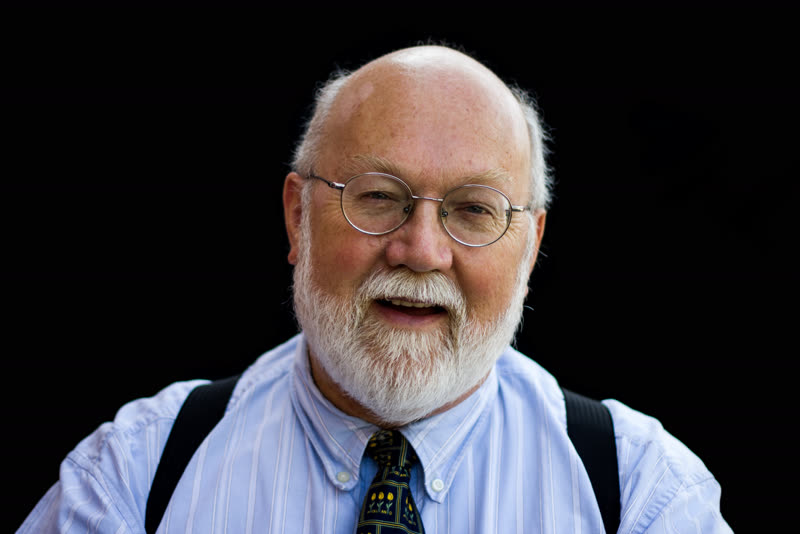 Tim Pasma Sunday AM Reformation Sunday October 31, 2010
Main passage Acts 20:24
📖 Read the Scripture passage (ESV)
Acts 20.24
Transcript
Well, this is Reformation Sunday, a Sunday celebrated all across the world in Protestant churches. It was on this very day, on this day, October 31st, 1517, that Martin Luther nailed his 95 theses to the church door in Wittenberg and thus launched the Protestant Reformation. It was a revolution. it signaled the recovery of the true gospel a gospel that had been perverted by centuries of tradition and it was the beginning of what we might call today or what we do call today Protestant churches now it's become our custom at LaRue Baptist Church to use this Sunday to get to know some influential person from the church's past, not just to know them but to show how they illustrated a biblical truth a truth of the gospel we need to be reminded that we believe what we believe and we do what we do, not because we are so ingenious, but because others set the pace for us in centuries past.
Servants of God. It reminds us again and again that God did not start his work on this earth with us and that we are dependent on centuries of Christians who've gone before us. We're not in a vacuum. We're part of a long line of servants of God who have faithfully served And so we are here today because of them. So before we begin this morning, let's pray and ask God to bless our time together.
Father, on this day we are more than ever consciously aware of the fact that we stand on the shoulders of others. We do not have any great insight that we have achieved on our own, but Father, you have taught the church for century after century, and your work by your spirit in teaching has come down to us. Father we're reminded on this day that you have remained faithful to the promise that Jesus made that he would build his church and the gates of death would never prevail against it we are reminded that you have been faithful to that promise and have never left your church but you have always raised up a people to proclaim your name and to spread your fame abroad remind us again today in the life of this man that the gospel is what was central in all of that.
That you built your church and remained faithful to your promise by means of the gospel which went out and called the people to yourself Encourage us today with the life of this man Help us to see how we lived for the glory of Christ. We ask this now in Jesus' name. Amen. The Apostle Paul was determined to go to Jerusalem. He knew that danger awaited him.
In fact, he said that the Holy Spirit had told him that more imprisonment than suffering was in store for him, and there were great afflictions ahead. But he had one driving passion. Even in the light of all those hardships, he had one driving passion. And you find that in Acts chapter 20, verse 24. So I want you to turn there with me to Acts 20, verse 24.
Here the Apostle Paul is talking to his colleagues in the ministry, the elders from the church of Ephesus. He's on his way to Jerusalem. He has been told, he understands, and he'll be told again that nothing but hardship awaits him. And yet this is what he says in response or in light of that. Listen to these words. But I do not account my life of any value or as precious to myself, if only I may finish my course and the ministry that I received from the Lord Jesus to testify to the gospel of the grace of God.
That was his driving passion, to testify to the gospel of the grace of God. No matter what lay ahead, there was one thing that drove him, to testify to the gospel of the grace of God, to finish the course that he had received from the Lord Jesus, the ministry of testifying to the gospel of the grace of God. There was one man who had that same heart, a 19th century preacher by the name of Charles Haddon Spurgeon.
He was a man who spent his life for the gospel. As you read and understand the life of Spurgeon, you hear of a man who almost or literally drove himself to death for the sake of the gospel. Now, I must tell you that in the past, and as we've talked about Martin Luther for endless years, it seems, who is my hero, and John Calvin, who is another one of my heroes, and William Tyndale and his inspiring work to give us the Scripture in our own language, and Wilberforce, who encourages us to stay true, I must say that apart from the word of God this study has been the most convicting And I would almost plead with you out of selfish motives, don't compare me to Charles Haddon Spurgeon.
And yet, to read the life of this man has been incredible. Look at our verse again. But I do not account my life of any value nor as precious to myself. If only I may finish my course and the ministry that I receive from the Lord Jesus to testify to the gospel of the grace of God. This verse, in my view, describes the life of Charles Haddon Spurgeon. Spurgeon was a man who spent his life for the gospel.
But before we can talk about Spurgeon's passion for the gospel, before we talk about him preaching the gospel, before we ask why he was so effective, we first must see the effect of the gospel on him. Charles Spurgeon was born on June 19, 1834, to John and Eliza Spurgeon. Because they were very poor, he was sent to his grandfather's place, and he spent probably most of the first five years of his life with his grandpa and his grandma.
His grandfather, James Spurgeon, was a congregational pastor in Stanbourne. Now, a congregational church is an interesting kind of a church. It's kind of like a cross between a Baptist and a Presbyterian church. It's kind of like Baptist because it believes that, unlike the Presbyterians, that there's no higher authority over the congregation. Each congregation is independent and answers only to Jesus.
And yet it's like, that way it's like Baptist, but it's like the Presbyterians in that they believed in infant baptism. And all of the theology that went with that. And so he grew up, or he spent his first five years with his grandpa, who was a congregational pastor. And there he fell in love with books, because his grandfather had a great and good library.
Two books in particular caught his fancy early in his life as a child before he could even read. He had pulled down Bunyan's Pilgrim's Progress and was just fascinated by the pictures that he saw there And there was another book that also with its pictures fascinated him And that was Fox Book of Martyrs with all its illustrations of the several ways that Christians died in defense of the gospel. And long before he reached the age of five, his aunt Anne, the youngest daughter, taught him to read.
By the time he was five, he was reunited with his parents and by now his younger brother James and his sisters Eliza and Emily. Now his dad was a clerk for a coal merchant and he also was the pastor of a congregational church in the village of Tolsbury, which was nine miles away. His mother had a tremendous influence on him because his father was very, very busy.
He had to work for the coal merchant in Colchester, and then as well was ministering and pastoring a church that was nine miles away. So his father was burdened with many responsibilities. But his mother had a tremendous influence. Here's what Spurgeon says about her. Moms, listen to this. I cannot tell you how much I owe of the solemn words of my good mother.
I remember on one occasion her praying thus, now Lord, if my children go on in their sins, it will not be from ignorance that they perish, and that I should bear a swift witness against them at the day of judgment if they lay not hold of Christ. That thought of my mother's bearing a swift witness against me pierced my conscience. How can I ever forget when she bowed her knee and with her arms about my neck prayed, Oh, that my son may live before thee.
Now, boy, with a mother like that, you become conscious of the gospel very early, do you not? Now, his father tried to give Charles and James the best education he could, and they were sent to a number of schools. Now, here's one thing we need to remember when you think about it back in the 19th century England. There was no publicly funded education.
There were no public schools. If you wanted your child to be educated, you would send them to someone, like, for example, if one of you wanted to set up a school, You would set up a school, hang out your shingle, and people would come and they would pay you to educate their children. And that's how schooling, at least for the lower classes, was accomplished. in England at that time.
So his father, John, sent Charles and James to the best schools he could, that he could afford, and Charles acceded at his work. He loved books. In fact, his brother, James, talks about the fact, well, he was playing with turtles and blowing things up. Charles was always reading. He just didn't do the things that normal boys did, according to his brother. now Charles was greatly influenced by the Puritan books that his father and grandfather had in their libraries and when he learned to read he read them and read them greatly but Spurgeon was also a miserable boy because he was under great conviction for his sin he knew as well as anyone that Christ died for our sins but he saw no application of the truth to himself He says this, 10.
Now he's writing about this later, but this is what he felt. He knew he had to believe in Christ crucified, but he could not get a hold of it. He had seldom heard blasphemy, given the homes in which he was raised. But now blasphemous thoughts entered his mind. All manner of cursing God and cursing men began to enter his mind. And this was followed then by severe temptations then to just deny the existence of God altogether.
And yet he says at one point he had almost convinced himself that he was an atheist. Of course, trying to find some kind of solace for the conviction that he felt for his sin. But he couldn't escape that conviction, no matter what he did. He told himself that he must feel something, that he must do something. He even thought, if only I could get my back scourged or if I could take some real difficult pilgrimage, then I would be saved.
While he was away at school he got older 14 15 He away now away from home at school He went to different churches while he was away at school and he could find no relief He talks about the fact that he would go to one church and the preaching was very practical about how you ought to live as a Christian. And he said, it just increased my conviction because I couldn't live that way. And there was no gospel there.
And he'd go to another church and just hear dry, learned lectures of something or another. And it only increased his burden. But then he was converted, wondrously converted, at the age of 14 when he had come home for Christmas. I'm going to read his account of this, okay? I have to, because I could never tell it the way he does. Frankly, no one can ever tell anything like Charles Spurgeon could.
All right? Here's what he wrote. I sometimes think I might have been in darkness and despair now, Now, had it not been for the goodness of God in sending a snowstorm one Sunday morning when I was going to a place of worship, when I could go no further, I turned down a court and came to a little primitive Methodist chapel. And he says at one point, you know how the primitive Methodists are, they can sing so loud they make your head hurt.
In that chapel there might be a dozen or fifteen people. The minister did not come that morning. Snowed up, I suppose. a poor man, a shoemaker, a tailor, or something of that sort, went up into the pulpit to preach. He was obliged to stick to his text for the simple reason that he had nothing else to say. The text was, Look unto me, and be ye saved, all the ends of the earth.
He did not even pronounce the words rightly, but that did not matter. There was, I thought, a glimpse of hope for me in the text. He began thus, My dear friends, this is a very simple text indeed. It says, look. Now, that does not take a great deal of effort. It ain't lifting your foot or your finger.
It is just look. Well, a man need not go to college to learn to look. You may be the biggest fool, and yet you can look. A man need not be worth a thousand a year to look. Anyone can look. A child can look.
But this is what the text says. Then it says, look unto me. I said he in his broad Essex accent many of you are looking to yourselves no use looking there you never find comfort in yourselves then the good man followed up his text in this way Look unto me I am sweating great drops of blood Look unto me. I am hanging on the cross. Look, I am dead and buried.
Look unto me. I rise again. Look unto me. I ascend. I am sitting at the Father's right hand. Oh, look to me.
Look to me. When he had got about that length and managed to spin out ten minutes, He was at the length of his tether. I mean, he couldn't go any further than that. Then he looked at me under the gallery, and I dare say with so few present, he knew me to be a stranger. He then said, young man, you look very miserable. Well, I did.
But I had not been accustomed to have remarks made on my personal appearance from the pulpit before. However, it was a good blow struck. He continued, and you will always be miserable, miserable in life and miserable in death if you do not obey my text. But if you obey now, this moment, you will be saved. Then he shouted, as only a primitive Methodist can, young man, look to Jesus Christ.
There and then the cloud was gone, the darkness had rolled away, and that moment I saw the sun, and I could have risen that moment and sung with the most enthusiastic of them of the precious blood of Christ. Wow, isn't that great? It's just a simple man with a simple text. Well, he'd become convinced that believers' baptism, not the infant baptism of his upbringing, was the biblical form, and rightly so.
And so in May of the following year, a few months later, four months later, with the reluctant permission of his father and mother and the great disappointment of his grandfather, he was baptized. He began to visit people. I'm not sure how this works out, but he says within a few months, on Saturdays, and he was in school now, going to school, on Saturdays, he would visit up to 70 people okay and hand out tracts and just talk to them about spiritual realities and so forth And soon he was asked to become a Sunday school teacher and before long he was addressing the entire Sunday school class or the entire Sunday school with great earnestness.
Now, Sunday school in those days was a little different than it is now. Sometimes it all gets together and hears someone preach and so forth. Well, when he was 16, about a year later, his father sent him to another school in the city of Cambridge. he joined the congregation of St. Andrew's Street Baptist Church. It's interesting. There's so many stories I've left out.
There's so many stories I've left out. He talks about going to this church, and no one would talk to him. And they had the Lord's table, and after the service, he talked to the man next to him. After the service, he said, well, how are you, and so forth. And the man says, you have the advantage of me. I don't know who you are.
And he says to him, well, seeing as how you took communion and I took communion, I thought we were brothers, so I figured I'd talk to you. Well, in this congregation of the St. Andrew's Church, they had a ministry known as the Lay Preachers Association. And this arranged for men to go into the various villages in the surrounding area to minister the word.
And after Spurgeon had addressed the Sunday school, the guy who headed that lay preacher's association, a man by the name of James Vinter, recognized his gifts. And so Spurgeon began the work of preaching, visiting in villages. And what it would be is these lay preachers would go out to these villages and they'd just preach to people in a cottage, in a kitchen.
Just a few people at a time. There may be five, maybe six, maybe more. And they would preach to them. Now, this is what happened is Vinter says he'll never preach if I ask him to preach. So he said to him, I'm going to send a young man. You need to go with another young man, okay?
Go with another young man who's going to preach to this place. So he was walking. They walked. They walked for several miles to this place. and he's talking to this young guy who he thought was going to be preaching. And he said, what are you preaching today? He says, I'm not preaching.
You're the one. preaching. He goes, no, I thought I was, no, no, no, no, you're the one who's supposed to be preaching. So he prayed and thought about some things and he went to this little kitchen in a cottage and preached and they asked him to come back. And that started to happen all the time. Everywhere he went they'd ask him to come back, come back next week and preach to us, come back next week and preach to us.
So Vinter had Spurgeon preaching then just about every evening after school. So he would go out every evening to preach in these little villages. Now again, look at our verse. But I do not account my life as valuable, of any value, nor as precious to myself. All right? If only I may finish my course in the ministry that I received from the Lord Jesus Christ.
All right? Spurgeon was beginning to see that his life meant nothing, but that his life was to testify to the gospel of the grace of God. And then one Sunday in October 1851, as a 17-year-old, he preached in a church in a village called Water Beach. He was urged to return, and he came back for a second Sunday, and they asked him to become the pastor. despite the fact that he was only 17 he accepted the call and began to preach at the village church in water beach england 17 he knew god had called him to preach everyone had confirmed that and and he knew this village needed the gospel it was a terrible place to live And so he began to preach there.
And thus began his ministry of preaching the gospel. The ministry I received from the Lord Jesus to testify to the gospel of the grace of God. Very quickly, let me review the years of Spurgeon ministry of the gospel and the churches he pastored. I'm going to try to go over this quick and then ask why was he so effective? He served in the church at Water Beach for two years.
He tirelessly testified to the gospel of the grace of God, both publicly and privately. He was not only a preacher but a pastor This is one thing that a lot of people don understand He wasn just a preacher He was a pastor He talked to men and women on the street and in their homes. He knew their names. He knew their teenagers' names. He knew their children's names.
He prayed by the sick. He comforted the suffering. He watched with the dying. He had great maturity much beyond his years. He learned a lot, obviously. He had a great mind, an incredible mind.
He could remember the names of everyone. When he came to Water Beach, the congregation numbered 40. When he left two years later, it numbered 400. 400. got to the point where people were standing outside the church with the windows open so they could hear him preach. Now, why did he have such success? Because of the natural eloquence of this young man?
No. Because God chose to bless the preaching of the gospel. It is said of the village of Waterbeats that when he came there, it was a place where there were tons of Sabbath breakers, as they would call it, adulterers, drunkards, By the time he left, it was not unusual, it was said, to hear psalm singing coming from just about every house in the village.
Because God chose to preach, or to bless the preaching of the gospel. He spoke in 1853. He was asked to speak at the Cambridge Sunday School Union. There was a man there by the name of George Gould. He heard him preach. he contacted his friend William Olney, who lived in London, and said, you guys are looking for a pastor. Here's a pastor.
This led Spurgeon then to the New Park Street Baptist Church in London. The New Park Street Baptist Church invited Spurgeon to supply its pulpit for a Sunday, and he wrote to them that they must have the wrong Spurgeon, because he was only 19. And they replied, no, you're the right Spurgeon. New Park Street Baptist Church had a history of some of the Baptist greats.
Some of these names may not mean anything, but John Gill. John Gill was a Baptist who wrote a theology book about that thick John Gill was one of their pastors Pastor Rippon we have some of his hymns in our hymn book had been pastor This was a historic Baptist church. And he said, well, no, you must have the wrong Spurgeon because I'm only 19. And they said, no, no, you're the right one.
So he went and preached there on that first Sunday. And his preaching was so powerful that first Sunday morning that people from the church went out and knocked on the doors of the members who hadn't been there for a long time and said, you've got to come to the evening service and hear this guy. And instead of a dry, learned lecture, they had received the passionate preaching of the gospel, and they loved it.
So at the age of 19, Charles Spurgeon became the pastor of this London church. He was to minister to this congregation for nearly 40 years until he died. Now, on that first Sunday, he spoke to 80 people. But within a month, the church was crowded with all the seats filled, the aisles packed, the people sitting in the windows and standing shoulder to shoulder in what they called the Sunday school area.
The church got overcrowded. It was terrible. The story is told. Again, I've got to tell you this story. It's not even in my notes. He said to the deacons, you've got to do something about those windows, the top windows.
We can't open them. It's so crowded. It's stifling. You've got to do something about the windows. No one did something about the windows. They just didn't do it.
One morning they found all those windows broken out. Spurgeon said, you know, we need to offer a reward. We need to offer a reward of five pounds. And when we find the person who did it, we ought to give it to him as a present. He later made the statement that the stick that broke those windows out was one that he used quite often when he went walking.
I'm just wondering what our deacons would do if I did something like that. I'm sure their reply would be, well, you're no Charles Spurgeon. Well, the church was so overcrowded, they didn't know what to do. And so what they did is they rented Exeter Hall in London which had 4 seats and standing room for another 1 And that proved to be too small They had to turn away hundreds of people every day or every Sunday And so what they did was, while they were adding to the church, they went to Exeter Hall while they were building onto the church.
Well, things grew so much that when they went back to the church, after they'd added on to it, now with a seating capacity for 2,000 people, it was too small. So what they did was they would have the big service, which was the evening service at Exeter Hall, and they would have the morning service at the church. All right? The evening services were the ones where unbelievers would come, and that's when he would really preach the gospel to them.
And so that was the big service. In 1856, he was 22 years old, he married Susanna. And again, I would love to go off on that for a long time. That whole story is something as well. But we don't have time. One thing that she did, though, her ministry was sending books to pastors who couldn't afford books.
And especially his books. And so even though she early on became an invalid, she worked tirelessly at sending books to pastors. That's a whole other story. During this time, he's severely criticized by the press. In those days, not only religious press, but the secular press would carry sermons in the papers and would have, if you will, reviews. You know, I think about all the reviews I received at the dinner table on Sunday afternoon.
Spurgeon had reviews of people saying things about his sermons in the public newspapers. It was common, and he came under a great deal of criticism, incredible amount of criticism. Here's this upstart, this guy, 19, 20, 22 now. There's got to be something wrong. He can't be attracting these kind of people without some kind of gimmicks. He was a very eloquent man.
They said he was bringing humor into the pulpit, which, again, he was not about telling jokes, but he could be funny. And he would use that to bring home points. He was accused. He was criticized for that. He was criticized for the fact that he wasn't ordained and college educated. He was criticized for all kinds of things.
He was a strong, get this, okay? Now this isn't going to surprise anybody who's been a part of this church, but he was a strong Calvinist. Calvinist. All right? And he got criticized for that. On this side, from the Arminians, who hated his theology, and he would call them out from the pulpit, and there would be these scathing articles written from him.
But on this other side, he had great opponents from Calvinistic people, who were what we might call today hyper-Calvinists. They said to him, they wrote, they said, you have no business indiscriminately offering the gospel to every man. well why not well the hyper calvinist had said you only offer the gospel to people who become conscious of their need of christ when they become sensible to their sin and their need of christ then you give them the gospel well you know spurgeon would have nothing of that he says no jesus said go and preach the gospel to all creatures and that's what i'm going to do and to say that God has chosen his people and that man is responsible to believe, well, that may look like a contradiction to us. Both are in the Bible, so I believe both, and I'm going to do both.
I'm going to preach and call men to believe, and I'm going to believe that God has his people, and they will believe. Within two years, they lost the use of Exeter Hall, and so they decided to go to the Surrey Gardens Music Hall, which had a seating capacity for 10,000. just before Spurgeon preached on the first night, before he ever preached a sermon there, something terrible happened. Some say today that maybe it was a setup by his opponents.
Nobody knows for sure. But just before he got up to preach, a voice from the gallery shouted, fire, which was followed by a voice on the floor shouting, the galleries are falling, and then a third voice crying, the whole place is collapsing, caused a panic. And so people started rushing out. And the railing on the galleries, you know, like if this was a gallery and there was a railing there, that broke off and a bunch of people fell to the floor.
And now if you can imagine this, thousands of people are trying to get out. And as they're coming out, all the hundreds of people outside are thinking, these people are coming out, let's get a seat. And so they're going in. And there's this huge crush of people. And seven people died that night because of all that. and 28 people went to the hospital severely hurt Spurgeon was just overcome I mean he almost passed out and he never got, he never quite got over that tragedy.
Never, that always, if you will, if I can use this term, that always haunted him. His enemies in the press just blamed him for that. Some saying, we should know better than have church in a godless place like a music hall where all this evil stuff goes on and others saying he should know better than that and so forth. And here's what he said. If I must lose my reputation too, then let it go.
It is the dearest thing I have, but it shall go too. If like my master, they shall say I have a devil and am mad. Again, what does that say? But I do not account my life of any value or as precious to myself. if he said, if I lose my reputation, I'm willing to lose it for the sake of the gospel. Well, the next three years, he preached in the Surrey Gardens, still meeting in the morning at New Park Street.
Then the congregation decided they had to build another church, and so the Metropolitan Tabernacle was built with a capacity for 6,000 people. with the first service on March 31st, 1861. He was 26 years old. Now, I am not trying to aspire to anything, but that date struck me. 124 years to the day. March 31st, 1985 is when I started here. There's my connection with Spurgeon.
The only one. I don't know. But with the arrival of Spurgeon, revival came to London. And the Metropolitan Tabernacle from his age of 26 to the age of 57, that was home. And that's where he preached. How do you account for such a powerful ministry as that?
A clue can be found in a prayer. This is interesting. As I read this prayer, it seems to sum it up now. Spurgeon had no problems with people writing down his sermons. He would publish his sermons. Every sermon that he preached was printed and sold Every month in his publication he edited a sermon once a month and sent it across the world in his paper The Sword and the Trowel But to have a prayer transcribed, that was just not right.
Well, someone did, and we have it here. I'm going to read this prayer, and I'm glad someone wrote it down because it tends to give you an idea of why he was so powerful. I want you to listen to this prayer. This is from the watch night service in 1856. Having a watch night service, he's going to preach. This is how he prayed before he preached, okay?
It's kind of a long prayer, so just settle in and concentrate. Oh God, save thy people. Save thy people. A solemn charge hast thou given to thy servant. Ah Lord, it is all too solemn for such a child. Making reference to Jeremiah 1.
Help him, help him by thine own grace to discharge it as he ought. Oh Lord, let thy servant confess that he feels his prayers are not as earnest as they should be for his people's souls. that he does not preach so frequently as he ought with that fire, that energy, that true love for men's souls. But, O Lord, damn not the hearers for the preacher's sin.
O destroy not the flock for the shepherd's iniquity. Have mercy on them, good Lord. Have mercy on them, O Lord. Have mercy on them. There are some of them, Father, that will not have mercy on themselves. How have we preached to them and labored for them?
O God, thou knowest that I lie not. How have I striven for them that they might be saved? But the heart is too hard for man to melt, and the soul made of iron too hard for flesh and blood to render soft. O God, the God of Israel, thou can save. There is the pastor's hope. There is the minister's trust.
He cannot, but thou canst, Lord. They will not come, but thou canst make them willing in the day of thy power. They will not come unto thee that they may have life, but thou canst draw them, and then they shall run after thee. They cannot come, but thou canst give them power. For though no man cometh except the Father draw him, yet if he draw him then he can come O Lord for another year has thy servant preached Thou knowest how It is not for him to plead his cause with thee But now O Lord we beseech thee bless our people Let this our church, thy church, be still knit together in unity.
And this night may they commence a fresh era of prayer. They are a praying people. Blessed be thy name. And they pray for their minister with all their hearts. O Lord, help them to pray more earnestly. May we wrestle in prayer more than ever. and besiege thy throne until thou makest Jerusalem appraised, not only here but everywhere.
But, Father, it is not the church we weep for. It is not the church we groan for. It is for the world. O faithful promiser, hast thou not promised to thy son that he should not die in vain? Give him souls, we beseech thee, that he may be abundantly satisfied. Hast thou not promised that thy church shall be increased?
O increaser, increaser, and hast thou not promised that thy minister shall not labor in vain? For thou hast said, As the rain cometh down and the snow from heaven, and returneth not thither but watereth the earth, even so shall thy word be, it shall not return unto thee void. Let not the word return void tonight. But how may thy servant in the most earnest manner, with the most fervent heart, burning with love to his Savior and with love to souls, preach once more the glorious gospel of the blessed God?
Come Holy Spirit, we can do nothing without Thee. We solemnly invoke Thee, Great Spirit of God, Thou who didst rest on Abraham, on Isaac, and on Jacob, Thou who in the night vision spoke unto men, Spirit of the prophet, Spirit of the apostle, Spirit of the church, be Thou our spirit this night, that the earth may tremble, that souls may be made to hear Thy word, and that all flesh may rejoice together to the praise of Thy name. Unto Father, Son, and Holy Ghost, the Dread Supreme, be everlasting praise.
Amen. That's the prayer before we preach. now from that can you see can you see why his ministry was so powerful first of all he preached the gospel he preached the gospel nothing mattered to him not even life itself if only he could finish the course and that is to testify to the grace of god or to the gospel of the grace of god why did thousands, why did thousands of people come to hear Spurgeon? Part of it was because he was a great speaker.
But I think a great deal of it was because he preached the pure grace of God in the gospel. The meanest, the most wicked people in London heard the good news that God loved sinners in Christ and welcomed them. People were not doing that. Pastors weren't doing that. They weren't telling sinners that. Listen to this.
Here's the conclusion of a sermon. I want you to hear this. This is what he said. And the people that came to hear him preach were not the respectable people. There were some respectable. His church was kind of middle class, but the people who came, were converted and joined, were not like that.
They went to the worst parts of London. And the people who came to hear and preach were the worst people you could imagine. And here's what he said to them. Here's how he concludes one sermon. He that believeth and is baptized shall be saved, and he that believeth not shall be damned. Weary sinner, hellish sinner, thou who art the devil's castaway, reprobate, profligate, harlot, robber, thief, adulterer, fornicator, drunkard, swearer, sabbath-breaker.
Listen, I speak to these to the rest. I exempt no man. God hath said that there is no exemption here. Whosoever believeth in the name of Jesus Christ shall be saved. Sin is no barrier. Thy guilt is no obstacle.
Whosoever, though he were as black as Satan, though he were guilty as a fiend, whoever this night believes, shall have every sin forgiven, shall have every crime effaced, shall have every iniquity blotted out, shall be saved in the Lord Jesus Christ, and shall stand in heaven safe and secure. This is the glorious gospel. God, apply it home to your hearts and give you faith in Jesus.
That's why his church grew. Because he said to the meanest, lowest, wickedest people, every crime effaced, every iniquity blotted out, safe and secure in heaven. You also see, as I read that prayer earlier, you see here, and I think this is very, very important, a humble dependence on God. An incredible, humble dependence on God. because this is the ministry he received from the Lord Jesus It wasn his ministry It was one that he had received and he knew that and he was humble A man of these extraordinary abilities he had incredible abilities was everyone testified to the fact that's one of the most humble men they ever met.
And here's why. Because he knew his eloquence was not which would, or his powers of persuasion didn't bring people to the cross. Did you hear in his prayer, that prayer I read, did you hear what he said? He said, no man can soften a heart of iron. Man is so lost, he'll never turn to Jesus. Holy Spirit, you have to do the work.
And he believed that. He would pray before he preached. He thought, this is an awesome responsibility. And he would pray before he preached. and often his deacons would come to the vestry and actually lift him off his knees because the service had to start. And then you know what he would do? He would pray after he preached.
And you know what he would pray? Here's what would happen. To everyone who heard him, he would preach with confidence, with clear instruction, with heartfelt pleading. But as soon as the service was ended, he would go to his vestry, as one biographer said, there to groan out before God his sense of failure. It says he would weep about the failure of his preaching and plead that the seed sown in hearts might take root and bring forth fruit to eternal life.
He thought he was a failure. But he would say, God, use it, okay? Just use it. And most of all, here's what happened. His people would pray for him. You heard in that prayer what?
God, you know, these people are praying people. And it is said that he taught them to pray, and they prayed they would wrestle in prayer for him. That's why, that's why he had such a powerful ministry. And I would say this, his powerful ministry can be attributed to his Calvinistic theology. Spurgeon found assurance in knowing that Christ on the cross accomplished the full salvation of all whom God would call and that God makes unwilling men willing in the day of his power he knew he had to preach but he was confident that God would draw all of those for whom the Savior died He was confident of that.
His theology was not limited by the response of men. It depended on God. So to Spurgeon, this was a theology of victory. Right? It's win-win. I'll preach and God will do the work.
I'll preach and pray. Again, let me just say this. Dwight Moody, D.L. Moody had visited him. And they became friends. And when Spurgeon would ask Moody to preach, in the early days, Moody would say, I'm not going to preach in your church.
I'm going to listen. We got back to America. He said, so you heard Spurgeon preach? He said, oh, I heard Spurgeon pray. Spurgeon knew it wasn't up to him it was up to God the gospel was more precious to him than life itself let me illustrate it this way the Metropolitan Tabernacle was not just a preaching place it was not just a preaching place it was an unbelievable center of gospel activity.
Now, I'm just going to list just some of the things that I recalled, and I could go back and look up more, but I'm just going to list some of the things that this church did, all right? A lot of good stuff here for us to think about as a church as well. First there was the almshouses. Those were already part of the church when he got there. The almshouses were houses built for widows who could not support themselves.
They had no family. The church built them houses and supported them there. Okay? And that continued under Spurgeon's ministry. There were the orphanages. He went to the prayer meeting one Sunday night and he said, let's pray.
Let's pray that God will open up another way of ministry and the means of accomplishing that. And so they prayed for that. That week, this rich woman called him, not even a Baptist. Some Anglican woman called him. He went to visit her at her house. I thought it was deacons.
And she said, I have 20,000 pounds. That is an unbelievable amount of money. I want to give to you for a ministry And he said no no give it to your family No I don want to give it to my family I want to give it to you Well then give it to George Mueller who has orphanages in Bristol another city north. And she said, no, I want to give it to you. He said, well, finally, she said, I want to give you these 20,000 pounds, and I want you to start an orphanage for boys.
And so they did. Now, they started this orphanage, okay? And orphanages in those days were barracks. And all the kids wore uniforms, the same clothes. He said, not these. He made individual houses, limited to 14 boys.
Each one has a mother, a matron, a mother that would take care of them. He built them a gym. He built them a swimming pool. He used to brag that all his boys could swim. All right? They didn't have to wear uniforms.
Okay? The women in the church would make them clothes. They would get clothes. He was very tuned in to these children. They built an infirmary like a hospital. And whenever one of those boys was in the hospital, he visited them.
And guess what? He knew the name of every single one of those boys. They built a school. They built a school. Later on, by the way, they built an orphanage for girls. And they got more money.
They built an orphanage for girls. They built a school. Remember what I said about public education didn't exist then? They said, okay, we'll build a school for 400 children. And so they built this school and got teachers, brought kids in and taught them. Every month was the publishing of his magazine called The Sword and Trowel.
He edited that. Then he had the pastor's college. He started a college for pastors and trained men in the ministry. And then they had the planting of churches in every part of London. They had preaching stations. They would start Sunday schools all across London.
In fact, on Sunday night, there would be a thousand members of his church in other parts of the city ministering in the slums in every conceivable neighborhood, starting Sunday schools and so forth. Missionaries were sent from the tabernacle. There was the Cole Porters Association. These were men who were given 40 pounds. They would have Bibles. and tracts, and they would go out, they each assigned certain territory, and they would go out and sell Bibles and give away tracts and end up preaching and helping people and all those sorts of things.
That got up to over 100 men in that. Spurgeon wrote 140 books, and he would write, right, and I checked this out, he would write about 500 letters a week to people who inquired of him personally. and you know how writing was back then? Can you imagine writing 500 letters a week like that? Every Tuesday, he'd interview people who wanted to become members of the church, baptize and join the church, and what he would do is on Tuesdays, afternoon, these people would come, and you couldn't just say, I heard your message, I believe in Jesus, I want to be part of the church.
No, no, no. tell me how you believed. Tell me, have your affections changed? And I can't remember the third thing. There were three things they had to answer before they would even be considered for membership. And then Tuesday night prayer meeting, he would present them to the people for baptism and membership. Well, of course, with his preaching, it got so huge that he couldn't do that anymore.
So here's what would happen. All the elders and the deacons became the messengers. They would do the interviewing with the same questions. and the people who they thought are truly converted would get a ticket and they would get to see Spurge and others and they had to write a report. And if they didn't think they were converted, they would say, send her to Mrs.
Bartlett's class who was this woman who had this basic class in the Sunday school and then they would learn the gospel there. Okay? And so he continued that every week, interviewing people, every Tuesday from about noon to seven o'clock. All right? And then, if that's not enough, he was preaching 10 times a week in different places. Of course, you know, someone like that, they would ask him to come and preach.
And you know what? As I read this about Spurgeon, I don't think he went out preaching because, okay, I get to speak and get famous. He says, here's an opportunity for me to preach the gospel. Thing is, he oversaw every one of these enterprises. He had people working on it but he oversaw them all and when they would get in financial trouble he would pay out of his own pocket He would pay out of his own pocket Just all kinds of stories we could tell, but time forbids.
He literally worked himself to death. By the time he was in his 40s, he was suffering from gout. And if you ever had gout, it is extraordinarily painful. he had gout he had arthritis and usually by november he had worked himself to complete exhaustion and would have to leave for a time and in the later years of his ministry he would have a month here a month there where he'd be off because he would be so sick and so much in pain but he did not account his life of any value or precious to himself in order to fulfill the ministry he'd received from the Lord Jesus to testify to the gospel of the grace of God.
One more thing from his hand. He's writing 500 people a week. It's two years before he dies. His arthritis is such that it's very painful for him to write. His hand is swollen, but he's still writing. and he writes he writes this letter to a little boy his name is Arthur Lazell alright he starts out this way my dear Arthur Lazell I was a little while ago at a meeting for prayer where a large number of ministers were gathered together.
Okay, all of you stop crying. Okay, thank you. The subject of prayer was our children. It soon brought the tears to my eyes to hear these good fathers pleading with God for their sons and daughters as they went on in treating the Lord to save their families. My heart seemed ready to burst with strong desire that it might be even so. Then I thought, I will write to those sons and daughters to remind them of their parents' prayers.
Dear Arthur you are highly privileged in having parents who pray for you Your name is known in the courts of heaven Your case has been laid before the throne of God. Think of this. Remember how much you have already sinned, and none can wash you but Jesus. When you grow up, you may become very sinful, and none can change your nature and make you holy but the Lord Jesus through his Spirit.
You need what Father and Mother seek for you, and you need it now. Why not seek it at once? I heard a father pray, Lord, save our children and save them young. It is never too soon to be safe, never too soon to be happy, never too soon to be holy. Jesus loves to receive the very young ones. You cannot save yourself, but the great Lord Jesus can save you.
Ask him to do it. He that asketh receiveth. Then trust in Jesus to save you. He can do it, for he died and rose again, that whosoever believeth in him might not perish, but have everlasting life. Come and tell Jesus you have sinned. Seek forgiveness.
Trust in him for it and be sure that you are saved. Then imitate our Lord. Be at home what Jesus was at Nazareth. Yours will be a happy home, and your dear father and mother will feel that the dearest wish of their hearts has been granted them. I pray you think of heaven and hell, for in one of those places you will live forever. Meet me in heaven.
Meet me at once at the mercy seat. Run upstairs and pray to the great father through Jesus Christ, yours very lovingly, C.H. Spurgeon. Now, what's interesting is that he wrote this to a boy whom he'd never met, who he had learned through the prayers of his parents. And he says in this letter, and we have to assume that he wrote every one of the children that were prayed for that day.
He said I written the others in that letter So here was a man who counted his life of no value and not precious to himself And on January 31st, 1892, at 57, Charles Spurgeon died. God raised up a man, Charles Spurgeon, who accomplish great things in a short time. I wonder, do you desire the same kind of greatness? Not the greatness that the world offers, not the applause of the world.
In fact, greatness in the eyes of God oftentimes means no one will ever know you outside of the faith. And the only one who will know is God himself. if you want that kind of greatness, then we need to have the same attitude as that of the Apostle Paul and Charles Spurgeon. But I do not account my life of any value, nor as precious to myself, if only I may finish my course and the ministry that I receive from the Lord Jesus to testify to the gospel of the grace of God.
Father, we thank you for men like Charles Spurgeon who've gone before us, whose lives bring to life the truth of Scripture. Father such a life cannot be lived with any kind of grit and determination it can only be done by the power of the Holy Spirit Father it's not that Charles Spurgeon did great things in such a short time it's that you did great things in a short time using one who did not count his life of any value or precious to himself but lived only to fulfill the ministry that he had received to testify to the gospel of the grace of God. Father, help us to aspire. to that kind of greatness by having the same attitude.
Father, we may not have the natural gifts that You gave Him. We may not have the same opportunities that He had. But we do have the opportunity of obeying. We do have the opportunity of looking at our lives and counting them as nothing when compared to the value of the gospel. So God, I pray that you would give us that kind of an attitude. Forgive us for the agendas that we have and the pleasure we seek.
Instead, help us to love what Jesus loved, to love his church, and to love sinners. Father, give us that kind of an attitude, we pray. We aspire to greatness in the kingdom, which means, Lord God, that we aspire to serve, to become a slave. Give us that kind of aspiration. Forgetting self and serving Christ for His glory, the glory of our Father. we thank you for Jesus.
Thank you that he loved us and died for us. Give us his attitude. Let the mind of Christ be in us. We pray this in his name. Amen.