Eat The Book!
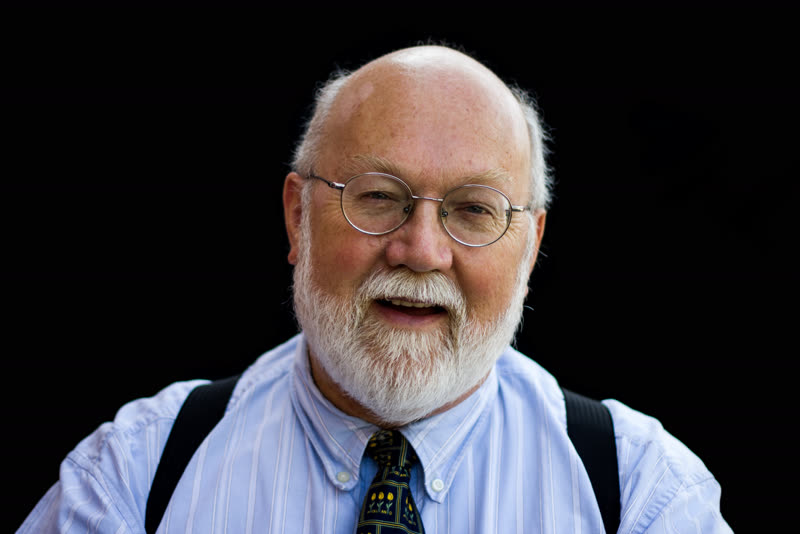 Tim Pasma Sunday AM Revelation March 27, 2011
Main passage Revelation 10:1-11
📖 Read the Scripture passage (ESV)
Revelation 10.1-11
Transcript
Take your Bibles now, and let's turn to Revelation chapter 10. Revelation chapter 10. You follow along as I begin reading in verse 1. Then I saw another mighty angel coming down from heaven, wrapped in a cloud with a rainbow over his head, and his face was like the sun, and his legs like pillars of fire. He had a little scroll open in his hand, and he set his right foot on the sea and his left foot on the land, and called out with a loud voice, like a lion roaring.
When he called out, the seven thunders sounded. And when the seven thunders had sounded, I was about to write. But I heard a voice from heaven saying, Seal up what the seven thunders have said and do not write it down. And the angel whom I saw standing on the sea and on the land raised his right hand to heaven and swore by him who lives forever and ever, who created heaven and what is in it, the earth and what is in it, and the sea and what is in it, that there would be no more delay, but that in the days of the trumpet call to be sounded by the seventh angel, the mystery of God would be fulfilled, just as he announced to his servants, the prophets.
Then the voice that I had heard from heaven spoke to me again, saying, Go, take the scroll that is open in the hand of the angel who is standing on the sea and on the land. So I went to the angel and told him to give me the little scroll. And he said to me, Take and eat it. It will make your stomach bitter, but in your mouth it will be sweet as honey.
And I took the little scroll from the hand of the angel and ate it. It was sweet as honey in my mouth. And when I had eaten it, my stomach was made bitter. And I was told, You must again prophesy about many peoples and nations and languages and kings. Then I was given a measuring rod like a staff, and I was told, Rise and measure the temple of God and the altar and those who worship there.
But do not measure the court outside the temple. Leave that out, for it is given over to the nations, and they will trample the holy city for 42 months And I will grant authority to my two witnesses and they will prophesy for 1 days clothed in sackcloth These are the two olive trees and the two lampstands that stand before the Lord of the earth. And if anyone would harm them, fire pours from their mouth and consumes their foes.
If anyone would harm them, this is how he is doomed to be killed. They have the power to shut the sky that no rain may fall during the days of their prophesying. And they have power over the waters to turn them into blood and to strike the earth with every kind of plague as often as they desire. And when they have finished their testimony, the beast that rises from the bottomless pit will make war on them and conquer them and kill them.
And their dead bodies will lie in the street of the great city that symbolically is called Sodom and Egypt, where their Lord was crucified. For three and a half days, some from the peoples and tribes and languages and nations will gaze at their dead bodies and refuse to let them be placed in a tomb. And those who dwell on the earth will rejoice over them and make merry and exchange presents because these two prophets had been torment had been a torment to those who dwell on the earth but after the three and a half days a breath of life from god entered them and they stood up on their feet and great fear fell on those who saw them then they heard a loud voice from heaven saying to them come up here and they went up to heaven in a cloud and their enemies watched them and at that hour there was a great earthquake and a tenth of the city fell.
Seven thousand people were killed in the earthquake and the rest were terrified and gave glory to the God of heaven. The second woe has passed. Behold, the third woe is soon to come. Then the seventh angel blew his trumpet and there was loud voices in heaven saying, the kingdom of the world has become the kingdom of our Lord and of his Christ and he shall reign forever and ever.
And the 24 elders who sit on their thrones before God fell on their faces and worshiped God, saying, We give thanks to you, Lord God Almighty, who is and who was, for you have taken your great power and begun to reign. The nations raged, but your wrath came, and the time for the dead to be judged, and for rewarding your servants, the prophets and saints, and those who fear your name, both small and great, and for destroying the destroyers of the earth. Then God's temple in heaven was opened, and the ark of his covenant was seen within the temple, There were flashes of lightning, rumblings, peals of thunder, an earthquake, and heavy hail.
Father now we pray open the text of the word of God to us for it is more than a text it is the living Word from You Encourage us help us give us understanding that we will know what is happening, that we will be encouraged, that we will be loyal to our Savior and Lord Jesus Christ through whatever seductions and persecutions this age brings our way. Help us now to understand for Your glory. We pray this in Jesus' name.
Amen. What do you want first, the good news or the bad news? I hate it when someone says that to me. I hate it because I know there's bad news coming my way. And my choice always is, give me the bad news first, because I'm hoping the good news will cancel out the bad. As you start chapter 10 of Revelation, that's where we are.
That's exactly where we are. That's where you find yourself, preparing to hear the good news and the bad news. Now we have to say something about chapter 10 and the first part of chapter 11. Okay? As we come to chapter 10, we come to an interlude, a parenthesis, that runs from chapter 10, verse 1, to chapter 11, verse 13. Now we've encountered one of these parentheses before, if you remember.
You remember in chapter 7, there's an interlude that comes between the sixth seal, the opening of the sixth seal and the seventh seal. And you remember that interlude talks about God sealing or putting a mark on his people so that he preserves them during what's going on in the seven seals. And that in chapter 7, in that interlude, it shows the great multitude of people that have been saved during that time.
So now we come to this point in the book, in chapter 10 through chapter 11, verse 13, in which we have a parenthesis, another interlude between the sixth trumpet and the seventh trumpet. Same thing happens here. God wants to tell us something. And like the first parenthesis, don't think of this chronologically. Let me say that again. Don't think of this chronologically.
That is, do not think of the interlude as following the sixth trumpet. The first six trumpets focus on God's judgment against the ungodly, the plagues that he inflicts upon the godless throughout the church age Then this parenthesis appears and it says to you let me explain to you the relationship between the godless and the godly during the time that covered by those six trumpets And so we've seen the judgment of God leveled against the plagues brought against the godless of this age intending to prepare the stage for his coming, alright, and to show us that these plagues actually harden their hearts. But this now intrudes to tell us what happens.
Not what happens after the trumpets, but rather offers you a further interpretation of what's going on during those plagues. It explains the basis for the punishment of the ungodly. But chapter 10 also serves another function. It introduces you to the rest of the apocalypse. It's like the piece of a puzzle. It takes the first part that we've read and the second part that we're going to go into and locks them together.
And it does this by showing us the recommissioning of the Apostle John for the task that God has given him to do. Jesus has some difficult things to reveal yet in the rest of this book. It gets harder when we move on. the message that's going to come is going to be more difficult to take. And so at this point, God or Jesus recommissions John for his prophetic task.
And so chapter 10 is kind of like something that brings these two halves of the book together. So it's part of this interlude, but it's part of this interlocking piece that brings the really tough part that's coming with the part that we've seen so far. And in this recommissioning service, he prepares God's people. That is, he prepares you for a bittersweet message.
He prepares you, if you will, for a bittersweet existence. What do you want first? The good news or the bad news? Well, you're going to get both in what Jesus reveals in the rest of the book. This is the introduction to it. You're going to get both so that you understand the bittersweet life of this age.
So get prepared. Now this is the recommissioning service of John, if you will. You remember we saw him commissioned at the beginning of the book. Now he's recommissioned. It's as if God says to him, there's some really difficult things coming. I'm going to really, I want you to understand, you have a function to serve.
Now, how do we approach that? I think the way we approach that is to say, how are we to understand that recommissioning service? What does it say to us? I'll say it says this. It's telling us to get prepared. To get prepared for the message he's going to bring.
And to get prepared for the life that he's going to describe in that message. It is a bittersweet message talking about a bittersweet kind of existence. So get prepared. And he does it this way. Get prepared by knowing the purpose of God in history. That's what we see in verses 1 through 7.
And prepare by knowing how God accomplishes that purpose, which is described in verses 8 through 11. Okay, so the first part is prepare by knowing the purpose of God in history, verses 1 through 7. prepared by knowing God's purpose in history. First seven verses. Now, after hearing and seeing the sixth trumpet, John's attention, he's expecting to hear the seventh trumpet.
But instead of hearing the seventh trumpet, suddenly this colossal angel descends from heaven. All right? Not something that you would expect, that I would expect, neither that he expected. Suddenly, after the sixth trumpet, there is this Colossus that descends from heaven. And when this Colossus lands, his left foot lands on the dry land, his right foot lands on the sea, and he looks so huge that he looks like an angel that could just stride across the globe with no effort at all.
That's how big he is. And as John looks up, if you can imagine, he stands there and he starts doing this number. right what does he see well what he sees first of all these huge legs burning like pillars of fire much like the pillars of fire that led the children of israel through the wilderness the angel is wrapped in a cloud a rainbow glistens around his head and his face is as bright as the sun and in his hand John glimpses catches a glimpse of a scroll that open His voice is like the roar of a lion. And then, this gargantuan figure raises his right hand to heaven and swears an oath.
That's what he sees. What is that all about? I love this book. Because this book makes us ask the question we should always be asking when you come to the Bible. What is this all about? Well, let's look at verses 6 and 5 through 7.
Let's start there. And the angel whom I saw standing on the sea and on the land raised his right hand to heaven and swore by him who lives forever and ever, who created heaven and what is in it, the earth and what is in it, and the sea and what is in it, that there would be no more delay, but that in the days of the trumpet call to be sounded by the seventh angel, the mystery of God would be fulfilled, just as he announced to his servants, the prophets. The angel says, in fact the angel swears, that the last blast of the seventh trumpet will bring about the fulfillment of the mystery of God.
Now in order to understand what's going on here, you've got to see that behind this is a reference to another angel who also lifted his hands to heaven and took an oath and swore something. It's built on that picture. it's built on the picture of an angel in Daniel chapter 12, who also swears an oath. So if we're going to understand this, we have to turn back to the book of Daniel.
Daniel chapter 12. Now the whole context of this starts in chapter 11. But we're going to pick it up at chapter 12. We're going to read the first nine verses. Now let's listen carefully. At that time shall arise Michael, the great prince, who has charge of your people, and there shall be a time of trouble such as never has been since there was a nation till that time.
But at that time your people shall be delivered. Everyone whose name shall be found written in the book. And many of those who sleep in the dust of the earth shall awake, some to everlasting life and some to shame and everlasting contempt And those who are wise shall shine like the brightness of the sky above and those who turn many to righteousness like the stars forever and ever But you Daniel shut up the words and seal the book until the time of the end.
Many shall run to and fro, and knowledge shall increase. Then I, Daniel, looked, and behold, two others stood, one on this bank of the stream and one on that bank of the stream. And someone said to the man clothed in linen who was above the waters of the stream how long shall it be till the end of these wonders and i heard the man clothed in linen who was above the waters of the stream he raised his right hand and his left hand toward heaven and swore by him who lives forever that it would be for a time times and half a time and that when the shattering of the power of the holy people comes to an end all these things would be finished.
All these things will be fulfilled is the word used there. I heard, but I did not understand. Then I said, O my Lord, what shall be the outcome of these things? Okay? How's this going to happen? He said, Go your way, Daniel, for the words are shut up and sealed till the end of time.
All right? Now, this prophecy in Daniel concerns the end time suffering and persecution of God's people, God's destruction of the enemy, and the establishment of his kingdom, and the reign of his saints. All this leads up to the end of history, when everything is finished, when everything is fulfilled. Now verses 1 through 6 describe the establishment of that kingdom, and the saints being raised, right, and ruling, And so Daniel wants to know how long before all that happens.
Verse 7. Verse 7. And I heard the man clothed in linen, who was above the waters of the stream. He raised his right hand and his left hand toward heaven and swore by him who lives forever and ever that it would be for a time, times and half a time. And that when the shattering of the power of the holy people comes to an end, all these things would be finished.
The angel swears an oath saying that the suffering and the persecution, here called the shattering of the power of the holy people, would occur all that suffering would occur during this period called a time a times and half a time And he swears that after that period of a time a times and half a time after that period of the suffering of God's people, the shattering of their power, all these things would be finished. God's plan would be completed. Then God's kingdom would be established.
All that happens in verses 1 through 6, the establishment of the kingdom, the reigning of his people, their resurrection to glory. All that is going to happen after the suffering of God's people. Alright? Then in verse 8, Daniel wants to know how it's going to be fulfilled. What's the outcome? How's this going to happen?
And the angel replies that he would not be able to understand it since the words are shut up and sealed until the time of the end. All right, so here's the promise. The angel, there's this persecution of God's people. And when that persecution happens in the time, times, and half a time, then after that, the establishment of God's kingdom is going to occur.
The resurrection, the reigning of the saints, and so forth. That's going to happen after the time, times, and half. And half time. All right? And the angel there swears that that's what's going to happen. Okay?
Now we come back to Revelation 10. Now a similar message, a similar messenger appears to John. And he also swears an oath. But notice that his oath is different. His oath says that when the seventh angel sounds his trumpet, history will come to an end. What was sealed to Daniel is now revealed.
Remember, God says it's sealed up in a book. You're not going to understand it. Well, the book's open now. He's opening it now. He's telling us how that's going to happen. What Daniel prophesied and looked for will be completed and fulfilled.
The kingdom will be established and the saints will reign. Verse 6, the angel here swears that there will be no delay. When the time of persecution and suffering prophesied by Daniel runs its course, God will accomplish his purpose he will not delay his kingdom will be established his saints will reign that's exactly what's going on here It says, I swear before God that there will be no delay.
When the time of the suffering of the saints has ended, then the trumpet will blast and that will be the end. And as we read in chapter 11, what does the seventh trumpet do? You remember 11 verse 14 to the end of chapter 11? When the seventh trumpet sounds, then... Remember, here's what it says. I can't remember it from my memory. but I love the way it's stated there when he says the kingdom of the world has become the kingdom of our Lord and of his Christ and he shall reign forever and ever when the trumpet blasts sounds that's going to happen so the angel swears no delay when the time of suffering is over that will happen the trumpet will sound and the kingdoms of this world will become the kingdom of our God and of his Christ now what is the mystery that's fulfilled then.
Verse 7. He swears that's going to happen, but in the days of the trumpet call to be sounded by the seventh angel, the mystery of God should be fulfilled, just as he announced to his servants the prophets. It is how the suffering and persecution of God's people, prophesied by Daniel for a time, times, and half a time, would end up in the victory of God's kingdom and the triumph of his saints.
The mystery is how that comes about. Daniel could not understand it because it wasn't revealed to him. How is God going to win? It's a mystery because it's being fulfilled in Jesus and Daniel could not see that. Now listen carefully. It's a mystery because he couldn't see that the time, times, and half a time is the age in which Jesus and his followers would suffer.
Okay? When the one angel in Daniel says that God's people are going to suffer, they're going to suffer, their power will be shattered, as it says, there for a time, times, and half a time. That's now. We're living in the time, times, and half a time. The time when Jesus and His followers are going to suffer. Since Jesus suffered until He comes they suffering for us Okay So it a mystery because he could not see the times time times and half a time as the age in which Jesus and his followers would suffer It's a mystery, and don't lose this.
It's a mystery, because Jesus wins by being defeated. Right? Jesus wins. Jesus won the victory through what appeared to be His apparent defeat. His death on a cross. He's cursed of God.
How can He be the King? He's cursed of God. That's how He won. Was by the cross. Remember chapter 5. The Lion of Judah.
What? Is the Lamb. How does the Lion of Judah win? He becomes the Lamb that dies. Alright? Same thing here.
This is the mystery. Daniel would not have understood it. Victory comes through what looks like defeat. The same thing is true of us. It's a mystery because the triumph of Jesus' followers comes through their apparent defeat in death and persecution. It is triumph through suffering, victory achieved by apparent defeat.
All the way through the book, what have we seen? It is a call for us to be faithful. It is telling us you conquer by what? Remaining true until death. What? I mean, that's what we all should do.
What? You overcome by your enemies killing you. Exactly. That's how we overcome. We remain faithful. And we remain faithful in the midst of seduction, of the culture of prosperity in which we live, and we're going to see that in the ensuing chapters. we overcome by not falling to the seduction of the prosperity and the ease and all the enticements of a prosperous culture of a prosperous nation we overcome by not being overcome it's triumph through suffering victory achieved by apparent defeat Now notice this.
This was announced to his servants, the prophets. Now look at that word announced. It isn the normal word that used for just announcing proclaiming It is the word euangelizo Now euangelizo euangelizo is the word we get the word evangelism from it. If you would write it out, E-U-A-N-G-E-L-I-S-M. If you would write out Ioan Galidzo, it looks like, almost like evangelize, because that's where we get the word evangelize.
That's the word that's used here. It's the word that means to announce the good news. Okay, to announce the good news. So the word that he uses here in verse seven, the mystery of God would be fulfilled just as he announced the good news to his servants. All right. Again, the gospel is in sight here.
He's using that word. The proclamation of the good news was given to the prophets like Daniel and they could not see it fully. And when we look at Daniel, what's he talking about? He's talking about victory and judgment. He's talking about God's enemies being judged. Here's the good news that Daniel got.
God's enemies are judged and God's people are raised. Right? In Daniel chapter 12, he talks about that resurrection, some for life, some for contempt. The good news announced to Daniel was God's people will be saved. God's enemies will be destroyed. It includes, this mystery includes the message of both salvation and judgment. its fulfillment is occurring and will continue to occur in a mysterious and unexpected manner from a human perspective but from heaven's perspective we know what's going on don't we so you're prepared for the bittersweet message and a bittersweet existence when you see that what is happening is the fulfillment of the mystery of god that is how god brings about His kingdom and the reign of His saints.
It is through the gospel, alright, it is through the gospel that promises salvation and deliverance and destruction and judgment. Okay That the bittersweet message by the way that we going to see Sweet deliverance bitter judgment Okay? Now we know that he's going to accomplish that purpose because he sent a divine messenger to promise it. That's what we see in verses 1 through 3.
Alright, now I don't think we have to read through that again. You've got this picture of this gargantuan angel, right? legs burning right rainbow sun sunny face all that wrapped in a cloud all those sorts of things now i'm going to say something to you i want you to listen carefully i think this angel is jesus i believe this angel is jesus now why do i say that because everything that composes this angel have been attributed to Jesus already. All right.
He's wrapped in a cloud. In the Old Testament, God alone comes in heaven or to earth in a cloud. You see that over and over. What happened at Sinai when God descended to Mount Horeb, to Mount Sinai? What happened? You remember?
Great cloud, great darkness. There was trumpet calls, right? Hail, darkness. All that should be ringing a bell from the book of Revelation. Right? When God descended, there's a cloud.
And when God manifested His presence among His people, how did He do it? In a cloud. When the disciples and Jesus were on the mountain of transfiguration, what surrounded Jesus and the disciples? That cloud that you saw in the Old Testament. The cloud is always associated with God. In Daniel chapter 7, and I hope you remember this.
Alright, because we're not going to turn there. In Daniel chapter 7, there's a mysterious figure called the Son of Man. He is given divine attributes. Remember, the Father on the throne hands over authority to this mysterious figure called the Son of Man. And He is described there as coming with the clouds. Okay?
And then finally, Revelation chapter 1 verse 7 says this about Jesus. Behold, He is coming with the clouds, and every eye will see Him. So here's this angel, what? Wrapped in a cloud. He has a rainbow over His head. Turn back to Ezekiel chapter 1.
By the way, if you want to read another book, Look where you ask, what in the world is going on here? It's Ezekiel. Ezekiel is like the revelation of the Old Testament. Alright, Ezekiel 1, verse 26, And above the expanse over their heads there was the likeness of a throne in appearance like sapphire, and seated above the likeness of a throne was a likeness with a human appearance.
And upward from what had the appearance of his waist, I saw, as it were, gleaming metal, like the appearance of fire enclosed all around. See, from the waist down, there's fire. Like the appearance of the bow that is in the cloud on the day of rain, so is the appearance of the brightness all around. So here is this picture, if you will, of God with a rainbow.
And then, of course, Revelation chapter 4, verse 3, speaking of God says, And he who sat on the throne had the appearance of Jasper and Carnelian, and around the throne was a rainbow that had the appearance of an emerald. So here's a rainbow associated with God. His face was like the sun. What did we read in chapter 1, verse 16 of the book of Revelation?
And his face was like the sun, shining in full strength. It also sounds like Jesus' face in Matthew 17 too. on the Mount of Transfiguration. And He was transfigured before them and His face shone like the sun. And then there's the legs, the pillars of fire, an allusion to the pillar of fire that manifested God's presence to Israel in the wilderness. All of these are divine attributes, all of them having been attributed to Jesus.
And then finally, what is He holding? he has a scroll in his hand now earlier in chapter 5 what did we see we saw that only Jesus the lamb was worthy to take the scroll I don't think this is the same scroll but he's got a scroll in his hand his voice roars like a lion reminding us of the lion of Judah and the fact that he stands Listen, the fact that he stands on the land and the sea is a symbol of his sovereignty over all creation. That's why I believe it's Jesus. But you say to me well if it Jesus why is he called an angel Good question Because I think he like another mysterious figure in the Old Testament called the angel of the Lord You've met him.
You've read about him. The angel of Yahuwah. The angel of the Lord. And when you read about the angel of the Lord, many times that angel is called God. I'll show you. Turn to Genesis 16.
Can I tell you something right now? In seminary, we had a class on angels. It was required. It was a class on angelology and soteriology. That is the doctrine of angels and the doctrine of salvation. And I had a professor who wasted most of a semester talking about angels so we had very little time to talk about this doctrine of soteriology.
I'm still bitter about it. I want my money back for that class. Because we spent so much time talking about angels. But I did learn one thing from that class. It's this whole idea of the angel of the Lord. Fascinating.
Genesis 16. Are you there? I'm not yet. I was wallowing in my bitterness there for a moment. In Genesis 16, the context is here that Sarah has driven out Hagar. We come to verse 10.
The angel of Yahuwah, the angel of the Lord, also said to her, I will surely multiply your offspring so that they cannot be numbered for multitude. I will also, who also made that promise to Abraham? God did. And the angel of the Lord said to her, Behold, you are pregnant and shall bear a son and shall call his name Ishmael because the Lord has listened to your affliction.
He shall be a wild donkey of a man, his hand against everyone, everyone's hand against him, and he shall dwell over against all his kinsmen. so she called the name of the Lord who spoke to her you are a God of seeing now wait a minute who speaking to her who speaking to her the angel of the Lord and what does she call him she calls him Yahuwah all right so there he identified You see the same thing in Genesis 22 In Genesis 22 Abraham's about to sacrifice his son. And verse 11, But the angel of the Lord called to him from heaven and said, Abraham, Abraham. and he said, here am I. And of course the angel of the Lord gives him these instructions.
Verse 15, And the angel of the Lord called to Abraham a second time from heaven, and he said, this is what the angel of the Lord said, By myself I have sworn, declares the Lord, because you have done this and have not withheld your son, your only son, I will surely bless you, and I will surely multiply your offspring as the stars of heaven, as the sand is on the seashore. The angel of the Lord calls himself what here? And swears by, this angel is swearing by himself, which can mean he's only God.
All right? We could look at Genesis 31. We could look at Exodus chapter 3. Exodus chapter 3 says the angel of the Lord is the one speaking from the burning bush. And then later, who's Moses talking to? Identifies him as the Lord.
So the point is, this is Jesus. Don't get thrown off because it's an angel. There was an angel called the angel of the Lord who was God. Angel means messenger. This is, and by the way, I believe the angel of the Lord in the Old Testament is Jesus. They don't know it.
But us looking back say, look, I'll bet that's Jesus talking. All right. So here again, he appears. So you can depend that God's going to fulfill his purposes because of this divine messenger. Not only that, but you can be sure he's going to fulfill this divine purpose of bringing everything to an end. When our suffering is at the end, he's going to bring his kingdom.
When the seventh trumpet blasts, he will not delay. He will accomplish it. How do I know that? It's because he swears an oath. And it says here that this angel, this Jesus, if you will, swears by the God who lives forever, swears by the God who created everything in heaven everything in it, everything in earth, everything in it everything in the sea and everything in it swears by that God but you say but if he's God then why does he swear by God well let me ask you something who is God going to swear by to make sure that you know he going to keep his word What can God swear by This is not a trick question.
He can't swear by anything else, can he? He can't say, you know, when we take an oath, we are saying, may God do to me terrible things if I don't keep this oath. Who are we swearing by? We're swearing by God. Who can God swear by? Turn over to Hebrews chapter 6 for a moment.
Now Hebrews 6 makes a reference to Genesis 22. Alright? Hebrews 6 here makes a reference to Genesis 22, the story of Abraham about to sacrifice his son. Let's turn to verse 13. Hebrews 6 verse 13, For when God made a promise to Abraham, since he had no one greater by whom to swear, he swore by himself saying, Surely I will bless you and multiply you. And thus Abraham, having patiently waited, obtained the promise.
For people swear by something greater than themselves, and in all their disputes an oath is final for confirmation. So when God desired to show more convincingly to the heirs of the promise the unchangeable character of His purpose, He guaranteed it with an oath. So that by two unchangeable things in which it is impossible for God to lie, we who have fled for refuge might have strong encouragement to hold fast to the hope set before us.
So God swears by Himself. God will accomplish His purpose. He's sworn an oath to do it. But you say, alright, what about these thunders? What about the seven thunders? Verses 3 and 4.
He hears these seven thunders and John gets the whole picture and he's about ready to write it down and a voice from heaven says, no, no, no, don't write that down. And so everyone today says, I wonder what the seven thunders are all about. I think that John saw the seven thunders just like he saw the seven seals, the seven trumpets, and the seven bowls.
These symbolic ways of explaining how God is at work. and he saw another vision called the seven thunders in which God shows how he's at work, but then God says, don't write that down. Why would God? do that? Why do you think he'd do that? I think so that we would understand that we do not know the means by which God's going to accomplish all his purposes.
He wants us to understand that he doesn't tell us everything. That he's working in ways that we don't know, that we don't understand. He essentially says to you, you know what? You don't need to know everything. Do you ever tell that to your children? You say, well, we're not...
You know, something happens, okay? Something happens and you've got to change your plans. But it's something, you know, you can't tell the kids. You say, well, we're not going to do that. And they say to you, why not? Why aren't we going to go over there today?
Why aren't we going to go see our friends? Why aren't we going to go? And your response often is what? Honey, son, you don't need to know everything. Right? Well, that's what God says to us here.
Look, I got stuff you don't even know about. Besides, you don't need to know everything. What are you going to do when you don't know everything? What are you going to do when you don't know everything? What are you going to do when God says, I'm not going to tell you? Do you say, God?
Well, then, forget it. You want me to trust you? Then you tell me everything. Is that what you do? Faith is when we believe God and trust in Him when He doesn't tell us the answers. And so God is saying here, you know there's other ways that I'm working but I'm not going to explain it to you.
There are other things that I'm doing but I'm not going to tell you about it. You just trust me. We have to trust God when He doesn't tell us everything. So, get prepared for this bittersweet message that tells of a bittersweet existence. Get prepared for that by knowing that God's going to accomplish His purpose in history. Now, prepare by knowing how God accomplished that purpose.
Verses 8 through 11. Then the voice that I had heard from heaven spoke to me again, saying, Go take the scroll that is open in the hand of the angel who is standing on the sea and on the land. So I went to the angel and told him to give me the little scroll. and he said to me, take and eat it. It will make your stomach bitter, but in your mouth it will be sweet as honey And I took the little scroll from the hand of the angel and ate it It was sweet as honey in my mouth but when I eaten it my stomach was made bitter and I was told you must again prophesy about many peoples and nations and languages and kings.
You'll be prepared for bittersweet life when you know that God's purpose in Christ is also accomplished by his people. Now this scroll makes you think of the scroll that Jesus took in chapter 5. Except that this is a little scroll. And the word that's used in verse 2 is the diminutive of book. I mean, they had it in one word. We would say little book.
Okay? Or booklet. Okay? It's smaller. It's smaller. Now, you remember that the scroll that Jesus takes in chapter 5 contains God's purposes of judgment and salvation.
Judgment and deliverance are on that scroll. And you remember, he breaks the seals to show us the judgment. The judgments that are written on that scroll. It's just like Ezekiel takes the scroll from our reading today. Ezekiel takes that scroll and on it is written on one side and the other side. Both sides are written. and it is written with laments and woes because of the judgment of God.
That's the picture that's behind the scrolls in Revelation. God's purposes of judgment and deliverance. And Jesus, you remember, is the one worthy to execute God's plan of judgment and deliverance. But here, John takes a scroll from Jesus, but it's a smaller one. Like Christ, we have a scroll. We have a scroll.
John eats it. It is a book that is symbolic of the purposes of God's people, only insofar as God's purposes are accomplished by his people. Now, in the big scroll, God's purposes are accomplished, many of them without us. But in this little scroll, he's going to tell us how we accomplish some of his purposes. Okay? And just as Jesus accomplished God's purpose as the Lion of Judah who dies as the Lamb, so we accomplish the purpose of God through our defeat at the hands of our enemies for our apparent our apparent defeat okay God purpose of fulfilling the mystery is also accomplished by His people following Jesus to victory through suffering and apparent defeat.
This is our scroll. And like His scroll, we accomplish God's purposes through our suffering. Now, Jesus' suffering is much greater than ours, right? His was a redemptive suffering. He purchased us. But he also suffered to accomplish the purposes of God.
And the Gospels make it clear over and over, you're going to follow in his steps. If it happened to Jesus, it's going to happen to you. So count on it. All right? So we'll be prepared when we understand that God's purpose in Christ also involves him accomplishing it through us and our suffering. doesn't that just take suffering and put it in an entirely different light I want you to think about that when we suffer God uses our suffering to bring about his purpose of victory your suffering is the step to victory when you suffer for the sake of Christ and it looks like to the world you lose you actually win.
Because God is using your suffering to accomplish His purposes. That puts our suffering in an entire different light, doesn't it? Instead of walking around going, poor pitiful me, look what I have to go through. Whose perspective do we have? The world's. But if we say, my suffering is accomplishing the victory. there's no room for the victim mentality then is there well let's the last few verses 9 through 11 you need to understand the bittersweet message message of the rest of the book here jesus recommissions john for his work now we read in ezekiel ezekiel's commission to his ministry of a prophet.
How was he commissioned? He ate a scroll. And so John is ordered by the voice in heaven to eat the scroll. And like Ezekiel it is a message primarily of judgment When you look at Ezekiel his scroll right is written on both sides and it is a message, it has laments and woes because of the judgment of God. It's a message of judgment. And like Ezekiel, the scroll that John eats is a message primarily of judgment against the enemies of God's people. but it's a message of judgment okay here's the key it's a message of judgment because God's enemies continue to pursue harass and persecute the people of God it's as if God says John what is yet to be revealed is difficult and so you need to be reminded of your commission eat this scroll and understand.
So he eats the scroll and what happens? What happens? It tastes sweet but it turns his stomach. It's sweet and it's bitter at the same time. Have you ever had the wonderful sensation of eating a pound of chocolate covered peanuts? man there's nothing better but an hour later you don't feel so good you just don't feel like it was worth the effort why did I do that well John here eats the scroll and it's sweet but then it turns his stomach what's that about the message of judgment can be sweet at first it's a proclamation of god's will we say god's going to judge he's going to be glorified in his judgment that's sweet to us isn't it god's righteousness his justice his holiness is going to be demonstrated when he punishes sin all this stuff about god just being this grandpa up in heaven people are going to finally see that this God is a God of holiness, righteousness, and justice.
And is there not sweetness in knowing that justice wins in the end, right? That everything, all the injustices we see around us are going to be turned around, that justice will one day reign again. That's sweet to us. There's a sweetness in our vindication. The fact that the world says, oh, you're just a bunch of flat earth idiots. And when we get to the end of time, we're going to be able to stand there and say, we were right, you were wrong.
Right? God's going to say, it's not going to be us, it's going to be God saying, they were right, you were wrong. That's part of our hope. That's part of the sweetness of the message that God's going to tell those people who've made our life miserable, Well, hey, they were right all along. You were the wrong ones. There's sweetness in that, right?
There's a message of God's judgment that helps us to remain loyal to Christ. We say God's going to win and my suffering accomplishes his purpose. My suffering is a stepping stone to victory. Therefore, that's sweet to us. And of course, there's the sweetness of God's gospel, the grace that comes to us and says, just believe and you're saved. That's wonderful.
That's sweet. And yet, and yet, there's bitterness in the message. The grace that saves is the grace that people reject to their eternal ruin. And we do not take pleasure in that, do we? Because there are going to be some people in our families that have rejected the grace of God in the Gospel. There are going to be those who reject the grace of God in Christ.
And that is a bitter thing to see them judged. Is it not? you experience the sweet grace of God in saving you, but you also experience the grace of God in your suffering. We want to say, God, I'll take the grace in saving me, but you know, I'd rather not have to call on your grace, right? Like the Apostle Paul said, I pleaded with God three times to take this thorn of the flesh away, and he said, no, my grace is sufficient for you.
Okay, God, Give me this grace, but that grace, I'd rather not have to call on you for that. That's part of the bitterness of the message. If we want God's grace, we have to go through suffering. All right. The message of God judgment and our vindication is sweet But you know what it means It means that if we going to be vindicated that means somebody has to be making our life miserable and telling us we wrong to begin with We rather not have that.
God, can't you just have them say we're wrong and then you come up later and say they're right and not make a big deal out of it? No, you're going to have to go through incredible suffering where they hate you. That's the kind of vindication. That's bitter to take, isn't it? That's hard. We don't take pleasure.
There's the inevitable bitterness of seeing people judge because they insist on going their own way. In our Finding Answers group, just Saturday before yesterday, a week ago Saturday, we looked at this one clip, this one segment of Timothy Keller's Reason for God. OK, Keller is the is a pastor of Redeemer Presbyterian Church in Manhattan. It's just an incredible story of what happens, what's happening in that place with that church.
This guy's an Orthodox preacher of the gospel, man. And he's taken it to New York City. I mean, he's in their face with the gospel and unbelievable things are happening. And he has this this little video series in which he gathers around him. No kidding. He gathers around him these people, none of them believers. and interacts with them.
It's really interesting to see this happen. How this guy interacts with these unbelievers as they bring all their reasons for why the Bible can't be true and all this stuff. And there's one heartbreaking part. There's this young woman on this video. And here's what she says. She makes this assertion.
I want to bear the brunt of my own sins. I don't want anybody else to take my place. it's like when i saw that last saturday that just blew me away because she does not know what she talking about she doesn have a clue what sin looks like to god she doesn have a clue what going to happen when she bears that That the bitterness of it all I don't know about you. God doesn't, and I certainly don't, take pleasure in what's going to happen if that young woman does not come to Christ.
That is bitter. That's exactly what's going on here. The message that John's going to bring is going to be sweet, but it's going to be bitter. This message of judgment, notice the last phrase that he uses. You must again prophesy about many peoples and nations and languages and kings. Properly translated, you must prophesy again against.
It's a better translation, against. because John's received this commission he must proclaim the message to all now look at that last phrase does that look familiar does that look familiar prophesy against many people nations and languages kings are added it's not been there before but we have seen that phraseology used before in chapter 5 in chapter 7 to talk about the universal scope of Christ's redemption. To talk about the fact that he has redeemed people from every tribe, every language, every nation, every people. But now the phrase is used differently.
And that is to say that the redemption of Jesus is not only universal in scope, but the judgment of Christ is also universal in scope. That's hard. That's a bitter message. There is not one people, not one language, not one tribe that is going to be exempt from that bitter judgment God accomplishes his purpose through judgment Well prepare then for a bittersweet message that describes a bittersweet experience A bittersweet existence.
The further revelation of what happens in this world that we will encounter is going to be hard. It will be sweet. But it will be bitter. And we need to be ready for that. It will be a message that will be sweet. God brings judgment on those who mistreat His people.
But it's also bitter. God's judgment is hard to fathom. It's hard to watch. It's hard to accept. It's not pleasurable. And it comes because we suffer.
But take heart. God has promised God has promised that when the suffering of his people has run its intended course he will not delay but will bring his kingdom and the glory of his saints let's pray Father help us now to think about this to meditate on this you've given us this chapter for a purpose we pray Lord that we would think carefully about this in the coming days that we might understand what is in store Father you've prepared us for the rest of this book now from this point on Father help us to hear the message help us to hear this message help us to hear it so that we will be profitable servants of yours loyal to you in the seductions and the persecutions of this age in Jesus name, Amen
Also referenced in this sermon
Other passages mentioned, beyond the main text.