Nicholas Of Myrna: The Saint Who Would Be Santa Claus
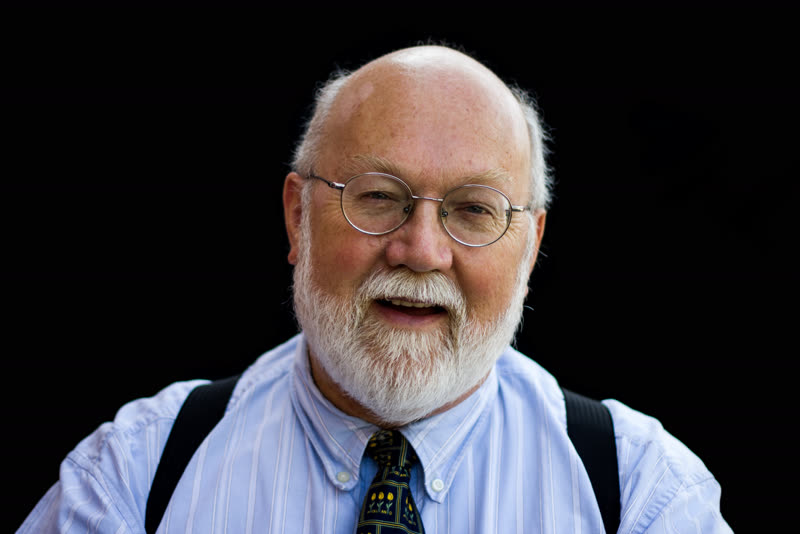 Tim Pasma Sunday AM Reformation Sunday October 27, 2013
Main passage Matthew 20:20-28
📖 Read the Scripture passage (ESV)
Matthew 20.20-28(ESV)
20 Then the mother of the sons of Zebedee came up to him with her sons, and kneeling before him she asked him for something. 21 And he said to her, “What do you want?” She said to him, “Say that these two sons of mine are to sit, one at your right hand and one at your left, in your kingdom.” 22 Jesus answered, “You do not know what you are asking. Are you able to drink the cup that I am to drink?” They said to him, “We are able.” 23 He said to them, “You will drink my cup, but to sit at my right hand and at my left is not mine to grant, but it is for those for whom it has been prepared by my Father.” 24 And when the ten heard it, they were indignant at the two brothers. 25 But Jesus called them to him and said, “You know that the rulers of the Gentiles lord it over them, and their great ones exercise authority over them. 26 It shall not be so among you. But whoever would be great among you must be your servant,[a] 27 and whoever would be first among you must be your slave,[b] 28 even as the Son of Man came not to be served but to serve, and to give his life as a ransom for many.”
Transcript
Thank you. Here we are in another Reformation Sunday. I hope not just to tell the story of someone that has gone before us, but also to, by that life, show what they can teach us from the Word of God. So I'd ask you to turn this morning to Matthew chapter 20. Matthew chapter 20, we'll begin reading in verse 17 and read through verse 28. Matthew 20, verse 17.
And as Jesus was going up to Jerusalem, He took the twelve disciples aside, and on the way He said to them, See, we are going up to Jerusalem, and the Son of Man will be delivered over to the chief priests and scribes, and they will condemn him to death and deliver him over to the Gentiles to be mocked and flogged and crucified, and he will be raised on the third day. Then the mother of the sons of Zebedee came up to him with her sons, and kneeling before him she asked him for something. And he said to her, What do you want?
She said to him, Say that these two sons of mine are to sit, one at your right hand and one at your left in your kingdom. Jesus answered, you do not know what you're asking. Are you able to drink the cup that I am to drink? They said to him, we are able. He said to them, you will drink my cup. But to sit at my right hand and at my left is not mine to grant.
But it is for those for whom it has been prepared by my father. and when the ten heard it they were indignant at the two brothers but Jesus called them to him and said you know that the rulers of the Gentiles lorded over them and their great ones exercised authority over them it shall not be so among you but whoever would be great among you must be your servant and whoever would be first among you must be your slave even as the son of man came not to be served but to serve and to give his life as a ransom for many Father now as we consider the life of one of our forebears in the faith we pray that we might see how others have lived consistent with the gospel. Help us, Lord, not just to learn something of someone, to learn something of our Savior who gave His life as a ransom for many and called us to follow in those steps in serving one another for greatness. Teach us now, we pray, in Jesus' name.
Amen. Well, you see Him in the movies and the malls and about this time of the year you see Him in Walmart and Meyers and Kroger's and even in the Office Depot. he has a head of white hair and a white beard with a brilliant red coat and a wide black belt sporting a huge silver buckle covering his ample stomach and he is usually laughing who is that jolly fat man you might ask and even a two year old would be able to tell you that's Santa everyone knows the identity of jolly old Saint Nick but the real Saint Nicholas is a man who's almost unknown, and yet, by the reckoning of Jesus, I would say, great. He was a bishop of the church in Myra in present-day Turkey.
But he didn't dress in red, and he didn't deliver gifts to children in the middle of the night. Many legends grew up around this man of God, as did many of the old saints of the church, the ancient church. Many legends have grown up around him. But how he became the Santa Claus that we know today is a mystery. In fact, I would say the Santa Claus we know today is the product of an advertising campaign started in the 1930s by the Coca-Cola Company, but be that as it may, how that's connected to St.
Nicholas, I don't know. But because almost everyone identifies St. Nicholas with Santa Claus, we've lost sight of the man who made himself a slave of all, served in the likeness of his Savior and though almost unknown today was great in the kingdom of heaven. Yeah St Nicholas did exist He was born around 260 A in the town of Tara on the southern coast of what is now Turkey.
Now that town is mentioned in the New Testament. The Apostle Paul spent the day there in Acts chapter 21 verse 1. You read this, and when we had parted from them and set sail, we came by a straight course to Kos and the next day to Rhodes and from there to Petara. Nicholas was born into a Christian family although we don't know the names of his parents.
Being raised in a Christian home back then was not like it is today though. Christianity was still a frontier religion. That is to say, it was still making progress. Most of the people around Nicholas as he was growing up were pagans who believed in other gods. And so the religion that he was born into, if you will, that his parents had, that the Christian family he was born into was a minority.
He was part of a faith that most people didn't believe. In his day, the church met in homes, not in church buildings. And when we think of members of the church that we know in times past, we think of them as peacefully dying. And we could name them all. We could name them as I stand here today. I can think of a number of people from our church who I've known and our children have grown up knowing who have died and gone to be with the Lord.
But in his day, as a child, he would recall members who had been killed. Chrysanthem from the neighboring city of Myra was put to death for refusing to sacrifice to the gods. two pillars of his boyhood church. Diascorides and Themistocles were hunted down and slain in the mountains just north of the city where he grew up. Leo marched into a pagan temple and just destroyed the candles of a goddess by the name of Fortuna.
And he was beheaded. He grew up in a church that endured years of discrimination, intolerance, and outright persecution. That's the kind of church that he grew up in. That's the Christian family he had. His parents faithfully brought him up in the gospel in the midst of all that persecution. But then when Nicholas was only 18 his parents died He only 18 years old when they died probably from a plague that was sweeping through that part of the world He was alone now.
However, he was not a poor little orphan because they left him a lot of money. His father was prosperous and they left him a hefty inheritance. It was from this point on the transformed character of his life became evident. The fact that his allegiance was primarily to Jesus. the fact that he was a Christian, the fact that he had been born again became evident from this point on.
Well, possessing a great deal of money is a great temptation. If all of us came into a whole bunch of money at one time, what would you do with that? That's a great temptation, isn't it? Oh man, I can get my house the way I want it, I can get that boat, I can take that vacation, I can do all these things. But for Nicholas, at 18, it became the opportunity to serve others and to sacrifice in the manner of the Lord Jesus Christ.
Look again at our verses. The last part of verse 26. But whoever would be great among you must be your servant, and whoever would be first among you must be your slave, even as the Son of Man came not to be served but to serve and to give his life as a ransom for many. Here, at 18, with a great deal of money, He found an opportunity to sacrifice in a manner that's like the Lord Jesus, but in a way that serves others.
Nicholas served others by saving a family. Now, he was moved to serve others with his inheritance because of the Scriptures. He knew the Scriptures. He prayed the prayer of the Psalms. Teach me to do your will because you raised my soul. Psalm 143.
Psalm 62, we remember the Psalm's caution. The Psalmist's caution about material wealth. Though your riches increase, do not set your heart on them. He knew what Jesus had said about the subject. He knew that His disciples were to go beyond occasional acts of kindness because Jesus had commanded His followers to give food to the hungry, drink to the thirsty, shelter to the homeless, clothes to the naked, care to the sick, and comfort to the imprisoned.
Matthew 25. You served Me. You clothed Me. You visited Me in prison. When did we do that? That's what say the people in Matthew 25. when those strangers came to you and they were hungry and they were thirsty and they were in prison and you clothed them and you visited them?
Had not Jesus said to a rich young man like him, Go, sell your possessions and give to the poor and you will have treasure in heaven. Then come, follow me. Jesus' message was radical and demanding. And of course, he also read in Acts chapter 4 about how the first believers took care of one another and sacrificed to serve one another by taking care of each other.
Acts chapter 4, from time to time, those who owned lands or houses sold them, brought the money from the sales, and put it at the apostles' feet, and it was distributed to anyone as he had need. Christians were expected to take care of each other. He knew that. And he also knew that Christians were supposed to care for anyone in need. And so at this time, he found out about three young maidens in Petara, all daughters of a once wealthy man who had lost everything.
Now, we have to remember what the days of antiquity were like. They were not like today. In this time, in the third century, the 200s, remember, third century means 200s. I know that's always confusing, isn't it? In the 200s, in those days of antiquity, in the days of the Roman Empire, it wasn't like today with liquid assets and saving accounts and welfare or disability programs and retirement plans.
There weren't things like that. A bad crop, a failed business deal, a disabling injury could spell ruin for a small family. You could come to the point of poverty in a very, very short time. A man could, if a man thought that that young baby that just came into his family was one mouth too much to feed, he could abandon it. oftentimes the pagans would just take those babies and put them out in the place where they threw all their trash.
By the way, this is just kind of a footnote. The Christians used to walk through the dump and find those babies and take them. But a father had tremendous authority in those days. Almost absolute authority. and it wasn't unusual because of debt or because of poverty for a father to sell his children. To pay for those debts To get out from under poverty They had that kind of authority and children went to auction for those reasons A father could sell his daughters into prostitution if he needed the money.
He had that kind of authority. Well, this poor man in the city of Petar where Nicholas Wood had lost everything and he had decided to sell his three daughters into prostitution. so nicholas resolved in his heart as one standing before the judgment of god to become those girls protector how did he do it well he took some gold coins and he placed them in a bag a money purse tied the string in the dead of night he tossed it through the open window of this house now you have to understand something about the culture of that day with no means of support and no kinds of money his daughters were unmarriageable But now with the money, the man was able to legally marry his eldest daughter. Because of the great joy and celebration that came to that house, Nicholas, another time, took some more money, put it in a bag, and threw it through an open window in that house.
And again, there was another wedding and great rejoicing. The father, it is recorded, prayed, thanks to that person we have been released beyond all hope from misery and the spiritual death of sin that had ensnared us. Behold, for your indescribable gift allowed me to legally marry my second daughter, freeing her and me from the ugly desperation and wickedness in which we had fallen.
Glorify your holy name, and glory be to your great goodness without end. of course Nicholas delivered another gift in the same manner for the third daughter only this time he was discovered the father fell at his feet in gratitude and Nicholas embarrassed by it all demanded that the man get up and promised not to tell anyone about it now how we know the story I don't know maybe the daughters told it I have no idea So Nicholas enters the pages of history as one of the great gift givers of all time. This quite possibly might be the beginning of those Christmas legends What interesting about the ancient times is that and we all do this the church would take some of their heroes and just as the years would go on, embellish it. And so the story becomes him throwing the money down a chimney, the girl's socks are hanging at the chimney to dry, and those kinds of things. you know.
Nevertheless, what we have to see here, more important than all that, is to see a man who sacrifices his wealth to those in desperate straits. We see a man who understands whoever would be great among you must be your servant and whoever would be first must be your slave for the Son of Man came not to be served, but to serve and to give His life as a ransom for many. You see, Jesus was saying, look at Me.
I came to give My life as a ransom. That becomes the very paradigm, the pattern, the template that you must follow in everything that you do in all of your life. Be a servant. Be a slave. I think of all the commands of Jesus this is the one that strikes me the most this is the one that strikes me the most when I'm tempted to say I'm busy oh man if I do that then I'm not going to be able to go to the game or I'm not going to be able to go on my vacation in the time that I wanted to I'm always reminded of this fact that I am to be a slave of all a servant to everyone greatness in the kingdom of heaven comes not in who serves you, but in how you serve others.
And Nicholas is this incredible example of taking this money that he could have used for himself and saying, I'm not going to use it for me. Like the son of man who did not come to be served, but to serve, I'm going to serve. Here are people who desperately need help. What a horrible thing. And again, notice, This is an unchristian man who's going to do these things.
And yet he's in need. Did not Jesus come and give himself for those who are wicked? You see and so he became that family slave Nicholas served others by serving a church and a community And a few years after these incidents, we don't know much about it, but it appears that he began to prepare for ministry. And in the year 295, when he was probably, from what we can gather, probably he was 35 years old, news arrived that the bishop of the neighboring town of Myra had died.
Now, here's what we need to understand about Bishop. The office of Bishop has evolved at least in some churches. When you read that word Bishop, you see it in 1 Timothy 3. A man who aspires to the office of, in our Bibles it's translated overseer. It's the term episkopos. That sounds familiar, right?
Episcopalian? Episkopos. If a man aspires to the office of Bishop, he's aspiring to a good thing. What's a bishop? Well, I'll tell you right now, you're looking at one. Well, wait a minute, where's your miter?
You know, those pointed hats. Well, I'm a bishop and Larry's a bishop and Charlie's a bishop. Greg's a bishop. Josh is a bishop. Bishop, pastor, elder. All in the New Testament are synonymous terms for the same person.
But yet, somehow it evolved. First, it started going towards, he's one of the elders, but he's the top guy. He's the top gun elder. That's the bishop. And then it started evolving a little bit more, probably because of the necessities of the age or whatever, where he became kind of the head minister in an area, which is how it is today, for example, in many churches.
And so it had gotten to the point, at least a little bit at that time, where a bishop was the one who kind of was the head of a church in a particular area. And it wasn't like today. You know, we've got how many dioceses in Ohio? Probably two or three. In those days, you know, there was many, many more because the areas were much smaller and they hadn't evolved into this, you know, mighty prince of the church or whatever you want to call them.
Well, anyway, Nicholas went to Myra to pay his respect and through a series of extraordinary events, he was chosen as bishop in Myra. And so the neighboring bishops came and they anointed him and set him apart. ordained him and gave him the authority to shepherd the flock of the church in Myra. Now, in Nicholas' day, the status of bishop wasn't like today, as I've just explained.
If you would go, for example, to Columbus. Columbus is where you're going to find the cathedral of the bishop of the Catholic Church of a particular diocese in Ohio. I don't remember. I don't know. The church next door used to be part of that diocese. So their boss.
In fact, remember when we were thinking about buying that property, you knew who we had to deal with. We had to deal with the bishop. Because he's the guy with the final say. He's the guy that says whether it goes or not. Now, we talked to his representatives, of course, but he was the guy. And if you go to Columbus, his church is a cathedral church.
That is, a cathedral is a church of the bishop. That's his church. And when they're doing all their really fancy stuff, you'll see a bishop and he'll have a miter, which is this two-pronged kind of a hat that kind of comes like that, sits on your head, and white gloves, and a big ring, and silk robes, and all kinds of stuff. Probably a big cross you've got hanging here.
It's very, very, very sumptuous. It gives you the idea of, hey, I'm in charge here. Okay? Okay? The bishops are, you know, the ones who basically run the church. That's the way it is.
But in Nicholas' day, that wasn't the case. It wasn't like that. Nicholas wore the simple black garb of the peasants and he embraced his ministry with enthusiasm. He devoted time to studying and to praying and to preaching. It was his job to distribute money to the poor. He shepherded the people of God.
He gave them counsel. People would come to the bishop and come to him then. And he would meet and care for their spiritual welfare of those entrusted to him. He baptized and instructed new converts. He accomplished this ministry with diligence and prayer. But the point is this.
He lived out verse 25. Right? What does verse 25 say? But Jesus called them to Him and said, You know that the rulers of the Gentiles lord it over them, and their great ones exercise authority over them. It shall not be so among you. Now it doesn mean again lord it and exercising authority there would be better translated tyrannize The idea is you don walk around saying hey I in charge here Okay?
And by the way, if the bishops of this church ever get to that point, you need to give them a slap or something because it's not about I'm in charge. Although they've been given authority, it's all about using that authority to serve the people of God. When you start saying, I'm the one in charge, that's when you get into trouble. And he wasn't that way.
He knew that he was to minister to the people of God and he gave himself to the people of Myra in his preaching and instructing new converts and taking care of the poor. He gave himself to that church as one among them who was there to lead them. Not a man above the people, but a man of the people. Now, it is difficult enough to shepherd the flock of God when times are good.
But imagine what it's like to shepherd the flock of God when a tsunami of persecution rolls over the church. Now, usually the persecution of Christians in the early day was not this massive Roman Empire we're against Christians. It wasn't like that. Most of it was sporadic, local kind of persecution. I mean, the church could be persecuted here, but not persecuted over here.
There was no centralized persecution of the church. It was sporadic. It was spontaneous, if you will. For example, a really good example of that is Acts 19. You remember what happened in Acts 19? The Gospel so permeates the city of Ephesus that it starts destroying the business there.
And Ephesus' major source of income was what? The god Artemis, this goddess Artemis. And they sold these little statues. And they were making big money off of that. But Christianity became so, the faith so permeated that culture that people quit buying those things. And you remember, there was a riot.
And they dragged the Christians into the Colosseum because there was this huge riot. And remember for two hours they yelled, Great is Artemis! Right? Great is Artemis That the kind of persecution that was typical in the early church It was sporadic It was local It was sometimes spontaneous But Christians were never persecuted everywhere all at once until Diocletian came to the throne.
And he hated Christians. And on February 23, 303, He issued an edict that ordered all copies of Scripture to be surrendered and burned. All churches, and by this time, they were starting to build churches, buildings devoted to the worship of Christians. This edict demanded that every church building be pulled down brick by brick, and that Christians were to cease and desist from gathering for worship.
First time, total empire now is supposed to root out Christianity. First time centralized imperial persecution of Christians, where all of the resources of the state now are now engaged to stamp out this religion, this religion that Diocletian hated. In fact, within two days or a few days of that edict, 268 Christians were killed inside of the palace, just right around the palace.
In Alexandria, Egypt, 660 Christians had their heads chopped off. 660 in that city. A city that would be nowhere near the size of Columbus at that time. A major city, but 660 Christians. And leaders of the church were rounded up. Then this was aimed at leaders.
Leaders of the church were rounded up. They were tortured. They were sent to the mines. They were beheaded. And they were burned alive. And their properties were confiscated, which of course left their families completely destitute.
This was what happened. The edict also stripped all Christians of any kind of legal appeal. That is to say, if you were a Christian then, you lost the right to defend yourself against accusers in a court of law, regardless of any charges In other words there was no legal protection The edict actually said you have no legal rights at all Well with only a few years under his belt as a bishop the officers of the empire appeared and dragged Nicholas away There was no formal charges, no going before the judge to be formally charged.
There was no lawyer. There was no reading of your rights. He was immediately dragged to the torturers. He was peppered with questions and accusations. He was threatened. He was beaten.
And yet he proved unwilling to renounce his faith or to turn over scriptures for burning. Now we don't know for sure if he experienced this, but the common thing to do with recalcitrant Christians at that time was to blind their right eye and to cut the sinews of their left ankle. Okay? That was typically what they did. Well, you know what? he was eventually released.
But for most of the years of his ministry at Myra, Christians were a hated minority. And despite the continuing threats, even after he was let go, despite the continuing threats, he again continued to preach, sing hymns, and fulfill the responsibility of ministry. His people loved him. You know why? Because when the tough times came, he didn't run. and when oppression of persecution brought sorrow to others, they would come to Him for counsel.
Some would even say, do we have the right to take up arms? Do we have the right to fight our oppressors? You know who He would counsel? No. Peace and perseverance. That's what Christ has called us to.
What does it mean to be great in the kingdom of heaven? Look at verses 17 through 19. And Jesus was going up to Jerusalem. He took the twelve disciples aside, and on the way He said to them, See, we are going to Jerusalem, and a Son of Man will be delivered over to the chief priests and scribes, and they'll condemn Him to death, and deliver Him over to the Gentiles to be mocked and flogged and crucified, and He'll be raised on the third day.
The greatness of our King is not found in the trappings of power, but in the agony of suffering. This is why Jesus is great. it's not because he came with all the trappings of power, but he willingly, deliberately suffered for his people. The greatness of our king is in his suffering and his humiliation. death. And the greatness comes in following our King.
Because what happens next? James and John's mom comes along and says, hey, can you give my sons these positions? And Jesus responds with what? Are they willing? Are they going to be able to drink the cup that I drink? They flippantly say, well, sure we are.
Well, they did. James, we read in Acts chapter 12, died. John lived to be an old, old man, but not before suffering great and being exiled to Patmos. Greatness is found in our suffering. You know, sometimes we look at suffering as a badge of shame. Through Christ, it becomes a badge of glory to suffer for his name.
The greatness of our king is not in his trappings of power, but in his suffering. Nicholas achieved greatness by serving as a slave to his community. Now, he didn't see his position of authority in the church as his only ministry. But that position of authority in the church eventually, eventually gave him a position of influence in the community. Let me give you one example of his service for the gospel and his community.
The convoy of ships with these troops were headed sailing to a particular point in the empire to fight some tribe, some Gothic tribe that was attacking the empire. And weather forced them to land in the port next to Myra. And upon landing, the commanding officers gave permission for the troops to fan out over the city to find provisions and entertainment.
Well, some local hooligans saw an opportunity here of getting some things for free, so they dressed up like soldiers and started pilfering and looting people. Well, they were eventually arrested, But the citizens of Myra, unaware that these guys were imposters, were incredibly angry at the troops. And so you had a mob now starting to come against all these troops who had landed near the city So someone runs for Bishop Nicholas who by this time is about 70 years old And this old man is neither intimidated by the rioters or the soldiers He comes down to this plaza, which is the central plaza in Myra, where there's going to be this huge riot.
And what he does is he calms the crowd down. Of course, they all know him, right? And he negotiates with the officers, and peace ensues. They don't have a riot because he's the peacemaker on the scene. Well, then word comes to him that the three guys who were the impostors are going to get their heads chopped off. Well, then he takes off running.
He arrives at the other plaza. It's called the Plaza of Byra, where they're going to get their heads chopped off. And he walks up and lets them go because they haven't had a trial, right? And he knows this is the corruption. and then he takes off for the governor's palace. You know why? He's going to confront the governor about what's going on.
And this is what, as I read this historian's account, when the governor arrived to talk, Nicholas cuts him off in mid-sentence and accuses him of being a thief and an enemy of God, sacrilegious, bloodthirsty, and unjust. Now, I'm thinking about, you know, going and knocking on the governor's door and tell them, you are a bloodthirsty, unjust man. It's just amazing to me.
Now, when I look at this, I'm reminded of verse 26. We're called to be servants and slaves. Now, what does that mean, a servant? When you look at that word servant, it's the word diakonos, which is the word for a table waiter, someone who makes sure everything's just right on the table, right? That describes the type of service. Then he goes on to say you've got to be a slave of all.
Slave here emphasizes the obligatory nature of your service. You must serve. You don't have a choice. You're a slave. You're obliged. And so I'm reminded of this.
I'm reminded of this. How do we serve our community? As servants seeking to make things right. seeking to make things right for those we serve. And as slaves, we can't turn our backs. We obligated Well what does that mean I think Nicholas shows us something like that means in our community By rectifying old injustices By preaching righteousness We ought not to be afraid of saying to those in authority, that is wrong.
That is wrong. Now, institutions can never be converted. Right? And yet, we need to be salt and light by working for righteousness in those institutions. Wouldn't it be great? wouldn't it be great and the Lord is kind of bringing this to my attention lately wouldn't it be great if we became known as peacemakers so that when people have problems they come to us they say good are those people in that church they know how to bring warring parties together now of course it's an opportunity for the gospel no doubt it has to be and yet wouldn't it be something, if we could catch a vision where people in our communities, wherever we are, would see us as peacemakers, would see us as those who hate it when people are coming at each other and are willing to jump in and serve them in that way.
Well, one last thing here, and that's this. Nicholas served others by serving the truth. The Diocletian persecution did not achieve its purpose. Instead, the church grew. And then a champion from the west came to the rescue. Now, if you know your, and maybe you don't, if you know the history of the Roman Empire, you know that by the 300s, they divided it in half.
There was the emperor in the west and the emperor in the east. Now, the emperor in the east was kind of like the senior guy, the senior emperor, okay? Now, in the west is a guy named Constantine. He's the Western emperor. And Constantine makes a profession of faith in Christ. And so in the West, he declares toleration for Christians.
But of course, Constantine's not satisfied with just being the emperor in the West. So he goes to war against the emperor in the East. And he conquers the Eastern Roman Empire. So he becomes the sole emperor of the whole empire again. And then something extraordinary happens. In 324, he calls for a council of the church.
He calls for a council of the bishops. He had freed the church now from all discrimination and persecution Okay now let me just say something here And this is I step away from the pulpit because this has nothing to do with the Bible now. All right? This has to do with history. When someone says to you that Constantine made Christianity the official religion of the Roman Empire, they're wrong!
Okay? They're wrong. Historically now. Just get this in your head. Get ready to argue when anybody says that. The most he did, which was a big thing, was to say Christianity is legal.
He didn't make it the official religion of the empire. That came two emperors next down the line who did that. Constantine did not do that. Okay, you got your history lesson, right? now Constantine is seeing that the church is being divided now he's a practical guy he doesn't want the church to be divided and it's divided doctrinally and so he calls a council of the bishops to say you gotta settle this issue so get all the bishops together and let them hammer it out what was the thing that was dividing them it was the Arian controversy there was a priest in Egypt in Alexandria Egypt by the name of Arius.
And Arius was saying that God the Father and the Son and the Spirit were not equally divine. In fact, to quote a letter from Arius, he wrote this, God, that is God the Father, had an existence prior to that of His Son. Before the Son was begotten or created or purposed or established, He was not. Now what's he saying? He's saying Jesus is not God. Jesus is a created being.
Alright, there ought to be bells going off in your head right now. Do you know any Aryans today? Sure, they're called Jehovah's Witnesses and Mormons. You see? This battle was fought a long time ago. We don't have to reinvent the wheel.
We can just see how they fought it before. But here's the point. It was tearing the church apart. And so Constantine said, we can't have this. Bishops, I want you to come here to the place of my residence, a place called Nicaea. And I want you to hammer this out.
And so on 325, a council of the bishops convened. in Nicaea. So Nicholas, being one of those bishops, packed up and went those 400 miles to that town. Now, he probably went with a little bit of trepidation because, you know, certainly this is a Roman emperor. And, you know, is this a trap? I mean, is this guy for real? But he went.
And many of the old bishops came, and I can't help but think that many of the old bishops came limping and half blind, still bearing the scars of Diocletian persecution in their bodies. as they met to hammer out things. You know, this is another thing that just amazes me. When I look at the early church, I see people who are talking about doctrinal things in the midst of having their eyes blinded and their ankles cut and being tortured.
They're still talking about these things. We are so pampered in our country, it's unbelievable. We have so much freedom. And yet these guys want doctrinal precision even in the midst of persecution. The proceedings were intense as the differing parties presented the Scriptures that seemed to support their views. What did Nicholas believe?
He taught and worshipped God the Father, His Word, and only begotten Son, our Lord Jesus, according to the doctrine handed down by the apostles as well as His Spirit, equal in power. He taught that the Father, Son, and Spirit were not just three names for the same being, nor was it three beings. It was three in one. Now there are differing stories as to what Nicholas...
When you think of St. Nicholas, do you think of a bishop at the Council of Nicaea? From now on start thinking that way There are many stories of what he did there One story is that when Arius was up presenting his views and blaspheming the Son of God by saying he was not divine the story goes that Nicholas got up and slapped him across the face. Now, that's probably not true, but it makes for a good story, doesn't it?
That probably was not true because that wasn't his character. Because there was another bishop who he knew by the name of Theonosis who was an Arian, and yet what he did with him was he wrote a whole string of letters trying to convince him and brought him back to the orthodox faith. Instead of giving up or getting violent or threatening, he patiently wrote him letters.
He was a shepherd. Out of that counsel came the Nicene Creed, a beautiful expression of biblical truth. It really is. I love it. I'm going to read it to you. Or at least part of it.
We believe in one God, the Father Almighty, maker of all things visible and invisible. And in one Lord Jesus Christ, the Son of God, begotten of the Father, the only begotten, that is, of the essence of the Father, God of God, light of light, very God of very God, begotten, not made, being of one substance with the Father by whom all things were made, both in heaven and on earth, who for us men and for our salvation came down and was incarnate and was made man. He suffered and the third day He rose again, ascended into heaven, and from thence He shall come to judge the quick and the dead.
I love that. God of God light of light very God of very God Isn that marvelous They nailed it And so he returns to his rocky seaside city of Myra and continues to serve. He served God's people by serving the truth. And then when he reached, oh, we think about the age of 75 years, old St. Nicholas died. his earliest biographer wrote after living for some time in the city of Myra and perfuming all with the sweetly fragrant and piously scented conduct of his life and pastoral duties he left this mortal life to enter eternal rest so Bishop Nicholas of Myra had not suffered the martyr's fate but he finished well now we're right on the verge of christmas now we're already over the line where you're seeing santa claus aren't we let me let me put this challenge to you from now on when you see those pictures of santa claus or when you hear any story or any song that refers to old saint nicholas think of the real St.
Nicholas. Think of the real man. Think not of a generous, jolly, fat man who visits homes all over the world dropping off presents. Think instead when you hear of St. Nick. Think of an ordinary man who became great in the kingdom of heaven by becoming a servant of all Think of a disciple of Jesus who like Jesus gave of himself.
Consider a Christian who gave himself for the gospel. Think of a shepherd who loved the people of God. Think of a slave when you hear Saint Nicholas. Father, thank You for Your Word and we thank You for those that You've raised up. People that are unknown and yet who are great in Your eyes because they, like Jesus, did not come to be served, but to serve.
Father, help us to be that way. Father, none of us here are going to be recorded in the history books. None of us here, like Bishop Nicholas are going to have a lot written about us. But Father, greatness doesn't depend on fame. Greatness is not measured by celebrity. Greatness is measured by ordinary people becoming slaves and servants of all.
Would you help us to remember that? Would you drive it into our hearts so that of all people we are known as those who would serve. Grant that we pray for your glory and for the reputation not of ourselves, but of our Lord Jesus. We pray it in his name. Amen.
Also referenced in this sermon
Other passages mentioned, beyond the main text.