The Beginning Of Beginnings
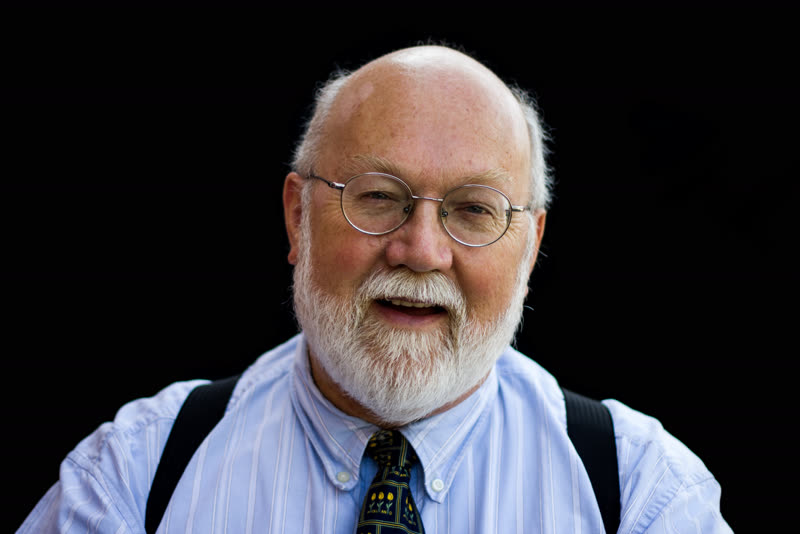 Tim Pasma Sunday AM Genesis May 4, 2014
📖 Read the Scripture passage (ESV)
The Beginning of the Beginnings - Genesis gives us the categories necessary for making sense out of life today. In fact, this first book of the Bible gives us the information we need for understanding the rest of the Bible. If you don't know Genesis the rest of the Bible will be a mystery. As we begin this study we will ask two questions. "How did we get this book," and "What is the purpose of this book?" Come along and learn.
Transcript
Let's pray now and ask God to meet with us and to teach us from His Word. Our God, as we come now, we confess our inability to understand any of Your Word apart from the work of Your Spirit. We, Lord, are a people who need Your Word. for Lord from the very beginning you created man even in his perfect state with dependence upon you to understand his place and purpose in the world and that dependence has been increased with the advent of sin and so we ask that your spirit would open up to us the book before us that we might be those who understand our God and who he is and serve him well we thank you for your word now in Jesus name amen why do Russian forces mass on the border of Ukraine and for that matter why are there bullies at your son's school why doesn't anyone just accept life the way it is it seems like everyone has some kind of a longing for something better.
Is it really wrong to euthanize my suffering grandma? I mean, we put suffering animals out of their misery, so why not people? If death is just part of the natural flow of life, then why am I so sad when death arrives? What is God really like? You keep talking to me about getting saved. What's the big deal about that?
The answers to those questions, and many more questions for that matter, can be found in the book of Genesis. You see, Genesis gives us the categories necessary for making sense out of life today. It does give you the categories for explaining bullies and death and God and salvation. In fact, this book at the beginning of our Bibles gives us the information we need for understanding the rest of the Bible.
If we misunderstand Genesis, we will misunderstand the rest of the Bible. In fact if we don get what Genesis is saying the rest of the Bible will be a mystery to us It like starting a book in the middle You don know what going on unless you know the beginning And so this book is given to us in one sense that we understand the rest of God's revelation. So it's vital that we understand this book.
As we begin to study the book of Genesis, and Lord willing, it won't take us three years. I'll try to do well on that. But as we study the book of Genesis, I just want to ask two questions this morning, just two. The first is, how did we get this book? And the second is, what is the purpose of this book? And so this morning, we just want to answer those two questions before we dive into detail into the book, is before we start looking at the creation account, before we start to work our way through the book of Genesis, we need to understand the book as a whole.
And so I'm just asking two questions this morning. How did we get this book? And what's the purpose of this book? How did we get this book? Well, someone had to write it. Right?
Someone had to put pen to paper or stylus to clay tablet or whatever the writing instruments were in those days in order for us to read these stories. Who was it? Although no author is identified within the pages of the book of Genesis, we think it is Moses, and we think it's Moses for very good reasons. We believe that Moses wrote this book. Genesis is part of a larger section of Scripture called the Pentateuch, which includes the first five books of the Bible.
You can see that in that name, Pentateuch. Penta, meaning five. The Pentateuch are the first five books of the Bible. The Pentateuch gives us the history of God's people from creation to Canaan. Alright? It gives us that history.
And we are told that Moses wrote the Pentateuch, which includes Genesis. Now the Jews always spoke of the Pentateuch as coming from Moses. And it interesting that you will never find any of the individual books named You won ever find the name Genesis or Exodus or Leviticus or Numbers or Deuteronomy None of them are named by those names But you will hear constantly the Law of Moses or the Book of Moses or the Book of the Law of Moses, always referring to those first five books.
In fact, soon after Moses was dead, the people already had a substantial part of those books. Turn to Joshua for a moment. After Moses has died, Joshua has now been appointed by God to lead his covenant people into the land of promise. And in those very first few verses, we read in chapter 1 of Joshua, verses 7 and 8, this is the angel speaking to Joshua, only be strong and very courageous, being careful to do according to all the law that Moses, my servant commanded you do not turn from it to the right hand or to the left that you may have good success wherever you go this book of the law shall not depart from your mouth but you shall meditate on it day and nights that you may be careful to do according to all that is written in it for then you will make your way prosperous and then you will have good success so soon after Moses was dead this is already attributed to him the Pentateuch the first five books are attributed him.
Much later in their history, much later, centuries later, near the very end of the kingdom of Judah, you again see this mention. It's mentioned several times in the Old Testament. I'm only picking out a few, all right? 2 Chronicles chapter 25. 2 Chronicles chapter 25, verse 4. Well, let's read starting in verse 1.
Amaziah was 25 years old when he began to reign, and he reigned 29 years in Jerusalem. His mother's name was Jehoadim of Jerusalem. And he did what was right in the eyes of the Lord, yet not with a whole heart. And as soon as the royal power was firmly his, he killed his servants who had struck down the king, his father. But he did not put their children to death according to what is written in the law in the book of Moses, where the Lord commanded, Fathers shall not die because of their children, nor children die because of their fathers, but each one shall die for his own sin And so here we have those first five books called the Law or the Book of Moses The Book of Moses.
All of those five. But what's more important is what Jesus says about those books. Jesus Himself referred to these books as belonging to Moses. Now if you read any commentaries, if you do any studies, there was a period when I was in seminary there was this what they called the well I can't remember the official name I just remember JEPD and it was all about these five strands of the Pentateuch and there was all these people contributing and sometime way way later during the exile someone put the Pentateuch together it was kind of a silly theory and some people bought into it but to do that would contradict what Jesus said, which is not a good thing to do.
For example, Jesus referring to Moses says in John chapter 5 verse 46, for if you believed Moses, you would believe me, for he wrote of me. Jesus there clearly identifies those first five books as from Moses, including Genesis. Now look at Luke 24. Luke 24. Very familiar passage. I like to call this passage the class I wish I had in seminary.
Luke 24, Jesus meets these two disciples, right? And they're walking on the road to Emmaus. They're all upset because all their hopes have been dashed because the Messiah that they had put all their hopes in was dead. They had no reason for going on. He was dead. And Jesus comes up. they don't recognize him, he doesn't reveal himself to them.
And he starts teaching them. And he says in verse 27, well, verse 25, and he said to them, O foolish ones and slow of heart to believe all that the prophets have spoken. Was it not necessary that the Christ should suffer these things and enter into his glory? And beginning with Moses and all the prophets, He interpreted to them in all the scriptures the things concerning himself.
So it says that Jesus started with Moses. No doubt he started with Genesis. And went all the way through the Old Testament teaching how it's all about him. And he does the same thing, you will note, in verse 44, as he later meets the disciples in a room. He says to them, verse 44, then he said to them, These are my words that I spoke to you while I was still with you, that everything written about me in the law of Moses and the prophets and the Psalms must be fulfilled.
Another way of saying the entire Old Testament. But notice that he identifies these books as the production of Moses. So because Moses is identified as the author of the Pentateuch, he must be the author of Genesis. So Moses is the one who gave us this book. But someone might ask, wait a minute. You've got Joseph at the end of Genesis.
We all know Genesis well enough that it ends with Joseph, right? Well, Moses lived 400 years after Joseph died. He lived 400 years after Joseph died. And Joseph was more than 100 years after Abraham. And who knows how long after Noah and Adam. So how could he write about all those events in Genesis, every last one of them, without ever having witnessed them?
How could he have written all those things? He never saw any of them. He's 400 years after the last character in the book he wrote died. how could he write about them well actually moses gives us a clue in the book of genesis itself how he knows about all these things these are called the 10 toledot toledote sections the 10 toledote sections if you're taking notes write down t-o-l-e-d-o-t that's a transliteration of the Hebrew word Toledot.
What's Toledot mean? Toledot is the Hebrew word for generations. And it refers to the history of a person's family or his descendants. And there are 10 Toledot sections. And so Genesis is kind of organized around these 10 Toledots. All right.
Now, as we begin the book from chapter 1, verse 1, to chapter 2, verse 3. Another one of those unfortunate chapter breaks, I'm afraid. From chapter 1 verse 1 to chapter 2 verse 3 we have the prologue Just the preface to the entire book and it the creation account All right And then from chapter 2 verse 4 we read this These are the generations, there's our word Toledo, these are the generations of the heavens and the earth when they were created in the day that the Lord God made the earth and the heavens.
The Toledot, the generations of the heavens and earth. And what follows is that Toledot. And that goes from chapter 2, verse 4, to chapter 4, verse 6. There's the first one. Now look at chapter 5, verse 1. And this is the book of the generations of Adam.
This is the book of the generations of Adam. And you notice it says when God created man, he made him in the likeness of God. Male and female created them. You see kind of an overlap there, right? Well, that overlap is there because now he's got another Toledot. Another book, if you will, that's telling a little bit about what we've seen in the last Toledot.
And continues the story. This is the book of the generations of Adam. Recorded by some of Adam's descendants. What follows then is that Toledot. quite possibly Noah. Noah's source. Then we come to chapter 6, verse 9.
These are the generations of Noah. Now comes the story or the toledot of Noah. The generations of Noah. Probably written by one of his sons. Chapter 10, verse 1. These are the generations of the sons of Noah.
Shem, Ham, and Japheth. And then, of course, follows their generations. Then 11.10. Chapter 11, verse 10. These are the generations of Shem. Now follows that story of His descendants.
Now we come to chapter 11, verse 27. Now these are the generations of Terah, the father of Abraham. The Toledot of Terah. 25-12. This is a long one, okay? So we go all the way to chapter 25, verse 12.
And I think probably all this came from Abraham. 25, verse 12. these are the generations of Ishmael Abraham son So here the generations of Ishmael What follows speaks of him Chapter 25 verse 19 These are the generations of Isaac, Abraham's son. Alright, then follows the story of Isaac. Chapter 36. Verse 1. These are the generations of Esau, that is Edom, And then again in verse 9, these are the generations of Esau, the father of the Edomites in the hill country of Seir.
Two that I count as one that give us the story then of Esau. And then finally, the last one, number 10, chapter 37, verse 2. These are the generations of Jacob. Now, what we have here are ten sources that Moses used in writing the book. Most likely, some of them were oral. Some of them had been passed from generation to generation.
Now, some of us might think that's inaccurate. But if you live in a country, if you live in a culture where the written word is not prominent, but the spoken word is, then you find a people who are very, very intent on passing down the oral tradition unchanged. And even to the point where there are certain people that are given the tradition and they memorize it and they pass it down to the next generation.
Some of these things are probably oral traditions, but I imagine a number of them are also written traditions that Moses had and that he used in composing this book. Wait a minute. One of you might object. I can hear it already. If Moses depends on these oral and written traditions, then how can we know he wrote it accurately? How can we know that he wrote it accurately so it's the Word of God?
Because we know that Scriptures are God-breathed. And if they're breathed out by God, and God cannot lie or give anything false, it must be accurate. What does 2 Timothy 3, 16 and 17 tell us? It says, all scripture is God-breathed and is useful for teaching, convicting, correcting, and training in righteousness. Now notice the Apostle Paul actually made up a word He took two words and put them together So we come up with this word God breathed And what Paul was trying to communicate to us was like this God breathed out And there were the scriptures.
In other words, what he's trying to tell us is if you want to know the mind of God, don't look any further than the scriptures. He breathed them out. He wanted to really make the point that you can trust the scriptures. They are the mind of God because God breathed them out. How do you think God breathed out the Scriptures? Did God someday go, and there was the Bible?
No. The Bible was composed over a period of 1,600 years. It didn't happen that way. And Paul didn't mean to say it that way. Did he dictate the words of the Bible? Are the words that we have here a dictation?
Did the writers of Scripture just sit there and suddenly they went into a trance and they just started writing? Is that how God gave us the Word of God? No, because, you know, for example, look at Luke 1. Luke 1, verse 1. I love this because of the historian that's in me. And Luke was a historian.
And he wrote his books like a historian. He said he wrote this, Inasmuch as many have undertaken to compile a narrative of the things that have been accomplished among us, speaking of what Christ has done, just as those who from the beginning were eyewitnesses and ministers of the Word have delivered them to us, it seemed good to me also, having followed all things closely for some time past, to write an orderly account for you, most excellent Theophilus, that you may have certainty concerning the things you have been taught. God didn't dictate anything.
Luke even admits that he went around and interviewed people, that he talked to these eyewitnesses. That he listened, he compiled notes, he sat down and he wrote this account that's called the Gospel of Luke for a man named Theophilus. So God did not dictate to Moses what he was to write. How do we know then that Moses was accurate? How do we know that what he wrote down is true?
Well, turn back to 2 Peter again. You just heard it a few moments ago as Caleb read to us these verses. 2 Peter 1, verse 16. For we did not follow cleverly devised myths when we made known to you the power and coming of our Lord Jesus Christ, but we were eyewitnesses of his majesty. For when we received honor and glory from God the Father and the voice was born to him by the majestic glory, this is my beloved Son with whom I am well pleased, we ourselves heard this very voice born from heaven, for we were with him on the holy mountain.
Now, what is he saying? He says, hey, I was at the transfiguration. I was there. I saw it. But notice what he goes on. And we have something more sure.
More sure than that, Peter? Yeah. What is it? The prophetic word to which you will do well to pay attention is to a lamp shining in a dark place until the day dawns and the morning star rises in your hearts, knowing this first of all, that no prophecy of Scripture comes from someone's own interpretation or didn't originate, for no prophecy was ever produced by the will of man, but men spoke from God as they were carried along by the Holy Spirit.
So what is Peter asserting here? He's saying that whenever God wrote His Scripture, He didn't override a man, He didn't dictate to him. whatever that man wrote, the Holy Spirit bore him along in a mysterious way, even in a way that probably was not consciously evident to the writer, in such a way that whoever was writing wrote exactly what God the Spirit wanted recorded. And so, if we want to wonder about Genesis and all these things that he had not witnessed and the sources that he used, we can be sure of this, that as Moses compiled or studied his sources and looked through them, and as he wrote this narrative of the people of God, the Holy Spirit was at work bearing him along so that what he wrote is the Word of God and what God the Spirit wanted us to hear.
So around 1,400 years, imagine this, 1,400 years before the birth of Jesus, Moses started writing this book. I think soon after the people of God had left Egypt soon after they had crossed the Red Sea Moses started writing this book but why did Moses write this book That where we need to camp Why did Moses write this book? What's the purpose of the book of Genesis?
Oh boy, there's lots of people who know the purpose of Genesis, right? Well, of course, God wrote Genesis so we could fight against the ungodly evolutionists. Now, don't hear me wrong. I'm not saying that the Word of God does not say something against evolution, but that's not why the book was written. Well, I know why. Because people just don't believe God, and that's why it's here.
But why exactly? What is the purpose of the book? And I would suggest you may be surprised at the purpose of this book. Imagine yourself in Israel's camp, soon after the great events of the Exodus and the crossing of the Red Sea. You have seen these plagues visited on these Egyptians, these oppressors that you have lived with for 400 years. You have seen these plagues visit upon you.
You've seen the water split wide open. You've walked across the ground and it was dry. And when you got on the other side, you saw these great walls of water collapse and destroy. The Egyptian army. And as you sit around the fires of that great camp, in those evenings, as you're sitting around the fire and you're talking to one another, these questions are surely coming to mind.
Why do we exist? Did you hear the Scripture reading from this morning? Has there been any other nation that came out of a nation by God's hand? You've never heard of that. Why have we left the land where people have been for four generations. These people knew nothing but Egypt.
Now, can you think 400 years in our history as Americans? Where would that take us? To the early 1600s. Now, most of you probably don't know what happened in 1600 in our country, do you? But this is all you know. They have lived in Egypt for 400 years.
They only knew that. We were a people group in another nation. Now we're separate. Why do we exist? What our purpose How do we fit among the nations now Where are we going and why Those are the questions surely you asking as your family sits around the campfire at night in that great camp on the other side of the Red Sea. And so Moses tells you the story to explain the reason for your existence.
That explains your purpose in the world. That's why the book was written to these people. So they would know who they are and why they were. What was their purpose among all these other nations? Well, it begins in creation. Turn back to chapter 1.
We're going to hop. We're going to do some triple jumping here. Have you ever seen the guy when he triple jumps, right? Hop, skip and the jump. I love that. I don't know how anybody can do that without falling on his face.
But that's what we're going to do. We're going to do a long, we're going to do the triple jump, if you will. Or let's quadruple jump through the book of Genesis here. I'm going to start in chapter 1, verse 26. Then God said, Let us make man in our image after our likeness, and let them have dominion over the fish of the sea, and over the birds of the heavens, and over the livestock, and over all the earth, and over every creeping thing that creeps on the earth.
So God created man in His own image, and the image of God He created him. Male and female He created them. And God blessed them, and God said to them, Be fruitful and multiply and fill the earth, and subdue it, and have dominion over the fish of the sea, and over the birds of the heavens and over every living thing that moves on the earth. Just drop down very quickly to verse 31.
And God saw everything that He had made and behold, it was very good and there was evening and there was morning the sixth day. It begins with creation. The world was created in perfection. Truly, it was paradise. God created and placed a man and a woman in the midst of that garden. Perfect creatures who bore the image of God.
And God commissioned them. He calls them to fill and oversee the earth for the glory of God name in dependence upon Him It is not just a commission just to have a bunch of kids and fill up the earth No, it was that the image of God in all its perfection and the rule of God through mankind would be over the entire earth and the glory of God's name would be seen in all the earth as man in dependence upon God filled and subdued the earth. That was their commission.
To, if I can put it this way again, to fill and oversee the earth for the glory of God's name in dependence on Him. That was man's purpose. But then, something horrific happened. Humanity falls. And there is a curse. And we know the story.
In a few weeks, we'll be there. But there is the fall where Adam and Eve both disobey God and they eat of the fruit of that tree. And from that moment on, all of life is changed. Men and women become enemies. Adam throws his wife under the bus. And there is now this tension.
Now there is alienation from God. Alienation from each other. Alienation from the earth itself. and now there is a curse. Let's pick it up in chapter 3 verse 14. The Lord God said to the serpent, because you have done this, cursed are you above all livestock and above all beasts of the field. On your belly you shall go and dust you shall eat all the days of your life.
I will put enmity between you and the woman and between your offspring and her offspring. He shall bruise your head and you shall bruise his heel. to the woman he said I will surely multiply your pain and childbearing in pain you shall bring forth children your desire shall be for your husband and he shall rule over you and to Adam he said because you've listened to the voice of your wife and have eaten of the tree of which I commanded you you shall not eat of it cursed is the ground because of you in pain you shall eat of it all the days of your life thorns and thistles it shall bring forth for you and you shall eat the plants of the field by the sweat of your face you shall eat bread till you return to the ground for out of it you were taken for you are dust and to dust you shall return. God curses the church.
He curses the woman, he curses the man. Life will now be hard and toilsome. Note that the curse on the man is really a curse on the entire earth that man must now fight for his existence. But in the midst of the curse is a promise. Verse 15. A promise that there's going to be a deliverer who will come, who will deal with the serpent, who we know from later revelation is Satan. who will deal with him.
But something has happened. How is man going to now fulfill his purpose of filling and overseeing the earth for the glory of God's name and dependence upon God? How is that going to happen? It can only happen through a deliverer that's going to come now. The next several chapters then, all the way through chapter 11, contain an unrelenting story of increasing perversion.
No matter what comes in the history of humanity, nothing stops the corruption. Civilization, all its tools, all what man does, nothing is effective in stopping the spread of the corruption. It seems like sin comes sweeping over mankind like the dam has broken and perversion and corruption now just sweep through. So much so that God destroys the earth with a flood and, if you will, gives humanity a second start through Noah and his children.
And in all of that increasing perversion, you see hints, you see clues of people looking for that deliverer. And you continue to wonder, will humanity ever fulfill its commission of filling and overseeing the earth for the glory of God's name and dependence on Him? By the end of those early chapters, in chapter 11, it seems like there's no hope. And that's where Moses wants to take us.
Turn to chapter 11. Chapter 11. Now, we all know the story. We'll get there in a few weeks. story of Babel of man pride how God destroys that But notice what happens here Notice carefully the wording Chapter 11 verse 8 and 9 So the Lord dispersed them from there over the face of all the earth. And they left off building the city. Therefore, its name was called Babel because there the Lord confused the language of all the earth.
And from there the Lord dispersed them over the face of all the earth. People finally spread over all the earth, but not for the glory of God's name. They spread over all the earth. Nations are now in open rebellion against God. All the nations of the earth, instead of subduing the earth for the glory of God, are now in rebellion against God. Is there no hope?
What's going to happen? And as you sit around the campfire, as you listen to the story, now you hear a familiar name. The name of Abraham, the progenitor, the father of your people. What's interesting about this? Notice in chapter 12. Verse 1, Now the Lord said to Abram, Go from your country and your kindred and your father's house to the land that I will show you.
And I will make of you a great nation and I will bless you and make your name great so that you will be a blessing. I will bless those who bless you and him who dishonors you I will curse. And in you all the families of the earth shall be blessed. Now don't miss this. Up to this point, the story's been all about all of mankind. The whole story is dealt with all of mankind.
But suddenly, now in the story, something totally different happens. The focus goes from the entire world down to one man. Just one. One man. From all of humanity, to one man. Alright?
Alright? And it appears up to this point in the story that God has abandoned all the nations to their rebellion. But now we come to this focus to one man. And he chooses a man who will form another nation and through that nation will what Will bless all the families of the earth We bless all the nations Here is your purpose. God, as you listen to this, you realize God has given you a missionary purpose.
That you, who have come from Abraham, You are the vessel of blessing to all the other nations. God has given you a missionary purpose of making His name known among all the nations of the earth. Are you surprised to hear that Genesis is about missionary work? that's exactly what it is it's about God how God formed a nation whose purpose was to bless all the other nations through a promised deliverer that's what the book is about that's what it's about how God in His faithfulness took Abraham and all his descendants and as you read the story, and it's interesting how you're going, uh-oh, there's a problem here.
And God turns it away. And how you see God's hand over all of these people descended from Abraham working His will until they end up becoming a nation. And working His will to make them a nation so they will be the channel of blessing to all the other nations. You say, well, that's good, but we're not sitting around a campfire. That's not us. What's the purpose of this book for us today in the 21st century?
Well, let me put it out, because this is going to guide everything that we do. If this is the purpose of the book, then this is how we have to read the book. This book was written so that we would know that God intends to bless all nations with the glory of God's name through the promise delivered. That's the purpose of the book. So that we would know that God intends to bless all nations with the glory of God name through a promised deliverer Now as we pursue that purpose, you know what we're going to see?
We're going to see the early flow of the great river of God's kingdom salvation. We're going to see the very, if you will, the very springs from which the river flows. We're going to see the very beginning of God's redemptive plan. you know what else we're going to see it should point forward to our missionary purpose it should point forward to our missionary purpose of blessing all the nations by filling the earth with the glory of God's name by the proclamation of the name of Jesus that's what it should do you know what else as we study this book we will see Jesus now I don't say that because I think okay how am I going to find Jesus here because Jesus himself said, for if you believed Moses you would believe me for he wrote of me.
So we ought not to have to dig very far. We ought to be able to see Jesus in this book. But as we pursue the purpose of this book it should point us to the fact that this Jesus who came through that nation will accomplish the original commission that God gave us. For you see, how does it all end? John the Apostle writes, After this I looked and behold a great multitude that no one could number from every nation, from all tribes and peoples and languages standing before the throne and before the Lamb, clothed in white robes with palm branches in their hands and crying out with a loud voice, Salvation belongs to our God who sits on the throne and to the Lamb.
Let's pray. Father, as we embark on this study, help us. Help us, Father, to understand it as you want us to. we anticipate great blessings as we see the early streams of your grace in the life of humanity as we see Jesus, as we're reminded of our purpose, as we see this point forward to the fact that the commission that God gave all humanity is fulfilled by the God-man, Jesus, and His people.
Father, as we come to this book, we ask for Your blessing that we may know You and Your Son and the Spirit. grant it we pray for your glory and our good amen
Also referenced in this sermon
Other passages mentioned, beyond the main text.