Deep and Wide
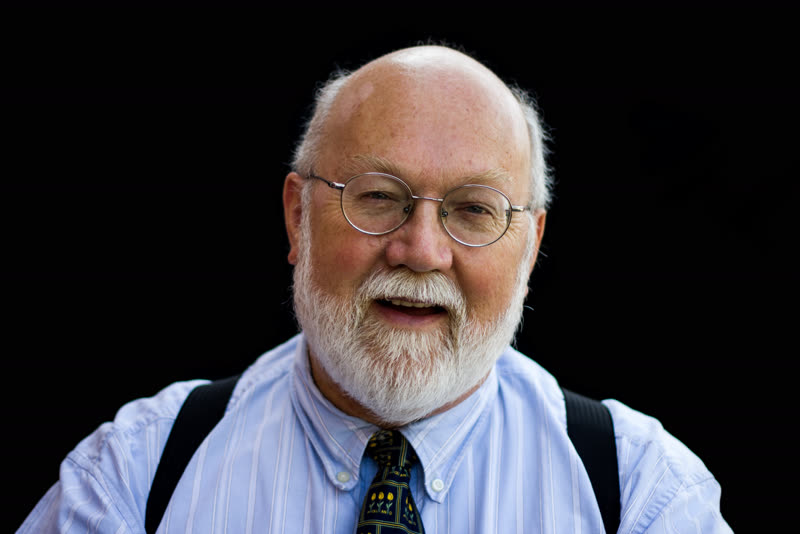 Tim Pasma Sunday AM Genesis June 15, 2014
📖 Read the Scripture passage (ESV)
On 9/11 many of us witnessed a disaster that we will never forget. It unfolded before tens of thousands of people as they walked the streets of New York City or watched on television. We can witness an even greater disaster as we turn in our Bibles to Genesis, chapter 4. There God gives you a clear view of sin's corruption exploding into the human race. In this sermon, Pastor Tim takes us to the Scripture that shows how sin starts to flow deep and wide in individuals and communities.
Transcript
Take your Bibles this morning and let's turn together to Genesis chapter 4. I want you to imagine for a moment standing on the banks of Lake Komino in southwest Pennsylvania near the huge dam that formed that lake. It's May 31st, 1889. Suddenly you see the dam give way and a 40-foot high wave thunders down the valley. It travels 14 miles down the valley and hits the town of Johnstown with the force of Niagara Falls. hundreds of the town folks are caught unaware as they along with their houses and their shops are swept away in the great force of that river later you move down the valley to discover what happened to Johnstown debris is piled 40 feet high and is spread over 30 acres where it's been caught by a stone bridge down the river.
2,209 people are dead, including 99 complete families wiped out. 124 women and 198 men are widowed. 1,600 homes have been destroyed. You never imagined that you would witness the depth and the breadth of that kind of destruction. Well, now in Genesis chapter 4, you're standing at another dam, about ready to witness the explosion of sin into the human race.
The entrance of sin was bad enough with the loss of paradise, and the corruption of human and divine relationships, but now we're about to see the kind of destruction that comes upon the earth as sin spreads and intensifies. Now, recall where we are in this book. We are in the first Toledot, that is the first book of 10 that comprise the book of Genesis It begins in chapter 2 verse 4 And it carries the title These are the Generations of the Heavens and of the Earth Creation tells us what happened to God's good creation.
Creation began with paradise. The perfect environment. That's Act 1. In Act 2, we see that man loses that paradise. As he succumbs to the temptation of the serpent. And all of mankind from that time on labors under the curse.
And now, in chapter 4, we come to act 3. Where we see that sin spreads and intensifies. We could call this chapter deep and wide. Because that's what it's about. Sin going deep. and wide. Let's look at it together.
Genesis chapter 4. Now Adam knew Eve his wife and she conceived and bore Cain saying, I have gotten a man with the help of the Lord. And again she bore his brother Abel. Now Abel was a keeper of sheep and Cain a worker of the ground. In the course of time Cain brought to the Lord an offering of the fruit of the ground and Abel also brought of the firstborn of his flock and of their fat portions.
And the Lord had regard for Abel and his offering, but for Cain and his offering he had no regard. So Cain was very angry and his face fell. Then the Lord said to Cain, why are you angry and why has your face fallen? If you do well, will you not be accepted? And if you do not do well, sin is crouching at the door. Its desire is for you, but you must rule over it.
Now Cain spoke to Abel, his brother, and when they were in the field, Cain rose up against his brother Abel and killed him. Then the Lord said to Cain, where is Abel, your brother? He said, I do not know. Am I my brother's keeper? The Lord said, what have you done? The voice of your brother's blood is crying to me from the ground.
And now you are cursed from the ground, which has opened its mouth to receive your brother's blood from your hand. When you work the ground, it shall no longer yield to you its strength. You shall be a fugitive and a wanderer on the earth Cain said to the Lord my punishment is greater than I can bear Behold You have driven me today away from the ground and from Your face I shall be hidden I shall be a fugitive and a wanderer on the earth, and whoever finds me will kill me.
Then the Lord said to him, Not so. If anyone kills Cain, vengeance shall be taken on him sevenfold. And the Lord put a mark on Cain, lest any who found him should attack him. Then Cain went away from the presence of the Lord, and settled in the land of Nod, east of Eden. Cain knew his wife, and she conceived and bore Enoch. When he built the city, he called the name of the city after the name of his son, Enoch.
To Enoch was born Erad, and Erad fathered Mehujael, and Mehujael fathered Methushael, and Methushael fathered Lamech. And Lamech took two wives. The name of one was Adah, and the name of the other was Zilah. Adah bore Jabal. He was the father of those who dwell in tents and have livestock. His brother's name was Jubal.
Jubal and Jubal. He was the father of all those who play the lyre and pipe. Zillah also bore Tubal-Cain. He was the forger of all instruments of bronze and iron. The sister of Tubal-Cain was Naama. Lamech said to his wife, Adah and Zillah, hear my voice.
You wives of Lamech, listen to what I say. I have killed a man for wounding me, a young man for striking me. If Cain's revenge is sevenfold, then Lamech's is seventy-sevenfold. And Adam knew his wife again, and she bore a son and called his name Seth. For she said, God has appointed for me another offspring instead of Abel, for Cain killed him. To Seth also a son was born, and he called his name Enosh.
At that time, people began to call upon the name of the Lord. Let's look at this chapter together. First of all, witness the growth of sin. Witness the growth of sin here as we look at what happens between Cain and Abel in the first 15 verses. What's the occasion for the growth of sin? Well, Eve has two sons.
She names one Cain and one Abel. Now, what's interesting is that it tells us what she called Cain and what that means. Okay? I have gotten a man with the help of the Lord The Hebrew word that sounds like Cain sounds like gotten I have gotten a man with the help of the Lord Now, notice the comment on Cain's name. It's a direct contrast to another son yet to be born, and that's Seth.
Because Seth's name is also given an explanation. Abel's is not. And so there's an intense intention to contrast Cain with Seth. Alright? And notice she says, I have done this. Parentheses.
With the help of the Lord. Alright? Now I think the writer's trying to tell us something. He's signaling to the reader that we ought to expect trouble from this man and his line. She's taking more of the credit than she should. And so there's a signal here.
Well, what happens next? Well, you remember, it's in worship that the trouble starts. Cain's envious and murderous thoughts begin at worship. And not to surprise us, because carnal worship always hates true worship. I don't know if you've noticed, but those, I would call them those churches on the liberal end of the spectrum, those kinds of churches that say, well, the Word of God, this is the story of men and God speaks through it and who have basically said the Bible is full of mistakes.
And so for those liberal Christians who I would frankly doubt their faith because they don't believe some of the most basics of the Gospel. Do you ever notice how they just seem to hate people like us who say, you know, certain things are right and certain things are wrong. Do you know they hate that? Have you picked up on that? It seems that way to me.
Right? Well, you know what? Carnal worship always hates true worship. Now, here's the thing to notice. Cain's sacrifice was not necessarily rejected because he brought from the fruit of the ground. That's not the basis of the rejection.
While Abel brought a blood sacrifice. That's not the basis of the rejection. The reason why I say that is because later on in the Old Testament, the laws are given that talk about bringing meal offerings. For example, in Leviticus chapter 2, when anyone brings a grain offering as an offering to the Lord, his offering shall be a fine flour. He shall pour oil on it, put frankincense on it, and bring it to Aaron's sons, the priests.
And he shall take from it a handful of grain. the fine flour and oil with all its frankincense, and the priest shall burn this as its memorial portion on the altar, a food offering with a pleasing aroma to the Lord. So it's not just that. In Deuteronomy chapter 26, you read about the offering of the first fruits. You bring the first fruits in and offer those to God.
So it's not the fact that Cain brought fruit of the ground. That's not the reason why his offering was rejected. But I want you to notice something else in the text. Please note that it doesn't just say that the offerings were rejected. What does it say? And for Cain and his offering, there was no regard.
For Abel and his offering, God accepted it. It's not just the offering. It's the person who brings the offering that's rejected or accepted. The point is not so much in the offering. The point is in the person. The point is in the person.
It may be, and it's interesting, and I believe this is the case, that Abel, what's emphasized about Abel is the firstborn of his flock and of their fat portions, meaning he's giving the best. Implication, Cain's doing this. This is tokenism. Cain's going to do his religious thing and expect God to accept that. Where Abel is coming with an entirely different attitude, which I believe is why in Hebrews chapter 11 we read this.
By faith, Abel offered God a better sacrifice than Cain did. By faith, he was commended as a righteous man. Abel had faith. Cain did not. In fact, look at the end of verse 5. Do you notice Cain's attitude?
He's ticked off that God doesn't accept him or his offering. Do you notice that? Now look, that doesn't just happen like that. You know, I've been involved, and you have too. Some of us who are older can say this. But when you're involved with people, do you notice that if somebody's angry about this particular incident, it's not that that made them angry.
They've got an angry spirit. That incident just brings out what's already there. Cain was an angry token religion kind of a guy. And that's why he was rejected and his offering was rejected. And yet do you see God fatherly concern for him in verses 6 and 7 why are you angry and why has your face fallen If you do well will you not be accepted And if you do not do well sin is crouching at the door Its desire is for you but you must rule over it God shows concern for this sinner in this fatherly address.
These questions, like those addressed to Adam and Eve, are intended to elicit repentance, right? He encourages him. And he warns him. Why are you angry? And why has your face fallen? Change your heart.
Be restored. Now, that's an interesting Hebrew phrase here. If you do well, won't you be accepted? Actually, it reads this way. If you do well, there is a lifting up. And so there's always this kind of a discussion of what's going on there.
Other translations say, if you do well, your face will be lifted up. Giving the idea that here's an angry man. But if you do well and you conquer sin, it will reflect in your face. You will be, frankly, you do right, you'll feel right. Essentially, what God is saying to him. Now look how God describes sin here.
He uses the metaphor of a beast ready to pounce and control or to devour Him. Now, I think it's really something that we have to get a hold of here. Sin is a power that possesses you. Sin is a power that possesses you. Now, from the point of conception, we're possessed by sin. We are born corrupt.
We are born with a sin nature. We are born with a bent against God and towards sin. And yet, beyond that, even sins that we commit will possess you, will rule you. Now, I hope every one of you there now is thinking, yeah, you know, this one particular area that I really struggle with, it just, it wants all of me. That is the nature of sin. You cannot just sin a little bit and expect to be satisfied. mind.
Sin does not work that way. You sin a little bit and sin wants all of you. Don't ever forget that I got to tell myself that all the time I going to tell myself that all the time Sin never just wants a little of you Sin always wants all of you And when you tempted to sin keep in mind this You're saying, I'll just do a little. And before you know it, you're gone further than you ever expected.
Why? Because the nature of sin is to possess you. And that's what God is saying to him. Sin wants to possess you. You must rule over it. Now we know that sin is already in Cain's heart.
And what God says is that sin is powerful and you have to deal with it because there's only this much from the emotion to the act. There's that much distance from the emotion to the act. Deal with it now. Deal with it now. Unless sin is checked immediately by faith, sin will spread like wildfire. Cain needs to exercise faith here.
He needs to cry out to God and say, Oh God, I cannot overcome sin on my own. I desperately need You. I believe You can deliver me. I believe You can rescue me. Please help. Now already, notice the growth of sin.
While Eve was talked into sin by the serpent, Cain cannot be talked out of sin by the Lord Himself. Do you see that? Well, Eve was talked into sin. Cain can't be talked out of it. Sin is intensifying. Sin is becoming much greater now.
Now we all know the story. What happens? Murder. Murder. He kills his brother. Notice, the family bond broken in Genesis chapter 3.
Lord, don't blame me. It's her fault. Right? that corruption that broke the family bond in Genesis chapter 3 now escalates to deliberate murder within one generation. Do you see how sin has escalated now? From the breaking of the family bond, punisher, not me, to killing of a brother in one generation. What a horrible thing.
You know, for most of us, it's just a matter of imagination. Someone killing their brother. You know, I was a pastor here for I think maybe, it probably about five years in And I had the funeral of a guy who was killed by his brother You know Yeah, you think about that. You know, that's kind of an imagination thing. For me, it was like, wow, I'm face-to-face with some really great wickedness here.
I can remember having that funeral. What do you say to people? You know, what do you say? What a horrible thing. Two brothers playing cards and in a drunken rage, one gets up and kills his brother. It's an awful thing.
And here, it's rooted in worship to even make it worse. It's rooted in worship. Sin is intensified in one generation. And so God confronts Cain, giving him the opportunity to again repent. in verses 9 and 10. Where is Abel your brother? Do you think God knew where Abel was?
Of course He did. But just like in the Garden of Eden, what is He doing here? He is offering the perpetrator a chance to repent. He gives the sinner the possibility of owning up to his sin. But instead of repenting, you see a hardening of Cain's heart with this impertinent answer to God. What, you think I'm my brother's keeper?
What a horrible thing. He says to God, why are you asking me? Am I my brother? Do you think I'm supposed to watch my little brother all the time? Come on, I've got better things to do than that. I don't know where he is.
Like his father Adam, you know what he's doing? What's he doing? He's covering up. He's concealing. He's trying to get away. But God knows because he says, Abel's blood cries to me from the ground.
Even though Cain buried his brother, he couldn't hide his deed. Now according to the Old Testament, blood and life belong to God alone. And whenever a man commits murder, he attacks God's very own right of possession. You heard that in the Old Testament law from Numbers 35 today. Right? spilled blood cannot be shoveled underground because it cries out for justice Abel's blood is crying to God for justice and so God sentences Cain his sin.
Verses 11 and 12. When you work the ground, it shall no longer yield to you its strength. You shall be a fugitive and a wanderer on the earth. Oops, I missed verse 11. And now you are cursed from the ground, which has opened its mouth to receive your brother's blood from your hand. When you work the ground, it shall no longer yield to you its strength.
You shall be a fugitive and a wanderer on the earth. God puts Cain under a curse that is cut off from the ground as his livelihood. In some way, God has intensified the curse so that for Cain, he will never be able to earn. He will never be able to gain his livelihood. He will never be able to live off the earth like everyone else. It becomes impossible for him.
God causes the earth to deny him the power of its blessing. How do you think... You already know the story. We all know this story, but how do you think Cain responds to that? Isn't it interesting? Look at verses 13 and 14.
Again, look at the intensification of sin. Cain said to the Lord, My punishment is greater than I could bear. Behold, you have driven me today away from the ground, and from your face I shall be hidden. I shall be a fugitive and a wanderer on the earth, and whoever finds me will kill me. Under God's curse, Cain goes to pieces. but not in remorse. Not in remorse.
Cain fears the physical and the social consequences that are going to happen to him but he doesn't care about God. He doesn't care about God. Everybody's going to be after me. When he says I'm hidden from your face he's essentially saying I won't be able to get anything. He's not saying I've sinned against God. Oh, what a horrible thing to do.
No, what does he say? What a horrible thing has happened to me with this unjust punishment. Cain disdains contrition and refuses to repent, complaining that the penalty is too hard for him. now again you see the increasing development of sin the growing power of corruption as someone who is undeniably guilty hardens his heart to the sentence that he deserves He's killed his brother and now he's complaining.
What? I won't be able to make a living. Everybody will be after me. Right? Right? I want you to notice something here.
I'm not going to say too much about it. But do you ever notice, I'm telling you, unconfessed sins leads to what the world calls today paranoic schizophrenia. Everybody's out to get me. Proverbs 28, verse 1. The wicked flee when no one pursues, but the righteous are as bold as a lion. It makes me wonder how many people are in mental institutions who are there because just merely of unconfessed sin. who are living with incredible guilt because they have sinned, and they're covering it, and they're concealing it, and they're not coming clean, and they're like Cain.
Everybody's after me. You know what God does? You know what God does here? He shows mercy. He says, I'm going to mark you, Cain. Now, we use that term.
We have that idiomatic phrase in our culture where we say, oh, man, that guy's got the mark of Cain, meaning, oh, he set out as a bad guy. But the mark of Cain is really a mark that protects Cain. Now, we don't know what it is. And it's interesting. As I read books and as I study commentaries, I look at what scholars say. You know, they're always running off on what's not the main point of the story.
What is the mark? It's a tattoo. It's a hairstyle. It's something. It's this. It's that.
It's different colored skin. It's all kinds of things they come up with. and it's kind of silly. We don't know what the mark is. That's not the point. The point is simply this. God in His mercy marks Cain so that no one will kill him.
He has mercy on Cain. And you know what? God shows mercy to society as well by indicating that murder is not an excuse for barbaric revenge. He is saving. He already in His mercy putting something in place that says to society at large don everybody start sharpening your knives to get the guy Alright? He's showing mercy to society at large by keeping them from going nuts in revenge.
Blood for blood. So then you already see the growth of sin. Without a tempter, rebellion still erupts. There's a consistent refusal of help from a gracious and merciful God. You find no confession of sin. And you witness Cain chafing at a just punishment for his crime.
Sin has grown and intensified. You've witnessed that. But witness also the failure to curb the growth of sin. the failure to curb the growth of sin verses 17 through 22 now in this genealogy of eight members you see a summing if you will of human culture summing up human culture okay Cain knew his wife and she conceived and bore Enoch when he built the city he called the name of the city after the name of his son Enoch to Enoch was born Erad and Erad father Mahuyahel and Mahujael and Mahujael fathered Methushael and Methushael fathered Lamech and Lamech took two wives.
The name of one was Ada and the name of the other Zillah. Ada bore Jabal. He was the father of those who dwell in tents and have livestock. His brother's name was Jubal. He was the father of all those who play the lyre and the pipe. Zillah also bore Tubal-Cain.
He was the forger of all instruments of bronze and iron. What's going on here? Well, first of all, Cain learns to make something of his independence. Giving us a first look at a self-sufficient society. He begins to build a city. Now, the Hebrew word can mean, even mean a village.
But he, you see here the, the big, bringing together peoples. I thought through this, it's, it's like this, okay? This is what happened when cities grow. And the Bible kind of gives us just a real quick glance at it. Cain can't earn his living from the soil, can he? How do people gather together, and most of us are this way now, it wasn't this way, but how do most of us gather together?
You know none of you out here except for one none of you make your living from the ground Right So how do you live You don grow your own food Well, some of you have magnificent gardens. You do grow a lot of your food, but you still go to the store, right? The issue is we all get together and we trade, right? We get together, we all have different trades that we exchange for food.
That's what Cain starts to do. Now we have a village, a city together. Alright? The first city. He names the city after his son Enoch, which means to initiate. So you see the beginning in the name of his first son.
You see the new beginning in the first city of Cain's independence. But out of the human race, note, that culture emerges with its arts, its sciences, and its tools to be used and enjoyed. You see the development of cities. Verse 17. You see the beginning of shepherds and the domestication of livestock in verse 20. You see the beginnings of musical arts and musicians in verse 21.
You see the origin of tools, the ability to forge instruments and works of art. Now please note, culture and its blessings are not shunned as evils in themselves. They can be a blessing or they can be a curse. Some of us old folks, not me, some of you old folks out there, you're cursing computers, right? And the young people aren't. Why?
Because they know how to use them, right? And they know how to save labor by use of those things. Alright? And we can curse things and say, oh, that's wrong. Oh, art's wrong. And boy, you know, tractors.
Well, what do we need tractors for? You know, like they're evil. I remember asking my father-in-law, do you ever pine for the good old days? You know what he told me? No, not in your life. I'd rather drive a tractor than have to take care of those stupid mules like I had to do when I was a kid.
So culture in itself is not evil. But that's not the point of this passage. You know what the point is? None of the products of culture can stop the onslaught of evil. It still grows. Civilized life has a potential for good or evil, but it has no potential for redemption.
Culture cannot save anyone. The family, notice, the family of Lamech could have handle its environment well. But as Lamech shows us, the family couldn't handle itself. You got a guy now who kills someone and brags about it. So you got all this culture coming from his family. So what?
You have here the story of humanity in a nutshell. Right here. You know what it is? great technical advance and increasing moral degeneration. You see? Culture has no power to stop the onslaught of sin. And that's where our culture is.
That's what the talking heads tell us all the time. That's what they tell us all the time. You know what the answer? What is the answer to all the money we're spending on prisons? Well, if we'd only spend more money on school, we'd spend less money on prisons. Really?
Really? Really? No, that's not the case. Because the problem is not ignorance. The problem is a wicked heart. The problem is a desire to live life in a God-created world in rebellion against God.
And education doesn't change a human heart. All the tools of technology, and it kind of bothers me that even as Christians, we put our hope in the stuff culture produces instead of the Savior. How do we do that? Well, we say, boy, let's make this movie. And if we get people to see this movie, what will happen? Oh, my.
Tons of people will be saved. Passion of the Christ, right? Now, I'm not for or against that movie. But you know what the problem with that whole thing was? We put our hope in a movie. Didn't we?
If only they'd see this movie. And so many people were moved, weren't they? Oh, people were moved by that cultural artifact. But did you see sweeping revival across this country? No. No. culture will not ever stop sin the third thing you witness is you witness the depth of sin verses 23 and 24 Lamech said to his wives Adah and Zillah hear my voice You wives of Lamech, listen to what I say.
I have killed a man for wounding me. A young man, and that Hebrew word there means a young person. We're not talking about an aged warrior here. We're talking about a young man, a lad, if you will, for striking me. If Cain's revenge is sevenfold, then Lamech's is seventy-sevenfold. Now let's witness the depth of sin here.
Lamech, first of all, perverts the intention that God had for marriage. Remember what Jesus said in Matthew 19? Have you not read that he who created them from the beginning made them male and female, and said, Therefore a man shall leave his father and his mother and hold fast to his wife, and the two shall become one flesh, so they are no longer one but two.
Let no man separate what God has put together. So, not satisfied with God's ordinance, he introduces polygamy. with disastrous results. Just read the rest of the book of Genesis and you will see the disastrous results of polygamy. Oh my goodness. Wow. But it's interesting.
It's interesting that twice in this chapter, Moses includes the name of the women. Now when you read through the genealogies, I mean that's the way it is, I'm not going to make any comment about it, you only see the men. It's highly unusual to see women mentioned in any kind of genealogy or women's names mentioned. Why do you think they're mentioned? He's making a point with those names.
Adah means ornament. Zillah means twinkle. What do you think he's saying? What do you think he's saying? Ornament and twinkle. Here's a guy who's not married a woman for purposes of companionship.
His desires have been... He's got the superficial basis of beauty rather than companionship at the heart of his marriage That what going on Now notice where Cain succumbs to sin Lamech exalts in it The song of the sword that you find in verses 23 and 24 boasts boasts about the fact that he killed someone Cain tried to hide it. Right? Lamech exalts in it.
A young lad wounded me and I whacked him. He's dead. And he's boasting about it. Cain was marred by violence. Lamech is marked by violence. Where Cain seeks protection, Lamech seeks revenge.
He's like provoking. He's provoking it. He's boasting in a way that says, Oh yeah? I will take revenge. I don't need God's protection. Anybody you want to take revenge?
Come on, I'll take you on. I will take revenge. I don't need God's protection. So you find here brutality and brute force and tyranny already in the human race. Tool making becomes weapon making. And so Lamech again illustrates how deep the roots of sin are going and how far corruption is spreading.
So here you find humanity gripped by a growing corruption. Marriage debased. Desire elevated. Human life disdained. Brutality exalted. Hatred of peace and love for power.
And a basic unwillingness to be reconciled, but to go to war, if you will. All of this as sin explodes and runs its course through the human race. What does God do in response to all of this sin? The last two verses of this chapter. Witness God's grace in the face of sin. Once more, and I think purposely, the writer shows us God's grace in the face of sin.
God displays grace by keeping His promise. What is that promise? The promise of a seed who would destroy Satan. Now remember what we said last week. The seed that's going to crush the serpent's head is both collective and individual. Alright?
It collective in the first thing Your offspring will do this and then he will do this to your singular All right So it collective and singular And so we see this seed by the way all the way through the book of Genesis, as God keeps that promise and keeps building toward the great fulfillment of that promise. So the promise of a seed that would destroy Satan, again, is fulfilled in the giving of Seth. And notice how Eve names this one.
The one appointed. The one appointed by God. It's not about her now. It's about what God's going to do. And he named his son what? Enosh.
Now you know what Enosh means? Weakness. Weakness. Out of weakness come a people who worship God. Now note, they are distinct from Cain's line. Cain's line is composed of powerful people who refuse to respond in faith.
Seth's line has weak, powerless people who respond in faith. There's God's mercy. the grace that comes down and takes weak people and gives them faith and they worship I don't know about you that gives me hope right weak, paltry, ineffective people how many of you in the last four years let's say are starting to feel like we're getting overwhelmed with a sea of iniquity has that occurred to you at all it sure has me It sure has me. It seems like we're being overwhelmed by Steve iniquity and we may think we're the only ones left.
Just this small, paltry, weak, ineffective group. God's grace uses weak, ineffective people. He does it here. He'll continue to do it. Now all of this, folks, sets the stage and points forward to the greatest expression of God's grace and what is that? It's Jesus.
The blood of countless millions of people have soaked into the ground of this earth. And it calls for justice. And if you don't get the idea from this chapter, you ought to start getting the idea now. The earth, if bad. And it needed the judgment of God. The earth is ripe for the judgment of an inerring just God.
And yet, that is not the final word. You know, Abel's blood is not the final word. I love the writer to the Hebrews in Hebrews 12, verses 23 and 24. Hebrews 12, 23 and 24. Listen to these words. You have come to God, the Judge of all men, to the spirits of righteous men made perfect, to Jesus, the mediator of a new covenant, and to the sprinkled blood that speaks a better word than the blood of Abel.
Now what is God saying there? Cain kills and Abel's blood demands justice. Jesus is killed and His blood pleads mercy. Do you know this room is filled with murderers This room is filled with murderers Jesus came and said if you angry with your brother in God eyes you murdered him Because the attitude you have is the same attitude any murderer has. You've just not done the act, that's all.
Maybe for a variety of reasons. But this room is filled with murderers. And unless the blood of Jesus is pleading mercy for you, you're doomed. Abel's blood cries for justice. Jesus' blood cries for mercy. And when you put your faith in Jesus, when you entrust yourself to Him, His blood pleads for your mercy.
And God always listens to His Son. The sacrifice of Jesus changes us so that we no longer hate, but love our brothers. You see? We love our brothers. More than just our... Notice what the blood of Jesus does.
It changes us so that we not only just love our family our blood family but we love people in the family of God As we heard in the New Testament reading No amount of cultural advance will ever change one corrupt human heart. But, if you're in Christ, what? You are a new creature. God's grace looks for the weak and the powerless and saves them to serve Him and accomplish great things for him, just as Jesus, as weak and powerless, accomplished the greatest work of God, purchasing a people for him.
And so, the story of beginnings continues, and you can see the power of sin. It is the power with a profound ability to corrupt and to disrupt. It corrupts everyone personally. It disrupts humanity corporately. It destroys and brings destruction. Like the water crashing down the valley sweeping everything away so sin exploded into the human race corrupting everything in its path And culture with all its gifts will never stem the tide Our community has been swept away in sin.
You individually have been swept away in sin. And the only rescue is the grace of God in Jesus. Father, thank you for your word. Thank you that we can look to it and see why we are the way we are and what you've done about it. Lord, help us not just to see this as the story of Cain and Abel, that we can relate to our children and grandchildren in a more effective way.
Help us to see this as the very explanation of what has happened to us. So, Father, I pray. Give us insight today because of what you said about yesterday. And above all, help us to see Jesus, the only one who can rescue us from the overwhelming corruption and growth of sin. We pray this in his name. Amen.
Also referenced in this sermon
Other passages mentioned, beyond the main text.