Starting Over
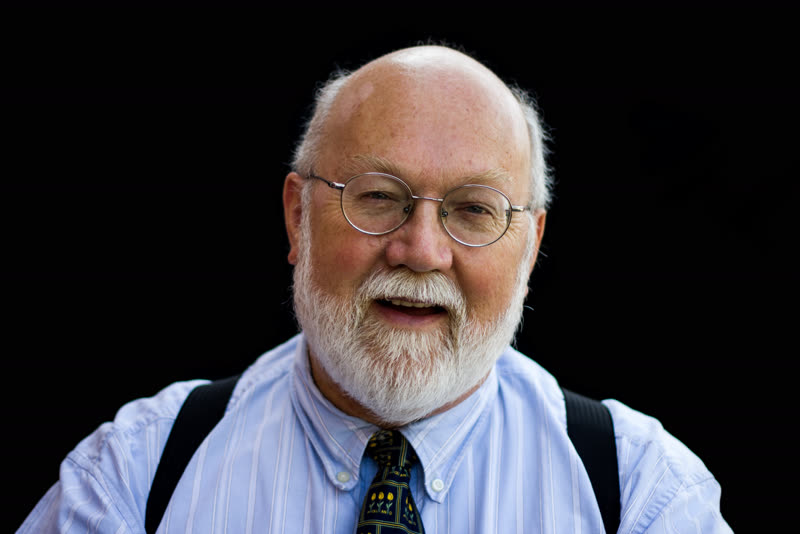 Tim Pasma Sunday AM Genesis July 27, 2014
Main passage Genesis 9
📖 Read the Scripture passage (ESV)
When we last saw Noah and his family they had just set foot on the new world and God had determined that he would never again curse the ground with universal devastation. He determined, instead, to bless sinful humanity and to be forbearing, not bringing divine intervention like the Flood again. "Wait a minute", you might say, "this doesn't make sense! You blessed Adam and Eve and look where that all ended - in such corruption that you destroyed everything except for this one family! If it happened once, won't it happen again? God, if you start over with forbearance, of all things, how will you fulfill your grand purpose?". How then, did God accomplish his grand redemptive purpose of raising up the woman's conquering seed to defeat the seed of Satan? Listen in to hear the answer to this question as Pastor Tim teaches from Genesis 9.
Transcript
Take your Bibles this morning and turn with me, if you will, to Genesis chapter 9. Be reading the first 17 verses of this chapter. Genesis chapter 9, beginning in verse 1. And God blessed Noah and his sons and said to them, Be fruitful and multiply and fill the earth. The fear of you and the dread of you shall be upon every beast of the earth and upon every bird of the heavens, upon everything that creeps on the ground and all the fish of the sea.
Into your hand they are delivered. Every moving thing that lives shall be food for you. and as I gave you the green plants, I give you everything. But you shall not eat flesh with its life, that is, its blood. And for your lifeblood, I will require a reckoning. From every beast, I will require it, and from man. From his fellow man, I will require a reckoning for the life of man.
Whoever sheds the blood of man, by man shall his blood be shed. For God made man in his own image. and you be fruitful and multiply team on the earth and multiply in it then God said to Noah and to his sons with him behold I established my covenant with you and your offspring after you and with every living creature that is with you the birds the livestock and every beast of the earth with you as many as came out of the ark it is for every beast of the earth I established my covenant with you that never again shall all flesh be cut off by the waters of the flood and never again shall there be a flood to destroy the earth and God said this is the sign of the covenant that I make between me and you and every living creature that is with you for all future generations I have set my bow in the cloud and it shall be a sign of the covenant between me and the earth and when I bring clouds over the earth and the and the bow is seen in the clouds I will remember my covenant that is between me and you and every living creature of all flesh, and the water shall never again become a flood to destroy all flesh. When the bow is in the clouds, I will see it and remember the everlasting covenant between God and every living creature of all flesh that is on the earth God said to Noah this is the sign of the covenant that I have established between me and all flesh that is on the earth Let's pray.
Father, open this text to us in the way you intended it. Help us to understand these things so that we might live in this world in a way that pleases you and reflects Jesus, our Lord. Open our eyes now to this, your word, in Jesus' name. Amen. Well, when we last saw Noah and his family, they just set foot in a new world. Noah begins life in this new age with a worship service of sacrifice to the Lord.
And as we read two weeks ago, God accepts the sacrifice of Noah and he determines in his heart that he never again will curse the ground with universal devastation because of man, even though he is still sinful. He determines to bless sinful humanity and to be forbearing. That is, not bringing divine intervention like the flood again. Wait. Stop the cameras.
Are you kidding, Lord? You blessed Adam and Eve and look where it all ended. The world got so corrupt that everybody was wiped out. and all living flesh was killed except for you, your family, and the animals in the ark? If it happened once before, is it going to happen again? You see, if God blesses mankind and becomes forbearing of his sin, how will he accomplish then his grand redemptive purpose of raising up the woman's conquering seed to defeat the seed of Satan?
God, if you start over with forbearance of all things, how will you fulfill your purpose? Well, our text answers that question today. The text before us answers that question. If God's going to be forbearing, and if God's going to bless humanity, how is it going to keep from getting so corrupted that nobody's left, and how is he going to fulfill his purpose?
Well, our text tells us that God will fulfill his purpose by a safeguarded and a promised forbearance. That is a forbearance that is safeguarded and a forbearance that is promised Understand that God fulfills his purpose by a safe guarded forbearance Now as you read these words you must see that God starts over He starts over with a new administration of forbearance and blessing. A new world demands a new beginning, and Noah stands as a second Adam.
You hear echoes of Eden in this new beginning, don't you? I hope you saw that. All the way through, it sounds just like the beginning. You hear God's blessing and command to be fruitful and multiply on all the earth, right? Verse 1 and verse 7, right? Almost the exact words that we read in Genesis.
Be fruitful and multiply and fill the earth. Verse 7, be fruitful and multiply. Team on the earth and multiply in it. You see again the echo of man's dominion over all creation. Verse 2, where God says, The fear of you and the dread of you shall be upon every beast, and I'm going to deliver everything into your hand. So man is going to have dominion again, and the ability to subdue creation.
As in Eden, God tells them what they can eat, right? Remember, as we just heard in the scripture reading this morning, God says, okay, here's what you can eat. I'm giving you all the green plants and all the trees and its fruit. You can eat all that. Here he says the same thing, except here he adds, for the first time, that man can eat animals. This is the first time that God allows or God says that man can eat meat.
Notice verse 6. How is man described? Just like in Genesis 1, he is described as a creature that is in God's image. so here you hear echoes of a new beginning. Okay, we're going to start over. And God, like He does at Eden, determines to bless humanity. But how can He do such a thing?
Because unlike Eden, which started out perfect, in the reboot, He's starting out with sinful humanity right at the start. Right? In the beginning man was perfect. Now he's starting over with almost the exact same thing. But now he starting over with people who are already sinful and corrupt And he blesses his sinful humanity while at the same time he determines not to curb their sin and corruption by universal devastation of a flood What is going on?
With such blessing and forbearance, how can he possibly accomplish his purposes? Well, that's what this text tells us. It first of all tells us that God institutes in order. He institutes in order an administration that safeguards his forbearance and his blessing. Look at verse 2. Although man has dominion, animals now have what?
Something they didn't have before. The fear of man. Originally, animals submitted to man. And you can see hints of this, pictures, snapshots, if you will, of this in the Garden of Eden with Adam. Adam names all the animals, right? It's as if God parades the animals in front of Adam.
They're not afraid of him. And do you ever wonder how Noah got those animals in the ark? Because in the old world that he came from, animals weren't afraid of people. All right? But it's changed now. The interaction between animals and man now will be nothing but, will be anything but peaceful.
Man can only rule by force, now by the fear and dread instilled in animals. Now I want you to think about that. With the corruption on the earth before the flood, and man exploiting the animals, that's now controlled by this fear of man, this hostile relationship. it will be much more difficult for the corruption of man to be used to exploit and to destroy the animals.
Okay? Here's a thought that occurred to me, and I'm almost hesitant to throw it out there because it's just a thought. But as I was contemplating this text this week, this is what occurred to me. think of the fact that we domesticate animals that man for centuries have domesticated animals right the fear of man has been in animals but man has worked hard at domesticating certain breeds right that means cows and dogs and cats and all those all had the fear of man right But we've domesticated those certain breeds of animals who would be naturally afraid of us.
And it occurred to me that trying to overcome that fear draws out compassion in people. I mean, you don't have a pet dog just to kick him around the house all day, do you? No. People who do, what do we think of them? They're terribly cruel. but you love those animals don't you there's a sense in which they almost draw out compassion from us take it for what it's worth maybe it's not worth anything all right so man has dominion but the fear of man is now instilled in animals for the first time god gives man the right to kill and eat animals.
But he restricts that use. Now, that may surprise you. But if you look carefully at the creation account, you will see that God only gives man vegetation to eat. At this point, something has changed. Now he can eat animals. Now some of you are saying, I'm glad I didn't live before the flood.
I'd hate to live on salad all the time. Well, if you lived then, you'd have gotten along with it. But here's the point. The point is, for the first time, God gives man the right to kill and eat animals, but notice he restricts that use. In verses 3 and 4. Verses 3 and 4.
Every moving thing that lives shall be food for you, and as I gave you the green plants, I give you everything. But you shall not eat flesh with its life, that is, its blood. In the Bible, and I heard this as a kid, the life is in the blood. right and and here God provides a safeguard against harshness and cruelty with this prohibition a respect for the life of animals all right there are some cultures that have ceremonies or even customs where you start eating an animal while it's still alive almost like other animals the savagery of other animals and here God prohibits that if you eat you first have to kill it and then drain its blood.
I think you have here more humane treatment of animals that you're going to eat. There's a respect for the life of animals. People may eat flesh as long as the life is no longer in it That is the blood So there is built into this an inherent respect for animal life Some of you may be sitting there thinking, boy, our pastor's becoming one of those ecological wackos.
Well, I'm telling you what the Bible says. We ought to have respect. That's what God expects of us. There's supposed to be a respect for animal life. You don't willy-nilly go around killing things. But there's a certain respect.
If you're going to kill, you eat. And you don't eat it with the life in it. Now notice this. If you must respect animal life, how much more human life? If you respect animal life, how much more human life? Notice what he says in the last part of verse 5.
Or the first part of verse 5. and for your lifeblood I will require a reckoning. From every beast I will require it and from man. Wow. Do you see that? God even holds animals responsible for killing people. And you say, how does he do that?
And I say, I have no idea. I don't know of any animal who's been dragged into court for killing a human being. Later on, we'll see when God establishes his covenant with Israel, part of the law says, what? That if an animal kills a man, that animal shall be killed. But God, even from heaven, looks down, and every animal that kills a human being will be held responsible for that.
Now, I don't know how God's going to bring that about, but that's what the text says. Human life is also to be respected, even to the point that if any human life is taken by an animal, that life must be forfeited. Okay? Notice the value of man. Notice the value of the life of man. As he says here, three times I will require.
And for your life bought blood, I will require a reckoning. From every beast, I will require it. And from man, from his fellow man, I will what? require a reckoning for the life of man. This threefold, I will require, says something to us about the value that God puts on human life The respect we should have for human life for animal life and for human life but particularly human life.
And notice, the last part of verse 5, God holds men responsible when another human life is taken. Let's look at it. From his fellow man I will require a reckoning for the life of man. Whoever sheds the blood of man, by man shall his blood be shed, for God made man in his own image. Why should God insist on such a drastic measure that if one human being takes the life of another, that murderer must forfeit his life?
Why does God require such a drastic measure? This is not merely because it's a sin against another human being, nor because it's a sin against society, nor even because it's a sin against the murder victim's family. That isn't why God requires such a drastic penalty. What is it? What does He say in the text? What is it that requires such a drastic penalty?
It's this. Because man is made in the image of God. Thus, the reason why God expects such a drastic penalty against the taking of a human life by another human being is because it is a direct attack upon God. It is God who is attacked, ultimately. We are image bearers, and we are saying something about God when we take the life of another human being. Now, you remember several years ago now, I think it was 2003, I can remember history from centuries ago, but this last decade I struggle.
It was 2003, I believe, when we invaded, the United States forces invaded Iraq. All right? Now, I remember something. I bet all of you remember this. Do you remember that scene when the United States forces are getting into Baghdad? There was this one scene where these Iraqis are throwing ropes around a statue of Saddam Hussein and they're dragging that thing down.
Do you remember that? I hope you do. I remember that. I remember watching that on television, and they replayed it, and they replayed it, and they replayed it. How Iraqis tore down that statue of Saddam Hussein What would have happened to them if they had done that six months earlier What would have happened if they had hauled that statue down six months before the United States forces were in Iraq?
You know what would have happened. Those people would have been arrested and no doubt executed. Why? Because the statue was made of gold. No. because it was extraordinarily valuable. No.
Why would they have suffered? Because that statue was a symbol of authority. And as they hauled it down, what were they saying about the authority above them? They were saying a great deal about Saddam Hussein, were they not? We hate this man. We want to be free of his tyranny.
And they showed that by ripping down that statue. Why? So you see, it's not the statue that had inherent value, it's what it stood for. And the same thing happens here. Murder is a direct attack against the character of God, against the person of God. And that's why he requires such a drastic penalty.
It says a great deal about someone's view of the Holy One, of the universe. Now here we might say it's the beginning of human government. God placing his own judicial power into the hands of men. They are now going to execute the judgment of God. Martin Luther, the great reformer, said this. This was the first command having reference to the temporal sword.
By these words, temporal government was established and the sword placed in its hand by God. God now gives some of his authority for executing justice, even the taking of life into the hand of man. So what are we seeing here? You see that God institutes this new administration of forbearance and blessing, but with safeguards in place so that man's corruption does not grow like it did before.
This is, if you will, and I almost hate using this term, but I think it will resonate with us, This is, if you will, God's checks and balances that he puts into human society so that corruption will not happen. grow like it did before the flood. God's universal destructive intervention will not be necessary because of these safeguards. But that's not all that happens here.
As we continue on in the narrative, in this story, we see that God now puts all of this into a covenant. Okay? He puts it all into a covenant. So we need to understand that God fulfills his purpose by a promised forbearance, by a promised, his forbearance is a promised thing. You see, God doesn't just say he'll be forbearing at the end of chapter 8. We saw that God said in his heart, I'm not going to do this again, right?
But he goes beyond saying that he's going to forbear and bless sinful humanity. But now you see that he promises that forbearance and that blessing through a covenant. Now, this is the first covenant mentioned in the Bible. As you read through the Bible, you see several covenants enacted. This is the very first covenant mentioned in the Bible. Now, who are the covenant participants?
Who are the covenant participants? Verses 8 through 10. Then God said to Noah and to his sons with them, Behold, I establish my covenant with you and your offspring after you, and with every living creature that is with you, the birds, the livestock, and every beast of the earth with you, as many as came out of the ark, it is for every beast of the earth.
Who are the covenant participants? Well, God, of course, all of mankind, every person that leaves the ark, and all of their descendants, so that would include us, and every man today, and every woman today, every human being today. But notice that he also makes a covenant with whom? With all the animals. All the animals are covenant participants. Now, how animals, again, okay, I'm going to head off the questions.
How can animals be covenant participants when they don't even know what a covenant is? And my response to that is, I have no idea. But I do know that God has made a covenant with all living creatures on the earth. And this affirms, listen, this affirms God commitment to the preservation and care of all living species Don miss that This is God commitment to care for and preserve all living species And we need to recognize that.
God's not leaving animals out of this. In fact, it looks to me like they're equal participants in the covenant with us. Even though we have dominion over them, God's making this covenant not just with us and telling us to fulfill it, I'm sorry, and telling us to communicate it. We're all, across the board, these covenant participants. Now, I call them covenant participants because they can't possibly be called covenant partners.
We are not a partner with God in this covenant. Now, why is that? In most covenants, or I should say in, well, in most covenants, each party agrees to fulfill certain obligations. Okay? Typically in a covenant, the parties to that covenant each have obligations they're responsible to fulfill. For example, we come to Genesis chapter...
Well, I don't have it in my notes. It's in the 20s. Later on, there's a covenant between Laban and Jacob. And if you don't know that story, we'll get to it. But Jacob and Laban enter into a covenant. And in that covenant, Jacob promises Laban, he says, here's my obligation to you.
I promise not to oppress your daughters, and I promise that I will not marry any other women but Rachel and Leah. That was his covenant obligations. There was also the covenant obligations on both parties' part that they would not transgress into each other's territory. Laban would stay on his side of the pile of rocks, and Jacob would stay on his side.
And so they each had obligations to fulfill in that covenant. They were partners. They each had obligations. Think of a marriage covenant with me for a moment. When you stand before the congregation and before the pastor and before God, you promise to fulfill certain obligations. Now, you may think for a moment here that those are nice words that we say at a wedding ceremony and they add to the romance of it.
My friends, you are entering into a covenant And when you say things like this I vow to forsake all others and remain faithful to you You entering into a covenant in which both of you are saying I'm going to fulfill this obligation. It doesn't matter how unattractive you get and how attractive other people get outside of this marriage covenant. I will remain faithful to you and to you alone. you covenant that is you you promise to love one another when things are good and bad someone has said we ought to get rid of you know how does it go I've done so many of these come on some of you young married people out there you remember the covenant where you said I vow to love and cherish you in sickness and health.
Richer or poorer. You know, it's not richer or poorer, it's richer and poorer. I mean, you're going to go through it all. And you're entering into this covenant that says, it doesn't matter how rich we are, it doesn't matter how low we get, we're going to stay together. You have promised to fulfill those obligations. That's a covenant.
You're covenant partners. But this covenant between God and us and the animals is an unconditional covenant. Do you see that? We don't have any obligations at all in this covenant. What is the covenant? The covenant is, I'm not going to destroy the world with a flood.
I'm not going to do it. Well, we have no control over the weather, much as we would like that. We have no control over the weather. We have no control over that or the extent of anything. Only God does. This covenant emphasizes God's sole initiative.
The only condition is on God, and He takes full responsibility to meet His obligation to fulfill the terms of the covenant. So we're not partners. We're participants in the covenant. What are the covenant terms? Verse 11, I establish my covenant with you that never again shall all flesh be cut off by the waters of the flood and never again shall there be a flood to destroy the earth.
There's only one obligation. Never again destroy mankind or animals with a catastrophic universal flood. Now whenever anyone enters into a covenant there a sign of that covenant For example here what we going to find Here what you will find as you read through the rest of the Bible You will find that circumcision is the sign of the Abrahamic covenant.
Sabbaths are the sign of the Mosaic covenant. The sign of the new covenant, the one we live under, you know what the sign of that is? It's the cup that we drink in communion. That's the sign of the new covenant. The sign of your marriage covenant is the ring that you wear. It's a sign of the covenant.
Now, what's the purpose of a sign? Well, for one, the first thing is the purpose is to remind us or to proclaim to us the existence of and what the covenant says. Okay? It's a sign. It tells us what the covenant's about. For example, when you're going down the street and you see golden archers, what does it say? hamburgers, french fries, good food, right?
But maybe not the latter. But, all right, that sign proclaims something to you. That's the first purpose of a sign of a covenant. It reminds you of the terms of the covenant. It proclaims to you the obligations, the existence of it and the obligations of it. But it also serves as a guarantee that the covenant obligations will be fulfilled.
So, when you have to do something official and you need what? You need a notary public to put that sign on those papers. So you go to Pam and you say, Pam, can you bring your thingamajig home? I'm selling this car and I need to have this thing notarized. What does that say? It guarantees that what you said on that paper is the truth.
Right? It's a guarantee that what you said is true. And so the sign of the covenant is also a guarantee that the terms will be fulfilled. What's the sign of the Noahic covenant? All of us have known this since we were that high in Sunday school. But I could ask my young grandchildren what that sign was.
What is the sign? It's a rainbow. It's the rainbow. What should happen when you see the rainbow against those dark clouds that threaten judgment? Right? What should it remind you of?
It should speak to you of God's unconditional grace. Here you are, you're sinful. And you deserve to be wiped out by a flood. But God has unconditional grace to all mankind. Unconditional, that is, there's nothing we have to do to get it. It's all on Him.
Right? It's His unconditional grace. That rainbow ought to speak of God's permanent grace. Notice, it's verses 12 and 16. It's an everlasting covenant. Alright?
It speaks of God's undeserved grace. You don't deserve to live. Every time someone sees a rainbow, they ought to say, oh, thank you, Lord, for not wiping us out. Now, what we typically tend to do is look at everybody else and everybody else around the world and see how bad they are instead of looking at ourselves and seeing how bad we are. But, I mean, as you look at the world, I mean, what have we seen over this last week?
An airliner shot down the surface-to-air missile. 262 people dead. Not combatants in a war. Wiped out. Like that. you think that deserves punishment the rainbow says i'm going to restrain my anger i'm going to hold back you see i'm not going to give you what you deserve that's what it ought to say to us speaks of god's universal grace notice that it's for all flesh and every living creature mentioned several times throughout that All flesh and every living creature But God also sees that rainbow God also sees that rainbow What does it say about him?
It says, I will remember. Now, God doesn't forget. But what he's saying there is, I will act accordingly. There's the sign of the covenant. It proclaims what that covenant is. And God's going to act accordingly.
It is his promise, his guarantee never to flood the earth again. He deliberately chooses to look on that colorful vision than on sinful humanity. You see that? He will look at that rainbow and choose not to punish sinful humanity. Now here's the question. How does this promised covenant fulfill God's redemptive purpose of defeating Satan's seed through the woman's conquering seed?
How does it accomplish that purpose? Well, for one, it guarantees an arena where mankind will see the goodness of God and will see the goodness of God in providing the remedy for his sin. Instead of getting wiped out, instead of getting wiped out, God forbears. And He doesn't send His wrath. In fact, it sets the stage for God to accomplish what we're going to see in a few more chapters where God says, I'm going to take this man, Abraham, And I'm going to bless all nations through Him.
So God's going to set and continue the arena of redemption by this covenant. By not wiping us out He gives us a chance to repent And God restrains His wrath and does what instead What does He do? He sends His Son. When you look at that rainbow, you ought to be saying to yourself, God at this point is restraining His wrath that should be poured out on this earth. and instead he sends us his son and he gives men everywhere an opportunity to repent.
For those of us who know the Lord Jesus we ought to be able to look at that rainbow and see the cross. Because that is what God has done. Instead of wiping us out he restrains his anger and in mercy and grace He sends His Son. And for all who believe on Jesus, God deliberately chooses to look at His Son and not at your sin. I hope you look at a rainbow different from now on.
Because it says a lot about the mercy of God and the fact that he, centuries and centuries and centuries ago, said, I'm going to be forbearing. I'm not going to bring my wrath down on that humanity. I'm going to restrain my anger. I'm going to restrain my judgment. And I'm going to work in that arena to bring about redemption. Here's the thing.
God has put all these things into place to keep our corruption from coming to full flower. And so, if you will, with all these safeguards in place, our corruption is held at bay. Right But guess what There may not be as many murders but there are still lots of murderers who have never taken a human life. Because even under that covenant, that Noahic covenant, man's heart remains unchanged.
It requires a Savior who will cleanse that heart with His blood and His death. And change us so that we will be different. God will accomplish his purpose. He will conquer Satan through the woman seen. And he makes sure that's going to happen by restraining his wrath while the safeguards are at work. And all the while, he offers his son.
All the while, he calls you to repentance and belief. all the while saying there's still time. Father, thank you for your word. Thank you for its clarity. Thank you for its ability to explain our world. God, help us now to live in light of those explanations. To see your marvelous forbearance with sinful man's sin and corruption and yet your mercy, not just your forbearance, but your mercy in sending your son, Jesus, to save and to change us.
Help us as those who love and serve you to shine as lights in the darkness, to show, Father, that it's not fear that keeps our corruption from exploding on the scene, but it is your spirit work in our hearts and our love for you and jesus that makes us different thank you for all that you've done for us in christ we pray this in his name amen