Many Nations Under God
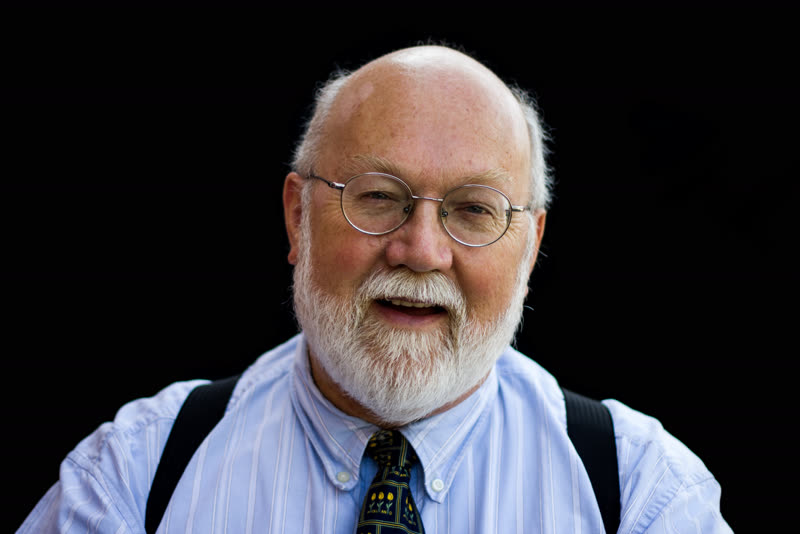 Tim Pasma Sunday AM Genesis August 24, 2014
📖 Read the Scripture passage (ESV)
A genealogy! What do you do with that? Are those the boring parts of Scripture that you merely "speed read"? Maybe you just skip over them entirely. If you do, you'll miss some important truths. Actually, God does speak in the genealogy of Noah's sons, Shem, Ham and Japheth. Listen to the message from God to you, today, recorded in this "Table of Nations." You might be surprised!
Transcript
Take your Bibles and turn to Genesis chapter 10. It's good to be home again. Becca and I had the opportunity of being in Iowa, and I was in Washington for a little bit speaking to a group of missionaries while we were gone. It's fascinating to meet a number of people who work in Canada, reaching people there and getting to know some more missionaries, some incredible people.
I think one of the most incredible was a missionary named Dave who has MS and had a stroke last year on top of that, and yet he was at the conference and talking about their ministry, and I was just encouraged by that. Well, I would guess now that you're all in Genesis chapter 10, you follow as I read. these are the generations of the sons of Noah Shem, Ham, and Japheth sons were born to them after the flood the sons of Japheth Gomer, Magog, Medai, Javan, Tubal, Meshech, and Tiras the sons of Gomer, Ashkenaz, Rufath, and Togarmah the sons of Javan Elisha, Tarshish, Kittim, and Dodanim from these the coastland people spread in their lands each with its own language by their clans and in their nations The sons of Ham, Cush, Egypt, Put, and Canaan. Sons of Cush, Sabah, Havilah, Sabta, Ra'amah, and Sabtaka.
The sons of Ra'amah, Shabah, and Dedan. Cush fathered Nimrod. He was the first on earth to be a mighty man. He was a mighty hunter before the Lord. Therefore it is said, like Nimrod, a mighty hunter before the Lord. The beginning of his kingdom was Babel, Erech, Akkad, and Kalna in the land of Shinar.
From that land, he went into Assyria and built Nineveh, Rehobothir, Kalah, and Rezin. Between Nineveh and Kalah, that is the great city. Egypt fathered Ludim, Anamim, Lahabim, Naphtuhim, Pathrusim, Kasluhim, from whom the Philistines came, and the Kaphtarim. Canaan fathered Sidon, his firstborn, and Heth, and the Jebusites, the Amorites, the Girgashites, the Hivites, the Archites, the Sinites the Arvidites the Zemurites and the Hamathites Afterward the clans of the Canaanites dispersed and the territory of the Canaanites extended from Sidon in the direction of Gerar as far as Gaza and in the direction of Sodom, Gomorrah, Admon, Zeboiim, as far as Lasha.
These are the sons of Ham, by their clans, their languages, their lands, and their nations. Tishem also, the father of all the children of Eber, the elder brother of Japheth, children were born. The sons of Shem, Elam, Ashur, Aparshad, Lud, and Aram. The sons of Aram, Uz, Hal, Githar, and Mosh. Arphaxad fathered Shelah, and Shelah fathered Eber. To Eber were born two sons.
The name of one was Peleg, for in his days the earth was divided. And his brother's name was Joktan. Joktan fathered Almadad, Sheleph, Hazarmaveth, Jerah, Haderam, Azal, Dikla, Obal, Abimeal, Sheba, Ofer, Havla, and Jobab. All these were the sons of Joktan. The territory in which they lived extended from Mesha in the direction of Sephar to the hill country of the east.
These are the sons of Shem by their clans, their languages, their lands, and their nations. These are the clans of the sons of Noah, according to their genealogies and their nations. And from these, the nations spread abroad on the earth after the flood. Let's pray. Father, now, guide us in the study of your word. We're here, Lord, to hear how you want us to be your people.
And so, Father, we pray that you would accomplish that task this day. In Jesus' name, amen. I know you surveyed today's text and said to yourself, I can't wait to hear a sermon on this. Man, I'm just looking forward to this. This is going to be a real barn burner today. well imagine my excitement when I came to this text and yet God does have a message in this text you may be surprised he intended to communicate important truth to his people Israel as they made their way to Canaan and he intends to communicate truth to his people today as he says in 1 Corinthians 10 now these things happened to them as an example but they were written down for our instruction on whom the fulfillment of the ages has come so everything in the Old Testament was not written to give us a history lesson It was written for us to help us Now I going to spend a little bit of time by way of introduction to kind of show you what do you do with the genealogy I hope you don mind but I think it important One scholar said his name is D Carson he spoke to our group of pastors one time many years ago and one of the things he said struck me.
He said, people ought to learn how to study the Bible by the way you preach. So you say, how in the world do you preach a genealogy? Well, by way of introduction, let's look at some things you need to look at when you come to a genealogy. Some hints is how you can find a message in a genealogy, not put a message into it. That's easy. But what's the message coming from this?
Well, the first thing to note is the context. Note the context here. This follows after God has blessed Noah and his sons by saying what? Chapter 9, verse 1. be fruitful and multiply and fill the earth so then this must be god blessing noah and his sons they are fruitful and they have multiplied and they are filling the earth it also follows the cursing of canaan we have to keep that in mind now another important thing to keep in mind is This is the fourth, the fourth Toledot or book that make up Genesis.
Okay, this is the fourth of the ten books. We've noted, as we said several weeks ago, this is the fourth one that makes up Genesis. Remember, Toledot is the idea of generation. So this is the book that's titled The Generations of Noah's Sons, Sham, Ham, and Japheth. now this book also contains the narrative of the tower of Babel because you note that the next Toledot does not start until 11 chapter 10 look at chapter 11, I'm sorry, chapter 11 verse 10 these are the generations of Shem there's the beginning of the fifth book and so this book of the nations this list of nations is also part of the book that includes the story of the Tower of Babel.
They go together. You find Noah's sons under God's blessing and you also find cursing in Babel. Now the list of nations anticipates Babel because it mentions already before we get to that story languages lands and nations And so it already anticipating that story It is saying these are the people that occupied the world after Babel This is what they became.
This is where they went. Now you notice that the genealogy does not list only individuals and descendants, but also tribal names and places. So that's something you need to note. Now verse 15, for example. We'll just take a few examples from this. Verse 15.
There's Canaan. Canaan is the son of Ham. Right? There's a personal name. And then the personal names of his two sons. Sidon and Heth.
Alright? But note that Canaan and Sidon are also place names. They also become place names. Sidon is a city, or was a city, on the coast of the Mediterranean. And as you read through the rest of the Old Testament, you often see these two terms together, Sidon and Tyre. Right?
Does that sound familiar? Those are the two Phoenician cities on the coast of the Mediterranean, just north of Israel there. So you see that personal names are used, but you also see tribal names. Isn't it interesting, for example, in verse 16, Canaan fathered Sidon his firstborn in Heth and the then he lists off a number of tribes or peoples that at the time of Israel occupy the promised land alright seven of them some of those are to be later on as we continue to read they're to be wiped out because of their sin so you find tribal names by the way you find tribal names in verse 13 and Egypt fathered, and then all his descendants, those are all people names.
Those are all tribal names. And then verses 10 through 12, do you notice that? It talks about all the cities, all the cities that grew up around Nimrod. And so you also see cities, places, particularly name. It calls your attention to a number of powerful, well-known ancient cities. So this is not concerned with a simple list of sons and ancestors, but what became of the sons of Noah?
What became of them? And those then have resonance with the people that are hearing this. They know these places. You didn't know there was this much in this genealogy, did you? Do you note that there are three individuals singled out? Three of them are singled out with extra mention.
Verses 8-12, Nimrod, the mighty hunter before the Lord, and it goes on and gives you a little history of Nimrod. So there's a particular emphasis placed on an individual. Verse 25, Peleg is mentioned. It just says his name means divide. Peleg means divide. It's Hebrew for divide. and it foreshadows the division of the nations.
And then what's interesting in particular is Eber. Verse 21. To Shem also, the father of all the children of Eber. Okay? Now Eber is... Boy, I charted all these things out this week.
I can't remember if Eber is... I think Eber is a grandson or a great-grandson of Shem. But it's quick to connect Eber with Shem, even though this generation is between them. Here's another thing to notice. That most of the genealogies go maybe as far as the grandsons. One exception would be Ham's great-grandsons through Cush.
But look at Shem's line. It goes all the way down to Shem's great-great-great-grandsons. None of the other genealogies go that far. but they go down all the way down to his great great great grandsons that's interesting and finally one nation is not mentioned at all there's one nation that's not mentioned there at all you know what it is no not the United States that's not it no it's Israel Israel's not mentioned why Israel's the focal point they're the point where you're looking at all these nations.
Israel is the one that's not mentioned. Now, what does God intend to accomplish with this table of nations? What is the purpose of it? Well, walk with Israel once more as it's on its way to Canaan, to the promised land. And it's hearing this. Alright?
It's hearing this. The nation marches out of Egypt, headed for the promised land, surrounded by these nations Where did they come from What our place among them Do we have a purpose as a nation How does this God this creator this judge this deliverer of Noah and who has now delivered us from Egypt how does he fit into the picture? And this genealogy or list of nations begins to answer that question. who are we and where do we fit and here's what I would say if I would sum it up here's the purpose of this genealogy the God who creates and delivers rules the nations and he rules for the purpose of blessing the God who creates and delivers rules the nations and he rules for the purpose of blessing.
So first of all, understand that God rules the nations. Let's get our bearings on these nations that are mentioned. Of course, there's some overlap to where they settle and where they go. If you pull down an atlas, and this is very, very ancient, some of these places they've never identified. They don't know where they are. Some they have.
Some of these settlements overlap of peoples, but we can speak somewhat generally. They seem to be listed not just in reverse order from youngest to oldest, but they also seem to be listed in distance farthest from Israel. Those that, it starts out with the ones that are the most distant from Israel. So the first ones to be mentioned are Japheth's descendants.
They settle further in the north. They're the ones who are going to settle in what is now Turkey. Okay? You know, if you want to, I suppose you can look in the back of your Bibles. There's probably some maps. I don't know if they're big enough.
But these will settle in Turkey. They'll spread over to Greece. Right? They'll settle the islands of the Mediterranean. They'll even go as far north as the Black Sea and the Caspian Sea. So, see.
Oh, Pastor Tim, you're stretching my geography now. Okay? You know what the Black Sea is? It's over here. And the Caspian is over here. and above the Caspian today are the Stans, the Kazakhstans and so forth. And right at the lower end of the Caspian Sea is Azerbaijan.
That's why I've been there. Right at the lower end of Azerbaijan, right above Iran. So these people are settling up that far north over to Turkey and over to Greece and the islands in the Mediterranean Next are the descendants of Ham These include the Egyptians the Babylonians the Assyrians and the Canaanites These are Israel's most influential and bitter neighbors.
All of them have something to do with Israel in the future. They've been delivered from where? Egypt. Okay? They're going where? And they're going to have a lot of trouble with whom?
The Canaanites. Someday the Assyrians are going to come sweeping in and make life miserable for them. And finally the Babylonians are going to come and wipe out their nation. But these are Israel's most bitter and influential neighbors. Of course, Shem is the ancestor of Israel. You may not know this, but we get the term Semites from that Hebrew word Shem.
You know what Semites are? We talk about anti-Semitism. What does that mean? Anti-Jewish. That word Semitic or Semites comes from the name Shem. He is the ancestor of the people of God.
Now this table of nations is unique to the Old Testament. No other culture has ever produced one of these, not in that time. Each culture concerned itself only with its gods and only with its nation and only with those gods as they led them in conquest of their enemies and other nations and peoples. They were very, what's the word I want, ethnocentric.
They were very tuned into their nations. They didn't write about other nations other than to say who they conquered. Not so with God's word. It talks about all the other nations. It makes a big deal about all these other nations. So here's one point that we need to grab.
From the beginning, the people of God were supposed to understand that their God was the God of all. Their God was the God of all. He is not only the God of Israel, but the God of the Gentiles as well. You get that from this genealogy. God is the God of all these people. Now, step back.
If you can take your imagination, step back into that time period. If you lived in Egypt you had your pantheon of gods And you believed that those gods existed and that they were your gods They weren the gods of the Assyrians or the Babylonians or any of the Canaanite people They were your gods. And these people over here, the Assyrians or the Babylonians or the Akkadians or the people in Ugarit or wherever they are, they have their pantheon of gods.
And you know what? you over here in Egypt, you have your pantheon of gods, but you don't say to these people over there, your gods don't exist, because you do believe their gods exist too. Right? Their gods do exist. You don't even question that. You don't say, no, no, we got the gods. Your gods are imaginary.
They didn't do that. They said, these are our gods and those are your gods. And if Egypt conquered one of those nations, you know what they would say? Our gods conquered your gods. Okay? That is why, I'm kind of getting off track, but I want you to grab this concept.
That is why when you get to Daniel, thousands of years later now, well, maybe a few thousand years later, when you get to Daniel, and you read about Nebuchadnezzar and taking the vessels from the temple and putting them in the temple of his God, and when you get to Daniel chapter 5, You see the king, Belteshazzar, taking the cups and everything of the Jewish god, Yahuwah, and using them in a drinking feast. That's significant. Why?
Because they're essentially saying they take the things from the temple of your god and put it in the temple of our god. So when you go into that temple, what do you see? Our god conquered your god, and here are the vessels that were used in his worship. and that's where they sit. As a sign of conquest. So are you with me? Okay?
So your gods conquer their gods. But that's not what's happening here. What you see here is this God is the only God. He's the true God. He's the only one that exists and He is the God of all. Not just the Israelites, by the way.
He's not only the God of Israel, He's the God of the Gentiles as well. He is one God, the true God. He's the only God. It does not matter whether the others even recognize Him as God. He remains the one and only true God. The God of all humanity.
Not just the people of Israel. That is what they had to understand. Let me ask you this. Has it changed that much? Has it changed that much? I would say we're pretty close to that pagan way of thinking.
We live in a pluralistic world, right? And if you witness, you tell somebody about Jesus, you tell them about that, what do they say to you? That's good for you, right? That's good for you. You can believe that. But I don't believe that.
I believe this. And the underlying assumption is, yeah, that's OK for you, but this is for me. Right? And all these different views of the world and of gods, if you will, can exist side by side. Don't tell me, right? What's the most terrible thing you could do?
To say to a Hindu, your gods don't exist. They're false. Oh, no, no, no, no. We live in a pluralistic society. If that's what they want to believe, they can believe that. If you want to believe in one god, that's your business.
But don't tell them they can't believe in many. You see, the more things change, the more they remain the same. We have one God. One God who's revealed himself in Jesus. Well, I'm on a rant. I might as well go all the way.
When you hear people say that the Muslims believe and the Jews believe in the same God we do, that's not true. That's not true. We believe in the God who's revealed himself in Christ. Do we not? Is that the God they believe in? No, it's not.
We believe in the God who's three in one. The one and only God. So don't fall into this pluralistic mumbo-jumbo about we really believe in the same God, because we don't. We believe in the God who has revealed Himself in Christ by the power of the Holy Spirit. That's the God. That's the true God.
And so what's happening here is right at the start of this nation, as the history is being told them, this history of the world before their form. They are told of a world that exists out there. They are told of those nations that they're aware of that exist under the sovereignty of one God. It is that God who has delivered them. And one fact surely stands out at the start and that is humanity is one.
We are all from the same ancestors we are all one All of humanity descends from these three sons of Noah Now, in a world of warring tribes and nations, each nation thinking it's superior to its enemies, they need to see that they are really indistinguishable. We are all descended from these three who descended from the one. None are superior in essence.
All are essentially the same. Now notice, does that mean there are no differences? No. Look at verse 5. From these the coastland people spread in their lands, each with its own language, by their clans and their nations. Verse 20.
These are the sons of Ham, by their clans, their languages, their lands and their nations. Verse 31. These are the sons of Shem, by their clans, their languages, their lands and their nations. And certainly, they are their languages. They have their lands. They have their nations.
They have their clans. And you can see these differences of nations. You won't hear an explanation until the next chapter when we come to Babel. But here they are and their differences. And yet, they remain essentially the same. They are all descendants of Noah and his sons.
That's made clear by verse 1 and verse 32. Okay? I know. today, can I tell you something? Sometimes I walk into the pulpit saying, oh Lord, you're going to have to do something today because this sounds like a lecture to me and not a sermon. I don't want a lecture, but I'm going to give you a little bit of lecture stuff here, okay? Number one, verse one and verse 32 is what we call an inclusio.
An inclusio is a literary it's a literary device that acts like a parenthesis. In other words, it's saying And everything in between is what I'm saying in the beginning and the end. And what is he saying at the beginning and the end? One of the things he emphasizes. These are all the descendants of Noah's three sons. He wants you to get the point.
Even though they all have their lands, clans, nations, and languages, they are all descendants of these three who came from the one. We are all one. We are all in essence the same. Now you would think that if we got such a truth as that, that basically we are the same that all wars would cease wouldn you You would think you would say hey I not superior to you you not inferior to me we are all the same that all wars would cease wouldn you You would think you would say hey I not superior to you You not inferior to me We are all the same Before God descended from these same people there's essentially no difference between us.
You'd think we'd get along, except for one unalterable fact. What is it? Sin. And that is personified in the person here in the middle of this genealogy by the name of Nimrod. I know, Nimrod, that's hard to say, isn't it? Because you use that when you make fun of somebody.
Oh, yeah, Nimrod. Well, Nimrod was a mighty, mighty man. Look at verse 8. Cush fathered Nimrod. He was the first on earth to be a mighty man. He was a mighty hunter before the Lord.
Therefore it is said, like Nimrod, a mighty hunter before the Lord. The beginning of his kingdom was Babel, Erech, Akkad, and Kalna in the land of Shinar. By the way, some of the most ancient, ancient excavations have taken place in Babel and Akkad. Those are the, remember learning in school, the cradle of civilization. one of the very couple of very first nations that we can even discern from historical studies are Babel and Akkad where was I ok the beginning of his kingdom was Babel, Erech, Akkad and Kalna in the land of Shinar from that land he went into Assyria and built Nineveh Rehobothur, Kalah and Rezan between Nineveh and Kalah That is the great city.
All right? Here is a man whose power is so legendary that he became a proverb in Israel. They had a sense of his existence because he was a proverb. All right? Kind of like, you say, well, that's kind of like we have a proverb in our culture, in American culture, that goes like this. You can trust him.
He's like Honest Abe. Right? Honest Abe. but you know we all have this legend of Abraham Lincoln being an extraordinarily honest man and so we use that term to describe someone who very honest well they use Nimrod like that in terms of the fact that he was an incredibly powerful mighty man in fact he was a mighty man before the Lord meaning the Lord even weighs in saying yeah, he was.
He was. He was recognized for his personal power and his aggression. This man known for his might used it in naked aggression to conquer. If you could look at a map, you would see that he started in the south, With Babel, if you would look at a map, if you look at present day Iraq, down in the southeast corner is where he starts. And you can see the Tigris and the Euphrates coming down like this into the Persian Gulf.
Shinar, or where Babylon is, starts down here. And he sweeps all the way up here into the northwest to where right near the border of Syria, Turkey, Right up there. That's about where Nineveh is, a little bit in that area. So he's coming from down here to up there. Now you say, well, that's not very far. In the ancient world, that was a long way.
For people who only walked, that's a long way to go. And he conquered that area and established those cities. See, he and his people didn't just spread out. They went out with their swords swinging. They went out to conquer. He was a cruel and a fearful tyrant.
He uses the term mighty man, the first mighty man in the earth. He's connecting him to the Nephilim in chapter 6, verse 4. Not saying he's a Nephilim, but he was like them. Remember what we saw, that those mighty heroes is the term used in chapter 6, verse 4. He's like them in the sense that he's mighty, he's aggressive, he's brutal, he's a tyrant. By the way, that cruelty is passed on to his descendants, the Assyrians, who become the most feared people in the ancient world.
They were horrific people. Unbelievably brutal in everything that they did. And then, of course, we have the reminder in the name Peleg. Divided is what the Hebrew word Peleg means, divided. It's a reminder of man's inevitable sinful ways. Another reminder of man's inevitable sinful ways.
What's the point? The point is this, this one humanity is ruled by one God. He rules as sovereign over all these nations. He's the one who chooses to bless. He's the one who chooses to curse. He's the one who chooses to scatter or to give promise to.
It's God who is the sovereign. He said he blessed the sons of Noah and they multiplied. They did. He is the sovereign. He's the one who controls it all. And as Israel surveys the nations around them, they must know that God rules.
Do you know that? Do you know that? I looked this last week at a map. I saw this little blurb said ISIS changing the map of the Middle East. I thought that looks interesting. So I clicked on it and showed all these areas controlled by ISIS.
And And if you're listening to anything about this incredible terroristic group, this maniacal, seemingly unstoppable new terrorist group, a lot of people are saying they're going to change. They're going to destroy the state of Iraq as we know it. And who knows what they're going to do in Syria. And who knows what's going to happen to those countries.
They may destroy entire states, entire nations in the Middle East. Is God sovereign over that? You get worried when you see things like United States, our country, is probably in the most danger it's ever been since 9-11. I don't know if you've read that, but it's out there. This group is crazy and they look unstoppable. They've even connected them to some plots in Chicago, of all places.
Do you know that God is sovereign over the nations? Do you believe that? Do you believe that God knows and plans what's going to happen at that level? Look at Ephesians 1 with me, just for a moment. this is a verse that these verses have always come to my mind a great deal in the age in which we live it might be maybe my own age as I have seen more in Ephesians chapter 1 it hard to pick this up it a very long sentence that starts in verse 16 but I going to pick it up in verse 20 he's talking about the fact that God exercised his power to raise he's talking about his great might verse 20 that he worked in Christ when he raised him from the dead and seated him at his right hand in the heavenly places we're talking sovereignty here of Jesus far above all rule and authority and power and dominion that is all the spiritual powers in this world and above every name that is named not only in this age but also in the one to come and he put all things under his feet and gave him his head over all the things to the church which is his body the fullness of him who fills all in all look at that little preposition to the church it can be translated for the church but it means that he gave him as head over all these things he gave christ authority over all these things on behalf of the church.
That is that Jesus rules over all the nations and all the spiritual powers, everything that's out there, for our good, on behalf of the church. We're the one nation in all the nations that Jesus is forming history around, if you will. Is he sovereign? Yes, he is. And he's sovereign for our good. He's sovereign for our good.
God rules the nations. But that's not all that we said is in this text. We said that we need to understand that God rules the nations for the purpose of blessing. Now, how do I know blessing is in here? Well, you have to look at Shem's line. It's important to see that.
Now, in this genealogy or this list of nations, the author clears the ground now. When he starts with Shem, he clears the ground of everyone else to focus on this one line, on this one family which the Old Testament is concerned about. How do I know that? You remember what we saw several weeks ago about how Moses, what he does all the way through this book.
He mentions, for example, Adam, right? And then two lines that come from Adam, Cain and Seth, right? What happens? He talks about Cain and his descendants and then stops We don hear anything more about Cain but then we see Seth and he follows him all the way down to Noah right And so what we find all the way through the book is that the writer Moses is going to discuss one line first and then he doesn't talk about that anymore and then follows this other line all the way down.
He keeps following this one line and by that to show this is the one that God's going to work through. This one will give you a little bit of information, we stop, it ends up in a cul-de-sac. We don't talk about that anymore. Well, that's what's happening here. He does the same thing here. He takes the first two lines this far, then he takes the third line, and he keeps following it through.
In fact, he's going to pick it up in chapter 11. Look at chapter 11, verse 10. These are the generations of Shem. And so now I was going to talk about the descendants of Shem. And even in Shem's line, right? Even in Shem's line, you have these two guys, Peleg and Joktan.
And if you look at chapter 11, verse 16, when Eber had lived 34 years, he fathered Peleg. And Eber lived after he fathered Peleg 430 years and had other sons and daughters. And it keeps following whose line? Peleg's line. So in other words, what am I saying? He's doing the same thing here.
Even in Shem's line, he says, we're going to follow this particular part of Shem's line. That's the line that God works through. Clearly then, this is the line of promise. The line of the woman's conquering seed. Okay? So, Shem's line is the promise line.
And don't miss this. To Shem also, the father of all the children of Eber. Eber. Now, again, Eber is great-grandson. Eber is the great-grandson of Shem. But he says to Shem also, the father of all the children of Eber.
Now, why does he do that? We'll turn back to chapter 9, verse 26. This is Moses talking. you remember he also said, Blessed be the Lord, the God of Shem, and let Canaan be his servant. He's blessing the Lord, not directly Shem Blessed be the Lord So what is he saying So he wants you to make sure you connect Shem with Eber children Why So that you connect the God of Shem to Eber line You connect that God with him.
Again, that's the line of promise. It's the line that worships the true God. It's the line that will carry forth. It's the line through whom he will send the conquering sea. By the way, little footnote. Eber is the root for Hebrew.
Okay? That's the root from which we get the word Hebrew. Now, I'm sure Moses knew that already. But at least it adds something to that saying, Aha! There's something that's going on with this one great grandson of Shem. He wants you to connect the God of Shem with Eber's line.
So you see, God rules the nation for the purpose of blessing them, because he said in Genesis, remember, the seed is going to come that will conquer. And that's the line he's indicating, the conquering seed is going to come. Now I want you to notice this. God works among the nations through this nation that will become Israel. God blesses the nations through a nation.
Israel have to see that it occupies not a place of pride, but the place of blessing. It now sees, it's beginning to see, maybe not all that clearly, somewhat it's beginning to see its purpose among the nations to reveal the glory of the true God to the nations. And that is why he chose them by his sovereign grace to exist among the nations. Later on, 40 years or so after they leave Egypt, Moses makes it clear to them that they are there because God chose them, not because of anything they had done. but God in his sovereign grace chose that line to bring forth the glory of God to show him among the nations God's purpose is that his glory be seen and thus bless all the nations through that line.
Now, God has not changed. Do you know that the purpose that you can discern in this genealogy is what he's doing today? In Luke 24, again, as we go through the book of Genesis, always keep this in mind. Always have this in your mind. Well, let me show you. Luke 24.
Turn there. To me, this is a... Luke 24 is one of the most important principles to grasp in order to understand the Old Testament. Luke chapter 24. Jesus is walking with these disciples on the way to Emmaus. and they're talking about all the terrible things that have happened. And he says in verse 25, this is Jesus speaking, and he said to them, O foolish ones and slow of heart to believe all that the prophets have spoken.
Was it not necessary that Christ should suffer these things and enter into his glory? And beginning with Moses and all the prophets, he interpreted to them in all the scriptures the things concerning himself. He covers the whole Old Testament and essentially says it's about me. In Matthew chapter 5 verse 17, Jesus makes an extraordinary claim. Do not think that I've come to abolish the law.
I've come to fulfill the law and the prophets, meaning the whole Old Testament. The whole Old Testament is about Jesus. Where in the world do you see Jesus here? God's purpose is that his glory is to shine among the nations through his chosen nation. and Jesus fulfills this narrative this genealogy this table of nations How so He the greatest descendant of Eber right He's the greatest descendant of Eber, and he fulfills all that Israel was supposed to do.
Turn over to Isaiah 49. Isaiah 49. this is one of those in Isaiah, this mysterious figure called the servant of the Lord appears periodically. And this is a servant of the Lord passage. Verse 3, And he said to me, You are my servant, Israel, in whom I will be glorified. But I said, I have labored in vain. I have spent my strength for nothing and vanity.
Yet surely my right is with the Lord and my recompense with my God. It sounds like Israel, but then he goes on and says this, and now the Lord says, He who formed me from the womb to be his servant, to bring Jacob, that's Israel, back to him, and that Israel might be gathered to him, for I am honored in the eyes of the Lord, and my God has become my strength. He says, it is too light a thing that you should be my servant to raise up the tribes of Jacob and to bring back the preserved of Israel.
I will make you as a light for the nations, and my salvation will reach to the end of the earth. It's speaking of a future servant of the Lord. He will be a light to the nations. He will bring salvation to these nations outside of Israel. Israel messed it up. They didn't do it.
But Jesus does. Jesus does become the light. Now, if that's not enough, if that's not enough, turn to Acts chapter 13. Acts chapter 13. here's the Apostle Paul preaching to a bunch of Gentiles and here what he says he talking about all the things that are going on he got this second sermon to these people Starts out in verse 44 The next Sabbath almost the whole city gathered Acts 13, 44.
The next Sabbath, almost the whole city gathered to hear the word of the Lord. But when the Jews saw the crowds, they were filled with jealousy and began to contradict what was spoken by Paul, reviling him. And Paul and Barnabas spoke out boldly, saying, It was necessary that the word of God be spoken first to you, to the Jews, since you thrust it aside and judge yourselves unworthy of eternal life.
Behold, we are turning to the Gentiles. For so the Lord has commanded us, saying, I have made you a light for the Gentiles, that you may bring salvation to the ends of the earth, quoting just what we read. And when the Gentiles heard this, they began rejoicing and glorifying the word of the Lord. And as many as were appointed to eternal life believed. and the word of the Lord was spreading throughout the whole region.
Wow, do you see what's happening here? Israel is supposed to be this nation that shows the nations the glory of the Lord is going to work through this line. And it comes down to this one, Jesus, who fulfills everything Israel was supposed to do. He becomes the light. And now the Apostle Paul says this, You are the light. You're the ones that are going to bring salvation to the ends of the earth.
He says, as we preach about Christ, we become that light that reaches the Gentiles. So God's purpose has always been, will continue to be, that He works through His people to reveal His glory to all the nations. That is our purpose. That is our purpose. In fact, we can see it again. Look at 1 Peter chapter 2.
You see the same thing happening. 1 Peter chapter 2, very familiar passage. But please note how the church is described here. and what it's supposed to do. 1 Peter 2 verse 9. But you are a chosen race, a royal priesthood a what Holy nation a people for his own possession that you may proclaim the excellencies of him who called you out of darkness into his marvelous light.
Once you were not a people, but now you are God's people. Once you had not received mercy, but now you have received mercy. Do you see that? We're a holy nation. For what purpose? For what purpose that we may proclaim the excellencies, the glories of him who called you out of darkness into his marvelous light.
So you see, this genealogy is pointing. It's pointing us in the right direction. It's pointing us into God's purpose. And God's purpose is to reveal his glory among the nations. And he will accomplish that through Christ as he's proclaimed by the people of God. That is how the glory of God will be seen among the nations.
What does a genealogy say anyway? more than we expected I'll bet more than we expected at least this genealogy says this God rules the nations God rules the nation one true God rules all the nations who are one humanity and he rules them for the purpose of blessing them with the his glory proclaimed by his people Father, thank You for Your Word. Lord, even as we approach texts like this, we sometimes are frightened that we're going to be bored to death. And Lord, I don't know if Your people here have been bored today or not, but I hope they've heard that this message is about Your sovereignty for the purpose of bringing blessing as Your glory is revealed among the nations.
Lord, help us to be faithful to the purpose that You've indicated even in this, that we would be faithful in declaring and proclaiming the glories of our God among the nations. God, help us to that end, we pray. Amen.
Also referenced in this sermon
Other passages mentioned, beyond the main text.