Babbling, Bumbling, Bunglers
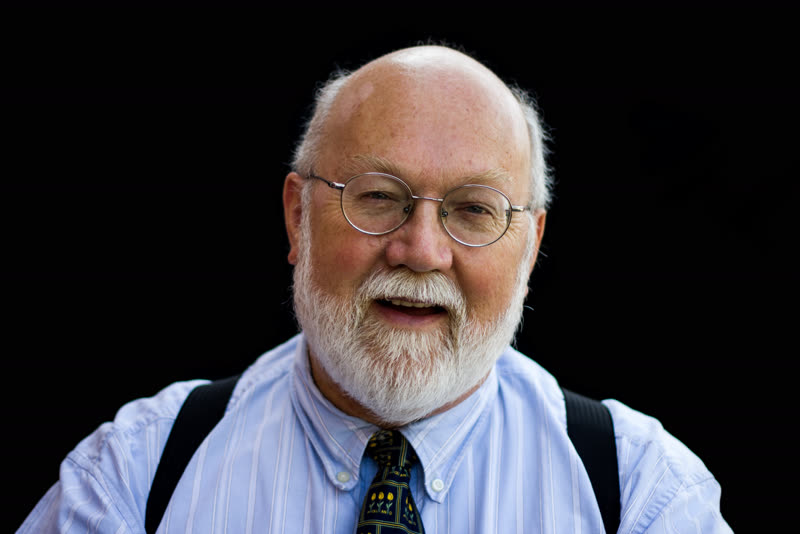 Tim Pasma Sunday AM Genesis September 7, 2014
📖 Read the Scripture passage (ESV)
The Tower of Babel - what images come to mind? A tower going through the clouds to heaven? An anxious God worried about earthly tower builders invading his heavenly sanctuary? A group of people babbling at one another? Is this some sort of fairy tale? Actually it is not the story of a terrified God, afraid that the incredible technical capacities of mankind will give them the ability to reach heaven. This is a narrative of pride, rebellion, apostasy and judgment. Listen in and get the real story of Babel.
Transcript
Take your Bibles this morning and turn to Genesis chapter 11 as we continue working our way through this important book. Genesis chapter 11, be looking at verses 1 through 9. You follow as I read. Now the whole earth had one language and the same words. And as people migrated from the east, they found a plain in the land of Shinar and settled there. And they said to one another, Come, let us make bricks and burn them thoroughly.
And they had brick for stone and bitumen for mortar. Then they said, Come, let us build ourselves a city and a tower with its top in the heavens, and let us make a name for ourselves, lest we be dispersed over the face of the whole earth. The Lord came down to see the city and the tower which the children of man had built. And the Lord said, Behold, they are one people, and they have all one language, and this is only the beginning of what they will do. and nothing that they proposed to do will now be impossible for them.
Come, let us go down and there confuse their language that they may not understand one another's speech. So the Lord dispersed them from there over the face of the earth and they left off building the city. Therefore its name was called Babel because the Lord confused the language of all the earth. And from there the Lord dispersed them over the face of all the earth.
Father, we would ask now that you would open our hearts and our minds to this text, this text not just written for your people long ago, but written for us. We pray, Father, that you would, in your way by your Spirit, begin to change us in light of this. We're thankful again for your Word. We're thankful for your Spirit. Help us now in our understanding.
In Jesus' name, Amen. Did you hear the story of the Tower of Babel when you were a kid I can imagine anybody in this audience not hearing that story And when you heard it, what were the images that came into your mind? Did you have in your mind a tower going through the clouds into heaven? Did you as a child think that God was very anxious in heaven and worried about what would happen if they succeeded?
What happens if they make it to heaven? Oh no! What am I going to do now? Maybe that's what you were thinking. I know that's what I thought when I was a kid. You no doubt have in your mind people babbling to each other, but what is this story about anyway?
What is this narrative about? What is God teaching us here? Well, of course it carries forward again God's purpose, the story that he began, the narrative that he began, which is to bring about the woman's conquering seed that would defeat the seed of the serpent. The last story we heard in that whole unfolding of this narrative was the story of Noah and his sons, of Ham dishonoring his father, and of the curse that fell on his youngest son Canaan, of God commanding Noah's sons to multiply and to fill the earth.
We were introduced to all the nations and the cultures that came from Noah's three sons. And now in chapter 11, we find out where all those different nations came from. All those nations mentioned in chapter 10, now he tells us how they got where they were. But it's more than presenting an historical note on how we got all those nations. as you read this narrative as you read this story it is again a story of sin inevitably reaching its climax in the affairs of men again we see that just as we have seen in every narrative in this book sin wins, sin wins sin reaches its climax and here again we see that happening and this is not a story of a terrified God afraid that the incredible technical capacities of mankind will give them the ability to reach heaven.
It is instead the narrative of pride and rebellion, apostasy, and judgment. So let look at that this morning Dispel the childish images from your mind and let dig in and listen to what this narrative says to us First of all, listen to pride. Listen to pride, verses 1 through 4. Now the whole earth had one language and the same words, and as people migrated from the east, they found a plain in the land of Shinar and settled there, and they said to one another, come, let us make bricks and burn them thoroughly. and they had brick for stone and bitumen for mortar.
Then they said, come, let us build ourselves a city and a tower with its top in the heavens and let us make a name for ourselves lest we be dispersed over the face of the whole earth. Now, note the setting of the story. This is all of humanity. This is all of humanity with one language. This is all of humanity with one language in one place. They've all moved together to the plains of Shinar, The cradle of civilization.
We studied about that. At least the cradle of civilization when we were in high school history class. That part of the world between the Tigris and the Euphrates River, which would be now in southeastern Iraq. This is where they gathered. The question then occurs to us. Is this gathering for good or for ill?
What's going to happen with all these people in this one place? Well, we see in verses 3 and 4 that humanity's technology has advanced. They know how to make building materials. And notice what it says in verse 3. And they said to one another, Come, let us make bricks and burn them thoroughly. And they did that.
Then they said, Come, let us build ourselves a city and a tower with its top in the heavens and let us make a name for ourselves, lest we be dispersed over the face of the earth. Come, let us. They're exhorting one another, combining all their energies for the task. what will they do with their new abilities? What are they going to do with their newly discovered technology?
Well, they want to build a great city with a tower as its architectural crown, as a monument to them. Now, what about that tower? Do they really plan on building a skyscraper that's going to make it into heaven? What is that all about? Well, recognize that they're using hyperbolic language. It's hyperbole. hyperbole again high school English remember hyperbole exaggeration for sake of emphasis we see this in other places in fact we see this same phrase used in other parts of the Bible the exact same phrase used for example in Deuteronomy chapter 1 verse 28 if you want to look at it Deuteronomy chapter 1 verse 28 Moses is talking here and this is what he says He's quoting the people when he says, Where are we going up?
Our brothers have made our hearts melt, saying, The people are greater and taller than we. The cities are great and fortified up to heaven. Now that's the exact same phrase that we find in chapter 11 here in Genesis where they say let's make a tower with its top in the heavens. It's the same phrase. The cities are great and fortified in the heavens, up to heaven.
And they weren't saying that we spied out the land, we've come to these incredible cities and we stood outside the walls and we looked and the walls went up into the sky and we couldn't even see the top of it. That wasn't what they were saying. They were saying, these walls go up to the heaven. These are humongous. These are tall, impregnable walls. You see the same thing in Deuteronomy 9, verse 1.
Hear, O Israel, you are to cross over the Jordan today to go in to dispossess nations greater and mightier than you, cities great and fortified, up to heaven. Same phrase that's used here in Genesis 11. It's a figure of speech. It's saying, this is incredibly great. This is high. In fact, if you want to know, essentially what they were saying is we're going to build a tower higher than anything you've ever seen before.
It'll reach to the heavens. Now, if you heard that today, you wouldn't think anything of it. You would know what they were saying. And that's what they're saying here. This is going to be an incredible monument. This is going to be an incredible architectural crown to all our efforts.
Do you know that we have the same kind of thinking? we have the same way of talking in our language. We have a term called skyscrapers. When you go to New York City, do you expect to see the clouds all of a sudden go because something's scraping them? Right? You don't think that. When you see skyscrapers, you know that that's an exaggerated way of talking about these extraordinary high buildings.
That's what's going on here. They're not trying to get to heaven. They're not trying to build this temple that's going to go up through space. They say, let's build this tower that will be greater than anything that anyone's ever seen before. This is probably the first ziggurat. Do you remember ziggurats?
Remember the high school again? High school history class. If you haven't heard about ziggurats in high school class, then you tell me and I'll talk to your history teacher because you need to know this. Ziggurats. Remember, they were those ancient temple structures that looked like giant stairs, right? They went like this.
There were these huge, massive, lofty staircase towers that were essentially temples. and when you got near the top, they would paint them blue in order to blend in with the celestial home of the gods. And on the very top of this huge stair step was a little shrine, a little building on the top. And inside they would paint it like the starry heavens.
This was the residence of the gods. And so these stair step pyramids, these step pyramids, these ziggurats, represented these stair steps by which men could ascend to the gods and the gods could come down the steps into the city. This is essentially the first ziggurat. That's what they meant. Now, were they building this to reach the true God or had they already fallen into idolatry and thinking about other gods?
I believe it's idolatry. Let's build this thing that will reach the heavens where we can communicate with the gods. This incredible architectural monument. In essence, they will use their technological powers to glorify and to fortify themselves. They're going to glorify themselves. How?
They glorify themselves. Why are they going to do this? They want to make a name for themselves. It's not that they want to get into heaven and attack the gates of heaven or to reach the gods or to get that high, what they want to do is build this incredible monument to their pride. They want to glorify themselves. They want to make a name for themselves.
That's the whole purpose of this. They want to exalt themselves. They want to glorify themselves. And this monument was the means by which they were going to do it. Now the spirit of the world speaks here, does it not? Men talk to each other in grandiose terms as if this is the ultimate achievement.
You see it this way Mankind talks that way today taking pride in themselves Look look at how we conquered space Those of us of my generation remember how for that one decade from 60 to 70 we were in this incredible race against the Russians. Who was going to get to the moon first? And we got there in 1969 and there was this incredible pride because we had conquered that which was unconquerable.
Today you hear it. Look at how we have mastered the human genome. And now with the way we can manipulate genetics, we'll be able to conquer diseases that were never conquerable before. Wow! And man talks in pride with these ultimate achievements. This is the spirit of the world loud and clear in this place.
They want to glorify themselves. But not only glorify, but fortify themselves. Listen, note, they don't want to be scattered. They don't want to be dispersed. God had commanded them, Noah's sons, fill the earth. But their descendants refused to do it.
They chose to stay here. And this skyscraper of theirs is this titanic monument to their self-assertion that they're going to do what they want to do. They're not going to do what they've been told to do. And they will crowd together to preserve their identity and to control their futures. Right? We are going to control it.
We're going to tell everybody, this is what it's all about. This is us. We're not going to do what God says. We're going to concentrate here. We're not going to be spread around. We are going to make a name for ourselves in this place.
Again, the Spirit of the world speaks here. Right? The Spirit of the world says, We're going to do what we want to do. And we'll build a monument to it. There's safety in numbers. It can't be wrong if so many believe it's right.
And so, the spirit of the world is loud and clear here. You see it coming. You see it speaking. This idea of pride and preservation. Pride and self-reliance and rebellion. That's what the Tower of Babel is about. self-reliance and pride we will do what we will do because we want to do it and we're proud of it now comes the pivotal point in the story it found in verse five this is the pivot the hinge on which the whole story turns And it says simply And the Lord came down to see the city and the tower which the children of man had built.
Now we hear, listen to God. We've heard pride. Now listen to God. God weighs in with His opinion in verse 5 of this monumental work. Now again, as a child, I would read that and be confused. It says, God came down.
And the Lord came down to see the city and the tower. Wait a minute. Wait a minute. I may only be 10 years old, but I know that God is omniscient. And I know He's omnipresent. He's everywhere present.
He knows everything. Why does He have to go down and see? Can't He see it from heaven? Right? See, you thought the same thing. You're just afraid to say it out loud.
That's the problem. Well, I'll say it for you. Can't he see everything anyway? Why does he have to come down? Is he nearsighted? Can't he see it from up there?
And the point is, no. That's the point. This is satire. This is irony. You see, man builds this ultimate architectural monument, this incredibly significant city, and it is so tiny. It is so puny.
It is so insignificant that God has to come down to see it. That's the point. This is God's opinion of it. What? Are you kidding me? Don't make me laugh, is what he's saying.
That's the point. It's not that God can't see it. It's that it's so insignificant, he has to come down to get a good look at it. It's so puny. And notice, there's also a phrase used here that's very rarely used, but I think it's used here on purpose. This is built by what?
The children of man. Now that's not a phrase that's used a lot, but I think again it's used in that ironic way. It's built by these frail, mortal earthlings. Alright? These frail, mortal earthlings have built this incredible city and I have to come down just to see it. That's God's opinion of this whole endeavor Alright It reminds me of Psalm chapter 2 or the second psalm where it says God sits on his throne laughing at people laughing at them because they say well we not going to obey God, and he just sits on his throne and laughs at them.
That's what's going on here. He's laughing. Come on, this is so puny. Give me a break. I'm not trying to be sacrilegious here, but if Moses was here today, I think that's how he'd say it. Right?
Such is God's opinion of man's grandiose achievements. You see? You ever thought about that? Wow! We've mastered the human genome! We can figure out the whole genetic makeup of a person!
And God says, I know that already. I've known that for a long time. You know, we're just, aren't we something? And God says, I invented it. Right? I mean, this ought to give us some perspective here about how great we think our achievements are.
We're always, and again, this is the spirit of the world, we're always blowing the trumpet about these great things that we have done or these great things that we have discovered. And the only thing we've done is uncovered what God has put there. The only thing we've done is peeled away a few layers and go, oh wow, that's incredible. But we haven't done anything that magnificent.
That's exactly what's going on here. That's what this story is about. Don't think you're so great. You're not. And the problem is you're proud about things that you don't have any reason to be proud about. Anyway, even though it's puny, even though it's insignificant, even though it's tiny in God's eyes, yet there is significant danger for the human race in this project.
Note verse 6. And the Lord said, behold, they are one people, and they have all one language, and this is only the beginning of what they will do. And nothing that they propose to do will now be impossible for them. There is significant danger with such united pride and self-reliance. Now, this is not the voice of a frightened monarch. This is not God saying, oh no, if I don't do something quick here, they're going to succeed in their wicked schemes, and I won't be able to stop them. them.
That's not what he's talking about. This is the voice of the Savior King determined to accomplish his purpose of sending the conquering seed. Same theme that we see throughout this book up to this point. This is disaster awaiting the human race. It's not disaster for God, it's disaster for the human race if they succeed in this project. If they're one language and one people and they're united in this false religion, in their pride and in their self-reliance.
This will mean danger. Imagine what would happen if the whole world was ISIS and the only true worshippers were found in Marion County. In other words, if I let them go on, we'll end up in the same situation we had with Noah. One family and the whole earth corrupt. All united against this true people of God if there were some. Alright?
And how's God going to accomplish His redemptive purpose? He has to judge. But what have we heard before? He's made a promise, hasn't He? He's made a promise not to destroy the world with a universal flood. He's not going to do what He did with Noah.
He's going to judge in a different way. And so what do we find? We find that God intervenes with His judgment in verses 7-9. Again, this is God seeing that His purposes are accomplished and He does that through judgment. But He does it through a different kind of judgment than He did before. Alright?
Now again, there's irony here. Sarcasm here. And you need to see it. come let us go down and there confuse their language wait a minute have you heard that before come let us where have you heard that well you heard that up in verses three and four right and what's he doing he's contrasting God's response to man's plans in a very clear way man says come let us do this and God says come let us do this the rallying cry of man is no match for the rallying cry of heaven.
Man determined actions are nothing when God determines to respond God come let us is a whole lot more different than man come let us And the judgment is really quite simple. Rather than catastrophe, God sends confusion. Confusion instead of catastrophe. What is it? No one can understand each other. I don't know, have you ever thought about this?
Have you ever thought about this? I sometimes let my imagination go in these texts. So here, you arrive on the job site, right? You go, hey Dan, how's it going? He says, guten tag. What did he say?
You go, hey Frank, ah, buna dimanazza. man am i hung over or what what's going on here right and then it gets worse right it gets worse but goes beyond good morning to hey bring those bricks over here and you can't understand each other it's the whole thing is just wild just someone ought to write this in a novel or something it would be hilarious they can't understand each other and so what does it say They leave off building the city. They can't finish because they don't understand each other. It's amazing.
And through that change of language, God shatters their self-reliance. Just absolutely shatters it. And he scatters them. Now again, look it. He scatters them. How did the story start?
One people, one language, in one place. Now they're scattered. They all go in different directions. God is sovereign over even the foolish, sinful acts of man so that they will eventually submit to his will. He's sovereign. You can't beat God.
There's no way around it. And look, it takes no earthly army or even a heavenly one to do it. God just confuses their language. And through that change of language, God humbles man's proud self-exaltation. again, there's more irony. What did they want to do? Again what did they want to do Verse 4 Let us build ourselves a city and tower that top in the heavens and let us make a name for themselves And so God does let them make a name for themselves And what is the name they make for themselves?
Confusion. Babel. That's the name they make. That's the name they end up with. At the end of the whole project, they end up with the name Confusion. Babel.
Some scholars think that there's even a word play here. The Akkadian language, the ancient language of that part of the world. The word for Babylon is Babilu. Which means gate of the gods. And in the Hebrew it becomes Babel. Confusion.
Chaos. God gave him a name alright. Now this narrative ends in a different way than the others. now I want you to see this because this is important for understanding how Genesis unfolds and what God is saying here this narrative ends differently than all the other narratives because it ends in judgment and no grace in each previous judgment in every previous judgment there's a gracious provision of hope but in this judgment there's none there's no token of grace no promise of blessing no hope of salvation.
There is no clothing for the naked sinner here. There is no mark for the fugitive. No protective mark for the fugitive. There's no rainbow in the sky. Unlike every other story of judgment, this one ends without grace. Why?
Why does this one end without grace? it ends with judgmental scattering and complete confusion because we're waiting for the new history this is the concluding chapter of the history of all mankind it ends in judgment and the new story begins in chapter 12 the people are scattered the people are scattered forming all these nations where our hope where the hope god where this is not ending like it should chapter 12 he sets apart a man who be a blessing for all the nations And the rest of the book then begins to tell God act of grace to bless all the nations that have been scattered. The blessing is not here. The world has to wait the new history. you only have to wait a couple weeks now one last point listen to the lessons listen to the lessons you can never exalt yourself without judgment you can never exalt yourself without judgment Jesus himself said those who exalt themselves will be abased those who humble themselves will be exalted you know the differences in language constantly remind us of God's curse and judgment just like the toil of work reminds you of the curse just like the pain of childbirth reminds you of God's curse just like the rainbow reminds you of God's judgment so the differences in language constantly remind you of sin and judgment of God's hatred of pride whenever you hear another language that ought to jump into your mind God hates pride you know it's really strange we'll be going to Albania another week and in the last how many years has it been now 13 years as I've gone overseas every year it's still always strange to land in a different airport and walk in there and hear everything but English everything but English it's really weird I remember the first time going overseas I remember walking with Florin Al my Romanian friend whose English was about this much and my Romanian was less and walking through that village and him showing me everything and him pointing at something and telling me the Romanian word and I would tell him the English word I'm reminded of his four year old daughter who sat on my lap and opened a picture book because she thought I was really some strange alien from another planet.
And she turned the pages in that book and looked at the pictures and would point at them and tell me what it was. And I'd tell her what I said it was. I wasn't buying it, you know. So I would repeat the Romanian word. I remember her pointing at a tomato and saying, Roshi. And I said, Roshi.
Noon, noon, noon. Roshi. Roshi. Noon, noon. Roshi. And she takes my face in her hands and turns me to her face and she looks at me and goes, Roshi.
Now, do you know how hard ministry is in that kind of situation? It's difficult. It's difficult. But those differences in language ought to remind us that God hates pride so much so that that curse reverberates through the generations for century after century after century after century. There's more languages now than there were back then. It's incredible.
Now God wrote this for His people on their way to Canaan. They're hearing this as they're on their way to Canaan. You see, they could look over the nations. They could look over there to the east and see where Babel used to be and see the descendants. There were civilizations after civilization that grew in that area of the world over and over and over.
Keep civilization after civilization after civilization. They could look at those descendants of Babel, look at Babylon as it was known in their day, and they could laugh and deride them, but they had to learn this lesson. If you're proud and disobedient, God will scatter you. And that's exactly what he did. He scattered them because of their pride. God wrote this for people today.
Exalt yourself, you'll face judgment. You say, well, I don't exalt myself. that's you know what do you do when someone pats you on the back say good job and you're saying to yourself yeah i was yeah that was good i did do a good job you're proud you're proud god hates that because you wouldn't be where you were without the gracious providence of god would you you wouldn't be where you were without the gracious providence of God your background your family whatever it is He worked all the details out There no reason no one has any reason at all in any way, for any kind of pride, ever. Could I make it any stronger than that?
We have no reason for pride. But you know what? God not only hates pride, but He provides an answer to it. And you know what? He doesn't conquer our pride by force of judgment. Do you ever think about that?
God does not show up with all His power and judge us and pride is gone. You know how I know that? Because pride did not stop at Babel. Did it? God judged them for their pride. Did pride end?
No, it continued. Did it not? It continued. judgment's not the answer for pride I could say to you that God's judgment horrific judgment horrific judgment awaits people who are proud and that's not going to change your heart you may be frightened for a while but you'll continue being proud how does God conquer pride? you know how he did it? think about this God conquered pride by humiliating His Son.
Consider that. Isn't that amazing? The answer to pride was the Son of God humiliating, shamefully treated, hung on a cross in open shame. No pride at all. That's how God conquers pride in our hearts. Isn't that amazing?
Would you work that way? No. And when the gospel of that death goes out and people believe, God then begins by His Spirit to deliver them from their pride so that they become what Jesus tells us. Let your light so shine before men so that they see what? Your good deeds. And you get a pat on the back.
No, no. So they see your good deeds and glorify your Father in heaven. Isn that amazing They see the things you do and they won talk about you They be so amazed that God is real because of that As the Gospel goes out it conquers pride. As the Gospel of this humiliating death of His Son goes out, pride is conquered in our hearts as we then humble ourselves and say, I am a sinner.
And I have nothing to offer you, God. I have nothing. I have nothing to be proud of. The only thing I am is dust and ashes in your sight. And the only hope I have is to trust in your Son. That's all I have.
Pride is conquered in our hearts. I'm amazed at the statement of the Apostle Paul in Philippians 1.20 when he's in prison. He's waiting to be heard by the Roman Emperor. It's going to determine whether he lives or dies. And the only thing he says is to the Philippians, pray that I'll have sufficient courage so that now as always, Christ will be exalted in my body whether by life or by death.
He says it doesn't matter whether I live. It doesn't matter whether I die. The only thing that matters is that Jesus is seen. That's the conquering power of the Gospel. That ought to be what happens to us as we humbly seek God's face. As we repent of our pride.
God ought to be glorified and exalted rather than ourselves. And you know what? he begins to reverse the curse of Babel. Do you know that? Do you remember Pentecost in Acts chapter 2? The apostles went out to all these different Jewish people from all these different nations. All of them speaking different languages.
And what? They heard the Gospel of the Kingdom in their own language. And God slowly begins to reverse the curse. So that when we come, for example, to Colossians chapter 3, verse 11. He says this, Here there is not Greek and Jew, uncircumcised or circumcised, barbarian, Scythian, slave or free, but Christ is all and in all. And so the barriers start to fall until finally on that great day all the nations, all the people redeemed from all those nations will be before the throne of the Lamb and will be singing.
And it says in Revelation 5, and they sang a new song saying, worthy are you to take the scroll and to open its seals for you were slain and by your blood you ransomed people for God from every tribe and language and people and nation and you have made them a kingdom and priests to our God and they shall reign on the earth They sing of His glory in one language. Babylon's about pride. Babel's about pride and how much God hates it.
The cross is about pride and what God's done about it. Some years ago I went to a funeral and I was talking to the two funeral directors. They're friends of mine. I know all these guys. And we were talking. The guy came in from that area.
He was talking and he said this. I don't think he knew I was a pastor. I don't think he would have said this. He said, you know what? I don't apologize to anybody. I will never apologize to anybody.
I thought, there's an arrogant man. There's an arrogant man headed for judgment. God hates pride. When you see Babel, you think pride. And how much God hates it. But when you think of that tower, never forget to think of the cross. the only instrument in all the world that will ever conquer this inevitable rise of pride in our hearts.
Father, thank You for Your Word. Thank You for Your Son. Thank You for the cross that delivers us from the judgment of pride, but also from the power of it. Father, we thank You that as Your children, when we even sense pride in our hearts. We hate it and we repent of it. Father, thank You for making this part of Your portion, of Your Scripture, clear to us.
And so we ask again, save us from our pride and make us folks, make us people who humbly live and who exalt, not ourselves, but the name of our redeeming God. Thank you, Lord, for your word. To you be the glory, we pray. Amen.
Also referenced in this sermon
Other passages mentioned, beyond the main text.