Reformation Sunday 2014
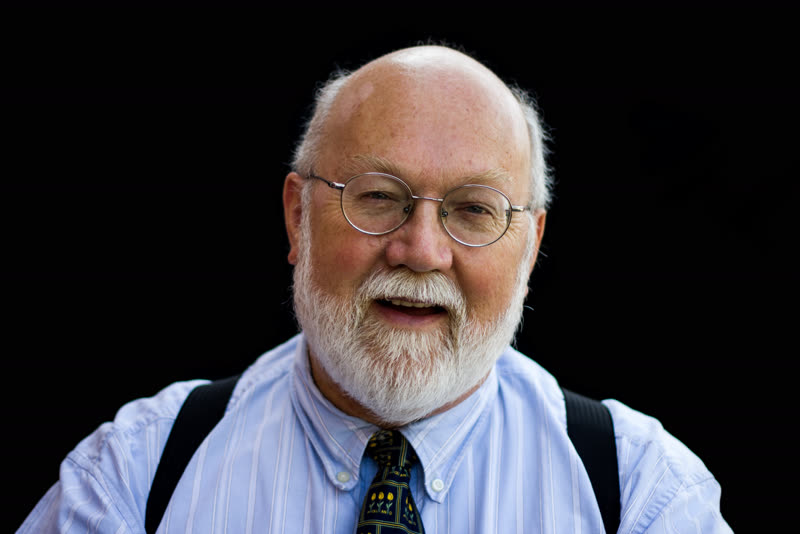 Tim Pasma Sunday AM Reformation Sunday November 2, 2014
📖 Read the Scripture passage (ESV)
How do you light the fires of revolution? What does it take? Must you amass an army and some major firepower? Does it take years of secret planning? Do you need to educate the common people in your ideology? God lit the fire of the Protestant Reformation through a simple pastor concerned for the souls in his congregation. Through that pastor he launched a revolution that turned the world upside down. Through that pastor he changed the course of history - the world would never be the same again. But most importantly of all, through the concern of that pastor, the gospel of God’s grace was recovered from centuries of corruption. That rediscovered gospel freed millions of people struggling under the burden of trying to earn the favor of God. That pastor was Martin Luther and it was he whom God used to trumpet the grace of God - the free forgiveness of sins through faith in Jesus. Listen to this Reformation Day sermon and learn more of what the Bible means by "grace alone."
Transcript
It's been a tradition of the Rue Baptist Church for nearly 30 years now to celebrate Reformation Sunday. And you may be asking, why do we do this? Well, we're not the only church that does this. There are many churches across the world, Protestant churches, that are celebrating this special Sunday. It's on October 31, 1517, that a young Augustinian monk, pastor, professor by the name of Martin Luther nailed his 95 theses to the church door at Wittenberg.
And that launched a revolution that we call the Protestant Reformation, a revolution that changed the course of history. Now, over the years, we've used this Sunday to talk about different characters in church histories. People like Luther, John Calvin, Ulrich Zwingli, William Tyndale, John Bunyan, Charles Spurgeon, Jonathan Edwards, William Wilberforce, just to name a few.
The question is, why should we do this? I think we need to do this because we have to remember our heritage and those who've gone before us. You see, we understand the Scripture better today because of what people have done in the past. We have a clearer view of the Scripture today because the Holy Spirit has been at work for 2,000 years teaching other people His truth.
And so it's not just us, it's a whole span of history of the Spirit teaching people that we can learn from. So our worship service today reflects that fact that we stand in a line that stretches back for centuries. There's a cartoon that Charles Schultz, remember Peanuts, the Peanuts cartoon? There's a cartoon in which Sally is sitting there and writing a paper and Charlie says to her, what are you doing?
She says, I'm writing a paper on church history. And the next frame shows her saying, in 1950, our pastor came to our church. And that's about as far as any of us go when it comes to understanding the history of the church. But the church goes back for over 2,000 years, and much has happened, and God has worked in all that time. And so we're going to sing hymns that have been a part of our heritage, and we're going to sing hymns that speak of our heritage.
We're going to recite the Apostles' Creed, which was the earliest systematic confession of the Christian faith. that's nearly 1,600, 1,700 years old. And we going to tell the story of Martin Luther and the Protestant Reformation Now we want to tell the story by explaining the three pillars of the Reformation Three Latin phrases sum them up Sola Scriptura, Scripture alone. Sola Fidei, Faith alone.
Sola Grazia, Grace alone. Like great towers that soar above the landscape, these three pillars of truth stand above the theological landscape, drawing our attention to the Gospel of Jesus, the good news of God rescuing sinners through the gospel. You see, the story of the Reformation is not a story of some theologians wrangling about some theological propositions.
In fact, I believe the story recounts how God recovered the gospel from centuries of corruption and misunderstanding so that people could once more understand that they are reconciled to God freely without anything that they can do. freely through Jesus by faith. So let's enter our worship today praising the Lord who promised, I will build my church and the gates of hell will not prevail against it. Old Testament Scriptures in Jeremiah chapter 23, starting in verse 23 through 32.
Please follow along. Am I a God at hand, declares the Lord, and not a God far away? Can a man hide himself in secret places so that I cannot see him, declares the Lord? Do I not fill heaven and earth, declares the Lord? I have heard what the prophets have said, who prophesy lies in my name, saying, I have dreamed, I have dreamed. How long shall there be lies in the heart of the prophets who prophesy lies, and who prophesy the deceit of their own heart, who think to make my people forget my name by their dreams and that they tell one another, even as their fathers forgot my name for Baal.
Let the prophet who has a dream tell the dream, but let him who has my word speak my word faithfully. What has straw in common with wheat, declares the Lord, is not my word like fire, declares the Lord, and like a hammer that breaks the rock in pieces. Therefore, behold, I am against the prophets, declares the Lord, who steal my words from one another.
Behold I am against the prophet declares the Lord who use their tongues and declare declares the Lord Behold I am against those who prophesy lying dreams declares the Lord and who tell them and lead my people astray by their lies and their recklessness. When I did not send them or charge them, so they do not profit this people at all, declares the Lord. The passage we just heard declares that the word of God is what stands as the authority over even the dreams of the prophets.
And in the New Testament, in 2 Timothy 3, 16 and 17, we read these words. All scripture is breathed out by God and profitable for teaching, for reproof, for correction, and for training in righteousness, that the man of God may be competent, equipped for every good work. Because of that, we believe that Scripture is the ultimate authority that tells us what we ought to believe about God and how we ought to obey God.
But such confidence was not always the case in the church. For centuries, the church had claimed ultimate authority, saying that its teachings and its traditions were equal in authority with the Scriptures. It was Martin Luther, a young monk, a professor, a pastor, who challenged that belief. and in that challenge he launched that upheaval that's now known as the Reformation.
In 1483, Martin was born to a stern minor, Hans Luther, who maintained strict discipline in his staunch German household. Hans wanted the best for his son and since Luther did well in the early years of his education, he sent him to the university hoping that young Luther would become a lawyer. Luther pursued that dream and one day he was traveling through the forest and found himself suddenly in the middle of a violent thunderstorm.
Terrified, he promised that he would become a monk. And two weeks later, to the utter dismay of his father, he left his studies at law and joined the Augustinian monastery in Erfurt. Luther, as a loyal son of the church, was subject to all the teachings and the all-encompassing authority of the church and its traditions. He must accept the tradition as authoritative that said that confession to a priest was necessary for the forgiveness of his sins.
He had to believe that once absolved of his guilt, he still had to do works of penance works that would make up for his sin and satisfy a holy God and avoid any kind of temporal punishment that would come his way He must believe in a place called purgatory, where people after death were purged of their sins, making them ready for heaven because they hadn't made satisfaction for those sins in this life. The church also claimed that it could issue certificates of indulgence, that would reduce people's time in purgatory. Those kinds of traditions were believed to have the same authority as the commands of the Scripture.
Through God's providence, Luther became a professor at biblical studies at a little university, a brand new university in Saxony, the Wittenberg University, and also the pastor of the congregation in that city. He poured over the Scriptures in study, as he would lecture on different books of the Bible, and the university. And he came face to face with Jesus and his gospel.
But what he could not find was any biblical evidence for such things as purgatory or indulgences or even penance and confession to a priest. These were merely the traditions of men, not the commands of God. So on October 31, 1517, believing that the souls of his parishioners were at stake, for they were going across the river to another city, where indulgences were being sold and they were believing that those indulgences would relieve them of years in purgatory, might even release some of their relatives from purgatory.
And believing that that was causing irreparable harm to them, he nailed what's called the 95 Theses to the church door in Wittenberg. Now, this was just 95 sentences, 95 propositions that he wanted to debate with other professors. That's all he wanted to do. Luther challenged the idea that many of the traditions of the church were unbiblical. And he appealed to the scriptures to settle the issue.
Well, things really started rapidly happening then because someone took those theses and with the brand new printing press printed them up. And pretty soon they were spreading all over the country. And Luther was getting in trouble for his radical beliefs causing all kinds of an uproar. Another scholar wrote in response to them, He who does not accept the doctrine of the Church of Rome and the Pontiff of Rome as an infallible rule of faith, from which the Holy Scriptures too... their strength and authority is a heretic.
Well, he continued to publish his ideas, all of which appealed to scripture rather than tradition, getting into deeper and deeper trouble. Finally, four years after he posted those propositions, Luther was summoned to appear before the emperor and the princes of Germany in the city of Worms. He was ushered into the presence of the emperor, awed by what he saw in that great assembly.
In the midst of that august assembly, sat a table with books and they were all his books. In one of those books before him, Luther had actually made the statement, what is asserted without the scriptures or proven revelation may be held as an opinion but need not be believed. He was asked if he'd written the books and if there was any part of them he wished to recant.
He was surprised at that. He thought he would be given a chance to present his views, not respond to an immediate challenge to them and to and to recant those views. Confused, he asked for another day. He said, this touches God in his word. This affects the salvation of souls. I beg you, give me time.
He was given 24 hours. The next evening he entered the assembly. Candlelight flickered off the crowd of dignitaries jammed into the great hall. Once more he was asked, will you defend these books altogether or do you wish to recant some of what you have said? He said he could not. surely the reply came one individual could not call into doubt the tradition of the entire church you must give a simple clear and proper answer will you recant or will you not Luther replied in words that have been recorded and just sound down through the centuries saying this since then your serene majesty and your lordship seek a simple answer I will give in this manner neither horn nor tooth unless I am convinced by the testimony of the scriptures or by clear reason for I do not trust either the pope or count or in councils alone since it is well known that they have often erred and contradicted themselves I am bound by the scriptures I have quoted and my conscience is captive to the word of God I cannot and I will not retract anything since it is neither safe nor right to go against conscience.
Here I stand I can do no other May God help me Luther was bound by no higher authority than the Scriptures We appeal to the sole authority of Holy Scripture as the infallible Word of God against human opinion and ecclesiastical tradition. As Luther would say, sola scriptura. Sola scriptura. Romans chapter 4, beginning in verse 1. What then, shall we say, was gained by Abraham, our forefather according to the flesh?
For if Abraham was justified by works, he has something to boast about, but not before God. What does the scripture say? Abraham believed God, and it was counted to him as righteousness. Now to the one who works, his wages are not counted as a gift, but as his due. And to the one who does not work, but trusts him who justifies the ungodly, his faith is counted as righteousness. just as David also speaks of the blessing of the one to whom God counts righteousness apart from works.
Blessed are those whose lawless deeds are forgiven and whose sins are covered. Blessed is the man against whom the Lord will not count his sin. Is this blessing then only for the circumcised or also for the uncircumcised? We say that faith was counted to Abraham as righteousness. How then was it counted to him? Was it before or after he had been circumcised?
It was not after, but before he was circumcised. He received the sign of circumcision as a seal of the righteousness that he had by faith while he was still uncircumcised. The purpose was to make him the father of all who believe without being circumcised, so that righteousness would be counted to them as well, and to make him the father of the circumcised who are not merely circumcised, but who also walk in the footsteps of the faith that our father Abraham had before he was circumcised.
The Apostle Paul summarizes the Gospel in the book of Romans this way, For I am not ashamed of the gospel, for it is the power of God for salvation to everyone who believes, to the Jew first and then also to the Greek. For in it the righteousness of God is revealed from faith for faith as it is written, the righteous shall live by faith. What good news to sinners.
But the good news that God counts sinners righteous was strange to the ears of Martin Luther because he never really heard it. Luther became a monk for as a monk he had opportunity to earn the righteousness he needed to turn away the wrath of God through works of penance works of charity self and poverty he could achieve the righteousness required by God As a monk he lived a life of incredible self pushing his body to health-cracking rigors of austerity. He would beat himself nearly to unconsciousness.
He would fast for three days at a time and sleep without a blanket in the freezing winter in his solitary monk cell. All of it to earn acceptance with a God who was perfectly righteous and who hated sin and in righteousness would condemn all sinners. But all the time there was a voice that would say to him, Have you fasted enough? Are you sleepless enough?
He would repent and go to the priest and confess and confess and confess. And the voice inside would say, Have you confessed enough? You see, when he would read of the righteousness of God in the Gospel, he was terrified. That is why Luther struggled. He knew a great deal about the righteousness of God. The righteousness of God troubled Luther to the point of torment because righteousness spoke of the justice of God.
That justice was a source of great fear. God was more of a tyrant than a God of love and mercy. He could not grasp how Paul could say that his boast, his glory, his joy, and that he could live out of that righteousness of God. Luther wondered, how can I live out of the righteousness of God when I'm spending my whole life trying to avoid the righteousness of God because the righteousness of God must condemn me.
Luther dreaded the righteousness of God. He wrote this, when I was a monk, I tried with all diligence to live according to the rule and I used to be contrite to confess and number off my sins and often repeated my confession and sedulously performed my allotted penance, and yet my conscience could never give me certainty. But I always doubted and said, you did not perform that correctly.
You were not contrite enough. You left that out of your confession. The more I tried to remedy an uncertain, weak, and afflicted conscience with the traditions of men, the more each day found it more uncertain, weaker, more troubled. After watching studies, fastings, prayers and other most severe exercises with which as a monk I afflicted myself almost to death yet that doubt was left in my soul and I thought who knows whether such things are pleasing to God When viewed that way there but one course to take You have to establish your own righteousness before the righteous demands of a righteous God.
You try to meet the demands of divine righteousness. You patch up your life here. You determine to do better there, all of it intending to earn favor by establishing your righteousness before God. And so like Luther, if you're really serious about the matter, you come to dread the righteousness of God. You see, there's always that voice saying, you haven't done enough because the righteous demands of God are perfect.
But as professor of Bible in the university, he started studying the book of Romans. As he did, the Spirit of God unveiled the meaning of Romans chapter 1, verses 16 and 17 to him. He realized that the just shall live by faith, that it was not his righteousness that mattered, but a righteousness from God that came through faith. Luther remembered it this way.
Here I was in my tower, reading and praying. I labored diligently and anxiously to understand these words of Paul. The righteousness of God is revealed in the gospel. I sought long and knocked anxiously for the expression, the righteousness of God blocked my way. As often as I read this expression, I wished that God had not made the gospel at all. But then one day, when I was meditating in the tower, I saw the difference between law and gospel for the first time in my life.
The light broke through as I formerly hated the expression, the righteousness of God. I now regarded it as the most comforting word in all the Bible, In very truth, this language of St. Paul was to me the true gate to paradise. You see, the law taught him the righteousness of God, what God would do, what God demanded. But the gospel told him of a righteousness from God, the righteousness that God would give him through faith.
He says, then I grasp that the justice of God is that righteousness by which through sheer grace and mercy God justifies us through faith. life would never be the same for Luther after that and God would forever be the object of his love not his hate for he had heard the gospel the righteous shall live by faith you are justified you are declared guiltless you are accepted by God through faith alone, sola fide. Luther once said about preachers, the three marks of a good preacher are these. He stands up, he speaks up, and he knows when to shut up.
He believed that preachers should teach only the Word of God and seek only His honor and praise. He said this, Likewise, the hearers should also say, I do not believe in my pastor, but he tells me of another Lord whose name is Christ him he shows me let's pray Father we're thankful again for your faithfulness to your church and we're thankful for this event these events that came about by your providence to bring about the recovery of the gospel we pray Father that we would celebrate this not in the sense of looking to great men, great as they are in your plan, but that we would look instead to the fact that your gospel became clearer and that we were once again set on the course of seeking reconciliation with you revealed in the scripture by faith through grace. Help us now as we consider your grace this morning in Jesus name.
Amen. Well how do you light the fires of a revolution? What does it take? Does it take amassing great quantities of arms? Does it take years of secret planning? Do you need to educate the common people in your ideology?
What does it take? God lit the fire of the Protestant Reformation through a simple pastor concerned for the souls of the people of his congregation. Through that pastor, he launched, he turned the world upside down. And through that pastor, he changed the course of history. but most importantly of all through the concern of that pastor the gospel of god was recovered from all the corruption that had accrued that had gathered around it over centuries and that rediscovered gospel freed millions of people once again because they heard the good news that you are saved by faith through grace that you have nothing to contribute but god freely gives you salvation as a gift the reformation i believe gave us back jesus as a savior not just as a judge martin luther was that pastor and it was he whom god used to trumpet the grace of god the free forgiveness of sins through faith in Jesus It all started in the waning days of October 1517 Many of you know this story, some of you do not.
Pope Leo X, in an effort to raise money for the continuing construction of St. Peter's in Rome, had authorized the sale of certificates of indulgence. Now the Roman church taught that it had in its possession the treasury of merits. Well, what is the treasury of merits? It was this. Those that they called saints had done more than enough good works to make it to heaven.
And so their excess merits were put into a treasury that the church owned. Excess merits. They had more than enough to make it to heaven, but you don't. And so their extra merits were put into a treasury. and that excess of merit could be granted by the church to those who are deficient and it did so, it sold those merits through certificates of indulgence and the one purchasing such a certificate could purchase remission from sin that is remission from temporal punishment remission from some of the purging fires of purgatory or they could purchase it for relatives who were there in purgatory already.
Johann Tetzel was a Dominican monk and he was appointed as the agent to sell these certificates in the German states. Tetzel promised his listeners that they could purchase remission for their sins or the sins of loved ones in purgatory. And he was a really good salesman. He had a catchy little slogan. As soon as the coin in the coffer rings, the soul out of purgatory springs. people came from far and near to purchase certificates to liberate loved ones from purgatory or to reduce their time in purgatory but some of those folks came from the congregation of Dr.
Martin Luther pastor of the church in Wittenberg and professor of bible at the nearby university he told the souls under his care that they had been cruelly deceived that these things were not true, that the church could not dispense such grace. He spoke out vigorously against the sale, that he believed deceived and damned those who put their faith in such certificates. And so on October 31st 1517 aflame with indignation and concern Luther went to the church with the 95 theses in one hand a hammer in the other and he nailed those 95 propositions 95 sentences on the church door at Wittenberg.
As if you took this thing and nailed it to the door, the front door of the church. Now that action was nothing extraordinary because there were other things hanging on the church doors as well. This was the town bulletin board. It was nothing extraordinary at all with what he did. His intent was to gather together a group of scholars at the university to debate these 95 propositions.
It was as if, it is so ordinary, it was as if a professor would tack something up on the faculty bulletin board in the faculty lounge challenging people to come and discuss something. That's all it was. But in God's good providence, that ordinary action of posting some theses on the town bulletin board lit the fire of the Reformation. For you see, for Pastor Martin, God's grace was God's grace.
It cannot be bought, sold, or parceled out in indulgences. The very understanding of the grace of God was at stake. If you do not understand the grace of God, you have no hope. And that is as true today as it was nearly 500 years ago. If you don't understand the grace of God, you have no hope. There is no hope for you.
And so with the Reformation came the cry, Salvation by grace alone. And just like Luther, you too must recognize God's grace to you in salvation. Turn to Romans chapter 3. Romans chapter 3. We're going to look at verses 21 through 24. And we read this, But now the righteousness of God has been manifested apart from the law, although the law and the prophets bear witness to it.
The righteousness of God through faith in Jesus Christ for all who believe. For there is no distinction. For all have sinned and fall short of the glory of God and are justified. And that word justified means declared righteous. Declared righteous. And are declared righteous by His grace as a gift through the redemption that is in Christ Jesus Oh, these are so important words.
Luther was angry because no matter what anyone else said, the Scriptures asserted that God declares you righteous freely by His grace. Now remember the indictment that stands against us all. if you jump up to verses 19 and 20, you read these words. Now we know that whatever the law says, it speaks to those who are under the law. It's speaking of God's law.
So that every mouth may be stopped and the whole world may be held accountable to God. For by works of the law, no human being will be declared righteous in his sight since through the law comes the knowledge of sin. God makes two declarations here. Number one, you're guilty. Everyone's guilty. That's what he says in verse 19.
Every mouth in the whole world is stopped before the judgment of God. You're guilty. You can't say... In other words, there's no defense. Your mouth is stopped. You have no defense.
You have not kept the law of God. And then he makes a second declaration in verse 20. By the way, if you try to obey the law of God, hoping then that will cause God to declare you righteous, it's not going to happen. You cannot do it. Boy, wait a minute. if first of all he says everyone's guilty and then says you can't be acquitted or you can't be declared righteous by trying to be righteous?
What hope is there? If you can't earn your salvation, what do you do? Well, that's what he says in verse 21. But now the righteousness of God has been manifested apart from the law, although the law and the prophets bear witness to it. It's a righteousness from God, the righteousness of God. God will never declare you righteous by your efforts.
Let me say that again. Try as you might to obey the law of God. You will never do it good enough so that God says to you, you're righteous. He says it's impossible. The only thing the law can do is to show you that you're a sinner. That's all it can do.
Try to obey it. It won't do any good. You will not. You say, Tim, that's pretty radical. I always thought if I did well, God would declare me okay. Well, it's not me saying that.
It's the Bible here saying that. Try as you might, you will never do it good enough so that God will justify it. He says, no one will be justified by works, by obedience to the law. How do you acquire that righteousness? Keep reading. The righteousness of God through faith in Jesus Christ for all who believe.
There's no distinction. Everybody sinned. He goes on. He repeats that. Everyone falls short of the glory of God. Then how do I, what's my hope?
There is a righteousness of God through faith in Jesus Christ. Consider it this. God gives you a test. He says, obey my law and everybody flunks. Everybody flunks. Everybody flunks.
What is that law? Let me just sum it up. Love the Lord your God with all your heart, all your soul, and all your mind, and love your neighbor as yourself. Have you loved God completely, wholeheartedly, for your whole life? No. Guilty.
Have you loved your neighbor as much as you love yourself? No. No, you know you haven't. Guilty. what hope is there there is a righteousness that comes through faith everybody flunks the test everybody gets an f but one came who took the test his name is jesus he got an a plus and when you believe in him even though you flunk god gives you his a and you are declared righteous you stand before the judge and say here's the test he looks at the top it says a I'm going to declare you righteous.
Why? Because I've given you the righteousness of Jesus who took the test for you. There is a righteousness that comes through faith in Jesus to all who believe. What marvelous news that is. That's what happens. It's as if the verdict of the last day, not guilty, is brought all the way down to right now.
And it says, by the way, on the last day when you stand before the judge, you're not guilty. You can know that now. You can know it now. And that verdict comes because Jesus paid the price. And they're justified by His grace through the redemption that is in Christ Jesus, through the payment that He made. But here is what you must see.
Here is where you must take note. This verdict comes to you freely Do you see that Do you see that in verse 24 You are declared righteous by grace as a gift That is, you are declared righteous by grace freely. Freely. You can do nothing to earn that declaration of righteousness because it's free. You don't do anything to get it. It's free.
Nothing you do, or nothing you are, and nothing you do constrains God to give you that gift. Nothing you are and nothing you do compels God to declare you righteous. In fact, everything you are and everything you do compels God to damn you, to condemn you. But you see, this is grace. He gives it to you freely. You know, I don't know, has anybody noticed the new roof on the church?
Some of you haven't noticed. There's a new roof on the church. Brand new roof on the church. The guys, the crew came and it took them four days to put that roof on the church. And on day number five, the bill came. Now I was thinking this morning, I need to write a thank you note to those guys for the work they did.
Well, that would be nice, but am I obliged to do it? No, you know why? Because we're paying a lot of money for that roof. I opened the bill and that was only half of it because we already paid the first half before they ever started. It was a big bill. By the way, it's okay.
We got it covered. But the point is this. The point is, they didn't do it as a gift. It wasn't free. We paid for it. We're paying every last dime to them for that roof.
But you see what God says here? This is a gift. You can't do anything to earn it. You get it for nothing. The only thing you have to do is believe in Jesus. Then He declares you righteous even though you're a sinner.
He declares you righteous. Why? Because someone else took the penalty that you owe in your place. Someone else lived the life that you owe in your place. And His righteousness is put on your account. What do you have to do to get it?
Nothing! You just have to trust Jesus. But what does trust mean? Is that something I have to do? Not in the sense of earning anything. Now, some of you have heard this story a hundred times.
I'm not very creative, but it's the only illustration I can remember. that helps me get this through my head My son Jans one day when he was just a little guy was climbing a tree outside our window a kitchen window and all of a sudden he yelling and hollering I look up there and he got one leg and one arm hanging on a branch and the other leg and the other arm hanging down And he's struggling, trying to get himself, trying to right himself, trying to keep from falling and smashing his skull. So I came out, and I said, Yance, I held my hands up like this. He was this far above my hands.
I said, let go. Just let go. Just trust me. That's all you have to do. Just trust me. Let go.
As long as he struggled trying to save himself, he'd never get anywhere. As soon as he trusted me and just let go. Just drop. Trust me. That was it. That's what this is about.
That's all it is. You just say, okay, Jesus, you paid the price. I believe it. From that moment on, you're declared righteous in God's sight. You don't have to pay the price. What did you do to get that?
Nothing. It's free. It's a gift by God's grace. You're justified by faith through grace. Grace alone. Nothing you can do.
Now Luther recognized that God saves by grace alone. He came to understand that after years of trying to earn that verdict of righteousness from God. You heard that he was the son of a silver mine owner. He was a law student at the University of Arafort. And one day, as he was on his way back to school, a thunderstorm suddenly overtook him. A bolt of lightning struck a tree nearby and knocked him to the ground.
And in fear, he cried out to Saint Anne, which is the one he knew because she was the patron of miners. He cried out to Saint Anne, Saint Anne, I will become a monk. Save me, I'll become a monk. And in keeping with his vow, he entered the Augustinian monastery in Arafort some two weeks later. So he presented himself to become a monk. And there he was received into the monastery in a ceremony that set the course of what he believed could get him salvation.
The head of the monastery, called the prior, stood upon the steps of the altar while Luther prostrated himself before him. All monks went through this, and so Luther did too. He prostrated himself before the prior. And the prior asked, What seekest thou? To which the young novice replied God grace and thy mercy The prior then raised him up and asked him if he was married a bondsman or afflicted with secret disease to which Luther replied no The prior then described to him the rigors of the life he now entered, the renunciation of self-will, the scant diet, the rough clothing, the vigils by night, the labors by day, the mortification of the flesh, the rigors of poverty, the shame of begging, and the awful existence to live a cloistered life.
Was he ready to take upon himself these burdens? And the answer was yes, with God's help and insofar as human frailty allows. And he was admitted to a year of probation. As the choir sang, his head was tonsured, which means it was shaved, so he had that distinctive look of a monk. So everyone could recognize he was clothed in the habit of a monk. Over him the prior then prayed, Listen, hear, O Lord, our heartfelt pleas and deign to confer Thy blessing on this Thy servant, whom in Thy holy name we have clad in the habit of a monk, that he may continue with Thy help, faithful in the church, and merit eternal life through Jesus Christ our Lord.
Amen. Did you hear that? And merit eternal life. Luther then prostrated himself again his arms out like this in the form of the cross and the prior admonished him with these words not he that hath begun but they he that endures to the end shall be saved so a new life began for him no grace here no free declaration of forgiveness but the fact that he had to fight and earn his way in there was no grace there was no peace with God and if he wanted a place in heaven is going to take all kinds of work.
And the life of earning that declaration of righteousness from God proved to be a road of agony and even hatred. He was to do his first Mass. And his father came for that. It was a big deal. He was going to do this first Mass and he approached the altar with the intention in Catholic theology of turning the elements into the body and the blood of Jesus.
That's their doctrine. At that point, terror struck him. as he said we offer unto thee the living the true the eternal God as he later said I'm dust and ashes and full of sin and here I was talking to this God who am I and from that moment he lived in fear of the condemning sentence of God and so he began earnest to live up to what he was supposed to as a monk. He began to go to his superior to confess his sins, sometimes taking as much as six hours a day in the confessional.
Because only confessed sins could be the ones forgiven. And he ransacked his memory, he probed his motives, he thought of every little sin he'd committed. After hours in the confessional he would leave only to return a few minutes later because he remembered something else that he had forgotten to confess. At one point, his exasperated superior, Father Stalpitz, exclaimed, Brother Martin, if you're going to confess so much, why don't you go do something worth confessing?
Kill your mother or father. Commit adultery. Quit coming in here with these flummery and fake sins. He was so fed up with this. And then Luther would be plagued with another thought. Was I contrite enough?
Was I sorry enough for my sin? And driven to despair, Luther writes this. Listen to him. I was myself more than once driven to the very abyss of despair so that I wish I had never been created. Love God. I hated Him.
That's from a monk. I hated Him. And because he hated Him, now he felt guiltier for that. this was not a life of peace with God this was a life of despair seeking to earn the favor of God there is no grace here well Father Staupitz in an effort to help Luther sent him to Wittenberg to become professor of Bible at the university there and so he began an intense study of the scriptures in order to lecture on the books of the Bible and in the Bible the grace of God began to dawn on him as he just forgot about everything else and just studied the Bible.
He was preparing lectures on the Psalms when he came to Psalm 22, where the first verse says, my God, my God, why have you forsaken me? These were the words of Jesus on the cross that he read in the Psalms. And he asked himself, why should Jesus know such desperation? Why does he feel the same way I feel? Luther knew why he felt that desperate, because he was a guilty sinner.
But why would Jesus feel that way? Because He was pure. He was not impious. He was not impure Why should Jesus be overwhelmed with the same desolation that he felt He couldn understand it And the answer must be that Christ took upon himself our iniquities our sins so that he identified with us and he too felt the same alienation from God. Now he wasn't quite sure yet, but it seemed to Luther that somehow in this utter desolation of the forsaken Christ, God was reconciling the world to Himself.
He couldn't quite figure it out. When he was finished with the Psalms, he began a study in the book of Romans. And he saw for the first time that God's justice does not condemn, but saved helpless sinners like himself. Here's what he wrote. Night and day I pondered until I saw the connection between the justice of God and the statement, the just shall live by faith.
Then I grasped that the justice of God is that righteousness by which through grace and sheer mercy, God justifies us. God declares us righteous through faith. Thereupon, I felt myself to be reborn and to have gone through open doors into paradise. The whole of Scripture took on a new meaning. And whereas before the justice of God had filled me with hate, now it became to me inexpressibly sweet in greater love.
The passage of Paul became to me a gate to heaven. If you have a true faith that Christ is your Savior, then at once you have a gracious God. For faith leads you in and opens up God's heart and will that you should see pure grace and overflowing love. you see the grace of God like the noonday sun suddenly burst brilliantly upon him it's all of grace there's no earning it it's free you're not the laborer who labors for that salvation but you are the beggar made rich as God the Father because of his son freely bestows the riches of forgiveness on you because someone else has labored on your behalf now Luther wrote a lot of hymns we have one or two I think two in our hymn book but he wrote tons of hymns he loved music in fact he said the Christian this is what he said the Christian with the Bible in one hand and the song songbook in the other can conquer Satan and the world Here one of the hymns that he wrote I'd sing it to you, but I don't want to and I don't have a melody.
So you just listen to the poetry of it all. I cry to thee in direst need, O God, I beg thee, hear me. To my distress I pray, give heed. O Father, draw Thou near me. If Thou shouldst wish to look upon the wrong and wickedness I've done, how could I stand before Thee? With Thee is nothing but untold grace, evermore forgiving.
We cannot stand before Thy faith, not by the best of living. No man boasting may draw near. All the living stand in fear. Thy grace alone can save them. therefore in God I place my trust my own claim denying believe in him alone I must on his soul grace relying he pledged to me his plighted word my comfort is in what I heard there will I hold forever you say what has all this to do with you thank you for the history lesson but what does this have to do with you you have to recognize that God saves you by grace I'm going to ask you to turn to one more passage just for a minute.
Ephesians chapter 2. Some here today may not be tormented like Luther was. You may not be tormented by Luther was. You haven't thought about a righteous God. But today I want you to think about a righteous God who does have a law that says you must meet it, but that you can't. And the only thing left for you is a declaration, a verdict of guilty.
You may think that you are good enough for heaven. You may not be tormented at all. you may think that you are good enough for heaven. You may think that you can earn heaven. God says otherwise. Ephesians chapter 2. Look at it with me.
First three verses. And you were dead in the trespasses and sins in which you once walked, following the course of this world, following the prince of the power of the air, the spirit that is now at work and the sons of disobedience, among whom we also once lived in the passions of our flesh, carrying out the desires of the body and the mind, and were by nature children of wrath like the rest of mankind. You may have a wrong and distorted view of your condition.
You think you able to do what God expects You not The Bible says here look at verse 1 you dead You dead in your trespasses and sins I could go out to the cemetery just north of town I could go out to that cemetery on the corner that you see just north of town This huge cemetery, the LaRue Cemetery. I could go out there and preach all day and no one would hear me. And you know what?
That's just the same as talking to people who do not have a new heart. They're just as dead as those people in that cemetery. Some of you here today are dead in your trespasses and sins. And you'll never hear me. You can't. You're dead.
You don't have the ability. So if you think you can make it, if you think you can make it on your own, you can't do it. You're dead. Dead people can't do anything. That's not all. You have a wrong and distorted view of your, not only of your condition, but of your abilities.
Notice what he says. You're a follower of Satan. You say, I'm not a follower of Satan. I don't sacrifice babies. You don't have to sacrifice babies to be a follower of Satan. You follow him.
You know those many years ago when those hijackers flew those planes into the World Trade Center towers. They're followers of Osama Bin Laden. Guess what? Even if you don't know it, you're sold out to Satan unless God has worked in your heart. you're a slave. Not only a slave to Satan, you're a slave to your desires and your cravings. Do you see that?
Right? We once lived in the passions of our flesh carrying out the desires of the body and the mind. You're a slave to your desires and cravings. You do what you want and you can't keep yourself from doing it. I'm reading a book called Unbroken right now. It's the story of Louis Zamperini.
He was an Olympic runner in the 1936 Olympics who became an airman in the United States Army Air Force in the Pacific. And his plane went down. And he and two other guys were the only survivors of that crew of ten. And he and another guy were the only real survivors of 46 days in a raft on the Pacific. 46 days. They ran out of food on day three.
He relates the story of them just laying there in the rafts and an albatross landed his head. And he slowly reached up and he grabbed it. You know what he did with it? They tore it apart and he said, the smell of that bird made us all gag, but they ate it raw. That's just like you unless God works in your heart. You have so many, the cravings are so powerful, you will do whatever it is.
Your cravings, what you want to do, when you want to do it, how you want to do it, that's what you live for. That's how he describes you here. You cannot resist satisfying the cravings of sin. You may even have a wrong and distorted view of God. Notice what it says, that we are by nature children of wrath like the rest of mankind. God's angry.
God's not the one who says, God is not an indulgent school teacher who will suddenly look at your nice cute dimples and say, oh, never mind, it's okay. God won't do that. God is holy. He cannot do that. He cannot overlook sin. We are by nature children of wrath.
We an object of wrath If you here with the idea that God understands He won condemn me you got a wrong view of God God will never wink at sin That why He sent His Son to pay the price But look, here comes grace. Verse 4, here comes grace. But God, being rich in mercy because of the great love with which He loved us, even when we were dead in our trespasses, made us alive together with Christ, by grace you have been saved.
God must intervene. God must give you a new heart. And God says that is grace. Why? Because you haven't done anything to get it. You haven't done anything to get it.
Nothing in you compelled Him to raise you from the dead. Nothing drew out of His mercy. He did it because He is gracious. Because He is a God of grace. If you believe, it is because God has given you a new heart you're saved by grace alone in January 1546 Martin Luther now 62 went to Mansfield in Germany to settle a dispute between some family members he was successful in his mission and he prepared to go home when suddenly he became ill he started having some pains and no amount of aid could afford relief Luther knew he was dying At about one in the morning, he awoke in pain and repeated Psalm 31, verse 5, Into thy hand I commit my spirit.
Thou hast redeemed me, O Lord God of truth. His friend, Justice Jonas, asked him, Reverend Father, will you die steadfast in Christ and in the doctrine you have preached? And Luther responded loud enough for everyone in the room to hear, Yeah. By daybreak he was dead. On the desk next to his bed, Luther's friends found the last sentences he had written. simply this, we are beggars, that is true.
He captured the essence of grace. We can only receive from God. We can never earn anything from God. We have no legs of our own on which to stand. We can earn no merits which will purchase for us a standing before God We are beggars needy and totally without resources and we would be lost but for one thing the grace of God Sola gratia grace alone Father, thank you for your word, and thank you for the gospel which offers to us forgiveness from you freely, that all we have to do is believe in the payment that Jesus has made.
That's all that we have to do. Just trust in Him. Just rest in Him. We thank you that in your providence you raised up men who would proclaim the gospel, who would hold the gospel up so people could hear the good news from a God who is holy and infinitely righteous that He would not condemn them if only they would believe in the Son that He gave to pay for their sins.
Father, I pray for anyone here who has not trusted in Jesus, that they would see their desperate situation, but would look nowhere else but to Jesus, and rest in Him, and find peace with You. Grant that, we pray, for Your glory. And we'll thank You in Jesus' name. Amen.
Also referenced in this sermon
Other passages mentioned, beyond the main text.