It's Official!
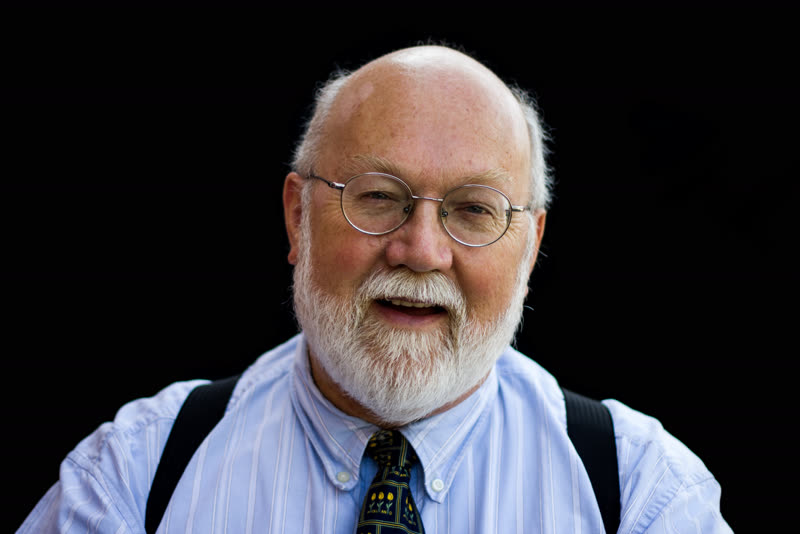 Tim Pasma Sunday AM Genesis January 18, 2015
Main passage Genesis 15:1-21
📖 Read the Scripture passage (ESV)
Genesis 15:1-21(ESV)
God's Covenant with Abram
15 After these things the word of the Lord came to Abram in a vision: “Fear not, Abram, I am your shield; your reward shall be very great.” 2 But Abram said, “O Lord God, what will you give me, for I continue childless, and the heir of my house is Eliezer of Damascus?” 3 And Abram said, “Behold, you have given me no offspring, and a member of my household will be my heir.” 4 And behold, the word of the Lord came to him: “This man shall not be your heir; your very own son shall be your heir.” 5 And he brought him outside and said, “Look toward heaven, and number the stars, if you are able to number them.” Then he said to him, “So shall your offspring be.” 6 And he believed the Lord, and he counted it to him as righteousness.
7 And he said to him, “I am the Lord who brought you out from Ur of the Chaldeans to give you this land to possess.” 8 But he said, “O Lord God, how am I to know that I shall possess it?” 9 He said to him, “Bring me a heifer three years old, a female goat three years old, a ram three years old, a turtledove, and a young pigeon.” 10 And he brought him all these, cut them in half, and laid each half over against the other. But he did not cut the birds in half. 11 And when birds of prey came down on the carcasses, Abram drove them away.
12 As the sun was going down, a deep sleep fell on Abram. And behold, dreadful and great darkness fell upon him. 13 Then the Lord said to Abram, “Know for certain that your offspring will be sojourners in a land that is not theirs and will be servants there, and they will be afflicted for four hundred years. 14 But I will bring judgment on the nation that they serve, and afterward they shall come out with great possessions. 15 As for you, you shall go to your fathers in peace; you shall be buried in a good old age. 16 And they shall come back here in the fourth generation, for the iniquity of the Amorites is not yet complete.”
17 When the sun had gone down and it was dark, behold, a smoking fire pot and a flaming torch passed between these pieces. 18 On that day the Lord made a covenant with Abram, saying, “To your offspring I give this land, from the river of Egypt to the great river, the river Euphrates, 19 the land of the Kenites, the Kenizzites, the Kadmonites, 20 the Hittites, the Perizzites, the Rephaim, 21 the Amorites, the Canaanites, the Girgashites and the Jebusites.”
Transcript
Let's pray. Father, once more we come to this part of our worship where our intention is to worship by listening. We have praised you. We have heard your word. now Lord as the word is preached open our hearts open our minds that we might understand particularly understand why you have given us this text help us we pray for your glory and our good in Jesus name Amen do you remember when you were dating and your boyfriend said to you I will always love you I'll love you forever till the day I die now when a boy says that when you're 16 you think it's romantic and good enough to say to the other girls we're in love he's my boyfriend and we're definitely past the hanging out stage right? but sadly you broke up and those wonderful expressions of undying love just were not true.
But what happens when a few years later you stand together in church with a guy and he says these words to you. I take you to be my wife in the sight of our Lord Jesus Christ. I promise to be faithful in suffering and in joy, in poverty and in wealth, in sickness and in health. I promise to love you until death do us part. Now, he said the same thing as that other guy said when he was 16.
He will always love you, that he will love you forever, and he'll love you until the day he dies. Right? What's different? What's different this time around? It's official. It's the real deal. because you've entered into a covenant before God and before a lot of other people who have assembled as witnesses to that covenant Now all those expressions of undying love are official And that what happens in Genesis 15 Something official happens in this chapter so that you see Abram differently and you see God's promises differently.
So take your Bibles and turn to Genesis chapter 15. Genesis chapter 15. we have watched from Genesis 12 up to this point the faith of Abraham and the promises of God but in this chapter something official happens to change our view of Abraham's faith and of God's promises so you follow along as I read Genesis chapter 15. After these things, the word of the Lord came to Abram in a vision.
Fear not, Abram, I am your shield. Your reward shall be very great. But Abram said, O Lord God, what will You give me? For I continue childless, and the heir of my house is Eleazar of Damascus. And Abram said, Behold, You have given me no offspring, and a member of my household will be my heir. And behold, the word of the Lord came to him.
This man shall not be your heir. Your very own son shall be your heir. And he brought him outside and said, Look toward heaven and number the stars if you are able to number them. Then he said to him, So shall your offspring be. And he believed the Lord and he counted it to him as righteousness. And he said to him, I am the Lord who brought you out from Ur of the Chaldeans to give you this land to possess.
But he said, O Lord God, how am I to know that I shall possess it? He said to him, Bring me a heifer three years old, a female goat three years old, a ram three years old, a turtle dove, and a young pigeon. And he brought him all these, cut them in half, and laid each half over against the other. But he did not cut the birds in half. And when the birds of prey came down on the carcasses, Abram drove them away.
As the sun was going down, a deep sleep fell on Abram, and behold, a dreadful and great darkness fell upon him. Then the Lord said to Abram Know for certain that your offspring will be sojourners in a land that is not theirs and will be servants there and they will be afflicted for four years But I will bring judgment on the nation that they serve and afterward they shall come out with great possessions As for yourself, you shall go to your fathers in peace, you shall be buried in a good old age. And they shall come back here in the fourth generation, for the iniquity of the Amorites is not yet complete.
When the sun had gone down and it was dark, behold, a smoking fire pot and a flaming torch passed between these pieces. On that day the Lord made a covenant with Abram, saying, To your offspring I give this land, from the river of Egypt to the great river, the river Euphrates, the land of the Kenites, the Kenizzites, the Kadmonites, the Hittites, the Perizzites, the Rephaim, the Amorites, the Canaanites, the Girgashites, and the Jebusites. Now this chapter has two scenes in it. both start with a self-revelation of God.
That is, God reveals something about Himself in both scenes, and He always starts by saying, I am. You notice that in verse 1, right? Fear not, Abram, I am your shield. Your reward shall be very great. And then in verse 7, I am the Lord who brought you out from Ur of the Chaldeans to give you this land to possess. Both those scenes start with the self-revelation of God.
Both have Abram responding with a question. Both times regarding the promises that God made to him. Verses 2 and 3. And Abram said. And then he puts his protest in. And then verse 8.
Again, he questions God. In both scenes, the Lord responds with a symbolic action. In verses 4 and 5, taking Abram out to look at the stars. In verses 9 through 17, walking between the animal parts. And finally, in both, there's some kind of declaration. In verse 6, a declaration about Abram's faith.
And then in verses 18 through 21, a declaration of promise, of a covenant that is made. So this scene has two, this play has two acts in it or two scenes in it. The first scene looks at Abram trust The second scene looks at God trustworthiness That is to say the first scene speaks about Abram faith the second scene speaks about God faithfulness So the first is faith, the second is faithfulness, or trust and trustworthiness.
Those are the two scenes in this chapter, and both of them are very important. So let's look at verses 1 through 6. And you find here that God makes an official declaration about your faith. After these things the word of the Lord came to Abram in a vision. Fear not, Abram, I am your shield. Your reward shall be very great.
But Abram said, O Lord God, what shall you give me? For I continue childless, and the heir of my house is Eleazar of Damascus. And Abram said, Behold, you have given me no offspring, and a member of my household will be my heir. And behold, the word of the Lord came to him. This man shall not be your heir. Your very own son shall be your heir.
And he brought him outside and said, Look toward heaven and number the stars, if you are able to number them. Then he said to him, So shall your offspring be. And he believed the Lord, and he counted it to him as righteousness. Now Abram returns home from his victorious campaign against the Eastern Alliance, which we saw last week in chapter 14. So imagine one night after his return from home, he's sitting outside of his tent, and he starts thinking about future reprisals from those foes.
He's defeated them. He certainly has to be thinking about the fact that they're not going to let him get away with that. And all of a sudden, God comes to him in a vision and speaks. And in the midst of Abram's worry, God says, Abram, Melchizedek's benediction spoke the truth, as we saw in verse 14, verses 19 and 20. I did deliver your enemies into your hands.
I am the one who is responsible for your victory. I will be your shield. I am your shield. I will be your protection. And Abram, all that wealth that you refused to take, when you talked to the king of Sodom, and you said, I've raised my hand to the Lord Most High, and I have promised that I will not take anything from you in terms of wealth, for only he's going to get the credit.
And he says, Abram, I'm going to honor that. you won't be disappointed for your reward will be great. But then Abram protests. But God, you've not given me the promised heir. You've promised me a descendant. You have promised that you will bless all the nations through me and my descendant. See, Abram began to fear that he would never see the promised posterity, but the only thing he would see was his present prosperity.
That would be all that he'd receive from God. He certainly was interested in God's purposes. He says, I don't need an heir. I already have an heir. Lord, I already have an heir. His name is Eliezer.
He already had someone who could inherit the wealth, right? By the way, in that day, if you didn't have a son, you could adopt someone, and he would become the heir of all your property. Eleazar probably was the overseer of his household, the second in command, if you will, of all that Abram had. And he says, well, I've already got an heir. It's Eleazar.
And Abram wasn't wanting a cuddling, smiling Abram Jr. he could call his own. I don't think that's what he was after. Abram was not content with the good life. He already had that. What he wanted from God was that God would be true to his purposes and promises. He wanted to see God's purpose of blessing the nations through him fulfilled.
Now notice this. Abram's complaint does not come from a lack of faith. It's not come from a lack of faith. Abram's complaint comes because he believes that God said he was going to do something. God, are you going to do it? Are you going to do it?
I don't have an heir yet. Or I don't have a son yet. So God replies to Abram's protest, Eliezer will not be your heir because I will keep my promise. You will have a son from your very own body. Okay? English Standard Version, which most of you are using, says your very own.
A son that will be your very own. It's more graphic in the Hebrew. A son that comes from your bowels as it were. Or a son that comes from your own body. This will not be an adopted person. This will be someone who comes from you.
And then he takes Abram outside and he points at the stars in the sky. I don't know if you've ever been in a place where there aren't any lights around. You know where there are no other lights around. Like that's really rare anymore. You have to go to Canada or out west or something. If you go to a place where there aren lights there aren city lights around anywhere and you look in the sky what you will see is just this whole array of stars Not the few that we see but it like glitter thrown across a black cloth When you get in those places, you can see stars like that.
I know the greens see it. Every time they go to Canada, when they get out in the wilds that they go every year, they can see those stars. And God says, count those. If you can count those, that's how many descendants will come from you. So don't worry about a son. Don't worry about me fulfilling my purpose.
The number of your descendants will be like the stars. Now how does Abram respond? Verse 6, he responds in faith. He believes that God will actually do what he says. this is important here's a man in his 70's without any son and God says he will have a son from his own body and that son will produce descendants that will be uncountable and he simply trusts what God says he will do he relies on God he considers God reliable he considers God trustworthy he considers God true now again I don't know how to communicate this to you right it's like here's a guy who's 70 he has no child none and God says he's going to give him a son from his very own body and Abram's response essentially was okay alright God will give me a son and I'll have starry hosts for descendants okay cool what's going to happen It doesn't sound like much, does it?
Is that the way you would have responded? Right? Now is the time you expect the questions to come. Right? But they don't. Now is when he says, okay.
Alright. If you say so, it's good enough for me. Now here's what's important. God does something official at this point. Something He hasn't done until this point. It says in chapter 15, verse 6, and he believed the Lord and he counted it to him as righteousness.
He declares that Abram faith is the instrument that makes him righteous in God eyes That makes him acceptable to God Now notice Abram not done anything to earn the title righteous He hasn't obeyed anything. He hasn't met any conditions. The only thing he's done is believed the promise of God. And we can translate that, he counted it to him for righteousness.
He's not saying that his faith was equivalent to righteousness, as if, well, that's faith, so you're righteous. No. The Hebrew construction here has the idea that something is given to you that you don't have, that is not inherently yours. Your faith is not your righteousness. You don't have righteousness. So God gives him that standing of righteousness.
God counts Abram righteous without any kind of work on his part. He's done nothing to earn it. The only thing he's done is taken God at his word. That's it. That's it. He's only believed the promise of God.
Now you say, what does this ancient story have to do with me? Okay, Abram believes God. That's great. I do too. No, there's more to it than that. It has everything to do with you. because if you want God to look at you as righteous, the one whom He will not condemn, then you have to believe like Abram.
You have to have the same kind of faith. You know, this verse is mentioned four times in the New Testament. And it's mentioned to tell us there's nothing you can do. The only thing you can do to be righteous with God is believe. That's all. Some of you here may be struggling under this idea that if only I obey God just a little bit more, He will say, you're righteous and you're okay with me.
And the point of this verse is, Abram didn't do anything like that. He just believed and God said he's righteous. So if you're here thinking, alright, I've got to make it with God. God, I'll do just a little bit better. I'll do better this next week. Last week was kind of bad, okay?
I mean, you know. But this week, I'll really do good. This week I'll do better. Lord, I will obey. And you expect that God will say to you, alright, good, you've hit the mark. You righteous Look what the Apostle Paul says about all this in Romans chapter 3 Now I want you to follow with me He going to come to Abraham in all of this talk about faith and righteousness and everything else.
We're going to start with Romans chapter 3. He's concluding an argument in verses 19 and 20. He's talking to someone who says, if I hit the mark that God has set in terms of obedience, then He will look at me and say, you're righteous. If I obey the law of God, at one point He's going to say, you're righteous. But here's what He says about the law of God.
Verse 19, Now we know that whatever the law says, it speaks to those who are under the law, so that every mouth may be stopped and the whole world may be held accountable to God. You go, wait a minute. Wait a minute. I thought if I obeyed the law I'd be okay with God. He says, no, the law is going to shut your mouth. Why?
Verse 20, for by works of the law no human being will be justified. Or you could put in place of justified. For by works of the law no human being will be declared righteous in his sight. Since through the law comes knowledge of sin. And the only thing that the law of God can do for you is make you aware that you're not making it. You'll not be righteous.
God will never declare you righteous by how obedient you are. Now that may come as news to some of you, but that's the truth. That's what He says right here. The only thing the law is going to do is not give you a benchmark where you know if I hit this benchmark, God will declare me righteous. No. He's saying what this law does is continually says to you, oh, you disobeyed, you're condemned.
Whoop, you didn't do what I told you to do, you're condemned. That's the only thing the law can do. Well, then what hope is there? Let's go on. But now, the righteousness of God has been manifested apart from the law. Though the law and the prophets bear witness to it, the righteousness of God through faith in Jesus Christ for all who believe.
For there's no distinction. For all have sinned and fall short of the glory of God and are declared righteous by His grace as a gift through the redemption that is in Christ Jesus, whom God put forward as a propitiation by His blood to be received by faith. So, stop trying to earn your righteousness by obeying the law. It's not going to work. you're going to get is you're a sinner.
But there is a righteousness that comes to you as you what? As you just believe. Believe what? In Jesus. Who's a propitiation. Who's the one who takes away your sin.
Now jump to chapter 4. What then shall we say was gained by Abram, our forefather according to the flesh? Oh, he's going to talk about Abram now. Abraham. For if Abraham was declared righteous by works, he has something to boast about, but not before God. For what does the Scripture say?
Abraham believed God and was counted to him as righteousness. Oh, well what lesson are we to learn? Verse 4 and 5. Now to the one who works, his wages are not counted as a gift, but as his due. And to the one who does not work, but believes in him, who declares righteous the ungodly, his faith is counted as righteousness. just as David also speaks of the blessing of the one to whom God counts righteousness apart from works blessed are those whose lawless deeds are forgiven and whose sins are covered blessed is the man against whom the Lord will not count his sin righteousness means the Lord will not count your sin he will forgive all your sins but it does not come from your effort verse 4 and 5.
You quit working and just believe. Why? Because that's what Abraham did. That's what he did. And the Lord counted him righteous. So you see, God has not changed.
He still declares people righteous by faith in Jesus. What will God say about your faith? What will God say about your faith? Now it's not faith in faith. It's faith in Jesus. It's not faith in okay, I'm really a believer.
I believe. Look at my faith. No. Look at the object of your faith. Look at Jesus. Right?
Is he looking at you and does he see a faith that just trusts in Jesus? He says, okay. Jesus did it all. There's nothing more for me to do. It's not what I can do. It's what Jesus did.
And I trust that. You see, that's the same kind of faith that Abram had. What's the official declaration of God about your faith? Is it like the declaration he made about Abram faith Right Well let move on God doesn't just talk about Abram's faith, He talks about His own faithfulness. So God makes an official declaration about His faithfulness to you in verses 7-21.
Verse 7-21. it appears that sometime later we're not sure when, another day perhaps God reveals himself to Abram again only this time he reveals himself not as his shield who's going to give him a reward but here he says that I am the Lord who brought you out from Ur of the Chaldeans to give you this land to possess He reveals himself as the sovereign God who has the authority to give this land for Abram's possession. He has the authority to give him the land. Now you remember, up in chapter 14, what did Melchizedek say about God?
Verse 19, Blessed be Abraham by God Most High, possessor of heaven and earth. He is the one who possesses it all and He can give it to whomever He wants and He gives Abram this land. But again, this revelation of God brings a complaint from Abram. A complaint that takes God's promises seriously. Again, this is a complaint that comes from faith, not from doubt.
Lord, I believe that You have the right and the power to give me this land. But here I am with no land really to my name. Besides, possession of this land requires the dispossession of the current inhabitants. If I'm going to possess it, they have to go. O Lord God, He says, how am I to know? How am I to know that I shall possess it?
How am I to know? How was He to know? The Lord's reply to Abram and Abram's actions seem very strange to us in the 21st century. How am I to know? And God says, alright, I want you to get a heifer, a goat, a ram, and two birds. Hack them in half and lay them out If you would do that today your neighbor would call the police on you Right If your neighbor saw you out in the backyard with a heifer, hacking it in half, and then laying one side here and the other side, and then taking a goat and hacking that, they'd call the police on you, wouldn't they?
What in the world is going on here? What is this hacking and hewing that's going on? What does it mean? How does this mean I can possess the land? Good question. You see, God, in order to assure Abraham that He would keep His promise, and in order to declare His faithfulness to Abraham, He enacts a covenant.
That's what's going on here. A covenant. The most solemn agreement you can possibly make in that day. Right? That's what's going on. Now here's what happened in the covenant.
There were different kinds of covenants and so forth. But almost all of them had these kinds of elements to them. The parties to a covenant would make an agreement. They've come together to make a covenant. That is, they're going to agree to certain things. They're going to come to terms.
They're going to say, all right, I'm responsible for this and you're responsible for this. I'll do this, and you're supposed to do that. Agreed? Yes, agreed. So they would agree to fulfill the conditions laid out in the agreement. Okay, I promise to do this, and I promise to do that.
Okay? And then, at the conclusion of the covenant agreement, the two parties would walk between the sacrificial animal, or as in this case, animals. You hack them in half, you laid them out, you come to agreement, and you would both walk through the middle of those body parts. Why? What was that all about? It served as a kind of acted out curse.
That is to say, when you walked between the parts of the animal or animals, you were saying, if I break this covenant, if I do not fulfill my part of this agreement, may I be torn up into pieces like this animal was You get it In other words you saying if I don keep my part of the agreement my part of the covenant, may I be torn and ripped up like this animal. Alright? So this is serious.
This is really serious. I mean, if you didn't keep your part of the covenant, he had the right to act on you. Alright? So, that's what's going on. The Lord is... And Abram knows this.
It's time for a covenant. God's going to make a covenant with me. We're going to come to an agreement and we're going to walk through the parts of these animals. So Abram prepared the animals, cut them, laid them out, and waited for his covenant partner, the Lord, to show up. While he's doing that, he's chasing off all the birds of prey to keep them off those animals.
But when the Lord does appear for the ceremony, Now some really unusual things occur, even unusual for what Abram would expect. As he waits, Abram falls into a deep sleep, but a dreadful and great darkness falls upon him. Now, that ought to start ringing some bells for us, because you know why? Because when you see covenants coming up later, the same thing happens.
You see dread and darkness. What happens? You heard it this morning. What happens at Sinai when God comes to Mount Sinai to make a covenant with Israel? What do you see? You see the terror of the Lord revealed and you see darkness, fire and smoke.
Right? Just like you see it here. We'll see the fire and the smoke in just a second. But there's fire, smoke, terror and darkness. This is a dreadful darkness. Abram is terrified in this darkness.
It appears at Mount Sinai. Guess where else it appears? At the cross. You see darkness and dread at the cross as another covenant is enacted by God. Look, the terror, the darkness, the smoke, and the fire speaks of God's holiness. This is serious business for God.
He arrives on the scene in all His holiness which strikes terror. You see? Now, at this point, the Lord sets down the promises that will be contained in this covenant. He says in verses 13-16, after suffering in opposition, after Abram's death, after the judgment and the dispossession of the people that are in the land now, after all that happens, your descendants will certainly, it says in the text, your descendants will certainly live here.
They will possess the land. And then you see the clear promise summarized in verse 18. On that day the Lord made a covenant with Abram saying to your offspring, I give this land. And then describes the boundaries of it. Now what's strange, what is strange in this covenant ceremony is that God is the only party with any obligations. You will notice, Abram has no obligations laid on him at all.
What is Abram supposed to do? What does it say? Nothing. It doesn't say anything about Abram's obligations. There's only one party in this covenant taking any obligations on himself. And Abram's not that one.
It's the Lord. And then, who passes between the animal parts? Do Abram and the Lord pass through together? No. No. Only God manifested with a smoking pot and a flaming torch.
He alone walks through the animal parts. Well, what does that signify? It's very clear. I alone am responsible to fulfill the obligations of this covenant. You have nothing to do to gain the promises that I'm making. I promise to fulfill these obligations.
You see that? This is amazing. You didn't make a covenant like that. Two parties always went through, but here God alone goes through. God alone is responsible for making sure the promise of the covenant is fulfilled. Abram's got nothing to do to get the promise.
He's got nothing to do to get the inheritance. There is nothing for him to do. This is all grace. This is God saying, it's all on Me. It's all on Me. There's nothing else for you to do to have a child or to gain this land.
It's all on Me. God makes an official declaration about his faithfulness to you here his faithfulness is not dependent on you His faithfulness to fulfill his promises do not depend on you They depend on God alone. Now the promise is going to be delayed. You see that. Suffering in opposition is going to happen to his people. Right?
Abram's descendants are going to suffer for four generations at the hand of another nation, before they are brought out. Suffering and opposition always precede glory. That is the theme all the way through Scripture. God makes a promise. But He always says, there's always the cross before the crown. There's always suffering before the glory.
My people, I'm going to put them through suffering. I'm going to discipline them and make them fit for this land. You see? judgment on the land's occupants will certainly come. He says the sin of the Amorites have not reached their limit. And they won't until I'm ready to bring the people in. I'm going to forbear with these people.
But then they're going to reach the limit of their sin and I then will give you the promise. Do you know that judgment, most of the time, judgment comes with promise. Think of the promise that we have of glory. What precedes? the promise that we have of glory in the new covenant. Suffering, judgment, right? Same thing is true here.
Now here's something that did cause some questions on my part. It says, Abram, you're going to die at a good old age. But wait a minute. Abram asked this question. Verse 8, But he said, O Lord, how am I to know that what? I shall possess it.
He asked that question. And the Lord says, death's coming before you ever possess it. Your descendants will. But hadn't he promised the land to Abram? Yeah. What in the world happened?
Was God not faithful to that promise? Did he not keep it? Abram was supposed to get it he didn't or did he look over at Romans for a moment I remember preaching through Romans and as I was working my way verse by verse through this book this blew me away Romans chapter 4 We were just there a few minutes ago and the argument of Paul is that Abram was counted righteous because of his faith, not because of anything that he did.
And he gets the inheritance, not because of anything that he did. But, you know, I come down to verse 13. I mean, I've got it highlighted in my Bible. Look what it says. For the promise to Abraham and his offspring that he would be heir of the... Whoa, wait a minute.
What? Heir of what? The world! did not come through law, but through the righteousness of faith. Whoa, whoa, wait a minute here. Wait a minute. I don't see world here, do you?
It looks to me like a land. What in the world is going on? Well, we don't have time to talk about it all this morning, but we'll get to it later. Let's just say this. Here is how the Bible story goes. All the promises of the Old Testament find fulfillment in Jesus.
Jesus is the descendant of Abraham that gets the world. And guess what? Abraham someday is going to be resurrected. And what's he going to gain? The world. Not just a little sliver of land in the Middle East.
He's getting the whole thing. You see? Does God keep His promise to Abraham? Absolutely. He's going to get it at the resurrection. And Hebrews tells us that Abraham knew that because he said he started looking for a city whose foundations were not in this world but in the next.
Isn't that amazing? He said, wait a minute, God promised him the land. Okay, if I borrow $100 from you and my grandpa pays you back with a million, has he kept the promise? Yeah, he has. He paid you with the back and then some And so you see what going on here is Abram God is faithful to His promise Abram will possess the land Here the point though The promise may be delayed, but God is completely, absolutely, perfectly faithful.
He will keep His promises. That's the point we need to see. God says, I will walk between the animals and I will take the curse upon Myself in order to see that this is fulfilled. Now do you know that God inaugurated another covenant? A covenant where He has taken upon Himself both the curse and the obligations alone. That is the new covenant.
Look over at Matthew 26 for a moment. because by the way look in every one of the gospel writers and you will see jesus talking about this new covenant in fact you will hear about the new covenant here at least once a month when we gather for the lord's table notice in chapter 26 verse 27 and he took a cup this is the last supper jesus took a cup and when he had given thanks, He gave it to them saying, drink of it all of you for this is my blood of the covenant which is poured out for many for the forgiveness of sins. Jesus here is talking about a new covenant. And every Lord's Day when we celebrate the Lord's table, I stand before you and I say what?
This cup is the new Jesus said, this cup is the new covenant in my blood. Do this whenever you drink in remembrance of me. What? We're part of a new covenant. Jesus spoke of the new covenant. There's a new covenant that's been inaugurated.
Jesus spoke of it. And by the next day, that covenant, that new covenant, came into existence. By the way, there were no sacrificial animals to symbolize the curse of this covenant. You know why? Because Jesus took the curse. Jesus Himself. in a more graphic way than Abram ever saw.
God promised to take the curses on Himself. And you know, God... God could not... Be eliminated, if you will, if he didn't keep the covenant. Right? But here, in a more graphic way, God actually does take the curse upon him in the person of Jesus.
There are no sacrificial animals, but there is a sacrifice. It's Jesus Himself. And in the terror of the darkness, God in all His holiness came to enact that covenant. And in that covenant, He promises us forgiveness, eternal life, intimacy with Him, the end of our rebellion, and the fact that He will be our God and we will be His people. And what obligations does He lay on us to see that any of that's fulfilled?
The answer is none. The only thing we have to do is receive it. That's all. That's all. This is God's faithfulness to us in His covenant. And when God says, I promise you eternal life if you believe in Jesus.
Have you seen it yet? No. You haven't. You haven't seen a world without a curse. You haven't seen it yet. Is God going to deliver?
Yeah. How do I know? He made a covenant. He made a covenant and sacrificed His Son to ratify that covenant. I know God will keep His promises. And if He promises eternal life when you believe in Jesus, you believe it.
You say, I don't. When I believed, I didn't feel any different. So? Is God going to be faithful? Yes. God will fulfill all the promises He makes in that covenant Long ago in a land far away God and Abram met It has everything to do with you.
What kind of declaration will God make about your faith? And by the way, it's not about whether your faith is strong or weak. The weakest faith will save. The question is, where is it? Is it in Jesus? if it's in you and your abilities the declaration will not be good if it's in Jesus then God will say that's the instrument that gives you righteousness have you heard God's declaration about his faithfulness today the God who did not spare his own son, the God who gave his son as a curse bearer is the God that will keep his promises this is the God who will faithfully save all who come to Jesus this is the God who will keep all His promises in Christ what is your faith like? where is your faith? and what do you think of the faithfulness of God? thank you Father for your word today we pray Father that if there are any here who have not placed their faith in the Lord Jesus they would do today God help us to see our faith and your faithfulness in Jesus name Amen
Also referenced in this sermon
Other passages mentioned, beyond the main text.