Ruling Grace, Relentless Grace
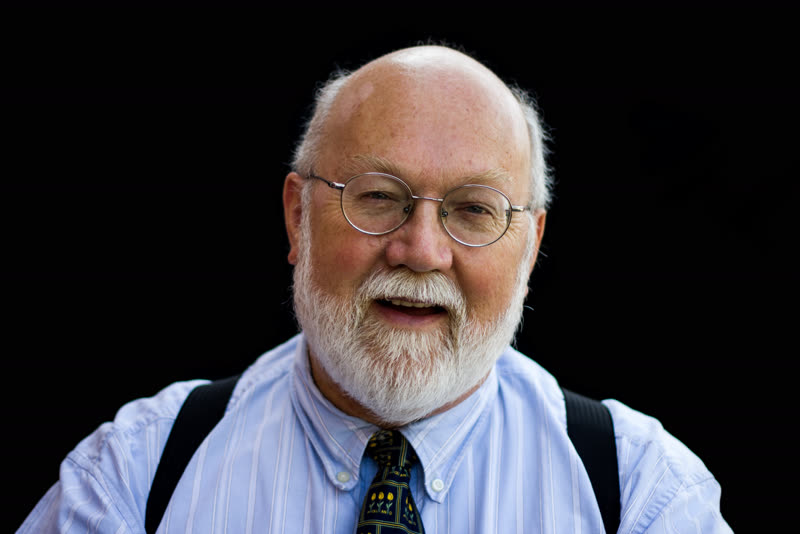 Tim Pasma Sunday AM Genesis September 20, 2015
Main passage Genesis 25:19-26
📖 Read the Scripture passage (ESV)
Genesis 25:19-26(ESV)
19 These are the generations of Isaac, Abraham's son: Abraham fathered Isaac, 20 and Isaac was forty years old when he took Rebekah, the daughter of Bethuel the Aramean of Paddan-aram, the sister of Laban the Aramean, to be his wife. 21 And Isaac prayed to the Lord for his wife, because she was barren. And the Lord granted his prayer, and Rebekah his wife conceived. 22 The children struggled together within her, and she said, “If it is thus, why is this happening to me?” So she went to inquire of the Lord. 23 And the Lord said to her,
“Two nations are in your womb,
and two peoples from within you shall be divided;
the one shall be stronger than the other,
the older shall serve the younger.”
24 When her days to give birth were completed, behold, there were twins in her womb. 25 The first came out red, all his body like a hairy cloak, so they called his name Esau. 26 Afterward his brother came out with his hand holding Esau's heel, so his name was called Jacob. Isaac was sixty years old when she bore them.
Transcript
Let's take our Bibles now and let's turn to Genesis chapter 25. Genesis 25. As we begin a new section of this marvelous book, I hope that you have not only enjoyed our study in Genesis, but you've learned and you've been transformed in some ways as you've learned of how God works to bring about the promise that He made at the beginning of this book, the promise of a seed.
We're going to continue that story as we begin reading. In Genesis 25, we'll be reading verses 19 through 26. You follow along as I read. Genesis chapter 25, beginning in verse 19. These are the generations of Isaac, Abraham's son. Abraham fathered Isaac, and Isaac was 40 years old when he took Rebekah, the daughter of Bethuel, the Aramean of Patamaran, the sister of Laban the Aramean, to be his wife.
And Isaac prayed to the Lord for his wife, because she was barren. And the Lord granted his prayer, and Rebekah, his wife, conceived. The children struggled together within her, and she said, If it is thus, why is this happening to me? So she went to inquire of the Lord, and the Lord said to her, Two nations are in your womb, and two peoples from within you shall be divided.
The one shall be stronger than the other. The older shall serve the younger. When her days to give birth were completed, behold, there were twins in her womb. The first came out red, all his body like a hairy cloak, so they called his name Esau. Afterward, his brother came out with his hand holding Esau's heel, so his name was called Jacob. Isaac was 60 years old when she bore them let's pray father as we look into your word again we pray that we would not see this merely as a history of the people of God and how you brought about Israel and finally us but we would see this Lord as a word directed to us at this time you You, Lord, breathed out this word so that we would learn from it in this day and learn of you and how you are and how we ought to be.
Would you please, Father, give us hearts that will listen and will embrace your word. Help us to worship now as we hear you speak to us. In Jesus' name. Amen. Amen. One night, Becca and I were watching a movie with some of our grandchildren, and suddenly little Adney said about one of the characters on the screen, that guy's the bad guy.
And I said, Adney, how do you know he's the bad guy? And he replied, because the music changed. See, he had already caught on to how the music worked. And even though the character had done nothing bad yet, the music foreshadowed his eventual nasty character. And he already knew that. Now the text before us foreshadows what's going to happen in the next 11 chapters.
That's why it's here. It sets the stage for the incredible conflict between just about all the characters that we're going to read about in the following chapters. We're going to hear stories of deception, fear and flight, danger, exploitation, violence, ruthless dealings, and even rape. and you're going to look at that and say wow, the promises which called this family into being almost seem lost in this next generation well, the thing we have to see is that the opening scene of this book not only foreshadows the wickedness to come but it foreshadows something even greater and that is the grace of God His determination to do good despite the sinfulness of the characters and the conflict and everything else that's going to happen in these next 11 chapters.
You're going to see that God is determined to do good to us as He fulfills the promise of blessings to all the nations. You say, how is that possible? Well, we're going to see His grace at work in the next 11 chapters. It's a relenting grace, a grace that pursues its objects until his promise is fulfilled and those people are transformed. It's a ruling grace.
It triumphs over all the obstacles and even uses evil to accomplish his purposes. It's amazing as you read that story. And so grace makes its appearance here in setting the stage of God's work. Now, we have come to the eighth book in the ten that make up the whole book of Genesis. You remember, it's made up of eight books. Each one set aside, each one called, we called it what?
A Toledot. Remember that? Toledot. That's the Hebrew word for generations or descendants. And it always starts out by saying, this is the generations. This is the story of the generations of this person.
And so we start that again. These are the generations of Isaac Abraham son Abraham fathered Isaac Alright And so here is the eighth Toledot But surprisingly instead of saying these are the descendants of Abraham which is what we'd expect, these are the descendants of Abraham, and then hear the story of Isaac, it skips Isaac and says, this is the Toledot, this is the story of the descendants of Isaac. For some reason, We don't have the descendants of Abraham telling us the story of Isaac.
Now, instead, we come to the story of the descendants of Isaac, thus telling us the story of Jacob. So it's through Jacob that we'll see how God fulfills his promise. And what is that promise? The promise is that God said to Abraham, I am going to make a great nation of you. You will have many descendants. and through you I will bless all the nations of the world.
But immediately as the scene opens in this next book, we see obstacles to the fulfillment of God's promise. Let's look at, again, verses 19 through 21. These are the generations of Isaac, Abraham's son. Abraham fathered Isaac. And Isaac was 40 years old when he took Rebekah, the daughter of Bethuel, the Aramean of Paddan Aram, the sister of Laban, the Aramean, to be his wife.
Already, he's already setting the stage for what's going to happen later with Laban and everything else that's going on. He's foreshadowing. Hey, he's mentioning these people. Why? Because they're going to enter the picture again and we're going to see them in action. And Isaac prayed to the Lord for his wife because she was barren.
And the Lord granted his prayer, and Rebekah, his wife, conceived. So right away, as the story begins, we find out that Rebekah has no ability to bear children. How in the world, then, will God fulfill his promise of many descendants from Abraham? How is he going to bless the nations of the world through that descendants if the line stops here with his son?
It seems that we have a replay of Abraham's story. The promised seed has not appeared. but in this story you see the faith of Isaac and Rebecca. You see their faith. Isaac believed God's promise and so he prayed for God to fulfill that promise. By the way, that's how we ought to pray. We ought to pray, God, you said you were going to do this.
Please, do it. That's how Isaac was praying. He believed God's promise but he prayed that God would overcome the barrenness of Rebecca, his wife. He wanted God to fulfill that promise. And as you look at that, you will see that he has faith. He has a faith that is persistent.
It's persistent. How do I know that? Look at verse 26. It says in verse 26, Isaac was 60 years old when she bore him. Bore them, the twins. Now, how old was he when he married Rebecca?
He was 40. When did the twins appear? When he's 60. You know what that means? He prayed for 20 years. He has a persistent faith.
He prayed for 20 years. Do you realize that he waited for his children or child, he didn't know at first, he waited for 20 years. Almost like Abraham. How long did Abraham wait? 25. So Isaac is waiting 20 years for the promised seed to appear and he prays for those 20 years for God to help his wife and for God to fulfill his promise.
Notice as well that Isaac's faith was an undiluted faith. Now recall that in their anxiety, his dad and mom, in their anxiety to see the promise fulfilled, did what? Sarah gave her handmaiden, Hagar, to Abraham as a concubine. And in that way, maybe God would produce the seed. And we saw that God said, no, it's through Sarah, not anyone else. But you see here that for Isaac and Rebekah, they did no such thing.
They took no shortcuts. They continued to believe the promise of God. This was not an occasion for anxiety. This was an occasion for the working of sovereign grace. They were looking for God to work. So in light of the obstacles and God's promise, notice that Isaac responds with a faith that is persistent and pure. notice as well Rebecca has faith too she too had that undiluted faith never suggesting it seems never suggesting like her mother-in-law that they take a shortcut she believed the promise as well and notice too in verse 22 what when she's in trouble where does she go let's look at that verse 22 the children struggled together within her and she says, if it is thus, why is this happening to me?
So she went to inquire of the Lord. You see that she was willing to interpret her life and the events of her life by the revealed will of God. She trusted God to give her answers. She has a faith that says, well, I got a question. Who will give me the answers? It'll be God.
So she has that kind of a faith as well. But please note this, it is not Isaac's faith or Rebecca's faith that overcomes this obstacle. It's not their faith that overcomes the obstacle. It's the grace of God. It's God's determination to do good that overcomes the gospel. Faith is trusting.
Faith is depending. Faith is waiting. It's not some kind of power that somehow gets God to do what we want. It is never right to say faith overcame obstacles. It not right Your faith doesn overcome anything It God power that overcomes the obstacles It faith waiting for God to do it It faith trusting God to do it It's faith depending on God to do it. But it's not what overcomes the obstacle.
It's God who does that. We need to understand that. It's not their faith that overcame this obstacle. It was the grace of God that overcame it. One writer put it this way, God is after all not the great slot machine in the sky whose arm you twist until you hit the jackpot and He gives you the desire of your heart. Isn't that how a lot of people think?
No. He is not the custodian of a celestial warehouse of delights waiting for you to dial the right number so that He can release your personal prize pack of blessings. I love that. But isn't that how many people see God? They see Him as the custodian of the celestial warehouse of blessing. And if you just dial the right number, you'll get what you want.
No! It is God who overcomes the obstacles. It is Isaac and Rebekah who say, God, You can do it! We believe You can do it! Please do it! God answers their prayer.
But they didn't twist His arm. They didn't make Him do something He didn't want to do. They said, you promised. God in his grace to us acts. So as you read this account, you must believe that God's grace overcomes all obstacles. God's grace overcomes all obstacles.
Do you believe that? Do you believe that anything can thwart God from his determination to do good? No. Nothing will thwart God. Have we not seen that in this book? Isn't that almost the very theme of this book?
Right? What happens? The serpent seduces Eve to sin. Does that thwart God? No, he makes a promise. Right?
Cain kills his brother. Does that thwart God? No. he gives another son through whom the promise will be fulfilled will the sin of mankind keep god from his determination to do good to all mankind no he destroys all those people and saves one family through whom the promise will be fulfilled will people gathering together in their pride against god and their will and their determination to do what they want to do keep him from fulfilling his promise?
No. He scatters them. He changes their language so that they cannot unite in a false religion. So God will accomplish his purpose. And so on and on it goes. On and on it goes.
Who can keep God from his determination to do good? Nothing and no one. Look at your own life. Before you came to Christ. before God conquered your heart by His grace? It would have nothing to do with God. And there's nothing anyone could say to you that would change your mind.
And then suddenly, one day, boom! The Gospel made sense. And you see, you sensed yourself as a sinner. And you saw that Jesus was the only way! And for some strange reason, you cast yourself upon Christ. Why?
Why? Because his grace overcame your unwillingness. No, nothing can thwart God from accomplishing his gracious purpose. Nothing and no one will ever keep him from his determination to do good. And so Jesus comes and he has the most powerful nation of the world arrayed against him, the Roman Empire. What does that empire do?
It nails him to a cross. And in that wickedness, what happens? God purchases a people. They thought they defeated Jesus when in actuality, they had done nothing but fulfill the purpose of God. And as we go through this story, we're going to see that. We're going to see God's relentless ruling grace triumphing in him accomplishing his gracious purpose all of it here just seen God's gracious he's going to overcome the obstacles that's not the only thing we see here you got to believe that God's grace sets the agenda God's grace sets the agenda I learned something from my father and that was never go into a meeting that you're in charge of without an agenda and so whenever we have an elders meeting whenever we have a church business meeting I get an agenda out that agenda determines what we're going to talk about.
Okay? Our family has been living this last month by an agenda. You know what that agenda is? Go to Levi's house and there's all these things. Here's a list. We're working in his barn yesterday and there's the list on one of the barn sills.
Okay, what's next? What do we do next? The barn has to be done today. That agenda determined what we were doing that day. Okay? The agenda determines what's going to happen.
Well, God's grace sets the agenda only on a universal scale. On a scale much greater than anything we could think of. His grace determines exactly how He's going to accomplish His purpose. Not only does He say, I'm going to overcome the obstacles by my grace, but that grace actually sets the agenda and tells us how He's going to do it. And that's what we see again foreshadowed here in this chapter, giving us the opening idea, saying to us, here's what's going to happen.
Here what God gracious agenda is Let look at that Let pick it up again in verse 22 End of verse 21 And the Lord granted his prayer and Rebekah his wife conceived The children struggled together within her and she said If it is thus, why is this happening to me? So she went to inquire of the Lord. And the Lord said to her, Two nations are in your womb, and two peoples from within you shall be divided.
The one shall be stronger than the other. The older shall serve the younger. When her days to give birth were completed, behold there were twins in her womb. The first came out red, all his body like a hairy cloak. So they called his name Esau. Afterwards his brother came out with his hand holding Esau's heel.
So his name was called Jacob. Isaac was 60 years old when she bore them. Rebecca starts experiencing a problem pregnancy. She doesn't know what's going on. In fact it gets so difficult that she thinks that God's smile on her has been replaced by God's frown. Something is happening to me.
God must not be pleased. So she goes to inquire of the Lord. Now, we don't know what that meant in that day. Right? There's no temple. There's no tabernacle.
What did that mean? We don't know. We're left in the dark. I would imagine that she went maybe to the patriarchal altar. and quite possibly, I would think probably, Isaac was the one to whom God gave the oracle. Isaac was a patriarch of God's people at this time and I would guess he would be the prophet through whom God would speak. And so it's not too much of a stretch to say that Isaac communicated this oracle to her.
And I don't know that for sure, so I'm not going to die on that hill. But in some way, she went to inquire of the Lord and in some way God gave her an answer. And the oracle from God is this. No, I am not angry with you. The problem is that you have two incompatible people in your womb. Two people that will struggle.
And this struggle is just the beginning. It's starting in your womb. How would you like that, moms? To have an oracle that says, you've got twins really fighting each other in the womb. And by the way, that's just the beginning. Right?
They're going to be two people of incompatible nature, and they're going to end up as two nations. Two nations that don't get along. They're going to be divided. And so this struggle between them is just the beginning, another foreshadowing of what's going to happen in the rest of the story. And the older son, contrary to custom, the older son is going to serve the younger.
And sure enough, two boys are born. One, a hairy red monster, and the other a heel-clutcher. And their parents give them names according to their observations, right? Esau is a word that sounds like Harry, and Jacob, Yahob, is a pun on heel, someone who clutches the heel. Now, you're supposed to get a picture from the birth story. You're supposed to get a foreshadowing of the future.
This is supposed to set in your mind, wow, what happens is going to be really interesting. What happens? What? The older is going to serve the younger, and these two guys are going to be incompatible. What's life going to be like? And the story is going to unfold in accordance to what we're seeing here.
This is the change of the music, if you will, that tells us something is going to happen out of the ordinary. There's going to be conflict. can God fulfill his purpose in the face of conflict. And as we read this story, just about every character in the story is in conflict with somebody else. Jacob and Esau, Rachel and Leah, Rachel and Jacob, Jacob and Laban.
Everybody's in a fight. There's a conflict. It's like unending conflict in the story. Can God fulfill his purposes? Will his grace triumph with all this nasty conflict going on? Can he keep his promise by defying social convention?
Remember, the oldest son always got the inheritance. Okay? So, our house, our little two acres, right? In the old days, there'd be no question about it. No one, none of my children would say, who gets the house? it would be a done deal. Calvin would get the whole ball of wax.
That's the way it worked. The oldest son got it. Now, the younger ones, you might give them some gifts. That's what Abraham did, right? Isaac got the inheritance. He gave a good hefty gift to Ishmael.
He gave a good hefty gift to his other sons through Keturah. We saw that. But Isaac got the inheritance. So the oldest is supposed to get the whole ball of wax. But he says here, no, the older is going to serve the younger. That just goes against social convention.
So you've got the problem of conflict. You have the problem of social convention. The youngest is supposed to serve the oldest. And then last of all, you've got the boys themselves are going to be a problem. These boys are going to be a problem. As we're going to see, the hairy monster, who's got red hair, who's red all over, is Esau.
And his name kind of describes him. He's a hairy monster. He's going to be animalistic in his nature. He's going to be driven by his desires. And he's not going to be the kind of guy that reflects on things very deeply. Right?
He's just, he's not going to think. He's just going to, just going to eat and just live. Right? He's the kind of guy that's driven by his desires. All right? It just reminds me, and I'm not saying my son is an Esau.
Okay? But I think this is going to be what Esau is going to be like. When Levi was getting married, Carrie thought it would be great if we had big tubs of ice with pop in it. And so for a couple months, we're buying pop on sale in cans, right? Just stockpiling this stuff for the wedding. One day we come home and there's Levi sitting in the kitchen down in a Mountain Dew or two.
And we said, what are you doing? What are you doing, Levi? This is for the wedding. Quote, weddings come and weddings go. I am thirsty now. All right?
That quote is part of our family lore. All right? He will never live that down. But that's Esau. Right? I'm hungry now.
I want what I want now. I've got to have it now. Well, let's think about it, Esau. No! Now! That's Esau.
On the other hand, you have Jacob. Jacob's the heel-clutcher. He proves to be one who dogs his brother's steps. He proves to be the betrayer who is tenacious in getting what he wants. Jacob, you're going to see, is a guy who's going to get what he wants. and he'll do whatever it takes to get what he wants. He's going to be at his brother's heel all the time and he's going to get what he wants.
That tenacious, I'm going to get it kind of an attitude. That's Jacob. Okay? Can God fulfill his promise working with that kind of material? Yeah, he will. He will.
See, God is not bound by circumstances because his grace sets the agenda. all the conflicts that are going to emerge in the story that follows cannot keep God from his determination to do good it can't keep him from it in fact his grace as we're going to see his grace will actually use that conflict to advance his purposes not just overcome the conflict but actually use the conflict to accomplish his purposes. You see, God's grace sets the agenda as to how God gets the job done. His purpose will not be bound by the customs of men.
Won't the promised blessing come through the oldest son? Isn't that the way it's supposed to be? I mean, that's the way we work, God. So that's the way you work, right? This reminds me of a lot of Christians, particularly now as we're entering a heavy-duty political system, approaching a presidential election next year. See, next year, you'd think it was tomorrow, but it's next year, all right?
And there are so many Christians who are just, oh, we got to elect the right man or God's purposes won't be accomplished. Oh no, if this party wins and that party loses, oh no, what will God do then? Right? God's not bound by our circumstances. His grace will accomplish what he wants. No, Jacob will be the one who ends up stronger, not Esau.
But isn't that the way grace always works? Isn't that the way grace works? Do you remember what 1 Corinthians chapter 1 says? This is a major theme in the Bible. If you want to look at it, 1 Corinthians chapter 1, beginning in verse 26. This is a major theme of the Bible that we're going to see at work.
The younger serves the older. How can that be? Well, here's what God says. For consider your calling, brothers. Not many of you were wise according to worldly standards. Not many were powerful.
Not many were of noble birth. But God chose what is foolish in the world to shame the wise. God chose what is weak in the world to shame the strong God chose what is low and despised in the world even things that are not to bring to nothing things that are so that no human being might boast in the presence of God God going to take the younger and make the older serve the younger because that's the way God works.
He takes the weak and He defeats the strong. He takes the foolish and shames the wise. He is not confined by our circumstances or the way we do things. Is that not what you see with Jesus? Shame. What could be worse than being nailed to a cross before the public, absolutely naked?
There's nothing more shameful and no humiliating than that. And what does God do with that? He saves people. Weak. Weak. Here's Jesus standing before speaking to power.
You know, people love to talk today about truth speaking to power, don't they? You want to see that? Watch Jesus in front of Pontius Pilate, a representative of the most powerful empire the world had ever seen. And that empire takes that peasant and nails him to a cross. That's weakness. And what does God do with that weakness?
He powerfully saves people. for generation after generation after generation of that empire falling. You see, that's the way God's grace works. And it's going to work that way in this story. Here is God's sovereign grace. You can never think of grace without thinking of sovereignty. Because grace is given to people who don't deserve it.
Well, then why does God give it? Because He wants to. It's not that you've earned a thing. Right? Turn back again to Romans chapter 9. Romans chapter 9.
We heard it this morning. It's God's divine commentary on the very passage we're looking at. You remember the first paragraph where Paul says, it seems like no Jews are believing. Jews who have had all these things from God, they're not believing. Has God failed? Again, there's the question, isn't it?
Has God's grace failed? It's not working the way we expected it to work. Has God's grace failed? No! Not at all. In fact, he looks at what we're reading now and he says in verse 8, this means that it is not the children of the flesh who are the children of God.
That's the way you'd expect God to work. No, no. Not the children of the flesh. Not the Jews who have had all the advantages of knowing God and having the temple and the Word of God like no other nation had had. You'd expect them to believe, but they don't. Has God failed?
No. But the children of the promise are counted offspring for this is what the promise said about this time next year I'll return and Sarah shall have a son. And not only so but also when Rebecca had conceived children by one man our forefather Isaac though they were not yet born and had not done and had done nothing either good or bad in order that God's purpose of election might continue not because of works but because of him who calls she was told, the older will serve the younger.
As it is written, Jacob I love, but Esau I hated. Why did God choose Jacob? Because he wanted to. That's why. His grace is sovereign because it's freely bestowed without any outside influences determining what God going to do Jacob position is not due to the fact that he was a good guy Because as we're going to read, he wasn't. He wasn't.
And it's not because Esau deserved it. It's because God said, I'll choose Jacob. God chose Jacob because he wanted to. Look at these boys. Neither one has anything to commend him to God, do they? Neither one.
Well, some might assert, but that's not fair. God chose one over the other. That's not fair. Embedded in that objection is an assumption. And that assumption is this. Both of them deserve it.
That's the wrong assumption. Neither one deserves anything from God. Neither one deserves it. but God's merciful to whom he will be merciful. And what about the one left to himself? What about Esau? Listen to what Ian Dugan says.
I really like this. I want you to listen. Those who remain outside God's kingdom, who've not received his election and calling to become part of his people, do not lose something they sought to have, but rather something they can counted of no value do you hear that do you hear that those who don't receive god's call they don't lose something they wanted to have but something they didn't count of any value and that's what we see with these esau he doesn't his birthright he doesn't count of any value at all he didn't count the value that doesn't mean anything to him so if god chooses isaac it's not like esau says no no no, that's not right.
I want that. He didn't want it. He goes on to say, God continues to choose and call those who are his, but those who are passed over by God will never complain that God is being unfair. Left to themselves, they have no desire to be chosen. Left to themselves, they don't want it. They don't want what God has to offer anyway. so God's purposes will not be thwarted by the character of the actors okay so God's purpose won't be thwarted by conflict it won't be thwarted by social custom and it certainly is not going to be thwarted by the character of the actors once more you see the sovereignty of grace at play his grace is sovereign because it's powerful and effective here's what we're going to see.
It's able to accomplish his purpose by transforming Jacob. That's how his grace works. He'll set the agenda. I choose Jacob. But Jacob is a is a he's a rotten guy. I know.
So I'm going to change him. I'm going to change him. And as we walk through Jacob's life we see God's grace at work transforming him into a man of faith. God's grace sets the agenda. But that's the way God always works. That's the way God works.
Do you know what the ultimate outcome of that oracle is? Here is the oracle. two nations are in your womb and two peoples from within you shall be divided They won get along You know what happens There a man who a descendant of Jacob His name is Jesus. And there's another man who's a descendant of Esau. His name is Herod. Herod. And Herod will seek.
Herod Herod the descendant of Esau will seek to destroy the descendant of Jacob but guess what the older will serve the younger and the descendant of Jacob will not be thwarted by the descendant of Esau and God will accomplish his gracious purposes what's on your horizon this morning what's foreshadowing for you you might say everything looks rosy but it may not turn out that way some of you may be looking down the road and you don't see anything good there's something that's in your life that does not foreshadow good it cannot withstand the grace of God if God determines to do good now listen God is determined to do good to all men in Jesus that's it that's the bottom line God's determined to do good in Christ that's where you go that's where you find his grace you can't work your way to God you can't just rack up the points there's only one way and that's in that descendant of Jacob named Jesus Christian, that goes for you too your only hope is him your only hope is him God's determination to do good can never be forwarded it will overcome all obstacles it will set the agenda God's grace is that sovereign let's pray Father thank you for opening up the curtains on this story and open it up with a magnificent display of your gracious purpose. Our prayer is that we would have hearts that would see that grace and have hope that your determination to do good to your people will never be defeated. No matter what's on our horizons, we know that your grace will triumph. and so father as we read this story help us not to read it as just another list of stories but as a display of your grace a relentless ruling grace that will accomplish your purposes we ask this in the name of jesus the ultimate gracious act amen