A Stone For A Pillow
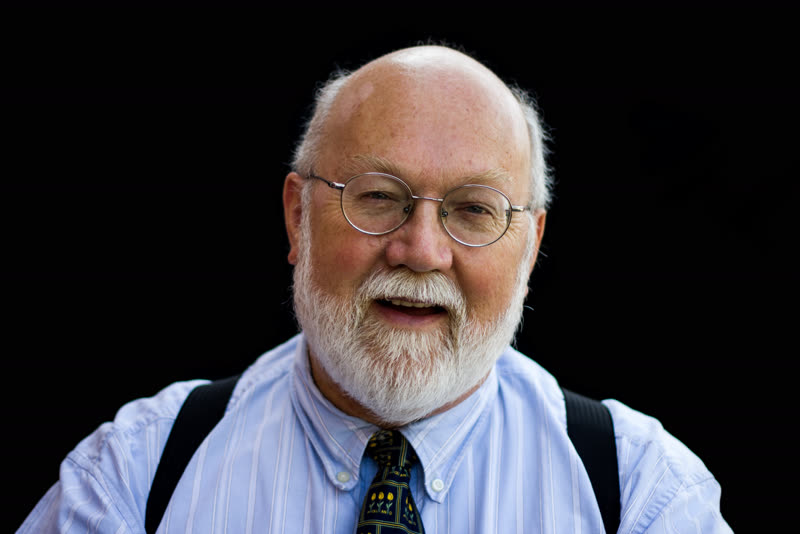 Tim Pasma Sunday AM Genesis January 24, 2016
Main passage Genesis 28:10-22
📖 Read the Scripture passage (ESV)
Genesis 28:10-22(ESV)
10 Jacob left Beersheba and went toward Haran. 11 And he came to a certain place and stayed there that night, because the sun had set. Taking one of the stones of the place, he put it under his head and lay down in that place to sleep. 12 And he dreamed, and behold, there was a ladder[a] set up on the earth, and the top of it reached to heaven. And behold, the angels of God were ascending and descending on it! 13 And behold, the Lord stood above it[b] and said, “I am the Lord, the God of Abraham your father and the God of Isaac. The land on which you lie I will give to you and to your offspring. 14 Your offspring shall be like the dust of the earth, and you shall spread abroad to the west and to the east and to the north and to the south, and in you and your offspring shall all the families of the earth be blessed. 15 Behold, I am with you and will keep you wherever you go, and will bring you back to this land. For I will not leave you until I have done what I have promised you.” 16 Then Jacob awoke from his sleep and said, “Surely the Lord is in this place, and I did not know it.” 17 And he was afraid and said, “How awesome is this place! This is none other than the house of God, and this is the gate of heaven.”
18 So early in the morning Jacob took the stone that he had put under his head and set it up for a pillar and poured oil on the top of it. 19 He called the name of that place Bethel,[c] but the name of the city was Luz at the first. 20 Then Jacob made a vow, saying, “If God will be with me and will keep me in this way that I go, and will give me bread to eat and clothing to wear, 21 so that I come again to my father's house in peace, then the Lord shall be my God, 22 and this stone, which I have set up for a pillar, shall be God's house. And of all that you give me I will give a full tenth to you.”
Transcript
This morning I'd ask you to take your Bibles and turn with me to Genesis chapter 28. Genesis 28. You follow as I read verses 10 through 22. Jacob left Beersheba and went toward Haran. And he came to a certain place and stayed there that night because the sun had set. Taking one of the stones of the place, he put it under his head and lay down in that place to sleep.
And he dreamed. And behold, there was a ladder set up on the earth, and the top of it reached to heaven. And behold, the angels of God were ascending and descending on it. And behold, the Lord stood above it and said, I am the Lord, the God of Abraham your father, and the God of Isaac. The land on which you lie I will give to you and to your offspring.
Your offspring shall be like the dust of the earth, and you shall spread abroad to the west and to the east and to the north and to the south. And in you and your offspring shall all the families of the earth be blessed. Behold, I am with you and will keep you wherever you go, and will bring you back to this land, for I will not leave you until I have done what I have promised you.
Then Jacob awoke from his sleep and said, Surely the Lord is in this place, and I did not know it. And he was afraid and said, How awesome is this place! This is none other than the house of God, and this is the gate of heaven. So early in the morning Jacob took the stone that he had put under his head and set it up for a pillar. and poured oil on the top of it.
He called the name of that place Bethel, but the name of the city was Luz at the first. Then Jacob made a vow, saying, If God will be with me and will keep me in this way that I go and will give me bread to eat and clothing to wear so that I come to my father's house in peace and the Lord shall be my God, then this stone which I have set up for a pillar shall be God's house. And of all that you give me, I will give a full tenth to you.
Let's pray. Father, open our minds now to this, your word. This is not merely historical record. It is the word of the living God that is intended to penetrate our hearts, to divide our attitudes and our thoughts, our bone and our marrow, everything, Lord, that is us. You intend to minister through this word, so help us to listen, I pray. I pray that your spirit would have his way in our hearts to teach us and to change us.
We ask this in Jesus' name. Amen. I remember this Old Testament story very well. In fact, it's one of the Old Testament stories that I remember the most as a child. Here's why. Why would anyone choose a stone for a pillow?
I mean, that's what I remembered most about this story. I mean, I saw the picture in my kid's Bible, the picture of the stairway with the angels going up and down and so forth. And that was interesting. But mostly I tried to figure out how Jacob could possibly get comfortable in this situation. And in doing that, I missed the whole point of the story. I can't help but think that most of the people who made the pictures in the Bible missed the whole point of the story.
But then many of us missed the point. And so we have to ask the all-important question, why is this here? To me, that's the most important question in all your Bible study to ask. Why is this here? When you think about it, Jacob had now embarked on a journey. You remember, his brother wants to kill him.
And so he's heading out for safety. His mom has told him he has to leave. He gets his father's blessing eventually. And he leaves to go to Haran, where his uncle lives. And he's there to find a wife. But that's a long, long journey.
He starts out from Beersheba. If you look at a map, Beersheba is way down in the south of Canaan. It's almost to the Sinai Peninsula. And he's making a trip to Huron, which would be today in modern Turkey. Now, that certainly is a trip that would take him a long time, given the transportation they had in those days. And yet the writer tells us of only one day in that entire long trip.
Only one day. Why single out that particular day of this long and arduous trip? Why pick that day? Because that day is a meeting between God and Jacob that begins the great transformation of this man. The son sets on a fugitive, afraid of his brother, coming to a no-name place with a rock serving as his pillow. But when the son comes up, a man running away from home runs into God.
A man afraid of his brother begins to fear God. An insignificant place becomes the house of God. And a rock becomes the temple of God. the sun sets on a thief but it rises on a worshiper this day changes the whole journey in fact this day begins the great change in Jacob for you see God is going to keep his promise we all know that and God even uses sinful means to keep his promise but God also changes people in order to achieve what he has promised this is the story of the grace of God that transforms a man This is the story of God grace to you So here the first question What is the grace that transforms you?
What is that like? Let's look at that. In verses 10 through 15, Jacob left Beersheba and went toward Haran and he came to a certain place and stayed there that night because the sun had set. Taking one of the stones of the place, he put it under his head and laid down in that place to sleep. And he dreamed, and behold, there was a ladder set up on the earth, and the top of it reached to heaven.
And behold, the angels of God were ascending and descending on it. And behold, the Lord stood above it and said, I am the Lord, the God of Abraham your father and the God of Isaac, the land on which you lie I will give to you and to your offspring. Your offspring shall be like the dust of the earth, and you shall spread abroad to the west and to the east and to the north and to the south.
And in you and your offspring shall the families of the earth be blessed. Behold, I am with you and will keep you wherever you go and will bring you back to this land. For I will not leave you until I've done what I have promised you. What is this grace that transforms you? Well, first of all, it is a grace that takes the initiative. It is a grace that takes the initiative.
Here you find a man fleeing an assassin. He has traded the comfort of his parents' tents for a rock. He is a thief and a scoundrel, willing to defraud his brother and manipulate his old weak father. He certainly has no interest in God. He is a sinning schemer, not a serious seeker. Not at all.
Remember his conversation with his father Isaac? You read it in the previous chapter. He goes out or he brings in this goat meat that's spiced so that it tastes like wild game. And he comes in to deceive his father Isaac. And Isaac says to him, how is it that you have found the game so quickly, my son? And Jacob replies, because, note this, because the Lord, your God, granted me success.
Isn't that interesting? I remember reading through that last week as I was studying last week's chapter and thinking, that's interesting. He doesn't say the Lord our God. He doesn't say the Lord my God. He says the Lord your God. As he's here, does he ask for a vision of God?
Does he stop here because he wants to meet God? Is he like the man who's so desperate for God that he's going to stop at the first church that he sees on the road? Absolutely not. He stops here because it's dark. He stops here because it's time to camp for the night. This vision is unsought.
It is unexpected. He wasn't looking for it. Jacob is not looking for God. His only concern is his wealth and his safety. And yet, he sees God. Why?
Because God chooses to make himself known to Jacob. That's why. It's the only answer. It's up to God. He chose to make himself known to Jacob. Jacob wasn't looking for God.
Jacob couldn't care less about God at this point. But God chooses to make himself known to Jacob. You see, the grace that transforms by definition takes the initiative. I'm reminded of Ephesians chapter 2 whenever I read things like this. Ephesians chapter 2 verses 1 through 5 if you want to look at it. Ephesians 2, 1 through 5.
And you were dead in the trespasses and sins in which you once walked, following the course of this world, following the prince of the power of the air, the spirit that is now at work in the sons of disobedience, among whom we all once lived in the passions of our flesh, carrying out the desires of the body and the mind, and were by nature children of wrath like the rest of mankind. Hmm. Sounds like Jacob to me.
In fact, it sounds like you too. And me. It's the way we were. Dead. Enslaved. I always call this passage the land of the living dead.
We're dead in our trespasses and sins. Enslaved to the world and what it teaches. Enslaved to Satan. And enslaved to our own desires. Completely, totally, if you will. Dead and enslaved.
How do we get out of that? Let's keep going. But God. I remember, and I'm not trying to be funny, but I remember a seminary speaker or one of the guests. We always had guest speakers at seminary chapel. One of them said, we need to do these studies of the buts in the scripture.
But God. Right? So we're dead. But God, being rich in mercy because of the great love with which he loved us, even when we were dead in our trespasses, note, made us alive together with Christ. What's the next phrase? By grace you have been saved.
You didn't want it. You weren't looking for it. You were dead. There was no way you could respond to God. None at all. So why did you respond? because God intervened and God raised you from the dead and God gave you life so that you would see Jesus and you would believe.
The grace that transforms takes the initiative. Note as well, in verses 12 and 13, this is a grace that reveals God. Grace reveals God to us. the vision that Jacob had was of a ladder reaching from heaven to earth now I used to think of that as a real ladder you know a ladder that went up and you climbed it and I could see angels going hey watch where you where you putting your foot My hand on that rung Okay But that not the picture that he wants us to see It's actually a flight of stairs.
And maybe you knew that already. But there's a reason why I think that. Because it's describing here something that was true of the culture around them. Do you remember studying in history in high school of the very first pyramids built in Mesopotamia, which is where he's headed, by the way. What were they? They were ziggurats.
They were the step pyramids. Right? That's how they went. And so why do you think they built them that way? Because they were to represent steps to God, to the gods. And on the very top, the very top was a shrine where they would meet their gods.
And so what Jacob sees here are these steps intended to go to God. And so this represents, as he would know, access to God. Now, as you read this vision, something should come to your mind. Something should come to your mind. I think the writer wants it to come to your mind, and that is Babel. In verse 12, notice what it says.
And he dreamed and behold, there was a ladder set up on the earth and the top of it reached to heaven. Does that sound familiar? You remember the rebels in chapter 11 were saying, let's build a tower that will what? Reach to the heavens. So the writer here, Moses, is wanting you to make that connection. And look at verse 17.
And he was afraid and said, how awesome is this place. This is none other than the house of God. And this is the what? Gate of heaven. By the way, Babel means gate of God. All right?
But here's the difference. While those rebels tried to reach God, this is God reaching to Jacob. God reaching down to a rebel. You see? I think the writer wants you to see that. I think Moses wants you to make that connection. before the rebels were trying to reach God now God reaches down to the rebel this is a God who takes a vital interest in what's happening here that's why the angels going up and down on this stairway represent they are his messengers as Hebrews tells us they are spirits that minister to us the inheritors of salvation they are messengers and ministers and they continuously move between heaven and earth okay now don't think that there's angels in a stairway somewhere this is a vision right there wasn't really a stairway there but this is a vision in a dream that's supposed to tell him something and what it says is this god is vitally interested in what happens here but notice it is the lord who has the spotlight not the angels because he suddenly appears at the top of the staircase and he identifies who he is.
This is the picture we have to have in our mind. As he's sleeping, he has this dream. There's a stairway to heaven. Angels are ascending and descending on the steps, but suddenly at the top appears God. There's where the spotlight goes. That's who's supposed to get the attention.
This is the God of Abraham and of Isaac. He's the God of Abraham, the God who called Abraham out of his pagan beliefs and made him his, gave him great promises. This is the God of his father Isaac, the God who graciously gave him all that he had promised, including his very, remember what he promised Isaac, including his very presence. You know, I think we need to note when God reveals himself to Jacob and to you, God comes to you in the darkest of moments. he comes to you not when you're at the top of the world but at your darkest moments God took you through dark times in order to reveal his light didn't he God sought you when you were not seeking him even when there was nothing in you to draw God to you God in his grace sought you out and revealed himself to you and now he tells us how to come to him there's this way to god that stairway represents access to god you know it's interesting as jesus made reference to this stairway did you hear it this morning look at john chapter 1 verse 51 as he talks to nathaniel john chapter 1 verse 51 he's speaking to nathaniel here and it says and he said to him truly truly i say to you you will see heaven opened and the angels of god ascending and descending on the son of man now what's he saying here he's saying i'm the staircase i'm the one who gets you to god You know how he puts it later on in John chapter 14?
He says it this way. I am the... God, I can only think two of the words. I am the way, the truth, and the life. There we go. I am the way.
He is the way. That staircase is pointing to Jesus. There's access to God only through Jesus. And by the way, Jesus reveals God to us, does he not? Certainly does. So this is a grace that takes initiative This is a grace that reveals God This is a grace that makes great promises Can you believe this?
God is talking to Jacob about these promises. Right? And notice these are nothing less than the promises that he made to Abraham. He is repeating here the Abrahamic covenant. He's repeating what he said to Abraham. He's repeating what he said to Isaac.
Now he says it to Jacob. And when you look at those promises, verse 13, I am the Lord, the God of Abraham, your father, and the God of Isaac. The land on which you lie I will give to you and to your offspring. Your offspring shall be like the dust of the earth, and you shall spread abroad to the east and to the west and to the north and to the south. And in you and your offspring shall all the families of the earth be blessed.
Behold, I am with you and will keep you wherever you go and will bring you back to this land, for I will not leave you until I have fulfilled all my promises. You see, these are nothing less than the promises made to Abraham. Now look at the grace here. Look at the grace here. What Jacob schemes to get, God freely gives to him. Don't miss that. what did we see was motivating Jacob and Esau for that matter?
They wanted the wealth that came with the Abrahamic covenant, but they didn't want the God who came with that covenant. Jacob didn't want him, neither did Esau. Remember, he's scheming to get the birthright. He's scheming to get the inheritance of that covenant. But notice, what he schemes to get, God freely gives to him. this revelation and notice this in this revelation to this undeserving man you find no word of reproach you find no demand but a string of assurances flowing from that central I am God's not interested in merely telling you how bad you are he's interested in saving and changing you now please don't misunderstand me i'm not saying there is never a place then for bringing god's word to bear to show people that they're sinners and they need to turn to a savior but what i am saying here is telling people just how bad they are will never get them saved only the promise of the grace of god will cause them to trust that god and notice the land he leaves is the land his descendants will inherit they will be like the dust and the word spreading there means breaking out in the north the south the east and the west and even though he is such a rascal bringing heartache and misery to his family his seed will bless the nations of the earth all the nations all the families isn't that the great promise we've seen from the very beginning, right?
From the very beginning of this book, the promise of the woman's seed. Now the promise of that seed comes through Abraham. And the promise of that seed, to me, the ultimate promise of that covenant is, and with your seed, I will bless all the nations. And that is how God keeps faithful to that promise. Here, what? Here he talks to Jacob.
By the way, Jacob hasn't even got a bride yet, has he? God's making this promise. From your descendants, I will bless all the earth. But notice verse 15, he doesn't just talk about the future, but of present intimacy. I will be with you. A presence that will protect him and a presence that will eventually bring him home he will be god with us to this wretched scheming grasping sinner i promise jacob that i'll be with you everywhere and i'm going to protect you and i'm going to see that you make at home.
He didn't deserve any of that, did he? Not a bit. But that's how God works. Why would he do all this? Why would he do all this? Because he'd already made a promise to Abraham that his seed would bless all the nations of the earth, that his descendants would inherit the land.
He's saying this to Jacob because he made the promise to Abraham that that's what he was going to do. Do you know that God manifests his grace to you because of the promise he made to another? Do you think about that? God manifests grace to you not because of you, but because he made a promise to another. Consider John 6, verse 37-40. I love John 6. but in John chapter 6 verses 37 through 40 this is Jesus speaking all that the Father gives me will come to me and whoever comes to me I will never cast out is that a great promise or what? whoever comes to me, what?
I will never cast him out there's the good news of the gospel my friends when you come to Jesus you can be sure he will accept you he will never cast you out so he says whoever comes to me I will never cast out why? because he already gave you to the father for I have come down from heaven not to do my own will but the will of him who sent me and this is the will of him who sent me that I should lose nothing of all that he has given me but raise it up on the last day for this is the will of my that everyone who looks on the Son and believes in Him should have eternal life. And I will raise Him up on that last day. Now listen to me.
God promises you eternal life not because you deserve it, but because He's already promised you to the Son. Amen. Now, all those who look to Christ will be raised on the last day. Not because of how well you've done, but because God promised his son that he'd given him a people and not one of them would be lost. Now, the story does not end here. It never does with grace. because grace is not just something we hold up to admire.
Grace is something that actually transforms us. What does this grace do to you? What does this grace do to you? Well, if we look at it, verses 16 through 19, here's the first thing, this grace transforms your perspective. This grace transforms your perspective. Look at verses 16 through 19.
By the way, if you don't have it, if it's not in your Bibles, there should be a paragraph break between 15 and 16. Why? Because the first up through 15 is talking about God's grace. From 16 to the end, it's talking about Jacob's response to that grace. So I believe there will be a paragraph break there. Because now we're looking at what this grace does.
Not just what it is, but what it does. What does it do? Then Jacob awoke from his sleep and said, Surely the Lord is in this place, and I did not know it. And he was afraid. and said, how awesome is this place. This is none other than the house of God and this is the gate of heaven. So early in the morning, Jacob took the stone that he'd put under his head and set it up for a pillar and poured oil on it.
On top of it, he called the name of that place Bethel, but the name of the city was Luz at the first. This grace transforms your perspective. Notice that the writer uses the word here, and I think this is important. I've highlighted this in my text. He uses that word place six times. Alright?
He uses it in verse 10, verse 11 twice, verse 16 once, verse 17 once, verse 19 once. It's this place. It's a non-named, insignificant place. It's kind of like this. It makes you think that Jacob is on his way to Haran, and he stops at a rest stop. Right?
You ever stopped at a rest stop? I mean, I remember one night, we were traveling with our family. It was getting late. We had not only our six kids, but two of the cousins. And it's getting late, and so we decided, oh, let's just stop and rest. So we went into a rest stop, if you will, and just everybody out.
Let's all just sleep here. Now, you're not going to find that on a map, right? By the way, I know, I shouldn't use that illustration. You're all wondering what happened. The police came and told us we couldn't do that. But, so we had to pack up and leave.
But I couldn't find that place now. It's not on the map, right? Rest stops aren't on the map. That's kind of the impression you get here. But actually, it's a Canaanite city of some importance. He was right there, almost in it.
So why is it called a place? because in truth it doesn't mean anything until he gives it the name Bethel the house of God it's a no name no name place until it becomes Bethel sure it's lose l-u-z that doesn't mean anything that doesn't mean anything even though it's an important Canaanite city doesn't mean a thing until it becomes Bethel. Jacob's perspective has changed. Do you see that?
Rather than a mere city, it is the meeting place between God and me, he says. This is the place that causes awe, for it is the gate of heaven. It is Bethel, which is a combination of two words, bet, which means house, and el, betel, Bethel as we would say it. El, the short form of Elohim. You all know what Elohim is, right god house of god that what this place is because this is where god meets me and so he consecrates that stone He anoints that stone So now it no longer merely a stone in the field Now what is it?
Now it is a memorial to the stairway. Notice it says that he set it up. Why did he do that? Because there was a ladder or there was a stairway set up there. And he consecrates that stone as a memorial to be a constant reminder that this is the place where you meet God? His perspective has changed dramatically now.
Let me ask you, has grace changed your perspective? Has grace changed your perspective? Does the way you look at the world and everything else in your life, is it significantly different than your unbelieving neighbor and the way he looks at his life? The one who's not been touched by the grace of God? Do you have a significant difference in your perspective because of the grace of God.
I think that's what you need to ask yourself. I love the Apostle Paul in 2 Corinthians 5. He says, my perspective on Jesus changed. You remember what he thought Jesus? He thought Jesus was a blasphemer. He thought Jesus was a troublemaker.
He went after the disciples of Jesus. But in 2 Corinthians 5, beginning in verse 16, he says, From now on, therefore, we regard no one according to the flesh. Even though we once regarded Christ according to the flesh, we regard him thus no longer. Therefore, right? Now because of the way I see Christ, therefore, if anyone is in Christ, he is a new creation.
The old has passed away. Behold, the new has come. See, Jesus is a troublemaker. War. He's the one who gives you new life and makes a whole new creation. See, your perspective on Jesus should have changed.
Jesus is the true Bethel. You think of that? Jesus is the true Bethel. Because he is the meeting place between God and man. Bethel and that rock are doing nothing more than pointing forward to the one person that becomes the meeting place between man and God. How do you view your work?
Has grace changed your perspective on work? It should. Colossians chapter 3, 24 and 25, Whatever you do, work heartily as for the Lord and not for men, knowing that from the Lord you will receive the inheritance as your reward. You are serving the Lord Christ. Do you have a different perspective on work because grace has invaded your life? Right?
A grace that takes the initiative, a grace that transforms you, ought to change your perspective. A grace that makes promises ought to change your perspective, even on the thing that we struggle with the most, our work. How about the church? Do you have a different perspective than you used to? I'll never forget the watch night service we had here several years ago.
Greg Field was a brand new Christian. And Greg got up. I don't remember much, but I remember this. Greg standing up and saying, if you would tell my friends last year that I would be spending New Year's Eve in church, they would have told you I was crazy. What happened? His perspective changed dramatically about the church, didn't it? has God's grace changed your perspective on everything in life it should it should the fact that God has revealed himself and his promises to you undeserving as you are should have a profound effect on your view of life God's grace changes your perspective God this grace transforms your approach to life.
Not just your perspective, but your approach. Note, okay, you know that I changed something in 20 through 22. You notice that I changed something. And I'll read it like I did before. Then Jacob made a vow, saying, If God will be with me and will keep me in this way that I go and will give me bread to eat and clothing to wear, so that I come again to my father's house in peace and the Lord shall be my God.
Then this stone, which I have set up for a pillar, shall be God house And of all that you give me I will give a full tenth to you Jacob will now live a life of commitment It seen in this vow He commits himself. This is, by the way, isn't it interesting, that the schemer here, what we have here is the longest recorded vow in the whole Bible. All right?
Now note the change that I've mentioned. The then before then this stone. And the reason why is that all those start with and, and, and, and, and, and, and, and. But we all know that he's making a vow, and so a then has to happen. I think the then should come where it does. Okay?
It comes where it does. The if is just part of that grammatical structure. Now, some have accused Jacob here of bargaining with God now. If you do this, then. But that's not what's going on, because the Bible clearly says what? He's not bargaining.
He's making a vow. He's not bargaining with God at all. You say, how is that possible with all those if clauses? Well, let me put it this way. Suppose you promise to give me $100,000. You promise that $100,000 to me.
You haven't given it to me yet. But I'm convinced that you will give me $100,000 because you're good for your word. And I say to you, wow, if you give me that $100,000, I'll spend it on everybody else's welfare. Now, am I making a bargain? Am I setting up a condition? Am I actually saying to you, if you give me that, then I'll do this?
No. The emphasis falls on what? Not the first part. The second part. I will spend it in the right way. The emphasis falls on the last part, my promise.
Right? We all do that. Well, if that happens, you know. So, this is a vow that he's making. He is casting himself on the mercy of God. Now here's the thing I want you to see.
Does this commitment to God flow from the fact that he's terrified of God? Does it flow from the fact that God has threatened him with terrible things? No. He commits himself to God because God has made great promises to a great sinner. That's why he makes that commitment. We all know what happens to commitments made out of terror.
They don't stick. This is a commitment that says, God, you have been good to me. Look at what he says, right? If you be with me and keep me and give me bread to eat and clothing to wear and bring me back to my Father's house in peace and be my God, then this will be the place of worship. You'll approach life with commitment to serve Christ because of the grace of God.
You know what? I think now he has a confident approach to life. He is now equipped to face the future, not because of his ability to manipulate, but by faith in the promises of God. Know what else? Verse 21. I don't know how to put this.
He owns God as his own, as opposed to just his father's God. Right? Verse 21. The Lord shall be my God. Right? He's convinced now the Lord is his God.
And lastly. All right? Do you note this? What's he say at the very end? I'll give a tenth of everything I have to you. The grasper now. becomes a giver.
Don't miss that. The one who is seeking to get everything and do whatever it takes to give everything, to get all that, now says he'll be a giver. But we all know the story of Jacob, don't we? We know that he's going to face hardship and temptation yet. Please note, transformation does not eliminate problems or temptations. God's grace can change you, but it's not going to change everything around you.
In fact transformation is not the same as perfection Right His perspective on life has changed His commitment to God has changed. He's confident now. But that doesn't eliminate the temptations and hardships. But it does this. A transformed person has been equipped to face hardship and temptation. those things have been transformed so that now he can face those things a transformed person becomes a growing person and you're going to see that with jacob because of the transforming power of god's grace you can trust god but we're going to see just like with abraham just like with isaac that is not perfect in his faith.
I don't know about you, that kind of gives me hope, right? I can see that those whom God has transformed, given them whole new ways of looking at life, can still fall in the ways, the old ways of that life. And Jacob will be no different than you and me. But he's been transformed, and the way he's operated up until now is going to change. and you're going to see him grow, right?
As he faces the hardships, the temptations, the exploitation, everything that happens to him, he's not going to face it the way he did before, not completely. Where does all this take us? One final passage, turn to Titus chapter 2. Titus chapter 2 verse 11. For the grace of God has appeared, bringing salvation for all people. Okay, the grace of God has appeared where?
It has appeared in Jesus. And it brings salvation for all kinds of people. Alright? What else does it do? It not only brings salvation, but it does this. it trains us to renounce ungodliness and worldly passions and to live self-controlled, upright, and godly lives in the present age, waiting for our blessed hope, the appearing of the glory of our great God and Savior, Jesus Christ, who gave himself for us to redeem us from all lawlessness and to purify for himself a people for his own possession who are zealous for good works.
You see, the grace of God has appeared, and it brings salvation, and it teaches us to say no to sin. It is grace that teaches us that. This man has been changed. Why? Because God has been gracious to him and in light of that grace, he's going to respond in a particular way. That ought to be true of you.
Because of what God has done by his grace, you are going to respond with commitment. you are going to respond with a confident way of life you're going to respond with faith you see because the grace of God teaches us that and so as we leave Jacob waking up heading for Haran we see a different man a thief who's become a worshipper and that's you whatever you were you're not that but now you're a worshipper recipient of God's grace ready to serve and to love him Father thank you for this marvelous word we thank you that you have revealed to us your grace in the life of Jacob because then we see even clearer the revelation of your grace in our lives. Help us, I pray. Lord, help us, I pray, to live in the light of your grace, to respond to it in ways that speak of the magnificence of that grace.
Help us, we pray, for your glory that others would see that you are glorified in your grace. We thank you in Jesus' name. Amen.
Also referenced in this sermon
Other passages mentioned, beyond the main text.