FIRE Conference Session 5
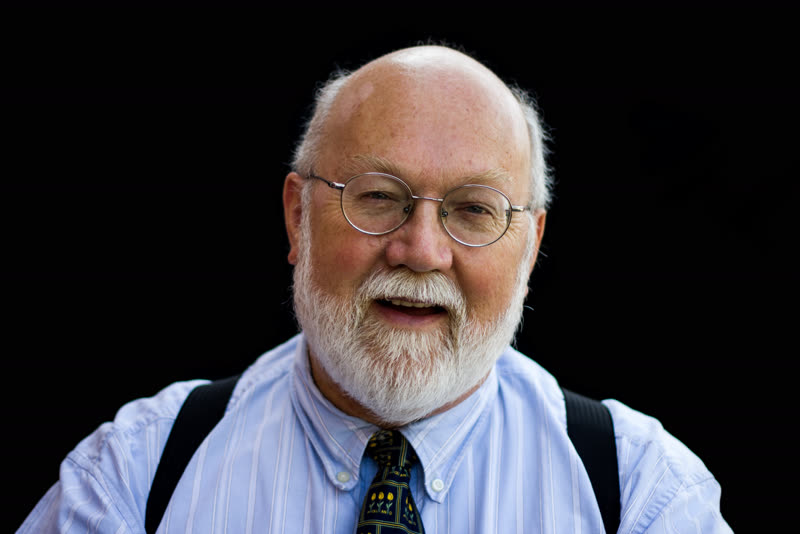 Tim Pasma Special Service 2016 Midwest Region FIRE Conference September 21, 2016
📖 Read the Scripture passage (ESV)
Church Ministry After Obergefell
Transcript
Well, this has been a hard week in terms of eating. I'm just about ready to die and we're not done yet. And I just feel obligated, you know? Let me say something. It's been a delight to have you folks here. It has just been great to have you here. and I hope that our ministry to you has been good.
It's been well-received, and we're just thankful that you've been here, and it's not been a, well, I hardly did any work for this at all, but it's not been a real hard thing, and so I just want to thank you for being a delightful group of folks. Now, in your notebook is an evaluation sheet. We'd really appreciate if you'd fill that out. There'll be a letter tray on the table. right outside the doors here.
In fact, I think I see it. And if you could just put it in there, that would be great. You've got until you have to leave. You might want to wait until after you eat the last meal before you fill it out. So we'd really appreciate that. And then, again, note, next year the Midwest Conference is going to be at First Baptist in Carmel, Indiana. so note that, put it on your calendar and see you next year how do you introduce the next speaker? as I said last night I've known this speaker every day of his existence we both grew up in a little town in Wisconsin called Merton and our dad pastored there for 15?
13. 13 years. So we essentially grew up there. Andy went on to Cedarville. We both did. He got his bachelor's in political science and then in 79 he married Deanna and we were really glad for that.
Went to Gonzaga Law School out in Spokane and practiced law in Minnesota for about 10 years. and then they did a one year missions trip I mean they were on the field for one year and thought you know we need to really get involved in this And so I think the board that Andy was with then or the sending agency required a Master Divinity so he got his from Grand Rapids Theological Seminary and then served for 12 years in Asia. Now, you'll have to judge which one is the better looking. however he is the most traveled spent some years in Singapore and in Thailand and particularly helping using his legal abilities to help with seminary in Singapore and moving it to Thailand eventually traveled all over Asia the Philippines, Burma, China for that seminary And so, you know, he's had a pretty interesting life in our book as PASMAS. Now he's the executive administrator at Hillside Community Church in Grand Rapids.
And so I've had questions, you know, since Obergefell decision came down. And I've had questions what we need to do. And I always call my brother on the legal stuff. and he said, well, you know what, I've done this presentation for pastors up here. Maybe I'll just send it to you. And so he sent it to me, and I thought, this would probably be good for our regional conference.
I mean, this is stuff that we're all really going to have to deal with. And so I asked if he would do it, and he said he would. So it's good to have Andy here, and I hope this is going to be helpful to you. So let's pray, and then Andy, you come up and help us. Thank you, Father, again for these three days. We are thankful for your mercy to us in Christ and the mercies that are new every day.
Again, we pray that we would listen carefully, learn, be able to understand what's happening in our nation and be able to adjust in a way that does not compromise the gospel. And we pray that it would be that we might learn in order to understand how to protect our churches and yet not in a way that would keep us from ministering the gospel to those who hate us So God Andy I pray and help us to learn together in Jesus name Amen Well, good morning. I have to admit I always get a little nervous when my brother introduces me because I'm not quite sure.
And so I come prepared with a couple of stories of my own, just in case. I haven't had to use any yet, so that's good. What's saying you live by the sword, you die by the sword? You live by technology, you die by technology. I had everything on my computer. We weren't able to get it all working the best way, so I'm using two computers.
So the coordination factor is kind of limited here. I'm getting older. It doesn't work as well as it used to. So we'll try to make this work. Let's see here. There we go.
All right. On June 26, 2015, we were greeted by the decision from the Supreme Court. Obergefell v. Hodges, which essentially legalized same-sex marriage throughout the United States. Now, no doubt you've all heard about this case and you've probably read a lot about it and you've probably come to your own conclusions about what it all says. In my review of various articles, both in the Christian domain and the legal scholars, we're seeing a whole range of reaction by the church.
One is, it's no big deal. We've got the freedom of religion, the First Amendment protects us, all the way to the other side where I know pastors who are no longer doing weddings at all because they don't want to be caught in this situation. For them, it's the apocalypse. The world is coming to an end. Let's stop doing everything we're doing. this morning I'd like us to take a look at it and see let you draw your own your own conclusion of where we are with the burger felt I got my own beliefs about it and I share those with you as we go along before we get too deep into the actual discussions of what should we do I think we need to have a basic understanding of what Obergefell really says So, what I want to do is look at Obergefell itself, the majority opinion, the dissenting opinion.
Then we look at the history of religious freedom in the United States. I think you might be a little surprised at what you hear about this. I'm not a constitutional law attorney, so it's going to be really a broad overview of this area. Next, how this case could affect our religious freedom and our response and some practical considerations. So if you take away anything, take away these two things today.
Sincerely held religious beliefs, public accommodation, Let me just say, too, I apologize. You don't have any notes from me. I wasn't quite sure what to put down there. I will have some material for you afterwards, which will kind of summarize a fair amount of this and give you some helps as well. So don't feel like you have to take copious notes if that's what you want to try to remember.
All of this, we'll have some material for you there. So, Sincerely Held Religious Beliefs, Public Accommodation. Again, the bottom line of Obergefell is that the 14th Amendment requires a state to license a marriage between two same-sex individuals or to recognize as legitimate such a marriage from another state. That's based on the 14th Amendment. So in effect, the Supreme Court ruled that same-sex marriage is now legal in all 50 states. now bear with me I'm going to use a number of quotes here because it's easy for me to paraphrase what the Supreme Court has said and I could skew it the way I think it should be read but if I give you the quotes you can kind of see what the justices are saying and their opinions this is essentially a split decision it was five justices in favor of same sex marriage four opposed.
And so the justice who wrote the majority opinion was Justice Kennedy. And we'll be quoting a few. He basically lays out four principles that they based their decision on. The first is, the right to personal choice regarding marriage is inherent in the concept of individual autonomy. The nature of marriage is that through its enduring bond, two persons together can find other freedoms, such as expression, intimacy, and spirituality.
This is true for all persons, whatever their sexual orientation. That's his first point. Second point, the right to marry is fundamental because it supports a two-person union unlike any other in its importance to the committed individuals. The right to marriage thus dignifies couples who wish to define themselves by their commitment to each other. It safeguards children and families and thus draws meaning from related rights of childbearing, creation and education.
Marriage also affords the permanency and stability important to children's best interest. Excluding same-sex couples from marriage thus conflicts with a central premise of the right to marry. Without the recognition, stability, and predictability marriage offers, their children suffer the stigma of knowing their families are somehow lesser. The marriage laws at issue here thus harm and humiliate the children of same-sex couples.
That was a big factor. Justice Kennedy spent quite a bit of time talking about that particular issue. Same-sex couples are consigned to an instability in many opposite-sex couples who are deemed intolerable in their own lives. And basically what the court is saying here is marriage is a keystone of social order. So we want to allow marriage for everybody.
I'd like to look at the concerns expressed by the dissent because if you read the majority opinion you can kind of come away going okay I don't agree with it but I'm not going to worry too much about it how is it really going to affect us that kind of a thing if we look at the dissenting justices opinions it is interesting in fact Justice Robert when they make a decision they come back in a session and they basically just publish their findings Justice Roberts read his dissent in its entirety which is very unusual It demonstrated how much he disagreed with the majority opinion. So you can take away some of these. Justice Scalia.
All right, let me see if I make sure I got the right one. Okay, here we go. Justice Scalia, the naked judicial claim to legislative, indeed super-legislative power, a claim fundamental at odds with our system of government, a system of government that makes the people subordinate to a committee of nine unelected lawyers, does not deserve to be called a democracy.
So this, to me, illustrates one of the problems I have with this case. It really is a real attack on process and checks and balances and all those things that are built into our system. Justice Roberts states, this dissent is about whether in our democratic republic that decision should rest with the people acting through their elected representatives or with five lawyers who happen to hold commissions authorizing them to resolve legal disputes according to the law.
The Constitution leaves no doubt about the answer. He goes on to say, hard questions arise when people of faith exercise religion in ways that may be seen to conflict with the new right to same-sex marriage. When, and this is key, for example, a religious college provides married student housing only to opposite-sex married couples, or a religious adoption agency plans to place a child with same-sex married couples.
Indeed, the Solicitor General, the Solicitor General is the top attorney for the U.S. He's the one that will argue the case before the Supreme Court. The Solicitor General candidly acknowledged that the tax exemptions of some religious institutions would be in question if they opposed same-sex marriage. There is little doubt that these and similar questions will soon be before the court.
Unfortunately, people of faith can take no comfort in the treatment they receive from the majority today. Justice Roberts again. it is one thing for the majority to conclude that the Constitution protects a right to same-sex marriage. It's something else to portray everyone who does not share the majority better informed understanding as bigoted And that clearly comes through in the opinion If you read the opinion yeah He says it well Aside from undermining the political processes that protect our liberty, the majority's decision threatens the religious liberty our nation has long sought to protect.
That's Justice Thomas. Again, Thomas, in our society, marriage is not simply a governmental institution is a religious institution as well today's decisions might change the former but it cannot change the latter it appears all but inevitable that the two will come into conflict particularly as individuals and churches are confronted with demands to participate in and endorse civil marriages between same-sex couples one of the other dissenters, Justice Alito the decision will have other important consequences It will be used to vilify Americans who are unwilling to assent to the new orthodoxy. In the course of its opinion, the majority compares traditional marriage laws to laws that deny equal treatment, and this is critical, deny equal treatment for African Americans and women.
The implications of this analogy will be exploited by those who are determined to stamp out every vestige of dissent. Alito goes on perhaps recognizing how its reasoning may be used the majority attempts towards the end of its opinion to assure those who oppose same-sex marriage that their rights of conscience will be protected we will soon see whether this proves to be true I assume that those who cling to old beliefs will be able to whisper their thoughts in the recesses of their homes but if they repeat those views in public they will risk being labeled as bigots and treated as such by the government, employers, and schools. Powerful words.
Concern has been expressed by, obviously, many other people. One constitutional scholar basically said, Supreme Court has determined that marriage is a constitutional right. This will have serious consequences for the future of religious freedom. Our opposition to the constitutional right to marry, same-sex marriage will be viewed the same as opposing constitutionally protected civil rights or opposition to freedom from slavery.
Refusing to perform same-sex weddings will be viewed as discrimination So yeah it kind of sobering when you read those kind of things it interesting in the 25 page majority opinion Kennedy addresses religious concern in only two small paragraphs so he doesn't even bring that into consideration it's out of his realm of consideration so not important to him Kennedy states many who deem same-sex marriage to be wrong reach that conclusion based on decent and honorable religious or philosophical premises and neither they nor their beliefs are disparaged here. But when that sincere personal opposition becomes enacted law or public policy as it was before, the necessary consequences is to put the imprimatur of the state itself on an exclusion that soon demeans or stigmatizes those whose own liberty is then denied. Finally, it must be emphasized that religions and those who adhere, these words are key words, and those who adhere to religious doctrines may continue to advocate with the utmost sincere conviction that by divine precepts, same-sex marriage should not be condoned.
The First Amendment ensures that religious organizations and persons are given proper protection as they seek to teach the principles that are so fulfilling and so central to their lives and faiths and to their own deep aspirations to continue the family structure they have long revered. We'll talk about those in just a moment. Okay, so let's look. That's where the court is.
That's kind of a really 30,000-foot view of what the court has decided. What I want to do just really quickly here is what really, you know, we rely on the First Amendment. We think that's our basis for protection for religious beliefs. So I want to just look at that very quickly. Reynolds versus the United States, 1879. This was the first major religion case that came before the Supreme Court.
It was brought by Mormons who wanted the right to engage in polygamy, and so they challenged When Utah became a state, the United States would only let them become a state if they outlawed polygamy. And the Mormon Church officially changed its position on polygamy. However, there were those who still believed it was necessary. And so they worked their way through the court system and finally got to the Supreme Court.
So this was that case. The Supreme Court stated that although a person was free to hold a religious belief, Congress possessed the legislative power to regulate religious practices. The court said to permit an individual to act in contravention of the law because of a religious belief would be tantamount to making the law subordinate to religious beliefs.
This would, in effect, permit all citizens to decide for themselves whether or not to obey the law. So, there's a saying when you study the law, when you're in law school, good facts make bad law. Here you have a fact pattern that says, boy, we've got to fix this problem. So in that particular case, we would all agree. Polygamy is wrong. We don't want that.
It should not be allowed in the U.S. The problem is that sets a precedent. That makes for bad law. So we're seeing how that will come into effect for us here now. this is what the court basically says this summarizes the court you can believe what you want but you're not free to practice how you want that the state of the law in 1879 Sobering when we think of it that way We move ahead 110 years or so We come to Employment Division v.
Smith. Nothing had really been done with religious freedom. I mean, it was pretty much status quo for quite some time. I mean, really the only case out there was the Mormons, and that was just that weird case kind of a thing, I think. this was a case where they had several American Indian men who worked for the state I'm guessing now here I think it was the state of Montana and part of their religious practice is to smoke peyote that's part of their religious practice they were fired from their jobs because they smoked peyote in this case the court basically said no we're not going to allow you to break the law for your religious practices it was a very important case and again it's one of those cases that's 100 pages long kind of a deal it's hard to summarize it but essentially what this case did was pre-exercise religion was effectively changed it changed the constitution in effect Now, the concerning part for those who may be conservative, who like to point at the Supreme Court and say, all a bunch of liberals doing that, this particular case, the decision was written by Scalia who was very conservative