Saint Augustine: Apostle Of God's Grace
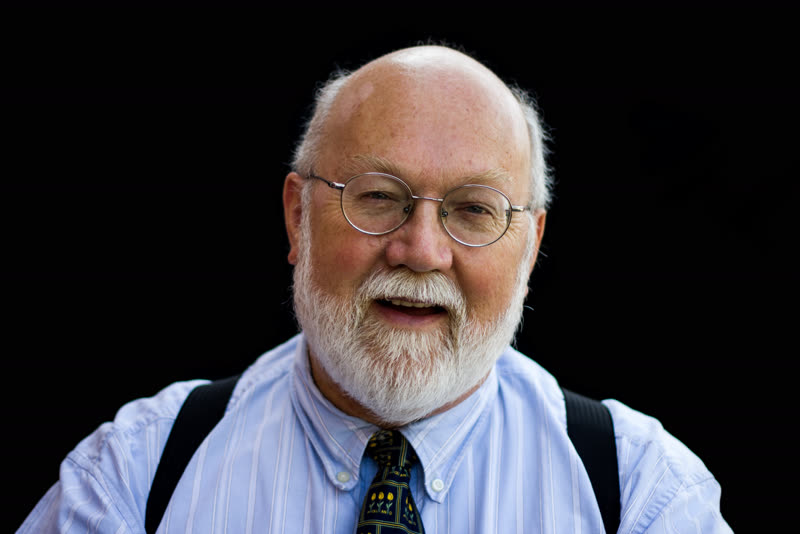 Tim Pasma Sunday AM Reformation Sunday October 30, 2016
📖 Read the Scripture passage (ESV)
Aurelius Augustine, Bishop of Hippo, influenced Western culture in the first century. His doctrine of sin, grace, and salvation helped launch the reformation.
Transcript
For those of you who are new here, for the last 30 years we have taken this Sunday, which is close to Reformation Day, and celebrated it. It's good for us to remember that God is at work in all of history, especially in the history of His church. and so we spent the last several years making something special of this Sunday because tomorrow on the 31st of October in 1517 Martin Luther nailed 95 theses to the church door in Wittenberg and started a revolution that recovered the gospel and we are here today because of God's providential work in that man's life and in that reformation and so we've taken this time to look at certain characters from history. Luther, Calvin, Zwingli, Spurgeon, Bunyan, Wilberforce, in order to see the working out of the word of God in the lives of others.
And this year we want to look at St. Augustine. I'd ask you to take your Bibles and turn to Ephesians chapter 2. For it's in Ephesians chapter 2 that we find in particular the truths that were worked out in this man's life and how he came to Christ. Ephesians chapter 2 beginning in verse 1. And you were dead in the trespasses and sins in which you once walked, following the course of this world, following the prince of the power of the air, the spirit that is now at work in the sons of disobedience, among whom we all once lived in the passions of our flesh, carrying out the desires of the body and the mind, and were by nature children of wrath like the rest of mankind. but God being rich in mercy because of the great love with which he loved us even when we were dead in our trespasses made us alive together with Christ by grace you have been saved and raised us up with him and seated us with him in the heavenly places in Christ Jesus so then the coming ages he might show the immeasurable riches of his grace in kindness toward us in Christ Jesus for by grace you have been saved through faith and this is not your own doing it is the gift of God not a result of works so that no one may boast for we are his workmanship created in Christ Jesus for good works which God prepared beforehand that we should walk in them Let pray Father now we pray even as we look at the life of this great man, this man that you used in all these centuries, that you would help us to see that your word was at work, your spirit was at work, the gospel claimed one for you.
And Lord, we just pray that you would give us hope as we review the story of this man, the hope of new birth, the hope of a grace that can capture our hearts and lift the burdens of our sins and give us joy in you. Help us now this day, we pray in Jesus' name. Amen. The age of 71, four years before he died, Aurelius Augustine, Bishop of the city of Hippo and North Africa handed over the administrative duties of the church to his assistant, Heraclius.
Overwhelmed by the aged Augustine sitting behind him on the bishop's throne as he spoke, Heraclius said, the cricket chirps, the swan is silent. Now, Heraclius would have been absolutely speechless. He wouldn't even have been chirping if he had realized the influence and the effect of his bishop would have on the church over the next 1600 years. Augustine was the first great Christian philosopher, an extraordinary thinker who influenced not only the church, but Western civilization.
Much of what we think today have come from the writings of Augustine. His writings helped form the theology and the practice of the Roman Catholic Church, but those same writings also proved to be a spark and a defense of the protestant reformation augustine proved to be one of the greatest church fathers and you may say what in the world is a church father what are they they're the theologians the leaders the teachers the apologists of the first 400 years of the church these are the men who shaped the organization and the doctrine of the church in its infancy and its youth. They're important because they set the boundaries of orthodox theology that we all believe today.
They were the first to wrestle with the scriptures and to formulate the essential doctrines that set Christianity apart from all other religions The creed that we recited today the Apostles Creed is a product of their work as they wrestled with these questions of is Jesus man or is he God? Well, he's the God-man. What is the Trinity? What did Jesus do on the cross?
All of these things were hammered out by the church fathers and set the boundaries that we know as Christianity today. Were they infallible? Absolutely not. The only reason why we look up to them is because as we look at the scriptures, we say, yes, they wrestled with him rightly. They came to the right conclusions. But they were not infallible.
Augustine is a great example of that. His doctrine of the church set the church on a course whose end is the Roman Catholic Church today. That comes from his doctrine of the church. However, his doctrine of sin, grace, and salvation helped launch the Reformation, which recovered the gospel from that very same church. He had doctrine that was at odds with one another.
And yet, he's not infallible. But he is a figure who towers above just about all the other church fathers. One church historian asserted that Augustine was the greatest man the church has possessed between Paul the Apostle and Luther the Reformer. His writings are unbelievably vast, just tremendous amounts of writing that he did in the years that he served Christ.
And they profoundly shaped our thinking. One of his major books is a book called The City of God. In 410, while he was Bishop of Hippo, the barbarians captured and sacked Rome. Rome, the eternal city. Rome, the capital of the mightiest empire in the world. Rome, which was a great, great city that no one should be able to conquer.
And some people were saying the reason why it was conquered is because of the influence of this new religion called Christianity. That's why we were conquered. And Augustine wrote his book, The City of God, in response to that. And in that book, he gives us a way of looking at events, a Christian philosophy of history. and in that book primarily he talks about the city of man and the city of God.
The world pins its hopes and all its dreams on the city of man but the city of man will always disappoint you And Rome was not the eternal city Rome is just one other expression of the city of man the latest version But Christians put their hopes on the city of God, a future city, a city not of this world, a city that's our destination. I think it would be good for American Christians to read this book in an election. year. Another of his books of wonderful consequence was Augustine's Confessions.
This is a book in which he writes the story of his life in the form of confessions, prayers to God. And it's a book that's written about his captivity to sin and the amazing grace of God that rescued him. It's a marvelous book. And this is a book I think that all of us should read because it offers the hope of God's grace in the gospel to those who are lost and to believers as well.
Aurelius Augustine was born in Togasta, a little town in what is now Algeria, on November 13, 354. Now when you think of North Africa in those days, don't think of Arab lands. The Arabs were still just living in the Arabian Peninsula. They had not spread out yet all the way across North Africa and across the Middle East. They were just in the Arabian Peninsula.
But Latin people had settled in North Africa for centuries. And now North Africa was part of the Roman Empire. In fact, it was the breadbasket of Rome. This is where Rome got all its food, its grain. And so the ships that sailed between Italy and Africa were common and frequent. He was born into a middle-class family.
His father, Patricius, or as we would say today, Patrick, was an easygoing pagan. And his mother, Monica, was an earnest Christian who for the next 30 years prayed for his salvation. 30 years she prayed for him. They had grand ambitions for their son, but they couldn't afford to send him to school. But through the help of a fluent family, they sent him to the University of Madara, a dozen miles away.
And there he studied rhetoric. And at the age of 17, he went on to study in the greatest city of Africa at that time, Carthage. He excelled at rhetoric. He was elegant and eloquent, and he could speak and he could write with the best of them. But in Carthage, Augustine found his first love. Sex.
He found sexual temptation irresistible. He writes, I went to Carthage where I found myself in the midst of a hissing cauldron of lust. He tells that he would sit in church looking for girls whom he would later attempt to seduce. His prayer was, Lord, give me chastity and temperance, but not now. He eventually began living with a girl. who gave him a son.
They lived together for 15 years. And the son, Etiodotus, was born to them. He was what Scripture clearly describes in Ephesians chapter 2, verses 1 through 3, and Titus chapter 3. Look at Ephesians 2 with me. And you were dead in the trespasses and sins in which you once walked, following the course of this world, following the prince of the power of the air, the spirit that is now at work in the sons of disobedience among whom we all once lived in the passions of our flesh carrying out the desires of the body and the mind and were by nature children of wrath like the rest of mankind this is augustine this is what he was like he was a captive he was a prisoner to his sin he was dead to the demands of god he was a captive to the prince of the power of the air.
He was a prisoner of the course of the world and the degraded culture in which he lived. He was a slave to his passions and he could not break free. In Titus chapter 3, if you want to turn there, Titus chapter 3 in verse 3, we read, for we ourselves were once foolish, disobedient, led astray slaves to various passions and pleasures. Now that's not just sexual passions and pleasures.
That's any kind of physical pleasure that we're enslaved to. I want it. I want it. That was Augustine. He was enslaved to his sexual passions. But after a few years in Carthage, Augustine found his second love.
That was philosophy. When he was 19 in the cauldron of Carthage, swollen with conceit and utterly given over to sexual pleasures, he began to read the Roman philosopher Cicero And this arrested his intellect because Cicero convinced him that he should pursue wisdom and truth not mere physical pleasure So now he got this pull in two directions. He loves philosophy, and by the way, philosophy means lover of wisdom.
And so he loves the wisdom of Cicero that says there's more to life. There's more to life than physical pleasure. And he's bound by his own physical pleasures. But the old temptations, even with all the philosophy he had, the old temptation still assailed him. He could not break free of his pursuit of pleasure. In his struggle, he turned to the Bible but found no help there because the Bible of that day was very crudely translated.
You realize that when Bibles are translated today into our language, much thought goes into style and eloquence and making it smooth. Well, the only Bibles they had were crudely translated, and he, being the very well-trained person in rhetoric, with his eloquence and elegance in speaking, thought, this thing is no good. How can it convey truth when it's so crude, right?
Perfect example of someone who puts appearance over substance, right? Well, for nine years then, he embraced a religion called Manichaeism. Manichaeism. Manichaeism was like Gnosticism. It rivaled the Christian faith with its half-truths and distortions and lies. It was a heresy.
The fundamental belief of Manichaeism pictured the universe as the scene of an eternal conflict between two powers. The powers of good and the powers of evil. Now before you think that doesn't sound bad, their idea was there are two eternal powers of good and evil. okay? They are equal in power. That is not our view. There are two powers in the world, good and evil, but power, the evil is certainly not equal with the power of God.
But in their view there are these two equal powers one good the other evil And man is a mixed product because in the thinking of that day the body of man housed if you will evil and the soul or the immaterial part of man his spirit was good. So he's a mixture of bad and good, and his task is to free the good in him from the evil. And that's accomplished by prayer, but especially by abstinence from the enjoyments of evil, from riches, lust, wine, meats, luxurious houses, and the like.
Of course, by the way, you know what that does to the incarnation of Jesus, don't you? It means that Jesus could never have come in the flesh, because the flesh is evil. And God could never take on flesh, because then he would be corrupted by evil. By the way, there's still a residue of that in our thinking. Some of us, some people think the body is evil, the spirit is good.
That is not so. That is not so. When God created human beings, he said what? This is very good. There's nothing evil about the flesh, and we don't live to free our spirit from our bodies. That is not Christian.
That is not what the Bible says, but that's what they believed. You can see the roots even of this heresy in the Apostles' time. Look at Colossians chapter 2. Colossians chapter 2. Look at verse 20 of Colossians 2. If with Christ you die to the elemental spirits of the world, why, as if you were still alive in the world, do you submit to regulations?
Do not handle, do not taste, do not touch, referring to things that all perish as they are used, according to human precepts and teachings. These have indeed an appearance of wisdom in promoting self-made religion and asceticism and severity to the body, but they are of no value in stopping the indulgence of the flesh. And so even though he was a devotee of this Manichaeism, this heresy had no power to stop the indulgence of Augustine's flesh.
Because it could not answer his deepest questions Augustus eventually abandoned this religion after nine years of devotion He gave up on it and said it doesn have the answers From the time he was 19 until the time he was 30 Augustine taught rhetoric He returned home to Dugaste after his education in Carthage, along with his mistress and his son, and he began to teach grammar. For about a year he did, and then he returned to Carthage and taught rhetoric there. Now, this was very, he didn't like it because the students there were undisciplined and raucous.
They could do whatever they wanted and he hated it and he stayed there for about seven years and became disgusted with the students and after seven years he moved to Rome. He quickly got a professorship at the University of Milan. Milan is a city north of Rome. If you look in your maps today, you'll see the city of Milan. He got a teaching position there at the University of Milan, and this was a tremendous career move for him because Milan was the central city of the empire.
Certainly, Rome was the capital, but Milan had now garnered, if you will, the economic power and the influential people all lived there. right they all live there and so he became well connected with these wealthy powerful influence influential highly placed people at 30 he had achieved the pinnacle of his success yet even with his brilliance and his success he was still a slave to sex and to his intellectual pride he was as the apostle Paul stated in Ephesians chapter 2 verse 3 look at it again to verse 3, among whom we also once lived in the passions of our flesh, carrying out the desires of the body and the mind. You notice that. The desires of the body and the mind.
He was lost on both fronts, was he not? He's imprisoned to his sexual lust and he's imprisoned to his intellectual pride. He was proud of his learning. He was proud of his brilliance. He was proud of all of this, and yet he was still a slave to his desires. But God was at work.
And God began to work in his heart when he came to Milan, because there was a bishop there by the name of Ambrose. Bishop Ambrose. Ambrose was also a student of rhetoric, but what he had done is said, I'm going to use this in service to Christ. And he used his oratorical skills to preach the gospel. This then attracted Augustine. He was attracted to church there because of Ambrose. but soon the gospel message started working in his heart and yet he still pursued his lusts and his ambitions for worldly success his mother had arranged for him to marry into this higher social circle and so he sent his mistress home to Africa that he lived with for 15 years with great many tears kept his boy and sent her away in the meantime he found an interim girlfriend to satisfy his lust.
At this point he wanted to abandon the world and he wanted to trust completely in Christ, but he also wanted success and sex. That's what he wanted. He wanted both. Why couldn't he command his will to do what is right and follow Christ, he asked himself. Why couldn't he follow through and trust Jesus, leaving all of it behind him? With all these questions in his mind, he was a miserable mess.
But then the miraculous happened. He was walking in the garden that was attached to his house in Milan. He was that day tormented, absolutely tormented. He talks about pulling his hair out and sitting down and wrapping up his knees and just tormented by this fact that I want Christ, but I want this too. And I just can't break free of it. Why can't I follow him?
Why can't I trust him? He was tormented by this. And here's what he wrote about that day. I flung myself down beneath a fig tree and gave way to the tears which now streamed from my eyes. In my misery, I kept crying, How long shall I go on saying, tomorrow, tomorrow? Why not now?
Why not make an end of my ugly sins at this moment? All at once I heard the sing voice of a child in a nearby house whether it was the voice of a boy or a girl I cannot say But again and again it repeated the refrain Take it and read take it and read At this I looked up thinking hard whether there was any kind of game in which children used to chant words like these, but I could not remember ever hearing them before. I stemmed my flood of tears and stood up, telling myself that this could only be a divine command to open my book of scripture and read the first passage on which my eyes should fall. so I hurried back to the place where Olypius Olypius is his friend who's with him from Africa so I hurried back to the place where Olypius was sitting seized the book of Paul's epistles and opened it and in silence I read the first passage on which my eyes fell not in reveling and drunkenness not in lust and wantonness not in quarrels and rivalries rather arm yourselves with the Lord Jesus Christ spend no more thought on nature and nature's appetites.
I had no wish to read more and no need to do so, for in an instant, as I came to the end of the sentence, it was as though the light of confidence flooded into my heart and all the darkness of doubt was dispelled. At that moment, he experienced the truth of Ephesians chapter 2 verses 4 through 6. at that moment he experienced that but God being rich in mercy because of the great love with which he loved us even when we were dead in our trespasses made us alive with Christ by grace you have been saved and raised us up with him and seated us with him in the heavenly places in Christ Jesus. You see, it was God's grace breaking in on him and giving him new birth.
And suddenly the doubts dispelled. That is the doubts that said, I want this and I want that. Suddenly it became clear to him, I only want Jesus. I don't want these other things. It was the grace of God. He was made alive at that moment by the word of God.
And it's all of grace. He did nothing to earn it. He did nothing to seek it. God suddenly in grace broke in and gave him a new heart and made him alive By grace you have been saved Do you see that in that passage It God who makes you alive You don do anything to get it God breaks through the darkness breaks through the stone heart, breaks through it all, and gives you life.
At that moment the prayers of his mother Monica were answered. She'd prayed for him for 30 years. that Easter Bishop Ambrose baptized Augustine his friend Olypius as well as his son Ariadne decided to go back to North Africa his mom had been living with him in Milan but on the way she died and soon later soon after that he lost his son he died as well well he returned to North Africa to Togaste, the town of his birth, in order to gather some friends and form a monastic community committed to celibacy and the study of God's word. Now let's not trip over that, okay?
Oh, Augustine, celibacy isn't the answer. Of course we know that. But let's at least understand that we all don't arrive at doctrinal purity all at the same time, known as as doctrinally pure as me, right? Or as you? Certainly, monasticism and celibacy is not the answer, but at least let's say this. He had been arrested by the grace of God, and he wanted to live faithfully to God from that moment on.
And he wanted to study the Word of God, and he wanted, in fact, in this community, many in those days, priests were saturated with the Word of God and went all over North Africa and spread the news of God's grace. But anyway, he went back to Togasta in order to gather some friends and form this community committed to celibacy and the study of the word of God and decided he ought to move to Hippo, which is a more strategic place, a city farther up the coast. While visiting a church there, the Bishop Valerius recognized Augustine and told the people that the famous professor from Milan had become a follower of Christ and soon events unfurled and they essentially forced him to become a priest.
We want you! We want you So he was ordained and he spent some years among them teaching and pastoring that flock He was chosen as the assistant bishop and a year later when Valerius died he became the bishop of Hippo He was 43, and for the next 33 years of his life, that is the rest of his life, he ministered in that city as its bishop. God in his providence took Augustine from a life of quiet contemplation to a life of action.
And from then on, Augustine stood in the center of the storms of that time. All the writing and the preaching, promoting and defending the Christian faith and shepherding the people entrusted to his care. By his own count, he said, in all his 33 years of ministry, he wrote against 80 heresies. You know, I look at some of these men and say, they didn't have electricity, so they didn't have lights at night.
And yet, they wrote volumes of things. and shepherded and thought. Of course it helps, of course. He doesn't have a family to distract him. But it's amazing to me how much that he did. His volumes would be unimaginable to us of his writings. As the bishop of this North African city, Augustine wrote the books that have left an enduring mark on the church for 16 centuries.
His influence continues today. Now, even though he faced many controversies as the bishop, from those revolving around the Trinity to talking about a Christian view of history, there was one controversy that really took his time and his energy. A controversy like no other. It was his controversy with a man by the name of Pelagius. This argument occupies a central place in understanding Augustine's life and theology.
And by the way, as I wrote this, I said, it's not about Augustine's life and theology entirely. it's whether Augustine's life and theology represent the Word of God. This controversy so molded the argument that either we side with Augustine or we side with Pelagius, which one has the biblically accurate view. That's what's at stake here. If Augustine holds the wrong view then let's change. right if Pelagius is right then let's become Pelagians who is this Pelagius well he was a British monk who arrived in Rome in the late 300s and lived there for several years he was a man of learning he lived a very austere life and he was scandalized by the loose living in Rome and he sought to reform it.
In 411, he and his disciple, Colestius, came to North Africa. But because of his views, he could not be ordained. Well, he and Colestius traveled throughout the East teaching their theology. And the battle between him and Augustine was joined with a statement that Augustine made in his book, The Confessions. By this time, Augustine's book, The Confessions, was spreading all over.
I mean, people were reading it. It was becoming, if you will, popular in a time when there weren't printing presses yet. Books were very expensive, yet it was spreading about. And in this, he writes these words. Again, this is his confession to God. It's written as a prayer to God.
Give me the grace to do as you command and command me to do what you will. O holy God, when your commands are obeyed, it is from you that we receive the power to obey them. To Pelagius, this was scandalous and abominable, hateful statement. This was an assault on human goodness and human freedom and human responsibility. If God has to give what he commands, then we're not able to do what God commands.
And if we're not able to do what God commands, then we can't be responsible to what God commands. And if we're not responsible, then the whole moral law unravels. All of this grew out of Pelagius' theology. He denied that human sin was inherited from Adam. Some of you are thinking, ooh, we're getting off on the wrong foot here. You're right.
He denied that any of us have inherited the corruption of Adam. He denied that. He said man is free to act righteously or free to act sinfully. And death is not a consequence of Adam disobedience In other words you don die because of what Adam did You die because you sin But then you free to choose whether you want to sin or not Adam certainly introduced sin into the world, but only by his corrupting example.
There's no direct connection between his sin and the moral condition of man. You are not fallen, you are free. Man's will has not been tainted by Adam's sin, but at birth, each man has the ability to choose the good. Now, almost all of the human race has sinned, but some people have in fact lived sinless lives. God's grace is not helping is not invading and changing us making us alive God's grace is seen in giving man free will and the law as a guide to his choice and in sending Jesus who by his teaching and good example assists us to do good God predestines no one except in the sense that he foresees who will believe and who will reject his gracious influences.
He can be saved by faith in Christ if he has sinned, but after he is saved, he has the power in himself to live a life that's pleasing to God. Now, there may be some here today who believe that. There may be some of you sitting here listening to me saying, what's the problem? Well, Augustine stood against it because he did not believe that's what the scriptures taught. for example Adam's sin has had an enormous consequences enormous consequences look at Romans chapter 5 Romans chapter 5 Romans chapter 5 verse 12 therefore just as sin came into the world through one man and death through sin and so death spread to all men because all sin this verse does not say all of you have sinned individually this verse is saying you've all sinned because Adam sinned he's your representative and he goes on by the way to make the argument Paul does that even though people did not transgress a law code they're still guilty why because Adam's our representative and when he's guilty the verdict of guilt passed to all of us because Adam sinned you are guilty you say that not fair Whoa wait a minute Wait a minute let me just throw this out to you When your representatives in Congress vote on something, are you bound by that?
Absolutely. You're bound by that. All right? If our government does something evil in the world, we're all responsible. Adam's guilt is credited to our account we are all guilty enormous consequences left to ourselves we have no power to obey God because the corruption of sin has enslaved our wills look at Romans chapter 8 a few chapters away Romans chapter 8 verse 8 verse 7 for the mind that is set on the flesh is hostile to God for it does not submit to God's law indeed it cannot those who are in the flesh cannot please God it is impossible for any of us to choose God we are enslaved our minds are hostile to God because of Adam our wills have been corrupted you say, but I still make choices.
Yes, you do. But you don't make the right choices as an unbeliever. You don't make the right choices. Look at Ephesians chapter 2. You could not get at any any stark, a greater reality than this. You're dead.
You're dead. You have no ability to respond to God. You're dead in your trespasses. You follow the course of this world. Your culture determines your ethics. Your culture molds you and you can't escape it.
You follow the prince of the power of the air, the spirit who is now at work and those who are disobedient. There it is. It's clear. You're dead. Oh yeah. And then verse 3, in the passions of your flesh, you are imprisoned, enslaved.
You cannot escape you are bound Your will is not free Your will is bound by sin and it will not choose God unless God does something first According to Augustine mankind became a mass of corruption incapable of any saving act Every individual from earliest infancy to old age deserves nothing but damnation We have no power to choose the good, said Augustine, only the power to choose what has enslaved us, the desires of the body and the mind. We are dead. John Piper wrote that Augustine discovered that beneath the vaunted powers of human will is a cauldron of desire holding us captive what a marvelous picture here's the vaunted human will I can choose what I want but underneath is this boiling cauldron of desire that keeps us captive our will follows our desires our will says I'll do what I want and this is what I want, evil.
Since Augustine said, since man himself can do nothing good, all power to do good must be a free gift of God and that is grace. And out of that mass of corruption, God chooses some to receive his grace. For without that choice, man would continue in his ways. Always remember this, God must choose us, for left to ourselves, we would never choose God. His choice must be first. because we would never choose him.
And the gift of that grace is deliverance that comes through Jesus. Listen to what Augustine says. The entire mass of our nature was ruined and fell into the possession of its destroyer. And from him no one, no, not one, has been delivered or ever will be delivered except by the grace of the Redeemer. And so out of his grace, God grants a new birth that delivers you from your slavery.
Ephesians chapter 2, 4 through 6. He makes you alive. It is by grace you have been saved. He intervenes. He invades your heart and gives you new life. This is great.
Now listen, for Augustine, this was not theoretical. This was not academic. This was personal for him. Augustine knew that if God had left him to his own free will he would have remained a prisoner of his sexual desire and his worldly ambition if God had left him to his free will he would have remained enslaved At one point in his confessions, he wrote, not of the power of free will, but of the power of God's grace.
Listen to him. During all those years of rebellion, where was my free will? What was the hidden secret place from which it was summoned in a moment so that I might bend my neck to your easy yoke? In other words, hear what he's saying? Where was my free will in all my rebellion where I could just summon it and then submit to Jesus? What was it?
How sweet all at once it was for me to be rid of these fruitless joys which I had once feared to lose. You drove them from me. You who are the true, the sovereign joy. You drove them from me and took their place. You who are sweeter than all pleasure. Isn't that marvelous?
I'm afraid to lose all this stuff. sexual pleasure and a reputation and my pride. I'm afraid to lose it. He said, suddenly the grace of God invaded. And all of what God was became so much sweeter to him than all that those held out to him. It wasn't him making that decision. It was the grace of God invading his heart.
He was painfully aware of the hopelessness of leaning on free will to battle his captivating desires. I would hope now that you can see from scripture and you too must know from painful experience that you have no power to escape desires that rule you Your struggle may not be sex or ambition but you can seem to do what holy and right maybe you been coming to church here and you find that the things you called to do you cannot do you hear there's these things you hear and you hear you're the people around you speak of the joy they have in their life and you want it but yet you can't seem to break free there's only one answer for you today there's only one answer it's the only answer that augustine had and that is the grace of god in a new heart god makes dead people alive he frees them from the captivity of their sin he makes you alive with christ and he seats you with him in the heavenly places. If that is what you want, listen to me, you who are here who have never come to Jesus, let me say to you, if that is really what you want, then you cry out to God for a new heart.
You beg him for a new heart. And I'll tell you right now, if you're serious about it, he'll do it. It'll be yours. but you need a new heart you need to be freed by his grace not by your efforts don't labor under the illusion that you have a free will and can at any moment when you feel like it choose Christ don't believe that lie young people some of you here may be saying this to yourselves you know what I having a good time now I don want Jesus I know what that means You know what When I older when I older and I done having fun then I choose Jesus You know what?
You're believing a lie. You won't choose him. You can't choose him. Don't wait. Cry out to God now, because you're a captive, you're a slave. God needs to invade your heart or you won't choose him.
Some of you are in your 20s or 30s or 40s and you're saying, I'll call on Jesus when I'm old and I can't do anything for myself. When life is over, then I'll call on him. You're operating under the illusion that you're free to do that. You're not. Don't fool yourself. Don't think, oh, sometime later I'll do it.
You're believing a lie. Some of you are old, like me. And you're saying, when I'm on my deathbed, I'll cry out to Christ. Don't believe that lie that says you're free to do it. Because you can't. You can't.
You need the grace of God in Christ. You call out to Him now. You've heard His word. You've heard how he describes your condition. Beg God for that heart and you have it Father thank you for the life of this dear saint Thank you for your word that describes for us clearly our condition and that gives us the hope that in Christ there is true freedom We thank You for Your mercy, Your grace that gives us new life.
We're thankful that You did that in the life of this man, for what he has taught us over all these centuries. Father I pray if there are some here some who are saying I'll do it later that you would impress upon them the fact that they are not free they will stay captive to their sins and they will not choose to do it later teach them that they're fooling themselves Father for us who have embraced Christ help us to remember that we only embraced him because of your grace, not because we're smarter and cleverer and more wise than anybody else, but only because your grace burst upon our hearts and the flame of belief was kindled in our hearts by your Spirit. Help us to remember that and to always be thankful for such marvelous grace.
Help us to leave here this morning thinking through this great truth. Thank you for your grace. We ask this in Jesus' name, the very embodiment of grace. Amen.
Also referenced in this sermon
Other passages mentioned, beyond the main text.