Politics & Promise
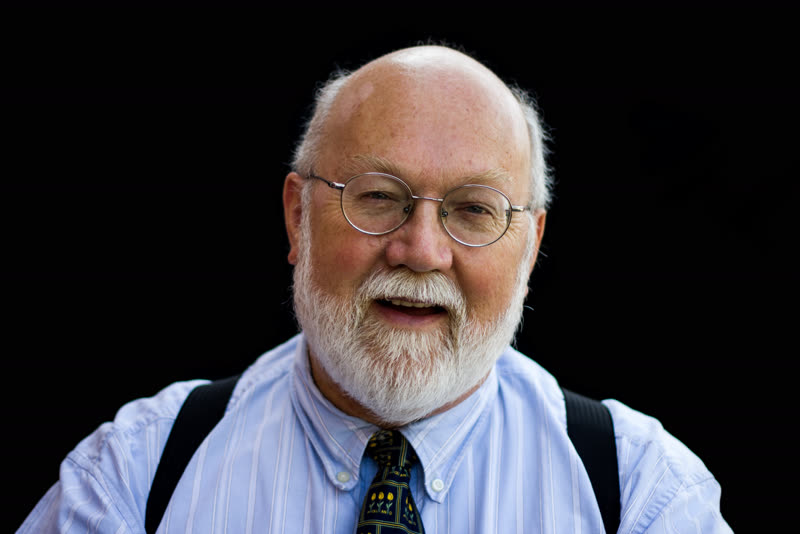 Tim Pasma Sunday AM Genesis February 5, 2017
Main passage Genesis 47:13-31
📖 Read the Scripture passage (ESV)
Genesis 47.13-31(ESV)
13 Now there was no food in all the land, for the famine was very severe, so that the land of Egypt and the land of Canaan languished by reason of the famine. 14 And Joseph gathered up all the money that was found in the land of Egypt and in the land of Canaan, in exchange for the grain that they bought. And Joseph brought the money into Pharaoh's house. 15 And when the money was all spent in the land of Egypt and in the land of Canaan, all the Egyptians came to Joseph and said, “Give us food. Why should we die before your eyes? For our money is gone.” 16 And Joseph answered, “Give your livestock, and I will give you food in exchange for your livestock, if your money is gone.” 17 So they brought their livestock to Joseph, and Joseph gave them food in exchange for the horses, the flocks, the herds, and the donkeys. He supplied them with food in exchange for all their livestock that year. 18 And when that year was ended, they came to him the following year and said to him, “We will not hide from my lord that our money is all spent. The herds of livestock are my lord's. There is nothing left in the sight of my lord but our bodies and our land. 19 Why should we die before your eyes, both we and our land? Buy us and our land for food, and we with our land will be servants to Pharaoh. And give us seed that we may live and not die, and that the land may not be desolate.”
20 So Joseph bought all the land of Egypt for Pharaoh, for all the Egyptians sold their fields, because the famine was severe on them. The land became Pharaoh's. 21 As for the people, he made servants of them from one end of Egypt to the other. 22 Only the land of the priests he did not buy, for the priests had a fixed allowance from Pharaoh and lived on the allowance that Pharaoh gave them; therefore they did not sell their land.
23 Then Joseph said to the people, “Behold, I have this day bought you and your land for Pharaoh. Now here is seed for you, and you shall sow the land. 24 And at the harvests you shall give a fifth to Pharaoh, and four fifths shall be your own, as seed for the field and as food for yourselves and your households, and as food for your little ones.” 25 And they said, “You have saved our lives; may it please my lord, we will be servants to Pharaoh.” 26 So Joseph made it a statute concerning the land of Egypt, and it stands to this day, that Pharaoh should have the fifth; the land of the priests alone did not become Pharaoh's.
27 Thus Israel settled in the land of Egypt, in the land of Goshen. And they gained possessions in it, and were fruitful and multiplied greatly. 28 And Jacob lived in the land of Egypt seventeen years. So the days of Jacob, the years of his life, were 147 years.
29 And when the time drew near that Israel must die, he called his son Joseph and said to him, “If now I have found favor in your sight, put your hand under my thigh and promise to deal kindly and truly with me. Do not bury me in Egypt, 30 but let me lie with my fathers. Carry me out of Egypt and bury me in their burying place.” He answered, “I will do as you have said.” 31 And he said, “Swear to me”; and he swore to him. Then Israel bowed himself upon the head of his bed.
Transcript
Take your Bibles this morning and let's turn to Genesis, Genesis chapter 47. Genesis chapter 47, our text for this morning is verses 13 through 31. Genesis 47. again you follow as I read now there was no food in all the land for the famine was very severe so that the land of Egypt and the land of Canaan languished by reason of the famine and Joseph gathered up all the money that was found in the land of Egypt and in the land of Canaan in exchange for the grain that they bought and Joseph brought the money into Pharaoh's house.
And when the money was all spent in the land of Egypt and in the land of Canaan, all the Egyptians came to Joseph and said, Give us food. Why should we die before your eyes? For our money is gone. And Joseph answered, Give your livestock and I will give you food in exchange for your livestock if your money is gone. So they brought their livestock to Joseph and Joseph gave them food in exchange for their horses. the flocks, the herds, and the donkeys.
He supplied them with food in exchange for all their livestock that year. And when that year was ended, they came to him the following year and said to him, We will not hide from my Lord that our money is all spent. The herds of livestock are my Lord's. There is nothing left in the sight of my Lord but our bodies and our land. Why should we die before your eyes, both we and our land, buy us and our land for food and we with our land will be servants to Pharaoh and give us seed that we may live and not die and that the land may not be desolate.
So Joseph bought all the land of Egypt for Pharaoh for all the Egyptians sold their fields because the famine was severe on them. The land became Pharaoh's. As for the people he made servants of them from one end of Egypt to the other. Only the land of the priests he did not buy for the priest had a fixed allowance from Pharaoh and lived on the allowance that Pharaoh gave them.
Therefore they did not sell their land Then Joseph said to the people Behold I have this day bought you and your land for Pharaoh Now here is seed for you and you shall sow the land And at the harvest you shall give a fifth to the Pharaoh, and four-fifths shall be your own, as seed for the field, and as food for yourselves, and your households, and as food for your little ones. And they said, You have saved our lives. May it please my Lord, we will be servants to Pharaoh.
So Joseph made it a statute concerning the land of Egypt, and it stands to this day that Pharaoh should have the fifth, that Pharaoh should have the fifth. The land of the priests alone did not become Pharaoh's. Thus Israel settled in the land of Egypt and the land of Goshen, and they gained possessions in it and were fruitful and multiplied greatly.
And Jacob lived in the land of Egypt seventeen years, so that the days of Jacob, the years of his life, were 147 years. And when the time drew near that Israel must die, he called his son Joseph and said to him, If now I have found favor in your sight, put your hand under my thigh and promise to deal kindly and truly with me. Do not bury me in Egypt, but let me lie with my fathers.
Carry me out of Egypt and bury me in their burying place. He answered, I will do as you have said. and he said, swear to me. And he swore to him. Then Israel bowed himself upon the head of his bed. Let's pray. Father, open again your word to us.
It is here for a reason. We pray that you would help us to discern that and then, Lord, to live our lives in accordance with it. We're thankful that you have revealed these things to us. Even though they may seem difficult to understand, yet you've given them to us for us to understand and to live in light of them. So open your text, the text of your word now to us, we pray, for your glory and our good.
In Jesus' name, amen. I imagine that most of you have an undying interest in politics and economics, don't you? Who wouldn't want to read On Politics, A History of Political Thought from Herodotus to the Present, in two volumes? I'm sure most of you have on your shelves the political theory of possessive individualism Hobbes to Locke there a good one and of course my all time favorite what wrong with Keynesian economic theory now all of you are going oh yeah I love that kind of books But as you read this text my guess is your interest in this text probably matched the interest you had in those kinds of books.
Because you're looking at this text and you're going, this text seems to be nothing more than a description of starvation and destitution, economic policy, government programs, and the accumulation of power. Whoopee! Right? Actually, this is a narrative about God's promises and his faithfulness to keeping those promises. And I don't, honestly, I don't believe I'm reading that back into the text.
I honestly believe that this is about God and his promises and the hope we can have in those promises. And so I guess it's up to me now to prove that point, isn't it? But I'm not here to prove a point. I'm here to preach the word of God. And I hope that you gain hope from this in understanding the promises of God. One of the reasons why I believe that is I think about the original audience, the people just released from Egyptian captivity, and they're headed to Canaan in the great exodus to the promised land that we read about, or that we started to read about in the book of Exodus, where they're leaving the land.
They had been slaves, starving because of Pharaoh's economic policy, suffering and destitute because of a government building program, and the fact that Pharaoh has unlimited power. But in this story that they're reading, those people who were once slaves, destitute and starving in this government program because of Pharaoh's power, in this story, as they hear it, their experience is turned upside down. Think about this.
In this text, it is the Egyptians who are destitute and starving, while Israel is prosperous. In this text, it is one of their people, Joseph, who does what? Who enslaves the Egyptians. You see? Certainly this must have spoken to them. It must have said to them, God can do marvelous things.
Look at our past, where he is faithful to His promises. They gain hope because now they understand there's hope in what happened to us because look what God did in our past And so as they look back on this they have hope And as you survey the faithfulness of God you too can have hope How do you gain hope? You count on the promises of God. And here, he tells us two things.
First of all, in verses 13-27. By the way, I believe the paragraph should break between 27 and 28. in our versions 27 and 28 are their own paragraph. I think if we're reading it right, 27 goes with the previous paragraph and 28 goes with the next paragraph. Okay? Egyptians, nations, father and son. Having said that, what you find here, first of all, is verses 13 through 27, believe you will reap the benefits of God's promise.
Believe you will reap the benefits of the promise. and then the last few verses verses 28 through 31 believe in the certainty of those promises believe in the certainty of the promise first of all believe you will reap the benefits of the promise verses 13 through 27 the narrator at this point if you remember where we were before this point we were with Joseph and his family as they have just entered Egypt and Jacob has had an audience with the Pharaoh the narrator now shifts your attention away from joseph's family to the egyptian nation and its king the famine has been raging in egypt and canaan now for a number of years and things are getting desperate things have only gotten worse in canaan since jacob and his family have left and it also appears that egypt's ability to produce food has ended and the only food that's left are the government reserves that Joseph has accumulated. That's all there is. There is no other food in the land.
So now the people approach the food czar. They approach Joseph about the food. And what does he do? He sells it to them. And note, this is a lot of money because you will note that it says all the money in Egypt and Canaan were brought in. this is lots of money the wisdom of Joseph on account of his dreams have enriched his boss Pharaoh He's enriched his boss because of his wisdom that he gained from the dreams that God gave him.
You remember, God told him there's going to be seven years of famine. And so because of that, Joseph says, let's gather as much as we can in preparation. We have seven years to gather it. So they've gathered for seven years. I think now this is probably the fifth year of the famine, right? There are three years left. and so now there's no more food they have those government reserves they're coming to get it and in the process Joseph enriches Pharaoh the next year dawns the next year dawns with heat and drought and no harvest and so the nation approaches Joseph again for food they say to him we have no cash all the money is gone what good is it to rule a nation of dead people?
Right? As they appealed to him. So Joseph suggests this. He says, alright, if you don't have money, I'll take the livestock in payment for the food. And so the Egyptians, as it says in our text, surrender all of their livestock to the prime minister and the king. A third year comes. they've consumed all the provisions of the previous year and once more the people approach the prime minister who controls these massive grain stores and they make their appeal here's the honest truth Joseph we have no money we have no livestock and we are on the precipice of death we have nothing left but our bodies and our land.
And so we offer them to you. Buy our land and us so that we can have food and grain to plant next year. By the way, notice that. It's interesting that on this trip in to see him, they say, verse 18, when that year was ended, they came to him the following year and said to him, we will not hide from my Lord that our money is all spent. The herds of livestock are my Lord's.
There nothing left in the sight of my Lord but our bodies and our land Why should we die before your eyes both we and our land by us and our land for food and with our land we be servants to Pharaoh and give us seed that we may live and not die and that the land may not be desolate So they're asking now for food and for seed. Now that's not unusual. And so what does he do?
He does. He buys the people, and he buys all the land. So now they all become tenant farmers on the king's land. He owns every bit of land and he owns every person. Now, you might think that's strange or maybe even cruel, but this is not unusual in the ancient world. You even see it in the Mosaic Law.
And that is, if you go into debt, you could get out of debt by selling yourself as a slave. You could sell yourself into slavery in order to pay the debt that you owe. Well, they know they're going to owe a lot, and so they sell their land and they sell themselves. So officially, they become servants of Pharaoh. All right? Again, it's not unusual.
This was normal in that day. If you can't pay your debt, you sell yourself into slavery. Joseph accepts the terms. And again, he enriches Pharaoh with land and people. Only the priests, only the Egyptian priests and their land are exempt. Okay?
Now Joseph puts one condition on these people. he says to them you have to pay 20 royal tax on all your harvests from now on you can keep 80 of it for you and your families but you're going to have to owe every year you owe 20 to the pharaoh that's the tax now again that seems horrible but that's not unreasonable in fact that's very generous. Joseph could have said, give us everything and we'll give you 20% to live on. He could have done that.
But instead he says, we'll take 20%, you get the rest to feed your families. Now we may think that's terrible, but look at verse 25. In fact, the nation does not look at Joseph as a tyrant. What do they see him? Verse 25. And they said, you have saved our lives.
May it Please, my Lord, we will be servants to Pharaoh. They don't see him as a tyrant. They see him as a savior. He has kept them from starving. But there is something, I think, the most important part of this paragraph You will notice verse 27 Please note that Thus Israel settled in the land of Egypt in the land of Goshen and they gained possessions in it and were fruitful and multiplied greatly.
Now you've got to see what's going on. You have to notice that there is another group of people who are not starving, who retain possession of their land. it doesn't belong to Pharaoh and their freedom they retain possession of their land and their freedom and they prosper that verse is a complete contrast to everything that's gone before evidently they had a connection to the food source that gave them access to the food without the drastic requirements of the Egyptians. What was that connection, by the way?
Right? It's not what you know, it's who you know. They knew Joseph. Joseph was them, was part of them. He was giving them the food. They did not need to do anything like the Egyptians.
They had food. They also noticed, what does verse 27 say? It says they gained possessions in the land. You can't gain possessions without money. They haven't given up their money either. They're not subject to the same things that the Egyptians are.
They're not starving. They have their money. They're gaining possessions. And instead of in a starvation mode, instead of barely hanging on, what are they doing? They're fruitful and multiplying. You see that? don't overlook that verse that's the most important verse in the whole first paragraph all this stuff is happening to the Egyptians but to God's people what's going on in contrast to the Egyptians you find here a people who are independent prosperous and growing and by the way they're not hungry either what in the world is happening here and again I would say to you they're reaping the benefits of God's promise.
What had God promised them? Look at chapter 12. Chapter 12 Turn back to Genesis 12 Alright Again the central important promises to the whole story found in chapter 12, verses 2 and 3. And this is God speaking to Abram. And I will make of you a great nation, and I will bless you and make your name great, so that you will be a blessing. I will bless those who bless you and him who dishonors you I will curse and in you all the families of the earth shall be blessed.
Those are the promises that he made. He promises to make a great nation of Abraham's descendants. And what do you see happening here? He is faithfully fulfilling that promise. He's making them into a great nation in the midst of a starving nation. They are fruitful and multiplying.
Jacob's family reaps the benefits of God's promise here. Not only that, but what's the other thing that he said to them here in this chapter? He says this. God says this, I will bless you and make your name great so that you will be a blessing. I will bless those who bless you and him who dishonors you I will curse. What's going on here?
Not only are they prospering, not only are they reaping the benefits of the promise, but those here who honor his people will be blessed. Those who honor God's people will be blessed. Those who dishonor them will be cursed. And you see that happening here. Pharaoh has honored Joseph. And as a result, he reaps the benefit of God's promise to his people.
Pharaoh is reaping the benefits of God's promise here. Why? He was good to Joseph, and so God blesses him. He becomes the undisputed, prosperous leader of a great nation. Now remember, that shouldn't surprise us, because all the way through the story, what's happened to those masters who blessed Joseph? Right?
They've done well. Well, the people of Egypt, have also reaped the benefit of God's promises to His people. How so? They're not starving. They have food. They're not going the way that most nations would go.
The people dying in droves. They've got grain stored up. The Egyptians died. Benefit just because they have God's people among them. They're benefiting from the promise as well. So what you see here is God being faithful to His promise again.
Wait a minute. Some of you may argue. Do you remember the scripture reading from today? And besides, you started this morning, you started at the beginning of the sermon talking about the Israelites as slaves and as destitute. So what do you do with that? Right?
Isn't that true? Isn't that what's going on? And absolutely right. The people who were reading this were slaves. They were destitute. They were starving, right?
They couldn't handle it. And God heard their cry. Well, you've got to get the long view of these promises. Even when it looks like God has forgotten His promises, has He? Has He forgotten His promises? When it doesn't appear to you that he's coming through on those promises?
Has he forgotten them? Is he saying, you know, I'm not going to keep my promises this time. No. He will always keep his promises. Even at the moment when it looks like he's not. He will always keep his promises.
Did you listen to our reading from the book of Exodus this morning? Did you hear it from our reading? It said this, And the people of Israel groaned because of their slavery and cried out for help. Their cry for rescue from slavery came up to God. And God what? Heard their groaning and God remembered His covenant with Abraham, with Isaac, and with Jacob.
God saw the people. It goes on to say, God saw the people of Israel and God knew. you've got to get the long view he keeps his promises again skip way ahead in the story to the book of Exodus those people were being treated cruelly you heard that today they were in this building program they couldn't get what they wanted what they needed for the projects they were in horrible horrible state God where are your promises well let me ask you this do you remember what happened to the Egyptians and the Pharaoh who dishonored God's people in the book of Exodus? What happened to them?
Ten plagues rained down on them and Pharaoh army was annihilated Did God keep His promise Yes, He did. He kept the promises He made to Abraham. So you see, that's what you have to see. God is faithful to His promises. Alright? And God has not changed.
Do you know that the world around us reaps the benefits of God's promises to us? Do you know that? You know, I've talked to a number of you. And I've been where you've been. Of course, it's been 30 years. But I've been where you've been, where you're working at this place, and you're saying to yourself, what are they thinking upstairs?
You know, where the offices are, right? What is wrong with those people? Are they that daft? Are they that stupid? Don't they see the decisions they're making? I can't believe it.
I can't believe our company is still in business. Well, I want you to consider this. Maybe the only reason they're in business is that God has promised to take care of you. And the only reason that company is still in business, even with the stupid decisions they make, is because God has promised to provide for you. And so he's keeping the company alive.
So when you want a raise, go to him and say, hey, I'm the reason why you're still in business. I'm dead serious about this. I am really serious. God says he's going to provide for you. And maybe the only reason your company, with all the stupid decisions those bosses make, maybe the only reason why it's still alive is because God says, I promise to take care of you.
So I'm going to keep this company going. I believe that. I believe that. Look at Matthew chapter 5. We see it again there. It was in our...
No, it wasn't. Matthew 5. Very familiar passage, but look at the benefits that accrue, that happen to the people around us because of the promise that God makes to us. Verse 13. You are the salt of the earth, but if salt has lost its taste, how shall its saltiness be restored? It is no longer good for anything except to be thrown out and trampled under people feet You are the light of the world A city set on a hill cannot be hidden Nor do people light a lamp and put it under a basket but on a stand and it gives light to all the house.
In the same way, let your light shine before others, that they may see your good works and give glory to your Father who is in heaven. Our society reaps benefits from the fact that we are salt and light. I want you to consider this. How bad off would our culture be if it weren't for the light that Christians shone? If it weren't for the salt that we are?
Retarding the rottenness that's creeping through our culture. We're putting brakes on it. Our culture, our society benefits because we are God's people. There are benefits to it. There are benefits to it. to us being here for everybody else, reaping the benefits. You say, but wait a minute, you talked about long view.
What about our suffering? Is God going to keep His promise? Yes, He will. Turn over to 2 Thessalonians. What do we do when it looks like God's not keeping His promise? What do we do when our life is getting hard?
When people are turning against us? when we, like today, in the culture in which we live, we are seen as evil, right? We are seen as the evil, narrow-minded, bigoted, horrible, nasty people in the world. And we're going, we're just doing what God says. What's your problem, right? Why is this happening? Why is life so hard?
2 Thessalonians 1, beginning in verse 3. We ought always to give thanks to God for you, brothers, as is right because your faith is growing abundantly and the love of every one of you for one another is increasing therefore we ourselves boast about you in the churches of god for your steadfastness and faith in all your persecutions and in the afflictions that you are enduring god i thought you said that you're going to take care of your people you're going to right notice what he goes on to say this is evidence of the righteous judgment of God that you may be considered worthy the kingdom of God for which you are also suffering since indeed God considered it considers it just to repay with affliction those who afflict you As the NIV used to say Right He's going to trouble those who trouble you. Alright?
And to grant relief to you who are afflicted, as well as to us, when the Lord Jesus is revealed from heaven with His mighty angels in flaming fire, inflicting vengeance on those who do not know God and on those who do not obey the gospel of our Lord Jesus. They will suffer the punishment of eternal destruction away from the presence of the Lord and from the glory of His might when He comes on that day to be glorified in His saints and to be marveled at among all who have believed because our testimony to you was believed. Now, what's the point I'm making?
Yeah, we're suffering. But what does God promise here? By the way, one of the gospel truths that we're almost kind of afraid to embrace is this. God will take vengeance on those who make our life miserable. Now look, we don't have the right to wreak vengeance, but God does. He's a righteous judge and he will do it.
And that's in order to give you hope that there is a God who is just. And so when it looks like, God, I don't see you keeping your promises, God says to us, get the long view. I will keep my promises. You can count on it. And even though you're afflicted, there's coming a day when all affliction will be gone, and those who afflict you will be afflicted.
But you know how the world benefits the most? The world benefits the most because it is with, because we have the treasure that blesses all the nations. It's Jesus. That promise made to Abraham so long ago, and from you will come the seed that will bless all the nations. We know it. We know that seed.
We know him. And the nations are blessed because we have the treasure of Christ that we offer to the world. Now, very quickly. I'd love to illustrate that by going through the whole history of Western civilization since the time of Jesus. But we don't have time. But you need to understand that so much... of what the world enjoys today has come because the Gospel has permeated all these lands.
Do you realize that? Do you realize that people were considered expendable unless you were royalty or nobility? But the Gospel came and said things like this, for God so loved the world, not just the aristocrats, not just the nobles. God has a heart for every human being, you see. And the message of the gospel so permeated our culture here in the West, and it's now going to the East, that things like the value of human life is just something that grew, you see.
One of the reasons why America grew so great, you know why? Because there's a group of people who came to this country called the Puritans. The Puritans were part of the Reformation. The Reformation said things like this. Hey, there's no such thing as unimportant work. If you do everything to the glory of God, then you do your best.
And it doesn't matter, as Martin Luther himself said, whether you're a preacher or a milkmaid. No matter what you do, you do it for the glory of God. And you know what happened? That took hold. and so people just started working hard. That's one of the reasons why our nation is so great because the gospel came in the early days of our nation and that was embraced.
You see, the world reaps benefits from the gospel, from the promises God made us. So you can have hope as you believe that you will reap the benefits of God's promises. the last thing we see verses 28 through 31 is believe in the certainty of the promise believe in the certainty of the promise the cameras fade out you know the scene of the palace where all the people are begging for food the scene closes and the next scene that opens up the camera then opens up in a private residence listening to a private conversation between a man and his son. Joseph and Jacob And you know what They making funeral arrangements of all things Wow Can you imagine being in a movie right And you've got all this clamor and everything, and then the camera opens up on two guys talking about what we're going to do at the funeral.
It doesn't sound like a good movie, does it? But that's what's happening here. The camera now opens up and we see two guys, a man and his son, talking about funeral arrangements. And Jacob seeks to convince his son that Joseph should bury Jacob not in Egypt, his place of residence now, where he lived for 17 years. Don't bury me here. Bury me in Canaan.
He says, please, do not bury my body in Egypt, but take it to Machpelah, where Abraham and Isaac are buried. I want to be buried there. I want to be buried with them. And Joseph says, okay, Dad, I'll do that. No problem. And Jacob replies, I mean it.
I'm serious about this. Promise that you'll do this for me. In fact, I want you to put your hand under my thigh and swear it. Now, you're thinking, what's this hand under the thigh business? And the answer is, nobody really quite knows what that is or why they do it. But you know, in our culture, if you're really serious about a vow that you make, what do we do?
We still do it. What do we do in our culture? We put our hands on a Bible. All our presidents have taken their oath of office with their hands on a Bible. Why is that? Because by that symbolism, we're saying, this vow is inviolable.
I will not break this vow. It's so serious that I'm going to swear with my hand on a Bible. Well, that's what they did in their culture, except they used a thigh instead of a Bible. Okay? Put your hand under my thigh. If you're serious about this and you're going to keep this promise, then you swear that you're going to do it.
That's how important it is for Jacob. That's how important it is. And so Joseph makes the most solemn pledge anybody could make. Dad, I swear we will bury you in Machpelah, not here in Egypt. and Jacob because he's too feeble no doubt to prostrate himself on the ground lays across the head of his bed and worships God in thanksgiving what you see here is a man who certain that God will keep his promise of giving that land to his descendants, that it's our land.
It's not ours yet. God's going to give it to us, and I'm so convinced of that, I'm going to be buried there. Now, that's kind of weird. Why would he do that? Well, I want you to think about this. I expect someday to be buried in the cemetery north of Leroux.
Now God may change that. But that's what I see. I see myself living and dying here. And being buried up there. I left my hometown of Merton, Wisconsin when I was 18 years old. Never to go back there to live again.
And I have lived more than half my life here. I came here when I was 29. I'll be 62 this year. So I have lived most of my life here, right? But what would you think if I said to Becca and my children, when I die, I want you to promise that you'll bury me in that little cemetery outside of Merton in Wisconsin. What would you think then if I did that?
You might think, wow, even though Tim has lived almost his entire life among us in LaRue, all these years, his heart is still in Wisconsin. That's what you'd be thinking. And this is what you'd think. You'd conclude, he considers Merton his real home. That's what you would be thinking. I have no doubt about it.
And that's exactly what Jacob communicates here. with his desire and the oath to bury him in Canaan. He's saying, I consider Canaan my real home. Now remember, he's living in Egypt, and he lived for many years where? In Mesopotamia, didn't he? And yet Canaan is his real home. Why is it his real home?
He says, that is my real home because I am utterly, completely, absolutely convinced that God's going to keep His promise of giving us that land. That where my home is Where God promised the land He believes in the certainty of God promise so much so that he makes his death a statement of God's faithfulness in keeping his promise. Do you believe in the certainty of God's promises?
Do you make decisions and live in such a way that says, I'm doing this because I believe that God's going to deliver on what He's promised. Do you live that way? As you look at the culture of disintegration and the political chaos engulfing us, do you lose hope? Or do you stand for Christ knowing that a new day is approaching? Right? Consider Philippians 3, verse 18 if you want to turn there.
Philippians 3, verse 18. Paul writes, For many of whom I have often told you and now tell you even with tears, walk as enemies of the cross of Christ. Their end is destruction, their God is their belly, and they glory in their shame with mine set on earthly things. Is that our culture or not? Isn't that where we're living? and here's what he says to people living in that kind of culture but our citizenship is in heaven and from it we await a savior the lord jesus christ who will transform our lowly body to be like his glorious body by the power that enables him even to subject all things to himself therefore Now what is he saying?
He's saying in a culture where they glory in their shame and their God is their belly and they're enemies of the cross, you stand firm. Why? Because your citizenship is in heaven and a Savior's coming from there who will transform us. And therefore, in light of that promise, you live this way. you stand in the midst of a culture that is against you. Right?
What about those times when your job seems so hard and the boss is unresponsive? Unbearable. And the pay, too little. How are you going to live in light of that? What does Colossians 3, Colossians chapter 3, verses 22 through 25 say? It says this, Bondservants, obey in everything those who are your earthly masters, not by way of eye service, that is, don't do it just when they're looking at you, as people pleasers, but with sincerity of heart, fearing the Lord.
Whatever you do, work heartily as for the Lord and not for men. Knowing, here it comes, knowing that from the Lord you will receive the inheritance as your reward. You are serving the Lord Christ. For the wrongdoer will be paid back for the wrong he has done and there is no partiality. so what happens when work is just like I am so through with this I'm just going to put my time in you know what God says he says you go and you work heartily because you working for God not for those bosses that you have and by the way let me tell you something You know what waiting for a hard worker in heaven An inheritance a reward And by the way, anybody who misuses you, God's going to pay them back.
So you live in light of that promise and you say, I'm going to work my best. Why? Because of the promise that God has made. Listen, Jesus believed in the certainty of God's promises and because of that, he conquered in the midst of suffering. Hebrews chapter 12 verses 1 through 3 here we see the faith of Jesus how is it that when he's in the garden of Gethsemane and he says Father if there's any other way take this away from me but he goes through with it what was the fuel Hebrews 12 1 through 3 let us run with endurance the race that is set before us looking to Jesus the founder and perfecter of our faith note now who for the joy that was set before him endured the cross despising the shame and is seated at the right hand of the throne of god consider him who endured from sinners such hostility against himself so that you may not grow weary or faint How can I not grow weary and faint I look to Jesus who by faith said on the other side of the shame of that cross is glory.
And I believe that God has promised it. And I will endure the shame and the humiliation and the pain of that death, because I am convinced, I am certain, that what God has promised, glory, a name above all other names, I am convinced that He's going to keep that promise. And so He went to the cross. You see? Jesus was certain of the promises of God. Are you?
Are you? That's what's happening here. That's what's happening here. In the long run, God keeps His promises. And in that, you will find hope. First, you've got to believe you're going to reap the benefits of those promises.
You've got to be convinced of that. Jesus reaped the benefits of the promise What A glorious throne and a glorious name because in his suffering he believed his father and the promise that he had made Do you believe you'll reap the benefits of the promise? God says. You're going to get it all. And in the meantime, you have to live and think in the certainty of those promises. our father delivered over his son as a guarantee that he would keep all his promises we need to live like we believe it father thank you for your word thank you for the marvelous story of the people of God but above all thank you for the marvelous story of your faithfulness and the promises that you made and the fact that you will never renege on them and that in every way you work out, you keep those promises.
Thank you. Thank you for this story of faith and faithfulness that we might have hope. We pray this in Jesus' name. Amen.
Also referenced in this sermon
Other passages mentioned, beyond the main text.