John Knox: Prophet In Scotland
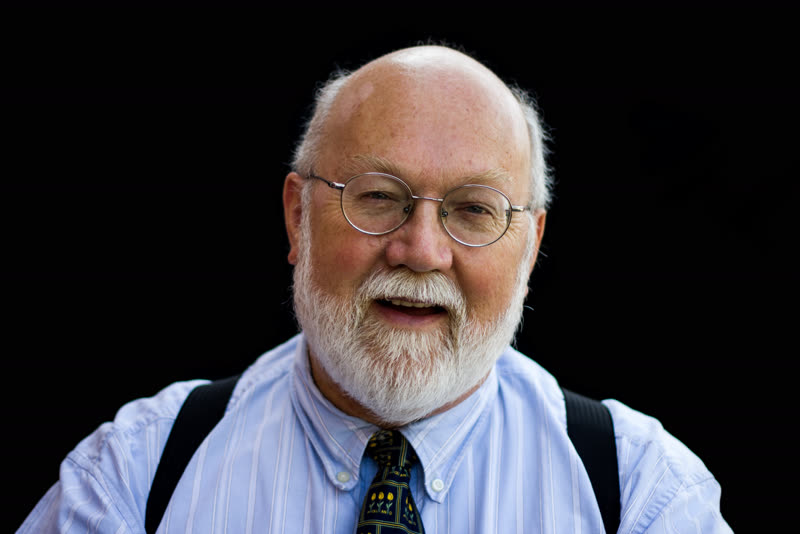 Tim Pasma Sunday AM Reformation Sunday October 28, 2018
📖 Read the Scripture passage (ESV)
October 28 was the annual celebration of Reformation Sunday at LaRue Baptist Church. Each year we celebrate the Protestant Reformation and the recovery of the gospel of Jesus after centuries of corruption. We also take the time to consider how the Lord has worked in his church through the ministry of real people by looking at the life of someone in Church History. Listen as Pastor Tim examines the life and ministry of Scotland's great reformer, the fiery, fearless, flawed John Knox and see how God can draw straight lines with crooked sticks!
Transcript
Take your Bibles this morning, and if you will, turn to Isaiah chapter 49. Isaiah 49. As you're turning, let me just make a mention of something important enough to insert it here, since we forgot it in the announcements, but there's a blood drive this Saturday. It'll be across the street at the Methodist Church, so let's keep that in mind, and let's serve others as we can do that.
Let's turn to Isaiah 49. You follow as I begin reading. In verse 1. listen to me oh coastlands and give attention you peoples from afar the lord called me from the womb from the body of my mother he named my name he made my mouth like a sharp sword in the shadow of his hand he hid me he made me a polished arrow in his quiver he hid me away and he said to me you are my servant israel in whom i will be glorified but i said i have labored in vain i I have spent my strength for nothing in vanity, yet surely my right is with the Lord and my recompense with my God.
Now the Lord says, he who formed me from the womb to be his servant, to bring Jacob back to him, and that Israel might be gathered to him, for I am honored in the eyes of the Lord, and my God has become my strength. He says, it is too light a thing that you should be my servant to raise up the tribes of Jacob and to bring back the preserved of Israel. I will make you as a light for the nations that my salvation may reach to the end of the earth.
Thus says the Lord, the Redeemer of Israel and his Holy One, to one deeply despised, abhorred by the nation, the servant of rulers, kings shall see and arise, princes, and they shall prostrate themselves because of the Lord who is faithful, the Holy One of Israel, who has chosen you. Let's pray. Father, help us now to see you at work. Lord, enlighten our eyes that we see that what doesn't appear to be accomplishing much or doing it in the wrong way yet can still accomplish your purpose This purpose of making this light shine to the nations of taking the gospel everywhere of bringing the word of God across the world Help us to see that you use weak instruments and even wrong instruments in accomplishing your purpose.
Help us now as we look into the life of this man and let us see the truth of scripture come alive there as we see you work. We thank you. In Jesus' name, amen. What do R.C. Sproul, J. Adams, Sinclair Ferguson, Paul David Tripp, and Timothy Keller all have in common?
They're all related to John Knox. Now, I don't mean that they're physical descendants of John Knox. Rather, they are all spiritual descendants of Knox because, you see, they are all Presbyterians. Through the preaching and the labors of this reformer, Knox, nearly 500 years ago, a Protestant church was born in Scotland that we know today as the Presbyterian Church.
What kind of a man was John Knox. What sort of a person did God use to call Scotland back to the Christian faith, to the idea that you're made right with God by grace alone, through faith alone, in Christ alone, because scripture alone says so, and it's all accomplished for the glory of God alone. Well, God used a fearless man. One man standing before Knox's open grave said, here lies a man who neither flattered nor feared any flesh.
Another called him Calvin with a sword. He possessed immense courage, and actually he didn't fear anybody. God used a fiery man. Unlike Calvin, he did not leave a great heap of writings behind him because he was a preacher, not a writer. And it was Knox's preaching that solidified the Protestant faith in Scotland. He would spend about half an hour calmly explaining a biblical passage, and then when he tried to apply it to the Scottish situation, he would become very animated and would often violently pound the pulpit.
One writer, as he listened to him, wrote, He made me so to quake and tremble that I could not hold a pen to write By his preaching he molded both nobility and commoners into a fighting force a formidable one He was a Jeremiah set down in Scottish soil. In a relentless campaign of fiery oratory, he sought to destroy idolatry and purify national religion. But God also uses flawed men, and John Knox was certainly a flawed man.
He could be narrow-minded and intolerant. He could be harsh with his words. And at one point, he opposed the reigning monarch of England, Mary Tudor, by writing a pamphlet for which he is most famous, which was entitled, The First Blast of the Trumpet Against the Monstrous Regiment of Women. Monstrous not meaning like monsters. Monstrous meaning unnatural. and regiment meeting rule.
So as to say the first blast of the trumpet against the unnatural rule of women. That's what he's most famous for. Because of his flaws, actually no monument was ever erected for him in Scotland until one was erected in the 20th century in Edinburgh. In fact, today his grave is under a parking lot in Edinburgh. in essence God used a radical reformer to accomplish his purpose of spreading the gospel and making disciples Knox was radical because in serving God he trusted God to do what only God can do and that way he was radical but because he was flawed some of the attempts of serving God were misguided and sometimes just plain wrong.
But the glory of God is that his purpose will never fail, no matter how flawed his instrument. In fact, if I were to sum up what I think about John Knox, I would say this, God can use crooked sticks to draw straight lines. And by the way, when you hear the story of Knox, my prayer is this that you will see God at work even in you that God can work even using you because God can draw straight lines with crooked sticks Now Knox was born in the town of Haddington Scotland a few miles south of Edinburgh Now to give you some perspective, he was born there in 1514.
To give you some perspective, Knox would be only three years old when Luther nailed his 95 theses to the church door in Wittenberg in 1517. So he was three years old when Luther did that. His father was either a merchant or a craftsman, but Knox was a commoner. He wasn't nobility, which probably helps explain how he connected with common people so well with his preaching.
He made it to the University of St. Andrews when he was 15 years old. He graduated. He came out of the university when he was 22. He had studied some law, but primarily he studied theology. And when he came out at 22, he was ordained a priest.
However, it didn't lead to a parish appointment because there was an excess of priests and they didn't need anymore. And so he became a notary that is a minor public official in his hometown and a tutor to some of the sons of the local lower nobility. Now, what was the state of the church? And at this time, we're talking about the Catholic Church. It was the church in Scotland.
What was the state of the church during Knox's youth? The church in Scotland, like it was in many places in Europe, if not all of Europe, was a corrupt institution. Many in the priesthood were ignorant, and they cared very little for the sheep that were entrusted to their parishes, but it was a living. In fact, the Catholic Church owned more than half the real estate in Scotland, and would gather in 18 times more money than the crown.
Can you believe that? The church gained more money from its taxes than the government did, 18 times more than what the monarch got. Bishops and priests were often appointed for their political connections. Because of the belief that the sacrifice of the mass can remove sins, private masses became common. In Edinburgh, at St. Giles Church, there were more than 40 altars in that church, more than 40 altars dedicated to Mary and to the saints.
And it was common to see priests before those altars saying private masses, either silently or in low voices in all the churches. All these altars in the church saying private masses because you could buy, you could pay for private masses. And what those masses would do was to, you know, shorten your time in purgatory and some torment for you if you died or for someone else.
And the more money you paid, the more elaborate was the mass. And, of course, worth worth more in God's eyes, obviously. And so you could go to St. Giles and see 40 or more altars with priests offering private masses all day long. The Archbishop of St. Andrews, a guy by the name of Cardinal Beaton, the most powerful religious man in Scotland at the time, openly consorted with concubines and had 10 children.
This isn't a church that says all priests must be celibate. The very highest religious personage in Scotland had 10 children. That was the state of the church in just a few sentences. But the Reformation had made its way to Scotland. You see, Scotland had a great trade with Europe and with their seaports, especially this one called Dundee. And that meant there was a great exchange of ideas, and Lutheran literature started being smuggled into Scotland soon after Luther began writing.
The church tried to suppress that spreading heresy, but it was unsuccessful. Although one outspoken critic by the name of Patrick Hamilton was in 1528, okay, 11 years after the Reformation started. Here is Patrick Hamilton in Scotland who is burned at the stake for promoting these heretical views of salvation by grace alone, through grace alone, by faith alone, in Christ alone. and who would say that the scripture is our authority, not church tradition or councils or popes.
He died at the stake in 1528. But when people explained his, but when they explained his views, it attracted people to the gospel, right? They started hearing these things, this heresy, and it sounded good to them. Knox believed the good news when he was 29. When he was 29, A converted friar by the name of Thomas Gillum went on a preaching tour of central Scotland and under his ministry the Lord Jesus claimed John Knox Now again for some perspective this occurred only three years before Martin Luther died So what we say about John Knox is he's a second generation reformer but he's on the front lines in the Reformation in Scotland which where the Reformation came later than it did in Europe.
Well soon after the government turned against the Protestants. There was a Protestant preacher by the name of George Wisher, another fearless guy, who would go about preaching the gospel and he gathered a band of men around him. Now these guys loved his teaching, but they also served as his bodyguard. And Knox was attracted to them and so he became part of that band.
Now this is going to give you a little bit of insight into his character and his temperament. As part of that band who accompanied that preacher, he bought a two-handed sword. You know what a two-handed sword is? Those great big swords that you have two hands that you just lop and chop, right? So, Knox bought that sword and accompanied Wisher wherever he went preaching, okay?
Can you imagine that? Come on. It's like, I'm going to preach an unpopular sermon maybe to the authorities, and I got these guys standing around with swords. Who's going to argue with the preacher, right? Here's the point. When the authorities wanted Wishart, he told his band of men, you can't go with me.
I'm going to go face him alone. And he did. And they tried him for heresy. Cardinal Beaton tried him for heresy. and then strangled him and burned him at the stake. Well, that set off a chain of events that would mark Knox for the rest of his life. Now, unlike the Reformation in Europe, Scotland is a little bit different.
Because now, a number of the followers of Wishart are really angry. Do you know what they do? They assassinate Cardinal Beaton. not the best way of advancing the gospel of the Lord Jesus Christ. But again, there's political motives all mixed in with this too. But so they assassinate Cardinal Beaton, and then they hole up in St. Andrew's Castle, where the French Navy or the French ships lay siege to it Now you say what What are the French doing Well because France is a Catholic nation and the monarchy is wanting to fight this reformation that seems to be coming into Scotland, and it allies itself with France.
So now these guys, these assassins, are holed up in St. Andrew's Castle while a fleet of French ships lay siege to it. And although he wasn't part of the original plot, Knox, sympathetic to them, goes and joins them in the castle. Now he didn't exactly disapprove of the murder. He wasn't a part of it, but he didn't exactly disapprove of it on the principle that God often allows evil men to mediate punishment.
While he was in the castle, there were many who were impressed with his ability to preach and they called him to take the office of preacher and he did not. He broke down in tears. He said, you can't do that to me. I can't do it and he wept but then one event convinced him that he should preach in some time when there was a let up on the siege he attended a service at a nearby Paris church and he heard the priest defend Catholicism by appealing to the authority of the church the bride of Christ.
Now Knox, Knox at some point couldn't take it any longer and he stands up in the pew and he says to the priest that the church as it exists then is not the bride of Christ, it's a harlot. Again, says something about the man, doesn't it? Well, the congregation who's sitting there hearing all this says, well, that's a pretty radical statement. we want you to come back Sunday and preach a sermon defending your views.
So he does. He comes back and he preaches a sermon defending his views. And that's when he is convinced that he should preach. Well, sad to say, eventually, maybe not sad, I don't know, St. Andrews falls, the castle falls to the French, and Knox is hauled off to France, where he now spends 19 months in the galleys of French ships. You know what galleys are?
They're sailing ships that have these giant oars. So he's in the belly of a ship, six men on an oar, chained down. And for 19 months he suffers at the hands of the French serving in one of their galleys Well through the agency of the English king Edward VI who by the way very young king a true believer, a supporter of the Protestant cause in England, through the agency of Edward VI, Knox was released.
And so he spends the next five years in England, helping the protestant cause by preaching in churches serving as a royal chaplain to the king contributing to the church of england's book of common prayer which was their um some of these churches have these like anglican church has the book of common prayer which is a book that lays out their liturgy that is like the rule book that guides them he contributed to that he was even offered a position as a bishop in the Anglican Church, which he refused. But young Edward died suddenly, and his half-sister, Mary Tudor, ascends the throne. She intends to reinstate Catholicism as the official religion of England.
Now, you might not know her as Mary Tudor, but you probably know her as Bloody Mary, because what she did was begin to persecute Protestants and to execute them and to kill them all across the land of England. She hunted Protestants down. And by the way, because of Edward VI, England is a Protestant nation, but she is so intent on reinstating Catholicism that she starts killing the Protestants.
And so they begin leaving for Europe, and Knox joins them. He called Mary that wicked English Jezebel and had no wish to become one of her victims, and so he left with a wife in 1554. He was 40 years old then. He spent the next five years then in Europe. Where did he go? He went to Geneva, and there he met John Calvin and, again, learned theology there and learned of the Reformed faith. he eventually decided to settle in a city called Frankfurt am Main.
And on the advice of Calvin, he took a church of English exiles. But within the year he's gone because of worship wars. You know what worship wars are, right? We fight them in our country. Are we going to sing that kind of music or not? Are we going to do this?
Are we going to do that? And churches split over the years. those things and his church split. Here's what happened. All these English Protestants coming and some of them want to have a liturgy that comes out of the Book of Common Prayer. They're used to that. They like that.
But others want to use Calvin's Genevan Order of Service. Knox doesn't like either and he comes up with a third liturgy. But finally the Common Prayer folks get the majority and the church splits and they get rid of it. Can you believe that? churches were doing this 500 years ago. They're splitting and throwing the pastor out. Well, he got thrown out.
He goes back to Geneva where he co-pastors another church of English exiles. Meanwhile, back in Scotland, the Protestant cause continues to gain steam. Congregations of Protestants, which used to meet secretly, are now starting to meet openly. And three years after Knox had left for Europe, some of the Scottish nobles draw up a covenant in which they say, this nation, we're going to work at making this nation a Protestant nation and faithful to the word of God.
We want to make it the official religion of the land. And at their insistence, he returned to Scotland. And for nine months he preached. And he met with such great success in his preaching that the church authorities, the bishops, were alarmed and he was summoned to trial. But the summons by God's providence was canceled and he returned to Geneva. Now, when he goes back, it was during this time that Knox develops one of his most radical ideas.
And listen, this is why God can draw straight lines with crooked sticks. He develops one of his most radical ideas, and it is this, that it is permissible, even necessary, to rebel against the king or the queen. It is necessary sometimes to throw the king out. This is radical. Now why did he get to that point? Here's how he did it.
Knox had concluded that the Roman mass the Catholic mass was an idolatrous blasphemous affront to God It was idolatry Nothing short of idolatry And so any monarch that promoted idolatry must be removed Of course, all the other reformers had insisted that rebellion was forbidden by God in Romans chapter 13, which you heard this morning. What? We're supposed to submit to the government.
And 1 Peter chapter 2 makes it clear that even when that government is unjust, Christians are still to submit. Now, the other reformers, all of them, without exception, would say that the Bible says that you can disobey when it contradicts what God says, but you can never revolt. Knox draws on the Old Testament, and he says that kings who promoted idolatry were under the judgment of God. and so Catholic monarchs who promoted idolatry in their nations should be removed.
You see? He failed to gain the support of even John Calvin, but it didn't deter him from publishing his most famous and most radical track, The First Blast of the Trumpet Against the Monstrous Regiment of Women. It was a ruthless attack on women monarchs monarchs, who at that time was Mary Tudor in England. He said, no woman could ever be a legitimate ruler of a nation.
Okay, now just, I know that really bothers at least half of you here, I know. Okay. But that's what he said. No woman should ever, ever be a ruler. It was monstrous, or in modern terminology, it was unnatural. He said, if the faithful, I love this, I mean, I don't love the point of view.
I love the way he says it. If the faithful are afflicted with a female sovereign, that's how he puts it. If the faithful are afflicted by a female sovereign, then they ought to remove from honor and authority that monster in nature. Okay? Already, John Knox is becoming your least favorite reformer, isn't he? Besides any ruler who would promote idolatry must be removed He wrote not to revolt against an idolatrous ruler was as he said plain rebellion Probably the fact that women monarchs in both England and Scotland were killing Protestants influenced his thinking.
I would guess that had a major influence on his thinking. But then he follows this with another tract called Appellations to the Nobility and Commonality of Scotland. And that is, I'm writing now to the nobles and the common people of Scotland, in which he proposed that ordinary people had the right and even the duty to rebel. Well, now he's got a name for himself.
Here is the interesting twist of history, which is not a twist, but God's providence at work. soon after he published that track the first blast of the trumpet against the monstrous regiment of women a protestant queen comes to the throne of England Elizabeth I who supports the protestants and guess what so she's a very powerful figure who could help but she reads this tract and Knox is not popular with her at all. All right? Not popular at all.
He says at one point, he says at one point, I lost all my friends in England with one blow, which was that tract. You see? Well, one year after publishing those two tracts, Knox returns to England where he spends the last 13 years of his life. He was 45 years old when he returned to Scotland. And the nation was in crisis because the forces of Catholicism now are squaring off against the supporters of the Reformation.
Now we're talking about armed conflict, civil war. Knox deployed his formidable authority and ability as a preacher to increase Protestant militancy. So within days of his arrival, he goes to the city of Perth and he preaches a sermon waxing eloquent against Catholic idolatry. And when the service was over a riot breaks out and the people go through the churches smashing images destroying altars and tearing down religious houses Now again I trying to think about how once you preach the gospel people can go out and start a riot right Well they did The military the Protestant nobility had brought armed forces then into the cities of Perth, Sterling, and St.
Andrews while the monarchy began to deploy its troops. They sent Knox to Edinburgh where he preached to arouse the spirits of the Protestants there to get them ready for action. But he becomes convinced that they could only win with the help of Protestant English troops. And so, through some other people, not him, he would have no hearing in England. and some others of his friends made an appeal to England.
And a treaty was signed which removed all English troops and all French troops out of Scotland, which therefore assured that at least Protestantism would exist now in Scotland. Now, can you see the providence of God? Right? Things we hate, things that just drive us crazy about this man, and even about the political situation, God uses so that those opposing troops are out of Scotland.
So now, because of that, at least Protestantism will continue, if not become the official religion. It will continue in that country. God uses crazy, weird, sometimes evil things to accomplish his good purposes. Soon after all that, the Scottish Parliament met and Knox preached to the Parliament. And it then charged Knox and five colleagues to draw up a confession of faith, which was quickly adopted.
Now remember, you've got the Parliament involved here and they're going to adopt this confession of faith as the confession of faith of the national church. They want to see Protestantism win. It also passed laws outlawing the mass and repealing any laws that contradicted the new reformed faith. Knox drew up the first book of discipline, which became the rule book, the worship guide for the Scottish Protestant churches.
And then in 1561, two years after coming back to Scotland, Mary, Queen of England, of Scots ascends to the throne. And this is the hard part sometimes in history. Don't confuse her with Mary Tudor, Bloody Mary, that's somebody else, she's gone, Elizabeth now. Here's Mary, Queen of Scots. She ascends the throne. Here's the problem.
She is Catholic. The Parliament is Protestant. She says, I'm not a Protestant, I am a Catholic, but I will practice my religion privately. Right? I'm not going to impose Catholicism. Well, Knox doesn't really believe in this.
He thinks we get a Catholic queen, she's going to try to impose this idolatry on us again. She promised to respect Scotland's law but she's going to be a Catholic in private. So he has a meeting with her. right and tells her that her actions are flouting the law they're defying the word of god and he says so from his pulpit now again you've got to understand the time about that time he's calling down the queen he's he's i mean it's one thing to write it it's another thing to get up in the pulpit and say, the queen, our queen is wrong.
She's lawless. So he summoned before the queen. She insists at this meeting that subjects should adhere to the religion of their monarch. And he says, you don't have any right to dictate the faith of the people. He met the queen four more times, fearlessly standing his ground, even telling her that her private life, she was wicked. And she was.
She was. There's no doubt about it. But the point is, here's this guy, a pastor, who walks in and tells the queen, you're an adulteress. Right? The guy was fearless. the fifth meeting was a trial in which he was accused of treason why because knox was summoning her subjects to meetings without her permission and is gathering the church for worship he asserted that as a pastor he had the right to gather his congregation whenever he thought best no monarch could tell a pastor how to shepherd his flock He was acquitted of treason by the way By the mid-1560s, the fight for the Reformation started taking its toll.
He became hardened in the fight, a little less tolerant, a little more curmudgeonly, if that's possible for John Knox. He insisted on preaching even when he had to be carried into the pulpit. And he preached his last sermon in Edinburgh on November 9th, 1572, and died five days later. And so one of Scotland's greatest preachers entered glory. Now here's the question that John Knox presents us with. can God use radicals who trust him but also misrepresent him to advance his purposes can God use radicals who trust him but also misrepresent him to advance his purposes look at Isaiah 49 again what is the promise that God makes here in Isaiah 49 what you see is he's talking to Israel and Israel responds that that the mission you've given me has not failed has failed it's not happening and then God says back to Israel in verse 6 it is too light a thing that you should be my servant to raise up the tribes of Jacob and to bring back the preserved of Israel he says when Israel in this little dialogue responds to God that you've made me these things but it's all been in vain God responds by saying it's not enough that you're going to gather the tribes of Israel it's not enough that you're going to bring back my people I'm going to make you as a light for the nations that my salvation may reach to the end of the earth and what you see happening in Isaiah 49 is that Israel suddenly becomes another person not becomes but all of Israel's drawn up into another person and we know that person is Jesus now looking back on this and he says I'm going to make you this summation of my nation this one who where everything is gathered up into one person I'm going to make you not just one who's going to draw my people to myself I'm going to send you as a light to all the nations And my salvation is going to reach to the ends of the earth not just to my little nation here but my salvation is going to reach to the ends of the earth so much so he goes on to say, that kings are going to rise.
They're going to stand in awe of this messenger and princes are going to fall prostrate before him. My purpose is to advance my rule and my gospel the news of salvation and the and the rule of as we know it now the rule of my son the lord jesus now keep that in mind when you think about people like john knox did god use a crooked stick to draw straight lines and the answer is he sure enough did number one john knox was a radical oftentimes in the right way he believed that he could accomplish great things for god because he served a great God. And God would do great things.
Turn over to Jeremiah chapter 1. You want to see something? Watch this. By the way, this is a text that really says a lot, I think, to those who stand and preach the Word of God. This is the Lord talking to Jeremiah as he commissions him to go and to preach. and here's what he says to him. Now the word of the Lord came to me saying, before I formed you in the womb, I knew you.
And before you were born, I consecrated you. I appointed you as a prophet to the nations. Then I said, oh Lord, behold, I do not know how to speak for I'm only a youth. But the Lord said to me, do not say I'm only a youth. For to all to whom I send you, you shall go. and whatever I command you, you shall speak. Do not be afraid of them, for I am with you to deliver you, declares the Lord.
So Jeremiah says, you got the wrong guy. I'm not the one you want to send. And he says, don't make excuses to me. I'm going to send you and don't you be afraid. You do what I tell you to do. You preach what I tell you to preach.
Now watch. Then the Lord put out his hand and touched my mouth and the Lord said to me, Behold, I have put my words in your mouth. See I have set you this day over nations and over kingdoms to pluck up and to break down to destroy and to overthrow to build and to plant You see what God is saying He saying look you go out and preach and I tear down nations through just my word of preaching And I build nations through preaching of the word Look at the power of God word when it preached And that exactly what happened when Knox preached That exactly what happened The gospel preach can change nations And what we see in Isaiah 49, kings are going to rise in respect and rulers are going to fall down, prostrate before this king preached in the gospel.
His belief in the power of the word of God gave him immense courage to stand for God. The word preached will change nations. by the way the protestant reformation gave birth to nations like the united states of america it tore down kingdoms it tore down kings not by overthrowing them by violent means but by the truth of the gospel advancing the whole course of history has been changed he knew that and he preached like he believed it here's another thing that we need to remember despite the views about women rulers he still believed that women were an integral part of the community half of the half of his surviving correspondence is written to women trying to help them and in fact here's what's interesting about John Knox in his first book of discipline you know the rule book by which the Scottish Protestants would run their churches. This is what he did.
In that, he required, or if you want to say he proposed, that all boys and girls should have what we would call today an elementary through high school education. This is centuries ahead of its time. Girls were not supposed to learn anything. They were supposed to stay at home and sew. So, Knox says all children, including the girls, should get the same education.
Right? He wanted women who could understand the word of God. Who could study it and use it. In fact, one of his greatest supporters was an English woman named Anne Locke. who he had a tremendous relationship with, writing to her. She did all kinds of work for him in the ministry that God gave him. Here's a third thing where his radicalism was good, I believe.
He dared declare that monarchs could not dictate the faith of God's people, nor the actions of God's shepherds. He stood before the queen and said, you can't tell me what to do as a shepherd of my flock. That's between that's what God tells me to do, not you. All, listen, all are subject to the word of God. All are subject to the word of God. But even when God's servant misrepresents God God can still use him as his instrument.
Now, Knox's view on resistance to government is biblically indefensible. There's no way around it. Right? It's wrong. It's just plain wrong according to what we find in the Bible. And yet, God used that for good. at least that thinking helps us to understand that the government does not have supreme authority over the lives of god's people at least it tells us that much that no matter how powerful the monarch no matter how much we need to submit the government cannot tell me what i should believe and what i shouldn't it does not have supreme authority over the lives of god's people and that laid the groundwork.
Okay, all the way back in the mid-1500s, you're seeing the groundwork laid for this concept of what Freedom of religion that we enjoy here Wrong way of going about it but God used it And because of that, churches can govern themselves, you see, by their own shepherds. Now, Knox's hatred of the mass as idolatry, which led to excesses of violence and tearing down images and ridding churches of their images, and even their organs, right? After the Protestants gained the upper hand in Scotland, worship became very simple.
It was praying, reading the Scripture, preaching the Scripture, singing the Psalms. No hymns, no things that anybody else would write. They would put the Psalms to contemporary tunes, and they would sing the Psalms. but much as that would drive us crazy what happened what happened was worship became not this elaborate spectator sport where people would sit and watch a priest do all these things in fact they couldn't even understand the priest it was all in latin and they would just watch him do his thing and with the mass and that was it what happened here is that it became the simple preaching of the word of God, singing, reading, praying, and everybody participating.
No longer spectators, but participants in worshiping God. But most of all, even when he misrepresented God, God used this man as a means of spreading the good news of the gospel across the globe. From Scotland, those Presbyterians went everywhere. They went everywhere with the gospel. You know, because of the ministry of a flawed man like John Knox, we today enjoy the ministries of people like Paul Tripp, Jay Adams Tim Keller George Scipione Lou Priola R Sproul Rosario Butterfield and many many more that have invested in our lives Many of you here, and I could go on with all kinds of authors that you're familiar with, all kinds of ministers and preachers of the gospel that you're familiar with, but they're here because of that.
And even though Knox may have been wrong in some of his radicalism, God used that to take the gospel in different places and raising up people that today are important to us, that God has used to help us understand the scriptures. Do you know that one of the most Christian nations in the world, and what I mean by that is true believers in proportion to the entire population. You know what it is?
You know what nation that is? It's South Korea. Do you know that? South Korea is mostly Presbyterian. because the Presbyterians targeted that country and they took the gospel there a couple hundred years ago. And that nation, listen, when I was in Mongolia, when I was in Mongolia several years ago, you know what I found? They had learned their Christianity.
You know where they learned it from? Korean missionaries. Because they were serious about it and they could get into Asia, and they swept across Asia with the gospel, and most of them were Presbyterians, you see. Because of a flawed man like John Knox, right, God kept his promise and said, I'm going to make you a light to the nations, and my salvation will go to the ends of the earth.
And God did it with a fearless, fiery, flawed man. He set the course with that guy. you see God can use flawed people to advance his cause and that should give you hope don't sit here and say I'm not as bad as John Knox really? what kind of flaws do you have does God use flawed people Absolutely You know John Knox may not be our favorite reformer In fact, we might not like him very much. After you hear his story, you might say, why did you spend the time talking about that guy?
Because we need to understand that we ought to turn our eyes to God who is sovereign. and who will use crooked sticks to draw straight lines. And as I look at a room full of crooked sticks, and as you're looking at one stick up here, it's crooked, understand that God will still do great things with flawed people. Father, thank You for Your Word. Thank You that we can learn from people in the past and that we can see the Scripture and Your truth come alive as we look at their lives.
Father, help us to be thankful even for those who don't do it just like we do. Help us to be thankful to you for your gracious purpose of sending the gospel to the ends of the earth. Thank you, Father, that you use us and that you can work good out of evil. You can work good out of weakness. You can use us. And we thank You.
In Jesus' name, Amen.