Good Works Inc.
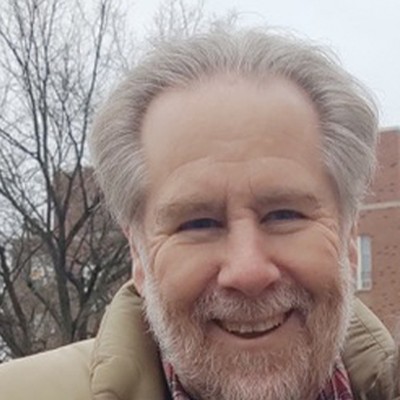 Keith Wasserman Sunday School October 12, 2025
📖 Read the Scripture passage (ESV)
Presentation of Good Works Inc. Helping the homeless in the Appalachian region of Southern Ohio.
Transcript
Good morning. I have the privilege of introducing a long standing friend. It goes back to when Sherry was at OU as a student. And I mentioned last week our friend Keith and his wife Darlene will be here with Sherry shortly. The Washermans started in their basement of their home when he was still a student at OU, a ministry to the homeless. And that is over 40, could be 45 years. so Keith's heart for the widow and the orphan has just been an example to us and we wanted to give him the opportunity to share what God has put in his heart and the ministry he's provided so if you would with that Good morning everyone Can I speak from this place?
Hear me okay? There we go Is this on? Well, greetings with gratitude. Excuse me. I grew up in the Jewish capital of Ohio, which is Cleveland Heights. Any Clevelanders in the room?
I never met a Christian in the 16 years I lived in Cleveland. I was 16, going on 17. They told me about Jesus because I moved out of Cleveland to a little town outside of Dayton called Centerville, which I later renamed the Land of the Gentiles. I met Christians for the first time in my life, and they told me about Jesus. I said, well, I'm Jewish. We don't believe in Jesus.
They said, well, Jesus is Jewish. And I said, no way. The only thing I heard about Jesus was when my father got angry. I mean, he would often say, Jesus Christ Almighty. I never knew much about the gospel or anything about the gospel until my friends from high school took the time to share it with me during my junior year. and so I received the Lord in my life and everything changed a bit dramatically I came out of the drug culture I was a drug user and a dealer to high school and junior highs kids my life was a mess and then the Lord apprehended me and I will now sing it in the words of Bob Dylan changed my way of thinking got myself a different set of rules that's an actual song by the way So, I graduated high school, which was the first true miracle that occurred in my life.
And I went to college. I went to OU, the party school of the Midwest. But the Lord had a plan for me. My goal at that time, before I became a follower of Jesus, was to own a rock and roll record store and sell drug paraphernalia. But the Lord had other plans for me. And so as I began to follow the Lord, I began to read scripture and began to kind of be discipled.
And out of that came this vision to welcome strangers in my basement. I bought a house as a result of some inheritance I received and began welcoming strangers about four years before we had heard of the homeless. The term had not yet emerged into the American vocabulary. So we started welcoming strangers. Later I understood that the language of homelessness, that's not language we use anymore.
We prefer the stranger or the sojourner who sojourns with you in the land. You shall love them as yourself or you were strangers in the land of Egypt. God speaks to the people of God. So we started taking people in. I explained it this way. God gave me the gift of naivete.
Had I known then what I know now, I wouldn't have done that. But listen to this. God used my not knowing to get me to do something I would have never done if I had known what I was doing. Now think about that, because I call that faith. And so as the Lord gives you light, you walk in the light. I had three roommates.
We had all read the book The Master Plan of Evangelism by Robert Coleman. Anybody heard of that book? And that book really changed our lives in terms of discipleship. and we began to see this through the lens of discipleship caring for people in poverty as a form of mission through the lens of discipleship and so we were helping each other well then I got married Darlene and I got married in September of 81 this was uh 1981 and I describe it we just celebrated our 44th anniversary I describe it this way the three of us have been married for 44 years so good works has been in our lives uh we did have we do have a son also, but good works has been done in our lives, and the ministry began to grow.
We were volunteers for the first four years, and we just began to welcome people and learn. We were learning a lot about how to love our neighbors, and we developed kind of a structure, believing that structure is the means by which you help people experience freedom. I mean, that's kind of a biblical idea, if you think about it, right? We are followers of Christ.
We are enslaved. And through those boundaries, the Lord helps us to experience true freedom. And so we used that principle and created all these structures and began to learn. And we're still learners. So shelter was the thing we started with almost 45 years ago, and we're still doing it. We operate a home for people who experience homelessness in Athens, Megs, Vinton, Perry, Washington, Morgan, Jackson, Gallia.
And so there is no shelter, has not been a place. So people come to us, men, women, and children. We have two rooms for families room for single men room for single women and we just learning how to love them into the kingdom of God So when Jesus stood up in the synagogue in Luke 4 and says the Spirit of the Lord is upon me, for the Lord has anointed me to bring good news to the poor.
I'm not making this up. This is actually... Yeah. So we ask these, he sent me to bind up the brokenhearted, to proclaim liberty to the captives, recovery of sight to the blind, to proclaim the year of the Lord's favor. This was, the scroll was of Isaiah, and then they wrap it up and he stands up and he says, today, this scripture is being fulfilled in your midst. so we look at that passage and we go well these are the questions we layer into that passage here's your homework assignment number one who are the poor or who are the people who struggle with poverty in the neighborhoods in which you drive or intersect or what are their names number two what do they struggle with what's snap what's what's hud what's what's wick i mean what What are the particular things that people struggle with who have too much month left over at the end of their income?
Are they on a subsidy of some kind or are they working? How much are they earning? What's minimum wage around here? What are people paying for fast food workers around here? And what's housing costs around here? And can people work at minimum wage and afford housing? these are the kind of questions we layer into this passage who are the poor what do they struggle with and then if you're bringing good news what is that what is the gospel how do we translate it to the context of the people who are coming to receive from us so we layer those questions in we have a whole essay we've written on our website called vision of hope and we try to address those questions and it's pretty long but it does kind of give kind of a theological as well as a practical approach to how we're engaging in these relationships.
These are relationships based on trust where we're meeting a particular need. We have these four practices as we build these relationships with people over time. I call them the five fours and one of the five fours is relationship not program how can we build trust with each person how can we meet a particular need in our shelter it's food and shelter and companionship and safety and is there a way to invite the people we're serving to give back somehow some way so we have a lot of foundations for our ministry.
I'm going to tell you what a couple of them are, and then I'll tell you about a few other things we do, and then I'll give you a chance to ask me some questions. How are we doing? I gave them reading literature in case the speaker gets boring. So I've been homeless by choice and lived in 11 cities in my life all as part of my continuing education. I lived in Lexington, Kentucky, and stayed in the shelter there.
Louisville, Kentucky, Cincinnati, Ohio, Pittsburgh, Pennsylvania, Tulsa, Oklahoma, Jacksonville, Florida, Charleston, West Virginia. They've all been intentional efforts to see them from a one-of-them perspective. And they've helped inform how we love, how we care. It's been very helpful. So we have several foundations. I'll give you, the Luke passage was one. another foundation is this idea in John 4 that the Father seeks worshipers who will worship in spirit and in truth I love this arrangement this conversation that Jesus is having from the with the woman from Samaria you know the passage and at the end of it she says she tries to change the subject several times she says well one thing I know when Messiah gets here he's going to tell us everything.
Remember that? And Jesus looks her in the eye and says, lady, I am the Messiah. And by the way, he didn't do that to too many people, but he took this poor outcast woman, looked her in the eye, and revealed himself. And I think that our mission is to help facilitate environments where God can be revealed to people who are struggling with poverty. But the idea of being worshipers is the paradigm of our entire ministry.
Lord, this is for you. Now hear me now. Whether someone is grateful or ungrateful, whether they say thank you or say nothing, is irrelevant. Now humanly speaking, it's relevant because we like to be acknowledged and appreciated for the things we're doing for others, right? Those of us who have raised teenagers get this pretty well. But in the kingdom economy, we have to die to our need to be appreciated.
And so, Lord, this is for you. And so we pour ourselves out, and we pour ourselves out. Isaiah 58 uses the phrase, spend and be spent. We spend ourselves. Now, you can't do that by yourselves. You can only do that in community where we're working together.
We have a staff of around 17, and a volunteer community of about 1,000 people every year that intersect with Good Works in some way. And so we do this as a community. So we put a lot of thought into how can we be a community of worshipers. And so the Father seeks worshipers. I love that phrase. And so we see the ministry as a paradigm of worship.
So whether you're making a bed or making a meal or whether you just listening this too can be done as an act of worship Lord this is for you there are people you know them you may be in their life they just don know how to stop talking They go on and on and on and they don even pause They don't take a breath, you know, and you're there like listening and your mind wanders and you go, how can I extract myself from this conversation? Well, then you realize that this too is an act of worship because you don't naturally want to be continuing to do this. You do this, Lord, this is for you.
So as I said, whether you're making a bed or cleaning the bathroom or listening or serving a meal, the whole paradigm is intended to be an act of worship. And so we're not results-oriented. We're worship-oriented. Lord, this is for you. So worship is, I'll bring you more than a song. You know it?
So the vision is service, sacrifice, singing. Service, sacrifice, suffering. These forms of worship are given as an offering. And so there are situations in which we are making a lot of sacrifices. And there is some suffering. But there is also a lot of service.
So we backed up the whole philosophy to three groups of people in Scripture that God is concerned about and speaks about. I will say it in the words of Paul Simon. over and over again. You know that song? All right. So there are three groups of people in Scripture we see over and over and over again. This is your first test question.
Who are these groups of people that God speaks about over and over? The themes come up over and over. I already talked about the stranger. Who are the other two? Widows and orphans or fatherless. And so we're investing our lives into these three groups of people in rural Appalachia who have, as I said earlier, way too much month left over at the end of their income.
So we went up and began to initiate ministry to widows maybe about 25 years ago. And so we have volunteer teams that come in every weekend in the fall and spring and week-long groups in the summer. On an average year, we'll probably have about 20 groups that come. and we serve around 60 or so widows or widowers at their homes. And then years ago we started gardens.
This year we had nine gardens at the homes of widows and widowers. By the way, if you do gardens with people, when zucchini season arrives, you give them a platform for generosity. Thank you very much. So the idea here is build friendship and grow friendship and food. And so we're engaging in a lot of relationships with people who are at the older season of their lives, who don't get out much.
We help them cultivate gardens. And then we do projects at their house. We just helped this senior put a big porch on her new trailer. We're constantly doing things for people who are economically impoverished. With the vision from Job 29, with the phrase, I made the widow's heart sing. And so we're engaged in a lot of these, and a lot of them are long-term relationships, and a lot of them, of course, have passed away.
But that's part of our vision. How can we care for widows? James 1, 26 and 27, that says... What is James 1, 26 and 27? You guys know that. In their time of distress, yes, and to keep oneself unstained or unpolluted by the world.
Unstained, unpolluted by the world's view. For the world has its utilitarian view of widows and orphans. We must have a kingdom view. Lord, help me to see people as you see them. And so we're constantly sending teens. We'd welcome you to come to a weekend with us in the spring.
Come in on a Friday night. We have a dorm and you can stay in the dorm and then join us for an all-day Saturday experience of serving in the community. We don't go unless we have volunteers. So we rely upon volunteers to join us. And it's a program we developed called Neighbors Helping Neighbors. And that's kind of the neutral language we like to use.
So we're constantly sending teams, doing gardens in Athens County for people who probably couldn't have that happen if we wouldn't help them with the startup. Years ago we created an initiative to help people get vehicles because in rural communities, and we're in one, you know that transportation is one of the main things that separates urban poverty from rural poverty, making rural poverty worse. Because you might get a job, but you got to get to the job.
And so we started a program to help people get vehicles. We also provide appliances like washers and dryers and refrigerators. We also have bicycles, non-emergency food and furniture. We don't sell them. We do not give them away. Ready for the first question.
This is a sign up. I'm so glad you are. So we created a sweat equity opportunity for people who want these things to sign up and volunteer time in exchange for their time to get points in exchange for their points they get a vehicle. What happens in that interim period from the day they start to the day they get the vehicle, is that we get to know them.
We get to share our story with them. And if you don't have a story, you have a problem, right? We get to tell our story, the transforming power of Christ in our lives, to change our lives. And so we get to work alongside them, and we get to invite them to use their abilities to help others. So some people will just mow grass or they'll work in the garden other people will fix things or they will install some some things one guy helped us cut down a tree we getting to know people in the context of working alongside them and in exchange for their time to get points we provided vehicle number 209 this year That 209 families who have donated cars and more than 209 families that have received them.
It's really amazing to watch this happen because what happens is people, they work hard, they show up, they get their points, and then we have a ceremony at the end, and we gather around them. If you go to our website you'll see some of these photos and there's an opportunity for us to offer words to them that build them up and encourage them and it's just beautiful to see because we get to meet people in this context that we would never naturally meet they're coming to receive something but they're volunteering time and they're receiving it as a result of their their time so that's called the transformation station so good works has three locations now since we started we have three different houses and one of them is to welcome adults and children who experience homelessness the other is to welcome adults who have a disability and who have an emotional support animal we have a separate house for that and then our newest initiative this year is called loads of hope it's a laundry it's a free laundromat we started and people come every week to wash their clothes and we have like a window to share our lives with them. So from the time the washer starts to the time the dryer ends, we get to share our lives and our faith with them.
So what I've done is, what we've done is created these different contexts through which relationships can be formed, trust can be established, a need could be met, and some way for people to give back. so that's a lot of stuff I mean to just lay on you does anyone have any questions? I asked you too fast does anyone have any questions? what's the timeline of a homeless person's stay? do they stay there for 3 years? the average stay is about 31-32 days sometimes people must stay longer we have a pretty tight structure of accountability and we actually require people to save their money and verify that that's the second trigger to getting evicted the first is drug use is we have a zero tolerance but the second is uh that other drug money which triggers problems so and then people could come back we'll start over you know we like to do that uh but uh it's it's a couple months on average some people stay longer some people are in a particular unique situation so we try to be flexible to some extent we don't have a formal length of stay we don't receive any state or federal dollars we're all privately funded so as a result of that we have flexibility to create us a length of stay that works for the person Yeah, so we started receiving estate money from the Ohio Department of Development, now called Ohio Development Services, up until 2014. And they worked with us, and it was not a problem.
We were grateful. But when they required us to collect data and upload it to their safe and secure website, we got out at that point. I didn't feel like that was, and I still don't feel like that's good. When I stayed in the Louisville shelter, they collected all this data on me. It's a program they call HMIS, Homeless Management Information Systems. And so we just got out of that.
We don't think that's something we need to do. By the way, they say collect the data, don't tell them. Don't tell them. I'm like, you want me to build a relationship based on trust and honesty and integrity, and you want me to start by lying to these people? That's ridiculous. That's not who we are.
So we stopped receiving them. We stepped out. That was the only state grant we were getting. we stepped out and then we've been privately supported ever since so yeah so my first trip was to lexington kentucky because i take my sabbaticals at a theological school outside of lexington in wilmore called asbury theological seminary i have a long-term relationship with them.
So I decided to take that journey. The first was 1989. I lived in the Salvation Army and got my day labor job stripping tobacco. And that was a memory. I don't even smoke. I've never been a smoker.
But I got out there and started stripping tobacco. And it was cold and it was wet. And the boss hosed things. There was a lot of dust in the wind. There's a song for that, but don't worry, I won't sing it. And he missed.
He hosed me down. And I'm like, this is not going well. I'm wet. so I eventually and then I got sick I got really sick I later learned that gallstones had to have my gallbladder removed but at the time that was my first journey of sleeping with 150 strangers on the gymnasium floor of the Salvation Army and you know it was it was actually kind of traumatizing when I think about what I went through but I'm glad I did it because I learned a lot about how people are treated what the rules were I remember I had to fill out this form and the first question was the second question after your name was home address and I'm like are you kidding me?
Are you serious? So, and then they were ridiculing this lady in line because she was working at Wendy's, and she was homeless, and I'm like, this kind of talk just offends me, you know. So Lexington was the first trip of all these different cities. The most recent trip I took was to Columbus, Ohio, and I'll tell you that story because it was so dehumanizing, and what's happening in the systems now is that they're very dehumanizing.
So I went to this place in Columbus called the Friends of the Homeless. And I walked in and they said, can I help you? And I said, I need a place to stay. And they said, well, this is Columbus, Ohio. We do things differently here. I said, okay.
They said, here's the 1-800 number. Make this call and they'll place you in a shelter in Columbus. The reason I went was because I had a meeting with the State of Ohio Department of Development Services officials on Monday. And this was Saturday. And I was going to express to them. my point of view about what they were doing that I didn't particularly appreciate as we gave back their money.
But here we are, friends of the homeless. It's Saturday night. I make the call. 1-800. And then all of our representatives are working with other customers. Please stay on the line and you'll be OK.
You've heard that before. So this went on 10 minutes, 20 minutes, 30 minutes, a half an hour, an hour and a half. I'm on a pay phone standing up. And finally, this guy from the shelter walks over and says, listen buddy you need to get off the phone right now I said yes sir so I hung up I went back to the desk and they said well what did they tell you I said they never answered the phone I don't know if they believe me but that was the case they said you go back and make that phone call so I went back and sure enough all of our representatives are working with other customers please stay on the line 10 minutes 20 minutes 30 minutes hello this is Jason how can I help you I felt like saying hallelujah hallelujah hallelujah but i didn't say that all right so nevertheless i said jason i was told to call this number i need a place to stay you want to know the first question he asked me social security social security number please now the name came later and then the third question was where did you stay last night i said jason if it's okay with you i don't feel like i can talk about that right now he says oh no problem when you're ready to talk about that call me back click click welcome to columbus ohio welcome to the dehumanizing system based on fear that they've created.
And that's what's happening. And so the villainization that somehow all people who are experiencing homeless are bad people, I don't think so. That's not been my experience. Not in the people we're taking in. Now, there are bad actors, but there's a lot more bad actors in my town than the people who are staying in our shelter. A lot more.
A lot more. So, and we have a pretty good screening process so we do pretty well now it's very stable and you know I did all these other different cities each of them have their own stories but and I could tell them but see if there's any other questions yeah so people call us first we don't take anybody walking onto the property we do a phone interview and we prepare them we say you know we're going to ask you some questions. We're going to tell you some things about us and then we're going to give you a chance to ask us some questions and it'll take about maybe 15-20 minutes to have that much time and if they don't we ask them to call back at a time that they have that much time and we go through a process and most of the time we make it through the process.
Sometimes we don't because we don't ask for a social security number on the phone. We do ask for something like that when they arrive and we're with them face to face but we want to ask them some questions beginning with tell me what's happening. We ask an open question. Describe what's going on in your life right now so that we can start building. Because the point of building trust and building that relationship starts in that phone call.
And so it takes some time to kind of ask a few questions like, you know, where are you from? And, you know, are you on any prescribed medication? We don't need to know what it is right now, but we would like to know when you get here. Are you involved with anything legal that we could be, we need to know about the questions on the phone are a little more general and then we have the next step is a face-to-face meeting so we've entered a two process before we actually let people stay yeah right the safety of those staying in our house are equal to balance with the person coming in And so, you know, we had eight people in our 15-bed shelter when I was there yesterday.
So, and then we have one person in our new building called Sign of Hope. So, yeah, safety is really important. And if someone jeopardizes safety, we have to address that. Yeah. and we have a zero tolerance for unprescribed medication or illegal drugs so part of the opiate epidemic in 2012 2013 2014 caused us to back off from doing emergency shelter we just couldn't manage uh the drug usage and you know i'm a former drug addict so i understand some of the dynamics and that thinking so yeah what's your off-boarding process like if someone does take drugs or breaks the rules?
What is that like? What is that composition? Yeah, we try to do that in twos. You know, Jesus sent his disciples out in twos. We try to do as many things in twos as possible. And so we'll ask someone to leave usually in the morning rather than at night unless they're creating a problem in the house.
And periodically we have to do that, but since 2014, less so because it's a lot more stable. The eviction because people are spending out of their income happens because we ask them to save 75% of their income. That's pretty radical. Now, they can spend 100% of that if they want to leave and get their own place to stay, pay their own utilities, and buy their own food.
Certainly, we wouldn't have, you know. But if they want to stay with us and we're going to provide that, we ask them to save their money. And so a lot of people do, some people don't. And then we have to sit down and say, you know, we try to give a two-day notice for people who haven't created any problems. They're not threatening and they're just more of a danger to themselves with that kind of thing.
We give them a two-day notice, and that's usually how that works. We do have to evict people periodically because their behavior is creating a problem for other people. Yeah. Correct. They keep it. They have to have a bank account.
They have to verify that in order to continue to stay with us. We don't keep any of those money. Yep. Are there local churches near these homes that you're studying? Do you have any Sundays? Are there options there?
Yeah, so our staff are involved in several different congregations. There's a Christian Missionary Alliance congregation in our community. a lot of our staff are involved there. So a lot of people go to that. There's the United Methodist Church in the neighborhood. There's more of an independent church uptown. There's a campus organization.
So there's about five or six local congregations they can walk to. And we try to do this by invitation, by inviting people to join us. And so it varies. I think it varies. Yeah. Yeah.
I'll tell you about the continuum of success. So people ask, you know, I haven't much success, you know. And we kind of evaluate success as it starts on this end of the continuum. God has not called me to be successful. God has called me to be faithful. And so insofar that we are faithful to care for people along the continuum we always going to have success So someone comes in they get a good night sleep How you sleep Great Good That success And they eating better which is important because nutrition, healthy food, really important to how people feel.
All of our food is donated, so if you know anybody that would like to donate a side of beef, for example, we will freeze it and serve it. Just for example. And so it's success. And we get to share our faith. Is that success? Yeah.
We get to invite people to join us in our gatherings. We have a worship gathering every Tuesday. Sometimes people will come. They'll join us in what we're already doing. We don't do something as a show to put on, but we invite people to join us. So every Tuesday morning we have a gathering for our community.
And then on Friday nights we have a Bible study that we invite people to come to. But is it – well, there's success, but not – so we invite someone to come to join us in our church, and they receive the Lord in their life. Is that success? Well, yes, but no. So let me tell you what success is in our vision, and that is when that person, we'll call her Terry, who walked from Cleveland, Ohio to Athens, Ohio, I didn't believe people actually did that until I met her, and she ended up staying with us, and then she went into our second step program, and then she came on staff.
She's now the longest staff person to be involved with Good Works, 26 years. When she got involved in a local congregation and she became a functioning and participating member in a local congregation, whether she has a measure of accountability, nurture, care, and where she's growing, that's success. And so does that happen? Yeah, it does happen. We wish it would happen more.
But that's kind of our vision, to see people connected and nurtured, get into a small group, get into scripture, and start growing in their walk, and then giving back. And then she's been, as I said, she's been on staff 26 years, and she's a pretty amazing person. She met her husband through that church, and then her son all during college worked with us.
And so there are several stories like that of people who have joined our community and it's good. God's working in their lives. How do you share your faith with all of us? So it's really important that we get permission and so we basically intersect with people on a personal level and say, can I share my story with you? And a lot of times people will say yes, sometimes they'll say no and then the second principle is you use respect. there'll be another time the Lord will work and so we press pause in terms of the third is we assume that God is at work in this person's life and that our mission is to find out what Lord what are you already doing and how can we further your work in their lives so get permission use respect assume God is at work and there's four of these what's the fourth one we have these lots of these fours but uh so it's important that um we start with our story and everybody understands how to share their story as the lead-in to you know how jesus has transformed their lives so we are a community and so we're constantly nurturing each other and teaching education uh how to communicate our faith and how to love our neighbors in all the different ways but we are also a witness our whole community is a witness this community is a witness And so it important that we are attentive to being a witness in our Acts 1 neighborhood our Jerusalem so to speak So we have to be attentive to how do people around us perceive us.
And so we have to have non-Christians that volunteer with us. And so how can we be a witness to them as they're engaging? It's really amazing to watch. They come in on one of our programs. They come in at five. We do a brief. and then at 8.45 that evening we do a debrief and they journal and out of that journaling we have conversations with them about what they're experiencing, observing, and then our stories.
So it's kind of a beautiful way to get into the lives of unbelievers who care about their neighbors who are volunteering with us. We found that to be remarkable, actually. Amazing and remarkable. Of course, we're in Athens, Ohio, which is host city to Ohio University, so we have a bunch of OU students that volunteer with us. Some are believers and many of them are not.
So there's a threshold. All of our volunteers have to meet a certain application threshold in order to volunteer with us. We're learners, you know. This is how all believers can say this. our primary identity as learners. We're always learning. And we're learning about how the on earth as it is in heaven should function.
You know, we pray it. So Lord, help us to learn how to on earth as it is in heaven this day in terms of how we treat people, how we receive, how we are correctable. I was just telling Mike, I wrote this essay on forgiveness and apology this week. And, you know, we're constantly learning how to love people. Yeah. What's our timeline?
I'm sorry? yeah through the information I've given you there's an email there oh yeah so you can call us 740-594-3339 or you can get on our website www.good-works.net and just learn about us through there we have a needs list and opportunities to serve just visit us on our website and I'm glad, just grateful, grateful to be together with you all this morning and meet you, and just thanks for listening. And let me kind of close in prayer. Is that okay?
Lord, we love you, and we're learning to love you with all of our heart and soul, with our mind and with our strength. Make us into the kind of people, Lord, who see the multitudes with compassion, like sheep without a shepherd. Lord, empower us by your Spirit to be bold with love and to be bold in sharing you with vulnerable people. We just ask that you pour out your Spirit on us, giving us wisdom and discernment.
And finally, Father, I pray, even today, even this morning, increase our faith. In the name of the Father, and the Son, and the Holy Spirit. Amen. Thank you.