God's Gathering Place
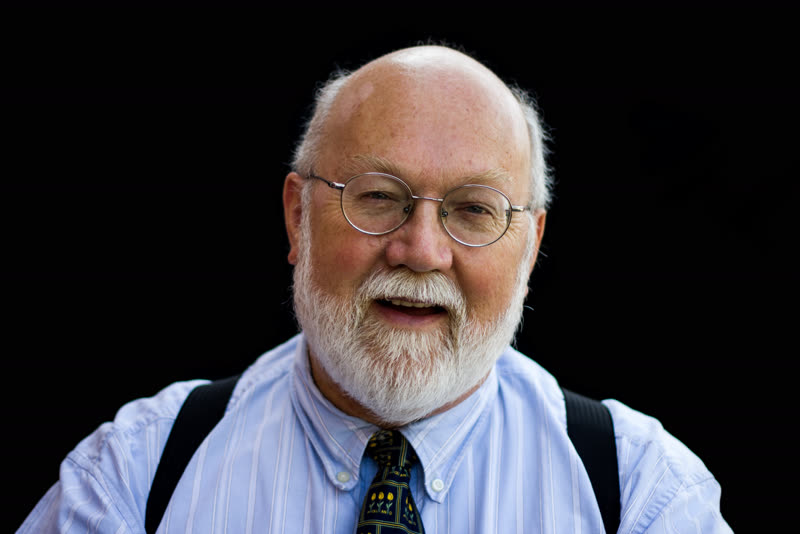 Tim Pasma Sunday AM March 24, 2019
Main passage 1 Chronicles 5:2-6
📖 Read the Scripture passage (ESV)
Solomon built a temple of unrivaled majesty. Hear the story of its dedication and see the relevance of it for Christians today in "God's Gathering Place," an exposition of 1 Chronicles 5.2 - 6.11.
Transcript
All right. I want you to follow along now as I read 2 Chronicles 5, verse 2, through chapter 6, verse 11. As we look at this passage today, I want you to be thinking about this. So what? God wrote this about what happened a long time ago. And yet, I find in 1 Corinthians 10 that what was written was not written for those long ago.
It was written for us who are sitting here today, upon whom the fulfillment of the ages has come. And so I want you to think with me through this passage as how does God want us to see this? How does God want us to understand this? What is here for us today who don't have the same thing? So let's look at 2 Chronicles, 2 Chronicles chapter 5, beginning in verse 2, and reading through chapter 6, verse 11.
Then Solomon assembled the elders of Israel and all the heads of the tribes, the leaders of the fathers' houses of the people of Israel, in Jerusalem, to bring up the ark of the covenant of the Lord out of the city of David, which is Zion. And all the men of Israel assembled before the king at the feast that is in the seventh month. and all the elders of Israel came and the Levites took up the ark and they brought up the ark the tent of meeting and all the holy vessels that were in the tent the Levitical priests brought them up and King Solomon and all the congregation of Israel who had assembled before him were before the ark sacrificing so many sheep and oxen that they could not be counted or numbered then the priests brought the ark of the covenant of the Lord to its place in the inner sanctuary of the house in the most holy place, underneath the wings of the cherubim. The cherubim spread out their wings over the place of the ark so that the cherubims made a covering above the ark and its poles.
The poles were so long that the ends of the poles were seen from the holy place before the inner sanctuary, but they could not be seen from outside. And they are there to this day. There was nothing in the ark except the two tablets that Moses put there at Horeb, where the Lord made a covenant with the people of Israel when they came out of Egypt. And when the priests came out of the holy place for all the priests who were present had consecrated themselves without regard to their divisions And all the Levitical singers Asaph Haman and Jaduthun their sons and kinsmen arrayed in fine linen with cymbals harps and lyres stood east of the altar with 120 priests who were trumpeters.
And it was the duty of the trumpeters and singers to make themselves heard in unison in praise and thanksgiving to the Lord. And when the song was raised with trumpets and cymbals and other musical instruments in praise to the Lord, for he is good, for his steadfast love endures forever. The house of the Lord was filled with a cloud, so that the priests could not stand to minister because of the cloud, for the glory of the Lord filled the house of God.
Then Solomon said, the Lord has said that he would dwell in thick darkness, but I have built you an exalted house, a place for you to dwell in forever. Then the king turned around and blessed all the assembly of Israel while all the assembly of Israel stood. And he said, Blessed be the Lord, the God of Israel, who with his hand has fulfilled what he promised with his mouth to David my father, saying, Since the day that I brought my people out of the land of Egypt, I chose no city out of all the tribes of Israel in which to build a house, that my name might be there.
And I chose no man as prince over my people Israel. But I have chosen Jerusalem, that my name may be there. and I have chosen David to be over my people Israel. Now it was in the heart of David my father to build a house for the name of the Lord, the God of Israel. But the Lord said to David my father, whereas it was in your heart to build a house for my name, you did well that it was in your heart.
Nevertheless, it is not you who shall build the house, but your son who shall be born to you shall build the house for my name. Now the Lord has fulfilled his promise that he made. for I have risen in the place of David my father and sit on the throne of Israel as the Lord promised and I have built the house for the name of the Lord the God of Israel and there I have set the ark in which is the covenant of the Lord that he made with the people of Israel let's pray Father, thank you for your word open it up to us now that we might see what it means to us help us Father to understand this is your word and it's your word that's intended to point us to teach us, to encourage us to strengthen us, to help us thank you now for our time together in Jesus name Amen I want you to use your imaginations this morning I want you to imagine that you wake up on a bright October morning with a sense of excitement and anticipation. You step through the door of your house and you look east over the city, the city of Jerusalem, and breathe in the refreshing autumn air. the Feast of Tabernacles that wonderful feast in the seventh month of the calendar has arrived it's a wonderful time of feasting and celebration get over a week off of work and it's just a time of tremendous celebration before God but this year is going to be the greatest fall festival you have ever experienced and then the magnificent structure catches your eyes as it rises in the east with its gold and bronze glint in the sun.
Your king has finished that beautiful sanctuary for the Lord and this is the day of its dedication. This year's feast will be the best, the most festive, the most glorious because it will be filled with all the worship and ceremony of dedicating the temple of the living God. Your nation is at peace. Everything is going well. And today is the day when you dedicate that temple. your heart just beats faster in anticipation of it all.
Later that day, you witness this incredible celebration that we just read about. King Solomon, in all his grandeur, leads the elders, the heads of the families, and the clans, and the tribes, the military commanders, the palace official, the whole representative assembly of Israel, all of them in great procession, walking through Jerusalem up to Mount Moriah to the splendid temple. following them comes some priests and they're carrying the tabernacle of God the one Moses had built and which was a sanctuary for God's people in the desert it had been brought from its place and now was headed for the temple where it would be put in the treasure house and all of its sacred articles used there or all of the sacred articles going in the treasure house because they built all new stuff for the temple and then come the priests bearing the Ark of the Covenant, the symbol of atonement, the symbol of God's presence. And it contains the stone tablets of the covenant made with God at Sinai Solomon and the assembly having reached the temple begin the worship with countless sacrifices to Yahuwah the God of Israel.
After the king finishes the sacrifices, you watch another group of priests lift the Ark of the Covenant on their shoulders, and they proceed into the temple courtyard. They disappear into the temple, and they deposit it in the Holy of Holies. where there are these two gigantic cherubim with their wings that spread from one side of that huge square cubicle, holy of holies, from one wall to the other. And there they place it underneath those great giant cherubim.
And then they withdraw from that place, never to return to it again. Only the high priest once a year. As they reappear in the courtyard of the temple, a superb orchestra along with a Levitical choir. Again, there's music. This incredible choir with a full orchestra starts this great hymn of praise to God and it just takes you away and you're just enraptured by it all.
And the voices roll through the city as they praise God with this song. He is good and for His steadfast love endures forever. That's the title of the song that they sing. That is what they're rejoicing about. And then, that's not enough, all of a sudden this incredible brilliant cloud, it's that Shekinah cloud, that cloud of glory that led those people through the wilderness, that inhabited the Holy of Holies in that tent tabernacle, now suddenly it appears and it descends onto the Holy of Holies and it is so bright, so bright, brighter than the sun, that the priests have to stop doing what they're doing.
They can't even carry out their duties. And then almost as if he's addressing God, you hear the king say, the Lord has said that He would dwell in a dark cloud. I have built a magnificent temple for you, a place for you to dwell forever. And then Solomon turns and he speaks to all the assembled people that are there and he blesses it. He speaks on the theme of that song that God is good and His steadfast love endures forever.
The theme of God's goodness expressed in that love. And that love, that steadfast love, is the Hebrew word, and you've heard it before, is chesed. Chesed. It means covenant. love. Not necessarily a love of this emotional thing that goes up and down. This is covenant love.
God's steadfast love. I love the way the ESV translates that. Steadfast love. It's a love that will not disappear. It's a covenant love. It's a love that's promised.
It's a love that will not end. He speaks on that theme. And he says that steadfast love is found expression in this way. God kept His promise. He told David His Son would ascend to the throne. And here I am.
I've ascended to the throne. I've ascended to the throne. And although David expressed the wish to build the sanctuary, God promised that He would build David's house and that His Son would accomplish the feat of building. So Solomon reminds you that none of God's promises have failed. And that begins the service of dedication. right imagination now now you move 500 years down down the timeline 500 years later now you are now in the time when whoever wrote these books of chronicles is living that is when he wrote the book 500 years after that event but everything is different now everything is different as you now gaze out over Jerusalem you don't see a great city you see a city that's rebuilding itself from its ashes because God had destroyed that city Nebuchadnezzar had come as an instrument of God's judgment had destroyed that temple and leveled the city and as you look east you no longer see Solomon's temple you see this little modest thing that has been written by the few jewish people that have returned to their homeland after 70 years of captivity with the babylonians and the glory of god's cloud no longer fills the holy of holies most of your people aren't there most of your people are scattered all over the world living in different nations they're not there there's only a a small tiny little group of Jews living in that part of the world All the rest of them are scattered all over the world As an inconsequential part of the great Persian Empire you don't have a sense of national identity anymore, like your people had in the days of Solomon.
In fact, many of your people doubt that God is good and that His steadfast love endures forever. but the chronicler is writing a history to give his people hope. Now, when I was a kid, I would read 1 and 2 Chronicles and think, good night, we already have a book about this. It's called 1 and 2 Kings. Why is he writing all this over again? Well, you will notice if you read carefully.
1 and 2 Kings was written right, right about the time that Israel was judged. And the purpose of 1 and 2 Kings is to say, look at our history, look at that. That's why we're being judged. The chronicler comes along and he writes the same history, but he tweaks it. Because in this book, he talks about, he emphasizes three things. One people, one king, one temple. and he writes now at the end of that judgment to give his people hope.
He's writing his history from a different perspective. It's to give these people who have now been scattered, who have lost everything, and to give this small group right here, back in their homeland, and all those who are scattered all over the world, he writes the history with the point of saying there is yet hope. As you read through 1 and 2 Chronicles, He talks about things that the writer of the Kings does not.
The writer of 1 Kings does not. And he writes it to give them hope. And here's an example of that. As he writes this history, you'll read this very same story in the book of 2 Kings. Alright? You'll read this very same story except one scene is not in that book.
You know what it is? It's right here in verse 13. And when the song was raised with trumpets and cymbals and other musical instruments in praise to the Lord for he is good for a steadfast love endures forever The house, the house of the Lord was filled with a cloud. That little piece right there is not in the other account. Why? Because the chronicler wants to give his people some hope.
He wants the readers to see that God is good. that his love is steadfast and that his covenant love does endure forever. In his history, he wants to give them hope that God still has good intentions for his people. Now, now that the chronicler has written this book for us, we need to look at it with its intention in mind to see the goodness of God. The goodness of God to us.
How is that? Let's look. Recognize God's goodness in bringing his people together. Recognize God's goodness in bringing his people together. At the time of this writing, most of the Jews, God's covenant people, were scattered among the nations. In fact, the same thing is true today.
Israel only has a tiny minority of the Jewish people of the world. It is still true. The Jewish people are scattered all over the world today. This was God's judgment on them for their idolatry. And that kind of dispersion takes away your sense of identity as a people. It takes away your sense of identity as a people.
Sure, there still is a sense of being a people, but in dispersion you start to think and act and adopt the ways of the people around you. You don't stand out like you did before. You don't have such a distinct identity, especially your identity as the people of God. It just doesn't look like that anymore. And so our writer turns their attention back to God's purpose of a people.
What's interesting about the chronicler is he always talks about Israel. He very rarely, because you remember Israel and Judah split. And so Judah becomes the center of attention. And in this book as opposed to Chronicles Judah and the kings of David are the sole subject of his study He doesn deal In 1st St Kings you see the kings of Israel and the kings of Judah Here it is merely the Davidic line.
He's trying to emphasize that. And as you come to this book, he emphasizes all the people of God. Notice, you see it in chapter 5 and 2, 3 and 4. when he says he assembled the elders of Israel, the heads of the tribes, the leaders of the fathers' houses, of the people of Israel. And verse 3, and all the men of Israel. Verse 4, all the elders of Israel.
Verse 3, the king turns around and blessed all the assembly of Israel while all the assembly of Israel stood. Verse 11, that the covenant that he made with the people of Israel. All through this book he keeps talking about Israel. He talks about the whole people of God. The whole Israel theme keeps coming up. But as he writes, and as we look around today, it looks as if God's promises have failed.
It looks as if God's promises have failed. But they haven't. Why? Because God has brought His people together in Christ. We, who were not part of the people of God of the Old Covenant, have now become the people of God. He hasn't abandoned His people.
He has gathered His people. Look at Matthew chapter 8. Jesus explained this when He was on earth. Matthew chapter 8. Matthew 8, beginning in verse 5. When He entered Capernaum, this is speaking about Jesus, when He entered Capernaum, a centurion came forward to Him, appealing to Him.
We all know this story. But notice the point that Jesus is going to make. Lord, my servant is lying paralyzed at home, suffering terribly. And he said to him, I will come and heal him. Jesus going to a Gentile. That's not a good thing.
According to everybody standing around. But notice what the centurion says. But the centurion replied, Lord, I am not worthy to have you come under my roof. But only say the word and my servant will be healed. For I too am a man under authority with soldiers under me. And I say to one, go.
And he goes. And to another, come. And he comes. And to my servant, do this. And he does it. When Jesus heard this, he marveled and said, those who followed him.
Truly I tell you, with no one in Israel have I found such faith. I tell you, many will come from east and west and recline at the table with Abraham, Isaac, and Jacob in the kingdom of heaven, while the sons of the kingdom will be thrown into the outer darkness. In that place there will be weeping and gnashing of teeth. And to the centurion Jesus said, Go, let it be done for you as you have believed.
And the servant was healed at that very moment. What's Jesus saying? He's saying, look, the people of Israel don't believe in the one that God sent, but others will. They are going to be the people of God. They're the ones that are going to be sitting at the table, not those that claim to be the people of God, the Jewish people, but all these others are going to be sitting with Abraham and Isaac and Jacob.
What's the point? The point is these are the people of God, not just this race, not just this ethnic group, I should say. Rather, it's those who trusted me, those who have faith in me. Those are the people of God. And the Apostle Peter goes on to say it in 1 Peter chapter 2, verses 9 and 10. But you are a chosen people.
Who's he talking to? He's talking to us. But you are a chosen people, a royal priesthood, a holy nation, a people belonging to God that you may declare the praises of Him who called you out of darkness into His wonderful light. Note, once you were not a people, but now you are the people of God. Has God failed? How is that promise that the Chronicler is saying?
How are all the people gathered together? They're gathered together by virtue of their relationship to the Messiah. We are the people of God in these last days. We are the people of God. God is good and His love is expressed in faithfulness does endure forever because He still gathers His people. Now, just a little bit of a footnote.
God has not left out the Jewish people. Turn over to Romans 11 for a moment. This is kind of a controversial passage. But I think it's clear Romans 11 here here is Paul addressing the idea that the olive tree with its natural branches the Jewish people have been broken off because of the hardening of their heart and we Gentiles we wild olive branches we been grafted in We are now the people of God But he gives us a warning and says, but don't you look down on Jewish people.
Why? Here's why. Romans chapter 11, we'll pick it up in verse 22. Note then the kindness and severity of God. severity toward those who have fallen, but God's kindness to you, provided you continue in His kindness. Otherwise, you too will be cut off. And even they, if they do not continue in their unbelief, will be grafted in, for God has the power to graft them in again.
For if you were cut from what is by nature a wild olive tree and grafted, contrary to nature, into a cultivated olive tree, how much more will these, the natural branches, be grafted back into their own olive tree? Lest you be wise in your own sight, I want you to understand this mystery, brothers. A partial hardening has come upon Israel until the fullness of the Gentiles has come in.
And in this way, all Israel will be saved. As it is written, the deliverer will come from Zion. He will banish ungodliness from Jacob. And this will be my covenant with them when I take away their sins. Now listen, God's not promising to restore Jews just because they're Jews. That's not the issue.
What he's saying is simply this. He promises to restore them when they too, along with us, along with us, become the people of God as they come to Jesus to save them. It's not apart from the Messiah. Listen, Jewish people who do not believe in Christ, they are not the people of God. Only those connected by faith to Jesus are the people of God. but God promises that someday he hasn't forgotten those people that he had his covenant with he promises that someday they'll believe in their Messiah and they too will become part of the people of God the point here simply is this God is good his love endures forever because he gathers his people together in Christ he's not abandoned his plan of gathering of people he gathers them together in Christ.
Note this as well. Recognize God's goodness in bringing His people together under one ruler. This again is another theme in the book of the Chronicles One people under one ruler under one king Now as he writes he has to address whether God really is good and faithful because they have no king at this point. The people he's writing to right now do not have a king.
They experience the abuse and oppression of a conquered people because they're part of a greater Persian empire and they're under the Persian emperor. They don't have their own king. As a chronicler writes his history, he records Solomon's sermon claiming that God has kept His promise by putting Him on the throne. Right? Look at chapter 6 again. Here in chapter 6, verse 6.
Solomon says, But I have chosen Jerusalem that My name may be there, and I have chosen David to be over the people of Israel. And then verses 10 and 11, Now the Lord has fulfilled this promise that he made, for I have risen in the place of David my father and sit on the throne of Israel as the Lord promised, and I have built the house for the name of the Lord, the God of Israel. And so we see there, okay, there he kept his promise.
Compare that with the promise made in 1 Chronicles 17. This to me is a fascinating passage. The promise, the covenant that God makes with David. 1 Chronicles 17 pick it up pick it up in verse 10 where the sentence starts in the middle this is God speaking and I will subdue all your enemies moreover I declare to you that the Lord will build you a house see David said I want to build the Lord a house and the Lord comes back through the prophet Nathan and says to him listen you're not going to build me a house but I'm going to build your house.
What does he mean? I'm going to build your dynasty. Alright? When your days are fulfilled to walk with your fathers, I will raise up your offspring after you, one of your own sons, and I will establish his kingdom. He shall build a house for me. And I will establish his throne forever.
I will be to him a father and he shall be to me a son. I will not take my steadfast love from him as I took it from him who was before you. But I will confirm him in My house and in My kingdom forever and his throne shall be established forever In accordance with all these words and in accordance with all this vision Nathan spoke to David I will establish your throne forever.
Here's the problem. When the Chronicler writes this, no king from David's house is reigning. There's not a Davidic king on the throne. How can you say that God's steadfast love endures forever, that He keeps His promises. How can you say that? Because a descendant of David now sits on the throne of God's people.
Turn over to Acts 2. Acts 2. This is Peter's sermon on Pentecost. Remember, when they all speak in the languages of the people that are there and the Holy Spirit descends on them. This is the sermon that Peter preaches. And here's what he says, beginning in verse 29.
Brothers, I may say to you with confidence about the patriarch David that he both died and was buried and his tomb is with us to this day. And I can see Peter as he's preaching this pointing over to a corner of Jerusalem where the tomb of David was. Right? He's dead. being therefore a prophet, where he just quotes from one of the Psalms about not seeing decay.
The Holy One not seeing decay. He says, David died, but being therefore a prophet, and knowing that God had sworn with an oath to him that he would set one of his descendants on his throne. He foresaw and spoke about the resurrection of the Christ that he was not abandoned to Hades, nor did his flesh see corruption. This Jesus God raised up, and of that we all are witnesses, being therefore exalted at the right hand of God and having received from the Father the promise of the Holy Spirit, he has poured out this day that you yourselves are seeing and hearing.
For David did not ascend into the heavens, but he himself said, The Lord said to my Lord, Sit at my right hand until I make your enemies your footstool. Let all the house of Israel therefore know for certain that God has made Him both Lord and Christ, this Jesus whom you crucified. Notice in verse 30, knowing that God's made a covenant with David, swore an oath that he'd put one of his descendants on the throne.
Verse 36, God put Jesus on the throne. What's the point? The point is that a descendant of David does indeed reign. He is over the people of God. The one ruler has come. The one king is here.
He sits at the right hand of God. God has kept his promise. A descendant of David now sits on the throne forever. and he reigns in order to protect and defend the people that God has gathered in his name. In Ephesians chapter 1, verses 22 and 23, it says, And God placed all things under his feet and appointed him to be head over everything for the church, on behalf of the church, which is his body, the fullness of him who fills everything in every way.
He sits on the throne and now protects his people. God is good and his love endures forever because he gathers his people together under one ruler, under one king. But, someone objects to the chronicler, those people were gathered together under one king and at one place, the sanctuary. And we can say, we don't have that. Right? We don't have that.
Where is the temple? Where is the sanctuary? Will you still claim that God is good and his love endures forever when he doesn't have a sanctuary? Ah. You've got to recognize God's goodness and bringing his people together to that sanctuary. He brings you to the one sanctuary.
Now think about how the Old Testament records the whole issue of the worship of God's people. Abraham, Isaac, and Jacob all set up altars from time to time while God's people were still a single family. But over the years, the heads of many families abused that practice. If you read through the judges and you read through the historical accounts in the Old Testament, you will find that there were all these high places all over the place.
Especially in the book of Judges. There's all kinds of these idolatrous practices all over the place. And the construction of the tabernacle in the wilderness checked that to a certain degree because now everybody had to come to one place. It wasn't a do-it-yourself religion. and God had said in Deuteronomy chapter 12 verses 5 and 6 as they coming to the promised land here what God said but you are to seek the place the Lord your God will choose from among all your tribes to put His name there for His dwelling To that place you must go.
There bring your burnt offerings and sacrifices, your tithes and special gifts, what you have vowed to give and your free will offerings. So Yahuwah brought that about, as we have seen, through David and Solomon. He built that temple, right? But what about now? where's the sanctuary now? Some would suggest to us that God's going to keep that promise by having somehow the mosque that's on the place where the temple used to be is going to be destroyed and someone's going to come along and build a temple there.
But that's to miss the whole point. That's to miss how God fulfills his promise. You know why? Here's why. God has appointed his son as our sanctuary. That's the place of worship.
What is the temple? When you read through the Old Testament, the temple is the meeting place between God and man. You come together at the temple. I'm going to have one place where you come to me. Right? Where is the meeting place between God and man now?
Where do we meet God? In his Son. the Lord Jesus himself is our sanctuary. Look over at John chapter 1 for a moment. John chapter 1. Verse 14. And the word became flesh and dwelt among us.
That term dwelt there can be translated tabernacled. And the Word became flesh and tabernacled among us, and we have seen His glory. Glory is of the only Son from the Father, full of grace and truth. Listen, John is purposely drawing a picture here. He is saying that the dwelling place of God, as Solomon himself has said, here's the dwelling place where you're going to dwell with your people.
Where's the dwelling place of God now? Where His glory is seen. It's His Son. It's His Son. There's the sanctuary. there's the temple if you will and wherever the truth of the gospel is preached we are drawn together in him God brings you to the place of atonement The temple was the place of atonement The sanctuary was the place of atonement God brings us there.
In this text before us in 2 Chronicles, the ark is a major player in the ceremony, right? It's brought to the temple, so everybody knows the ark of the covenant is brought to the temple. You know, that's where that ark sat in the tabernacle. It's got the built-in cherubim on it. And the cover was the mercy seat, also known as the place of propitiation.
The place of propitiation, that's how they referred to the mercy seat. And there it sat. Now that ark sits in the temple. The place where the propitiation is, is hidden now in the Holy of Holies, where it's always been. And once a year the priest goes in there and sprinkles blood on the lid of the ark and the sins of the people are forgiven for a year.
But then Paul says something interesting in Romans chapter 3. Turn there. Romans 3, 21 through the first part, through 25. Verse 21. But now the righteousness of God has been manifested apart from the law, although the law and the prophets bear witness to it, the righteousness of God through faith in Jesus Christ for all who believe. For there is no distinction.
For all sin and fall short of the glory of God and are justified by His grace as a gift through the redemption that is in Christ Jesus, whom God put forward as a propitiation by His blood to be received by faith. Now, what's the point? that word put forward can be said publicly displayed. Publicly displayed. God publicly displayed Jesus as the propitiation.
He's no longer in the Holy of Holies hidden away. Now, He's publicly displayed. And that word propitiation was the word used in that mercy seat, the lid where the blood was sprinkled. that is now out in the open. It's out of the Holy of Holies. It's publicly displayed. Here is the place of atonement There in Jesus is the place of atonement where all your sins are forgiven The mercy seat has been if you will the mercy seat has been dragged out of the Holy of Holies It's now in front of everyone.
And there it says you come to that and you find your salvation. And so this is the place of atonement. Jesus is that place of atonement. He is that mercy seat. and He's no longer behind a curtain. God's openly displayed that mercy seat for all to come. God brings you to His presence.
The temple was where the presence of God was. The ark was the symbol of God's presence with His people. And that great cloud of glory, the very cloud that descended to the temple, rested on the cover of the ark. What do we find? Turn to Ephesians 2, 21 and 22. Ephesians 2.
21 and 22. In whom, that is in Christ. In Christ the whole structure being joined together grows into a holy temple in the Lord. In Him, you, that's not you singular, that's you plural. In Him, all of you are being built together into a dwelling place for God by the Spirit. So Jesus brings us to the dwelling place of God.
In fact, he makes us the dwelling place of God. Can you believe this? When we're assembled together, not this building, okay, if we were meeting out at the park for a worship service, there would be the dwelling place of God as we gather together. You all are being built together into the dwelling place of God. so there's no temple but we are and wherever the people of god gather there is god present amongst them just like he was in that temple and the last thing you'd see at this sanctuary is the covenant god brings you to this covenant that's the last thing that happens in the sanctuary right so you see the sanctuary jesus is our sanctuary he's the atonement we are the temple, if you will, as well.
And then there's where the covenant is. You remember those stone tablets that God inscribed were always in the Ark of the Covenant as a symbol of the covenant that God had made that made these people his people. And so, you say, where is that? Where is that? We don't have a physical reminder of that covenant. Well, actually we do.
You know what it is? It's the Lord's table. That's our physical reminder. The Lord's table. Of the covenant that God has made with us. Now, we're under a different covenant.
We're under the new covenant. Where is that covenant displayed? Where is that covenant displayed? We display that covenant every time we preach the Gospel. We display that covenant every time we preach the Gospel in Word. We display that covenant every time we preach the Gospel at the Lord's table as we participate in the Lord's table.
You find that covenant displayed whenever and wherever you proclaim Jesus. you see God is good his love endures forever because he gathers his people together as his sanctuary so what do we learn from the chronicler he is good, God is good his steadfast love endures forever, he is not he will never, never fail in his promises how do we know that's true how do we know his love endures forever because God gathers His people together in Christ Because God gathers His people together under one King who is Christ Because God gathers His people together to one sanctuary. All of it in Christ. If you want to see that God is good and His steadfast love endures forever, there's one place to look. it's Jesus.
Father, thank You for Your Word. Help us, Lord, to understand that everything You have ever done finds its fulfillment in Christ. That He is the one that's the guarantee of Your covenant faithfulness. That He is the one who fulfills it all and that we, by our connection to Him in faith, by our incorporation into Him and union with Him, find all the blessings that You ever intended for Your people.
As we look back, Father, help us to see that all of this points forward to Him. That He is the center of it all. That the Lord Jesus guarantees to us that You are good and that Your steadfast love endures forever. We thank you in his name. Amen.
Also referenced in this sermon
Other passages mentioned, beyond the main text.