Roger Williams: Apostle Of Religious Freedom
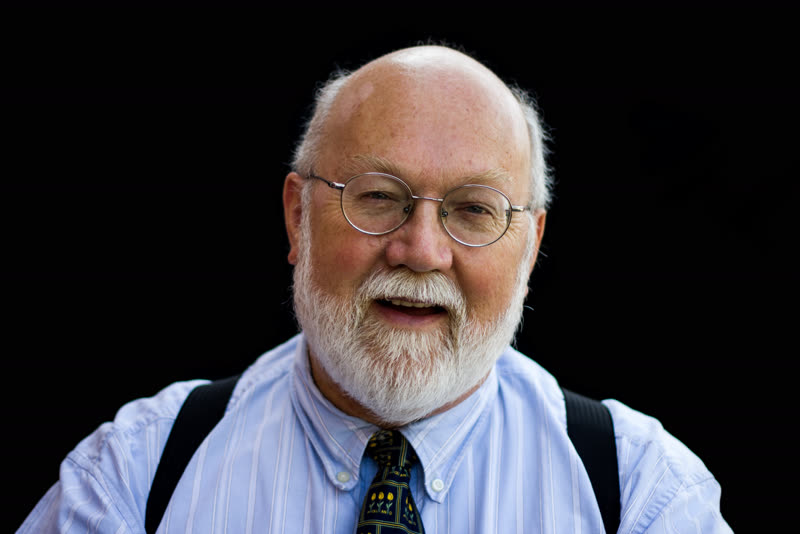 Tim Pasma Sunday AM Reformation Sunday November 1, 2020
📖 Read the Scripture passage (ESV)
Reformation Sunday 11-1-2002
Transcript
Let's pray. Father, now visit us with your spirit to help us to understand your word. Even this day as we do something that's different, we pray that you would yet speak to us through your word. Not just through the life of this man, but through your word. help us to see again that there are people who as they conform to the word of God become instruments of your grace and your power help us now we pray in Jesus name, Amen at first glance it may seem strange to devote the Reformation Sunday sermon to a man like Roger Williams We don't know exactly when he was born.
We don't know exactly when he died. We don't know what he looked like. We can't visit his home because it went up in flames over 300 years ago. Although he was a preacher, no sermon of his survives. During his lifetime, not a single monument was erected in his honor. He died on the frontier at the fringes of civilization.
And at his death, no carved stone marked his grave. And yet, his influence on America and even on the world is immeasurable. As Americans, our DNA is programmed with the idea of religious liberty, the idea that no government has the authority to demand that you belong to a particular church or denomination, nor does it have the authority to coerce you to believe certain religious tenets.
And anyone who denies it in this country is itching for a fight. this idea of religious liberty is so important that it even determines aspects of american foreign policy there are parts of our foreign policy that say we will treat certain nations certain ways depending upon whether they affirm religious liberty or not most democracies in this century the world over have some concept of religious liberty built into their systems even those countries that deny religious liberty will still affirm it in their constitutions. All this from a simple preacher who ministered at the very edge of civilization in colonial America in the 1600s How did that happen How did that happen Well one of the reasons it happened is because of the character of the man the kind of character described in Joshua chapter 1. Turn to Joshua chapter 1 with me.
Joshua chapter 1. This is Joshua. God is speaking to Joshua here, who's taking over the leadership of Israel because Moses is now dead. And this is what God says to this young man, Joshua chapter 1, beginning in verse 6. How does God describe godly character here? Well, he talks about being strong and courageous, never giving in to the pressures around you. and that is for the purpose of remaining faithful to the truth that God reveals in his word never turn to the right to the left you stay with the word of God no matter what it says you believe it and you obey it and you stay with it meditate on that truth so that you know it and you will obey it and that courage and obedience results in prosperity which in our case does not mean the Does that mean that we'll prosper materially as it did in those days?
But in this case, it means the acceptance of God's truth, even if material prosperity evades you. You can be this and do this because of God's promise. The promise of his presence and his help. Now there's one who was this and did this perfectly. And it wasn't Joshua and it wasn't Roger Williams. Jesus proved faithful and courageous against the onslaught of the devil and all of his human adversaries.
He never succumbed to the pressures around him but remained faithful to the mission that the Father had given him He went to the cross in what looked like utter defeat and yet God was with him and prospered him He vindicated him by raising him from the dead in victory He gave him a people that would love and serve him His message of salvation went out and conquered the world. And yet as you look at the life of Roger Williams, you see a man who, however imperfectly, followed his master and God prospered him in what he did. Now you might ask, haven't people always believed in religious liberty?
Hasn't it been what people everywhere always believed in that concept? Isn't that true? And the answer is no, not at all. And I think a way of understanding how important this truth is, how biblical it is, is to look at the world in which Roger Williams lived and ministered. England had a Protestant church called the Church of England or the Anglican Church.
It was a Protestant church. Henry VIII, in a huff because the Pope wouldn't give him a divorce from his wife, declared that the church in England was no longer under the authority of the Pope, but was under the authority of the king. And so in the 1500s, he established the Church of England with the monarch of that country as its ruler. Over the years, particularly under his son, Edward VI, the Anglican Church more and more embraced a Protestant theology, even becoming more like the reformer Calvin in his theology.
So it was a Protestant church. It was a state church. Now this is something that's totally foreign to us. So let me explain what it means to have a state church. For England it meant the monarch, the king or the queen, was the head of the church. So Queen Elizabeth II today is the head of the Church of England, of the Anglican Church.
Any changes made in the liturgy or the worship of the church had to be approved by Parliament. so if we wanted to if if someone said in the church of england we need to change this we need to we need to recite the lord's prayer every sunday and if it wasn't being done it had to be approved by parliament had to go through the whole process of parliament of parliament and become law Bishops appointed to the office of bishop also had to be approved by Parliament By the way, the bishops were also then, once you became a bishop, you were given a seat in the upper chamber of the Parliament called the House of Lords. And so the bishops were also automatically part of Parliament. Taxes levied by the government support the church. still does today, that meant that any church buildings built or improved were built or improved with taxpayer money.
That meant that every bishop and every pastor drew his salary from those taxes. Every pastor would be state salaried. That meant that whether you believed in the doctrine of the church or not, you were still paying taxes to support it. And because it was a state church, it was the only recognized church of the land, the only recognized church. It allowed no other beliefs, no other denominations, only one church allowed, the Church of England.
Many were arrested and jailed for even trying to start other churches or declaring opposition to the Church of England. You could only preach if you possessed a license by the church to preach, which meant a license from the state. So if we were part of the Church of England, I could not preach to you unless I had a license to do so. And to do so without a license meant the constable could show up and take me to jail. to even gather as a religious assembly without permission could mean that the sheriff showed up and drag you off to jail to oppose the church of england invited fines imprisonment flogging and even sometimes death now that all seems strange to you doesn't it that's the way it was now within this church an earnest group of believers grew up who wanted to purify the doctrine and worship of the Anglican church and so because they wanted to purify it they were called Puritans Puritans their goal was to move the church toward more Calvinist theology and worship.
The thing was, we've got to do this the way the Bible says. We need a pure church, and that means we've got to get rid of all the old vestments that we've carried over from Roman Catholicism. We've got to get rid of the old ways of doing things. And they were trying to head the church toward more of a Presbyterian form. And so they were trying to purify the church.
However, after many, many, many decades, starting in the late 1500s, going to the mid-1600s, they had a difficult time and did not meet with a great deal of success. Now, let me tell you something. Some of the best theological writings you're ever going to find are from the Puritans. They're from the Puritans. Anything you can get from the English Puritans is gold.
I have tons of their books on my shelf. I could give you some. For example, Jeremiah Burroughs' The Secret of Christian Contentment is a fantastic, phenomenal book. I have a book by Richard Baxter on my shelf. It's about that thick. Got it?
And it's about in eight-point font, two columns on every page. And Richard Baxter covers every single problem anybody could face in a lifetime and what the Bible has to say about it. It is a counseling textbook that is unbelievably exhaustive. The Puritans were physicians of the soul. They were phenomenal. but they weren't faultless now some of the puritans decided that reforming the church was an impossible task and so some of the puritans said we're going to separate from that church no matter what the persecution is no matter what's going to happen we will separate from the church because the church and the state should not be put together they were called separatists a group of them, in order to get away from the persecution, went to Holland.
And from Holland, they came to America. They are called the Pilgrims. They landed in Massachusetts in 1620 and formed a town by the name of Plymouth. Actually, they called it Plymouth Plantations and formed that community. These were the pilgrims. They were separatists.
Now some of the Puritans determined to take the same bold step and emigrate to the wilderness of America Now not the separatists now the Puritans have decided And so ten years later beginning in 1630 they started coming to America and they established a colony called the Massachusetts Bay Colony in what is today Boston and in other towns from that. In this distant place, they would create the true church of the Lord Jesus Christ. They would create a pure church.
Perhaps far from the persecution of bishops and the intrusion of sheriffs, and using the Bible as their guide, they could establish a new England. Sound familiar? A new promised land. And perhaps they could build a city on the hill, taking from Matthew chapter 5, verses 14 through 16, right? You are what? A city on a hill.
That was their goal. And it would be a light for all to see. And maybe, and this was their goal, Maybe it could be a light to the Anglican church to show where it had gone wrong and where it needed to conform to the scriptures. And so, ten years after the pilgrims, in 1630, a great wave of Puritan immigrants set out for the New World and established the Massachusetts Bay Colony, beginning with the founding of Boston in 1630.
They did not see themselves as forsaking England, but rather they left so that they might be a light to redeem England and its church. now even though the puritans wanted to be free from persecution do not think that they took with them the idea that you could worship god according to your conscience because they did not they came to establish the pure church and then others were allowed you know why if we allow other churches, people to worship freely, then that'll just increase heresy. We can't have that. The government still had the power to enforce both tablets of the law.
Now listen, when you think of the Ten Commandments, have you ever seen pictures of the Ten Commandments? You ever notice they're always on two tablets? Now I don't know if that's the way it originally was but in the theology that grew up in the Reformation they started talking about the two tablets of the law. The first tablet and the second tablet. The first tablet had the first four commandments They were no other gods no images not taking the Lord name in vain and do not violate the Sabbath That the first tablet the first four commandments The second tablet was honor your parents, do not murder, do not commit adultery, do not steal, do not bear false witness against your neighbor, and do not covet. now in the Puritans view the government still had the power to enforce both tablets not just no stealing no murder, adultery lying, not just that but the first tablet no other gods no images, don't take the Lord's name in vain and keeping the Sabbath so life in New England meant you could be fined for swearing you swore you could swear you lose your temper and you swear on the streets of Boston what could happen? the constable could take you to the judge and you'd have to pay a fine for swearing you would pay a fine for missing church if you weren't in church you'd have to pay a fine you'd be hauled not before the elders of the church you would do that maybe but then you'd also be taken to the court, where you would be fined for missing church, for violating the Sabbath.
You could be jailed, you could be flogged, you could even be banished. No images meant what? No Catholics. Although as good Protestants, the Puritans believed that the government and the church had been separated by God, nevertheless, in practice, it didn't look that way. That's the world into which Roger Williams was born. That's the way it was.
Now, Roger Williams was born to a successful merchant, James Pemberton and his wife, Alice, in one of the outer districts of London. His parents lived at a time when heretics were burned at the stake. And that may have had a significant influence on him. He was really good with languages, languages which would come in handy later he had a real ability to learn different languages and he won a scholarship to Cambridge University because of his excellence in Hebrew Greek and Latin now this is before college that he showed that kind of ability you imagine a high schooler who knows Hebrew Greek and Latin He graduated from Cambridge in 1627 He was ordained in the Anglican Church and became a chaplain to a wealthy family Somewhere in his pilgrimage, he came to Christ.
Somewhere, and we don't know exactly where, he believed that Jesus had died for his sins and he entrusted himself to this one who had been raised from the dead, declaring and declared the Savior. He entrusted himself to him and was saved. Two years after graduation in 1629, when he was probably 26, we think he was born in 1603, he married Mary Barnard.
But somewhere in those two years between ordination and marriage, he turned to Puritanism. And at the end of 1630, Roger and Mary boarded a ship for America and the Massachusetts Bay Colony. Governor Winthrop, who was the governor of Massachusetts Bay Colony, welcomed them to Boston, expressing his delight at the arrival of more colonists, but especially of what he called a godly minister in Roger Williams.
You see, Roger was offered the pastorate of a brand new organized church in Boston. This is where he could start ministering. Great, a brand new organized church. Here. Perfect, right? Wrong.
Because Roger did not think that church was separated enough. It wasn't pure enough. It was still too Anglican. And so he turned it down. He turned it down. Well, with that happening, he and Mary left Boston and traveled 15 miles to the north to a little settlement called Salem.
There, a church which was more separated, by his thinking, sought to have him installed as a pastor. However, the folks back in Boston who were miffed at him for rejecting them leaned on the church in Salem and said, don't install this guy. You need to delay. Wait. Now, technically, in New England now, they believe that each church was independent of the other.
So this church couldn't tell this church what to do. But you know how it is. I've got a couple of aunts and uncles and. My dad goes to this church, and they're writing to us, and they're leaning on us. Don't take this guy. And so, the Salem church delayed.
Well, after a bit, Roger and Mary moved again. This time, they moved south of Boston, about 30 miles, to Plymouth Colony, where the separatists were. They were separatists. That was good for him, he thought. And they lived there for almost two years from 1631 to 1633. It was during this time that Roger Williams spent a great amount of time with the Indians, the Native Americans there.
He wanted to learn their language. He wanted to learn their way of life. He wanted to learn everything he could about the Indians. All right? He was almost, if you will, a cultural anthropologist. He immersed himself with them, learned everything he could about them.
However, something else was also true. Roger was becoming an irritant to the people there, and the Plymouth governor, William Brewster, wrote that Williams began to fall into some strange opinions and from opinion to practice. Now, we're not exactly sure what that meant, but it wasn't long before we started finding out because something about Roger Williams started to surface.
Number one, he's always searching the scripture for truth. He's always trying to find the truth and when he became convinced of the truth, no one could change his mind. Absolutely no one. He was tenacious in holding to his convictions and no amount of pressure could ever make him change his mind. That became obvious about the man. Not only that, he was willing to argue his convictions with anybody.
No matter how unpopular the position he held, he was willing to defend it. I found this interesting that one of his biographies writes, Williams could either start an argument or heartily join in arguments already underway. And that became one of the distinguishing characteristics of his life. And as I read about Williams the thought occurred to me I am so glad for a man who will willingly stand for his convictions But he also gave the impression as one Puritan wrote about him one Puritan in America wrote about him he only believed what came from his own head.
He wouldn't listen to anybody else. well be that as it may Roger and Mary left Plymouth and returned to Salem controversies were swirling in Salem what's interesting about when you read the history of colonial America and you read the history of the Puritans since they're now free from a government that's telling them what they have to believe now they're exploring and they're getting in all kinds of arguments They're arguing all the time. One of the arguments in Salem, you know what it was? Should women wear veils or cover their heads for worship?
They argued about that. Evidently, Williams came down on the side of yes. One of the Puritans in Boston said no. This is another one. They were getting into a controversy about the right to deface the flag. When you look at the British Union Jack, the British flag, you will notice that, you know, what it's got is, it's got the cross of Scotland in it.
It also has a big red cross in it. If you look at the Union Jack, you'll see a big red cross. Well, way back centuries before, a pope had granted an English king the right to display that cross. It was a promise of victory. Well, now the Puritans are saying, How can we have a popish flag? And so they started cutting out the cross.
So there's a controversy of, do we have the right to deface our national flag? Remembering now, this is part of England still, the colony of England. Do we have the right to deface our national symbol? Does that argument sound familiar to you? except what's interesting is the hard rock solid Christians are the one with the scissors this time around everyone believed that Williams was without a doubt embroiled in all those controversies but on even more weighty issues Williams spoke loudly and clearly let me give you three three of the issues that he spoke clearly about He quibbled with the law that required that all men 16 years and older had to swear an oath of allegiance to the colony and the crown, concluding with the words, so help me God.
William said, what if the swearer doesn't believe in God? You going to make him swear by God? You can't make someone swear by God who doesn't believe in God. It makes no sense. Do you think people would say, you're right? Nobody agreed with him.
Nobody agreed with him. Here's one that really got him into trouble. He raised the serious charge regarding the land given by Charles I to the Bay Colony. he says what right does the king have to grant this land to the colonists he doesn't own it Roger was especially troubled by the use of the Christian religion to do a very unchristian deed namely depriving the Native Americans of their land without negotiation and without purchase.
English colonization, he said, was a sin of unjust usurpation upon others' possessions. Christian kings somehow believe that they are invested with right by virtue of their Christianity to take and give away lands and countries of other men. Wow. How do you think that went over? You know what he was doing? He was essentially saying the government here has no legitimacy.
It's not legitimate. We stole this land. And what about the civil officers and magistrates? Did they have the duty of enforcing obedience to the commandments of the first tablet? Should the government force citizens to worship one true God and refrain from idolatry? Does the government have the right to do that?
He said no. No one else agreed with him During this time he assumed the pastorate of the church in Salem and so his ideas were gaining weight and influence And for such views especially his one on taking land he was summoned to appear before the General Court of Massachusetts Bay Colony. Now, the General Court of Massachusetts Bay was both legislature and court.
That is to say, it was like a legislator, bills were introduced, and laws were enacted, but it was also a court where if you were summoned before that court, it was like being summoned before the Supreme Court where you would make your case and they would vote on whether charges would stick or not, whether you were guilty or not. So he was called before the General Court of Massachusetts Bay Colony. The case was argued, but no charges were made.
He continued in his ways. He continued in arguing. And in July 1635, he was called before the court again, which officially warned him that his opinions were erroneous and dangerous. One historian writes, a warning shot had been fired across his bow. A prudent man would have trimmed his sails and changed course. Williams, more a man of principle than of prudence, did neither.
I love that. Being a man of principle more than prudence, he didn't do that. He continued in his erroneous and dangerous opinions And so even his church in Salem became divided. In October 1635, the court again summoned him to appear. He was given the opportunity to recant what he had preached and written. He couldn't be persuaded that he was wrong.
And so the court banished him, banished him from the colony and gave him six weeks to leave. Now, what was he to do? He had a wife and the second child was on the way in a matter of weeks. And he had been banished. What did that mean? It mean he had to leave.
He had to go beyond the boundaries of the colony somewhere. He didn't leave. He stayed until January. So the court decided he's not leaving. We're going to put him on a ship to England. Well, the problem with that is things were getting pretty hot for Puritans in England.
So that would be death for him, quite possibly. And so what he did was when the officers came to arrest him, they found that he had left. They didn't know where he was going, and he hardly knew either. Off into the wilderness he went. He fled into the wilderness in a snowstorm. And here's what he writes.
He would later write this. I was unmercifully driven from my chamber to a winter's flight, exposed to the miseries, poverties, necessities, wants, debts, hardships. of sea and land in a banished condition. I was sorely tossed for 14 weeks in a bitter winter season not knowing what bread and bed did mean. Hard. Thrown up by the English though he was taken in by the Indians.
At length he came to the headwaters of the Narragansett about 40 miles southwest of Boston in what is now Providence, Rhode Island and that's where it got it got its name, Providence, because William says he had a sense of God's merciful providence to me in my distress. And that's why he named where he landed Providence. But you know what he did? What's the first thing that he did when he got there?
He found the tribe that owned the land, negotiated with its chiefs, and bought it, purchased it. Now, he wasn't reunited to his wife and child until the following year, 1637. He was gone that long, and finally he could bring them to Providence. Here's an interesting note. Some friends of his over in the Plymouth colony told him, we hate to tell you this, but the land that you purchased is still within the boundaries of our colony.
Well, he knew that if he didn't get out of the boundaries, he could be in legal trouble. So he moved across the river. Do you know what he did? he negotiated with the Indians and bought that land as well. And in these and future transactions, Williams insisted that Indian claims and customs had to be followed. By 1640, 40 families had settled in Providence.
And so in that year, they took some steps to establish a kind of simple government. The civil government would be carefully separated from the religious order. That was going to be the way it is. The government is not going to tell us what to do in religious affairs. They had a compact where they decided, we'll look out for mutual defense and planting and so forth.
But they also said this, we agree, as formerly have been the liberties of the town, so still to hold forth liberty of conscience. No one has the right to invade someone's conscience. One writer said, to some today, guaranteeing liberty of conscience may have seemed a small victory. to Roger Williams, this was what his struggle, his exile, his torment was all about.
No one can tell you how to worship God Now here what interesting In 1637 the Pequot tribe was planning to go to war against the Bay Colony And you know what they did? They appealed to Roger Williams. The very people that had banished him now appealed to him. By the way, let me just say this. I don't have this in my notes. You know what the hardest thing about this sermon is?
Trying to get a lifetime within a 45-minute span. You wouldn't believe the stuff I'm leaving out. But here's one interesting thing. Governor Winthrop of the Massachusetts Bay Colony was his friend. Even though he voted with the court to banish him, he remained his friend. And Williams remained friendly to him, and they would exchange letters all the time.
It was amazing. That says something about the man, doesn't it? Well, here's what happens. So they appealed to him. He's the guy that knows Native Americans better than anybody. And so they appealed to him.
To me, it's interesting that knowing his master, the Lord Jesus, he did not hold a grudge, and he agreed to help them. And so, scarcely taking time to say goodbye to his wife and children, he jumped into a canoe, this is his testimony, and by himself rode through a stormy wind 30 miles in great seas, probably coming down that great gulf that's part of Rhode Island today. After three days of hard negotiations, he persuaded the Narragansetts to break their alliance with the Pequot Indians.
He even became an ambassador to the Pequot Indians. He lived with them and tried to move them not to attack the colony. In fact, he said, I lived in their huts for three days, and the blood of my English countrymen were on their knives. And he said, essentially, I would wake up wondering if they would have a knife to my throat. But he stayed, and he negotiated with them.
Although he didn't avert war, the Pequot Indians went to war against the colony. The Narragansett tribe did not join with them. He was successful in keeping their alliance from bringing the Narragansett tribe in. And so he was very key in helping Massachusetts Bay Colony the very people who had banished him In 1643 and 1644 he traveled to London in order to gain a charter for the colony of Providence and gain legal standing with the king government Now he purchased the land right It was rightfully theirs, but he wanted recognition from the king's government, and so he went to get a charter so that they would have legal standing.
And while there, he published a book called A Key into the Language of America. Now, I don't have the full title there, because in those days, titles of books were this long. Right? I don't know if you've ever noticed that, but from the 16th, 1700s, it's a key to the name of a language addressed to Parliament on the subject of, for the purpose of, that's the whole title.
So we'll just call it A Key into the Language of America. Now, it was not just a dictionary. It did have that. but it was a book describing the customs and the culture of Native Americans. It was actually a work of anthropology. And he intended his observations. He put a lot of observations in there.
He intended by that to deflate the proud attitude of the English who thought that their culture was vastly superior to anything the Indians might know or do. Isn't that... Now, would you ever think of somebody doing that back then? That's what he was doing. And what he would do is he would write many of those observations in verse. You know, he kind of knew what he was doing.
So he's writing these observations in verse. Here's one. I could have given you a bunch, but here's one. If nature's sons, both wild and tame. Now, who is he talking to? Wild Indians, tame English.
He's going to use the term sons of God here in this. What do you think that refers to? The English Christians. So here's what he says. and nature's sons both wild and tame humane and courteous be how ill becomes the sons of god to lack humanity wow you guys call yourselves christians look how you're treating the people in this continent be that as it may williams was successful in gaining a colonial charter and gaining legal recognition of Providence.
In 1675, Massachusetts Bay Colony once again called on Roger Williams for help. He is still banished. This is 40 years after his banishment and it is still in force They have not rescinded it and yet they call on him again for help Rumors flew that Metacomet, chief of the Wampanoags, was forming a confederation of tribes to deal with all these English settlers.
He was known to the English as King Philip. That alliance included the Narragansett, and the colony asked Williams for help. And although he tried his best, although he tried his best, he could not make any headway. And King Philip's War erupted. Providence went up in flames, even his house. And the ties that he had forged over the decades with the Indians were broken.
You know what, and again, we don't know much about, many of us don't know much about King Philip's War, but in terms of lives lost and property ruined, in proportion to the population in America at that time, this was the costliest and deadliest war ever fought on American soil. Consider this. Of the 90 towns in New England, 52 52 were damaged or destroyed and that includes Providence that's pretty hefty hundreds of settlers died hundreds of Indians died it lasted for a year until King Philip was killed he was not successful that time and he lost his town went up in flames.
Some years later, in 1663, the colony, once known as Providence, now called Rhode Island, received a new charter. To everyone's amazement, it's stated in the clearest terms. This is part of the charter. A most flourishing civil state may stand and best be maintained with a full liberty in religious concernments. Full liberty in religion. This is what he'd been fighting for for 30 years. that now was officially recognized, legally recognized.
And you know what? The colony lived up to its charter. Now, this is where I would love to go off on a tangent because we're going to... talk about Baptists here. By the way, let me tell you something. I'm a Baptist pastor because I am a Baptist to the marrow of my bones. I am absolutely convinced that our position is scriptural, but I'm not going to go there.
Baptists, Baptists were outlawed everywhere. Baptists were persecuted and harried and hurried and bullied all over the place, not the least of which was New England. In fact, there was a Baptist guy I don't know when I started but there was a Baptist guy within the confines of the Massachusetts Bay Colony and he asked for a couple of the Baptists from Providence to come and pray with him, preach and have Lord's table. so they went the authorities got them imprisoned them three men two of them, somebody paid their fines the third guy didn't want anybody paying his fines so because he was a Baptist what happened?
They took him out they flogged him, they fined him and he served a sentence why? you know why? because he was a Baptist and that's not allowed the Baptists were separatists believing already that the church and state remained separate and in 1638 Williams with 11 other settlers organized the very first Baptist church in America in Providence the very first Baptist church was formed someday I'd love to talk about can't be a Sunday morning worship service but because of this Do you know who the champions of religious liberty were at the founding of our country? Who carried the banner? Who waved it the most?
Do you know who did? Baptists. We have had a significant influence on this country. By the way, Roger Williams, right? Okay, enough of that. The government pertained to civil things only, and the church was wholly separate, entirely different.
Quakers Listen, Baptists were allowed to come And he became part of that church Quakers were allowed to settle there This sect was considered heretical and was outlawed everywhere Quakers were hanged for what they believed but not in Providence Not in Providence. They were welcomed there. Now, here's an important thing to remember. When Williams did not like the word toleration, we use that word today.
Religious tolerance means what? It means no religion. All religions are equally valid. Rogers hated the term toleration. And you know what? Don't think of religious liberty as toleration as it's defined today.
That all religions are equally valid. He didn't believe that. Even though he said you should have the right to believe what you want, he didn't believe that other things were equally valid. Listen to this. I'm just going to read this section of one of his biographies. In his old age, Williams rode some 30 miles from Providence to Newport to engage the Quakers in vigorous debate, attempting to show them the error of their ways.
See, some commentators say, he did not really believe in religious liberty because he told the Quakers they were wrong. What a dreadful misunderstanding this is. Yes, Williams told the Quakers they were wrong and for several days debated their religious principles with them. But no, he did not prevent their moving to or thriving in Rhode Island. and he did not allow the hand of the state ever to be raised against them nor did he find, jail, whip or hang any Quakers or permit others to do so.
Williams, who cared deeply about his own faith and his own conscience would with equal passion and devotion ever care about and protect the conscience of others. So it's not like it is today. He believed in liberty and freedom of conscience but if he thought you were wrong, guess what he'd do? He'd argue with you about it. By the way, do you know where the oldest synagogue in the United States is?
In Newport, Rhode Island. Jews were not allowed anywhere either. Before his death, Williams would see the colonial charters of New Jersey and the Carolinas assert that no one in any way would be molested, punished, disquieted, or called into question for any difference in religious opinion. Finally in 1683 at 80 years old probably Roger Williams body was laid to rest Now why should we celebrate Roger Williams Why should we even take time to think about him Let me give you a couple of reasons here, okay?
First of all, because his beliefs are consistent with the ministry of the gospel. His beliefs are consistent with the ministry of the gospel. Turn to Matthew 28. by the way today you may think these things are so self-evidently true why would anybody dispute them you may think what's wrong with those Puritans what's wrong with those Anglicans what's wrong with the state church in Germany the Lutherans what is wrong with those people don't they get it let me tell you something you can be so part of your culture that you miss what the Bible says.
Always be open for people to rattle your cage if they rattle it from the Bible. All right? We can become so much a part of our culture that we forget what the Bible actually says. And so, by God's providence, he raises up troublemakers like Luther and Calvin and Roger Williams to help us to see past the blinders that are ours. And so let me say to you, when you want to get really mad and beat up on the Puritans, look at yourself first.
How much of, for example, how much of today's politics are influencing your Christianity? For many people, you equate our faith with a particular party. Either one, there's Christians on, all right? be willing to stop and say what does the bible say and maybe the blinders will come off well here's one here's why i think we should celebrate him because what he said is consistent with the with the ministry of the gospel matthew 28 verses 18 through 20 what does jesus say all authority in heaven on earth has been given to me go therefore and make disciples of all nations baptizing them in the name of the father and of the son of the holy spirit teaching them to observe all that I have commanded you, and behold, I am with you always to the end of the age.
In his book, The Bloody Tenet, which is a big book that he wrote, which by the way Parliament said everyone needed to burn The Bloody Tenet William asked the reader what Jesus would do if he were in London in 1644 Okay What would Jesus do This is what he wrote. What would Jesus do if he was in London in 1644? Which religion would he endorse? Mine, everyone confidently replies.
All right, said Williams, I do not want to argue about that. But my next question is this. What weapons would he provide to see that the religion which Parliament endorsed was followed by all in England? What weapons would he use? And the answer to that is clear. None.
Just as he employed no weapons in his own ministry except those of persuasion and love, so were only those instruments available to his faithful followers. You see what he says? Jesus didn't force anybody to believe anything. He went out and he ministered with love and persuasion. How does Jesus here tell us to make disciples? By baptizing and teaching to obey all that I have commanded.
He doesn't say by jailing and compelling people to obey. Right? It's teaching. It's ministering. That's what the gospel ministry does. Williams' beliefs are consistent with gospel purity.
Do you want hypocrites? You want hypocrites to fill the church? Then compel them to believe and obey with threats of imprisonments and fines. Make them believe what you believe. Make people believe what you believe. Use the government to make people believe what you believe, and you'll get outward conformity, but inwardly faith will not exist.
If persons are forced to adopt a particular religion, the end result, he said, was that they would in their hearts be of no religion at all, all their days. Force people to believe and pretty soon you won't have any believers. Here's what he wrote. The sanctuary of the soul should never be invaded by sheriffs or jailers, by judges or soldiers. The sanctuary was, is and will ever be God's own sacred place reserved to him alone.
Do you want people to use the faith for profit and advantage? then use the government to require faith. For example, in England, William observed, unless you were a member of the state church, now think about this, unless you were a member of the state church, the Church of England, you could not vote. You could not hold any political office. You could not gain entrance into university unless you were a member of the state church.
So then what happens? You're asked to trade your religion. You're asked to trade your religion for political favor, for social standing, for public approval. I'll join the church if that's what it means, that I get into office or into university. That's not the way of the cross. All right, here's a third way.
William's views are consistent with gospel power. Look at Titus chapter 2. Titus chapter 2. Now, here's the question. What produces obedience to God's commandments? Notice what Titus 2.11 says.
For the grace of God has appeared, bringing salvation for all people, training us to renounce ungodliness and worldly passions and to live self-controlled, upright, and godly lives in this present age. Do you need a constable who catches you swearing and hauls you before the judge in order to defeat the sin of swearing, of using God's name in vain? Do you need that?
Is that what's going to do the job? And the answer is no. The gospel contains the power of grace to help you defeat the power of anger and swearing No outside force will make you do that It can change your heart William views are consistent with gospel power And then lastly I would say these views are consistent with the biblical view of the church Look at Ephesians 4.
Turn back to Ephesians 4. In verse 15, the Apostle Paul writes, Rather, speaking the truth in love, we are to grow up in every way into him who is the head, into Christ, from whom the whole body, joined and held together by every joint with which it is equipped, when each part is working properly, makes the body grow so that it builds itself up in love. How does the church become mature?
How does the church become pure? How does the church become like Jesus? It doesn't come by means of the government enforcing things. religious beliefs rather the church becomes what it should by the loving ministry of the word of god notice speaking the truth in love and you're built up in every way in love it's not by coercion it is by the ministry of the word of god and the purity of the church is the responsibility of the shepherd set over the church not the responsibility of government officers the purity of the church is given to the elders.
Remember the Apostle Paul in Acts 20, verse 28, as he talks to the Ephesian elders, say, pay careful attention to yourself and to the flock of God, which he purchased with his own blood, because wolves are going to come and you need to be aware I think we should celebrate Roger Williams because he faithfully tenaciously believed and sought to obey the word of God. Now listen, Roger Williams' beliefs are still the law of this land. It is still the law, and for that I am thankful to God.
But we need to ask the question, what has religious liberty, the separation of church and state, what has it produced? On one hand, exactly what the Puritans feared. An explosion of all kinds of evil. Immorality is glamorized without fear of reprisal. Marriage is despised and the government won't prosecute. homosexuality is exalted and no one need fear jail time pornography abortion drug abuse all kinds of false religions are out there because of the separation of church and state but what if we had followed the bay colony example then what well we'd have a church financed by your taxes we'd end up like many european countries great britain included with beautiful buildings well-paid preachers and empty pews.
If the government prosecuted those who taught false faiths false faiths who would we win to Christ How can you persecute and evangelize at the same time Can you win those you trying to put in prison You see because of that the gospel has had free course in this land And because of that, we see many, many, many who have become faithful followers of Christ. Because of the influence of this frontier pastor, Freedom of religion reigns, and the church is stronger because of it. And so we can thank God for someone like Roger Williams.
Let's pray. Father, thank you for, again, the reminder that you're building your church, the reminder that you are at work, the reminder that you raise up men to call the church into greater conformity to the word of God, to raise rabble-rousers who will get us to think outside of the box of our culture and our society, which so easily blinds us and keeps us from faithfulness. Thank you for men like Roger Williams, for Martin Luther, John Calvin, Ulrich Zwingli, William Tyndale.
For all of these that you have raised up, we thank you. For because of it, the gospel has gone out with greater strength and power. Thank you again for the gospel which powerfully overcomes our sin and our blindness. Thank you in Jesus' name. Amen.
Also referenced in this sermon
Other passages mentioned, beyond the main text.