God Speaks, Finally
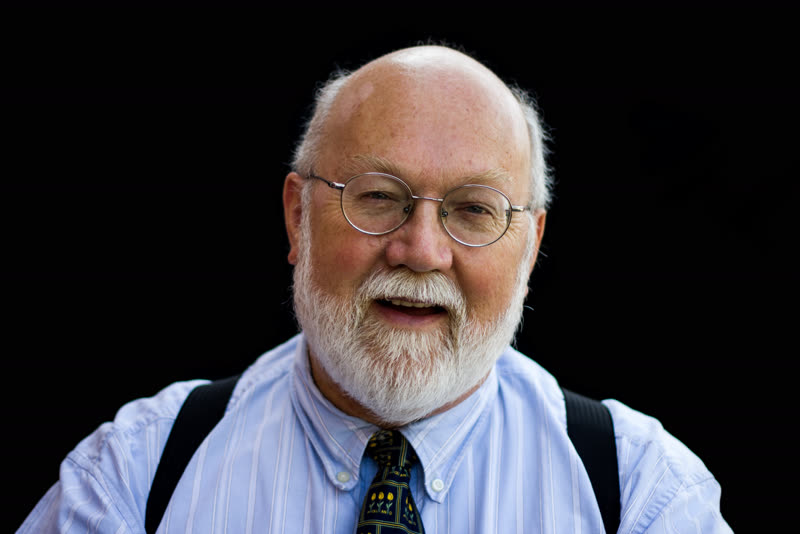 Tim Pasma Sunday AM Hebrews February 7, 2021
Main passage Hebrews 1:1-4
📖 Read the Scripture passage (ESV)
Our God is not one who hides himself. He does not play a sort of "Hide-and-Seek" with us, waiting for us somehow to find him. Rather, he is a God who speaks. But how does he do that? Listen as we explore Hebrews 1.1-4 and find out how God revealed himself in the past and how he has now spoken to us supremely and finally. Discover the best way of finding God.
Transcript
All right, let's take our Bibles, let's turn to Hebrews chapter 1. Last week we kind of got the bird's eye view of this book and now we want to dive in, see what God has to say to us in this marvelous book. You follow as I read verses 1 through 4. Long ago, at many times and in many ways, God spoke to our fathers by the prophets. But in these last days he has spoken to us by his Son, whom he appointed the heir of all things, through whom also he created the world.
He is the radiance of the glory of God and the exact imprint of his nature, and he upholds the universe by the word of his power. After making purification for sins, he sat down at the right hand of the Majesty on high, having become as much superior to angels as the name he has inherited is more excellent than theirs. Let's pray. Father, once more, we open your word to hear you speak.
These are your words. These are what you would have us to understand. Help us now as we seek to understand this, not just to know more, that we might be changed, we might serve you well, that we might endure, that we might be assured, and thus be useful to you. And we thank you in Jesus' name. Amen. My dad served in the 8th Army Air Force in World War II in England, and during that time, when he wanted to communicate with my mom, the only way he could do that was by letter.
When I was getting to know Becca, and we went our separate ways when school ended in the summer of 1975, she to Iowa and me to Indiana, I would write her almost every day. But we also had the use of the telephone, so we could hear each other's voices. But that was rare, because back in those days, there was a thing called long distance that would cost you a whole lot more.
And so even though we had that available, we rarely used it. A few decades ago, those extra charges were eliminated since cell phones had taken over and we could call anyone anywhere Soon new phones were developed and that included texting Another way of communicating was introduced Smartphones came along and now we have the ability to talk and to see a whole bunch of people all at one time. We can use Zoom or Skype or FaceTime or something along like that, apps like that.
And so we have a whole variety of ways by which we can communicate. We can write, we can text, we can conference call, we can FaceTime, and so on. It goes. But there's one form of communication that's better than any others, and that's face-to-face. Now, our writer, the one who penned this book, tells you something like that. God revealed himself to his people in a whole variety of ways in the age that has passed.
However, now he has spoken to you finally and supremely in his son. Now that's important for us to understand. It's important for you to understand. What Jesus has done in his life and his death and his resurrection settles all the questions about forgiveness, about how God intends to reconcile people to himself, about how he communicates what he expects from you. what Jesus has done in his life and death and resurrection says to you that you must endure, that there's no other way of living for or relating to God that will relieve the pressures that come when we follow Christ.
It's the only way. We must endure. So, once more, let's look at our text before we look deeply into it. Long ago, at many times and in many ways, God spoke to our fathers by the prophets, But in these last days he has spoken to us by his Son, whom he appointed the heir of all things, through whom also he created the world. He is the radiance of the glory of God and the exact imprint of his nature, and he upholds the universe by the word of his power.
After making purification for sins, he sat down at the right hand of the Majesty on high, having become as much superior to angels as the name he has inherited is more excellent than theirs. first of all you need to believe that God speaks by his son God speaks by his son one of the first truths about God you have to grasp is that he reveals himself it is in his nature to make himself known God is not the kind of deity who hides himself away in the darkness and you have to go searching for him What is he like? What does he demand of us? How do I understand life?
You don't have to twist yourself into all kinds of contortions and knots trying to discover this God. He's not one who hides himself in the darkness while you strive through all kinds of different means to find him. Now, when I was a kid, when I was a kid, we would end up our summer evenings almost every summer night by playing hide and seek. Our parents were great.
They let us stay out way past dark in the summertime. And that's when we'd play, when it was dark. We never played during the day. We always played after the sun went down. And we would go and look We'd look behind that, look under that, always trying to make sure that someone didn't make a run for the goal and get home free and all that sort of thing.
We had to go looking, and we had to look carefully. We'd peer out in the darkness. We'd look behind that bush. We'd get certain angles so we could get back there and still catch them and all that kind of stuff. But God does not play that game with us. He does not play hide-and-seek with us.
The entire Bible is the story of God revealing himself to us, who he is, what he expects of you, how you have to understand him, how you have to understand yourself, how you understand your world, how to understand everything, all of reality. God spoke. God revealed. the term used in scripture to reveal or the term revelation actually means to uncover and our God is the one who pulls aside the curtain and reveals himself we do not discover God he uncovers now according to our text God reveals himself different ways in different times Note the contrast.
First, there's this epic, this age called long ago. There's speech, revelation God spoke There an audience to the fathers There are messengers by the prophets But in this epic in this age called the last days these last days again there speech there revelation God speaks Who's the audience to us? Who's the messenger? His son. There's a difference between these two ages.
Different ways of revealing himself, of speaking to his people. But is one better than the other? Is one better than the other? Well, let's look at the previous revelation. He says in our text, it's from long ago. Long ago.
Now that doesn't mean way back in the distant past. When he uses that term, he's talking about the previous era before the new era, which Jesus inaugurated, which Jesus brought. It was to our ancestors in the faith, our fathers. This revelation happened at many times. It was piecemeal for millennia. All right?
God spoke, God revealed himself in the days of Abraham and over a thousand years in the days of Haggai. God spoke and he revealed himself in the days of the Exodus. and 400 years later in the days of Saul and David. He spoke to Jacob and centuries later is speaking to Elijah, Elisha and Isaiah. God spoke a bunch of times over a long period of time. He spoke in many ways.
He thunders from Mount Sinai, but he talks in a still small voice to Elijah. He spoke face to face with Moses, but addresses the people from the pillar of fire. He sent prophets to preach and the angel of the Lord to deliver particular messages to particular people. God even used a donkey one time to get his point across. Right? In various ways.
Over a long period of time, in many different ways. he used historical narratives hymns proverbs poetry parables love songs wisdom and apocalyptic literature all of these things were used by god to speak to our ancestors in the faith over a long period of time in all these many ways this is how he spoke and the whole old is prophetic. That is, it successfully communicated God's Word. It successfully communicated God's Word.
All those means and all that time, God did speak. He spoke to His people. But how has God spoken to us in these last days? You see, God isn't done speaking. He spoke again. But now He speaks to us in the last epoch of His redemptive work.
When he's talking about the last days, they're the days the prophets identified as the days in which God's saving promises are fulfilled. So one of the ways you could look at it is in days gone by, it's God speaking promises. But in these last days through his son, he speaks fulfillment. All right. It's one way of looking at it. These are the last days, the last epic of history.
In fact, in 1 Corinthians 10, verse 11, the Apostle Paul writes that we are the people on whom the end of the ages has come. We're in the last epoch. It appears that if this is the new era, it's probably better, right? But notice that he says that God has spoken by his son. This final revelation is not piecemeal or varied. It comes in one person, the Lord Jesus.
You can look to one person and see what he has said and see what he has done and know who God is, what God expects, and how to understand life. Certainly the Son is better than all other ways of God speaking to us. This is the best. This is better. But the question is, well, how can that be? Why is that better?
Why is it better? And he goes on to tell us because of who the son is and what the son has done. That's why it's better. That's why him speaking through the son is better. And so you have to believe that God speaks supremely and finally by his son. Now he very careful in how he outlines this for us He gives us a particular way of looking at the Son in order to show that the Son is the supreme and final revelation from God that he is the one that we ultimately have to look to.
First of all, he says, God speaks supremely and finally by Jesus because he is God's messianic Son. Verse 2, second part of verse 2. he says that he appointed his son the heir of all things. God appointed Jesus as the heir of all things. What is that all about? What is that all about? Well, if you look at Psalm 2, you'll get it.
So turn over to Psalm 2, the second psalm. The second psalm. And we're going to be looking at verses 7 through 9. God had promised to his Davidic king that he would inherit all things. So in Psalm 2, beginning of verse 7, here's what we read. I will tell of the decree.
The Lord said to me, you are my son, today I have begotten you. We're going to see that show up again. Ask of me, and I will make the nations your heritage and the ends of the earth your possession. You shall break them with a rod of iron and dash them in pieces like a potter's vessel. Now what's crazy about this is this is being said about a king in a little Middle Eastern nation.
Not the most powerful one by any means. Right? It's like saying to the king of Denmark, the whole world's yours. Right? And so he is saying to the Davidic king, I'm promising you the entire earth will no king, no king ever filled out the parameters of that no one ever had the whole world until Jesus and when you go to for example Acts chapter 13 around verse 33 you see the apostle Paul preaching in the Pisidian city of Antioch when he said this and we bring you the good news that what God promised to the fathers, this he has fulfilled to us, their children, by raising Jesus as also it is written in the second psalm You are my son today I have begotten you That son who is to get the possession of the entire earth who is appointed heir of all things, happens to be Jesus.
He is the one. He is the messianic one. By raising Jesus from the dead, God declared that the king who had possessed the entire earth had arrived and was now ruling. That's why you should see him as the one through whom God speaks supremely and finally. It goes on. God speaks supremely and finally in Jesus because he is God's divine son.
All right? Look at what else he says about him. Through whom also he created the world. He is the radiance of the glory of God and the exact imprint of his nature. and he upholds the universe by the word of his power. So in relation to the universe, Jesus created it all. He created it all.
The one who was put to death in Jerusalem and a cross a few decades earlier is now praised as the one who created the world. Now think about how much that would rattle your thinking. Wait a minute, this one who was crucified, who died shamefully, is the one who created everything? It's exactly what he's saying. He created everything. Jesus is the God who created the universe.
Not only that, in relation not just to the universe, but in relation to God, Jesus embodies and displays God's glory. Now the Bible tells us that as human beings we are made in the image of God. We reflect the character or the being of God in some fashion. But that's not what he's saying here. He goes way beyond saying that Jesus is in the image of God.
He says he is the radiance of God's glory. Not a mere reflection, but actually radiating God's glory. Okay? That's what he's saying. He's actually radiating God's glory. He is God.
This is his glory. He's the exact imprint of God's nature. And what's fascinating here, he not just saying he the exact imprint of what God is like it of his nature his essence God being the very substance or essence of God as a divine uncreated being is in Jesus He shares in the being the nature the essence of God wow now that's quite a statement isn't it this one who died is god wow now he turns again one more time to jesus relation to the universe he's told us about his relation to the universe what he created it his relation to god he's the radiance and and possesses the essence of god Now again, in relation to the universe, Jesus sustains everything.
Now this should dispel any questions we have about the divine nature of Jesus. Because it says that he upholds the universe by the word of his power. No creature could do that. Jesus is not merely human because he sustains the universe by his personal and powerful word. The created world depends on his will for its functioning and its perseverance. Is any human being capable of that?
Oh, sometimes I wish. You know, I wish I could go out to my car and place my hand on the hood and say, from now on, you will run without any problems ever again. And the power of my word would keep my car running. I had Furman, an Amish guy, out to my place to look at our chicken coop. Hey, we want to really fix this up. Instead of hiring Furman, you know what I'd rather do?
All decay must stop. Right? Boy, that would be so much better. But that's impossible for any human being. But this one, this Jesus, is the one, by his powerful word, by his will, keeps the universe running and functioning. Right?
Jesus is God, the divine son. That's why you should see him as the one through. God speaks supremely and finally. He's God. The last thing he tells us is God speaks supremely and finally in Jesus because he's God's ruling son. After making purification for sins, he sat down at the right hand of the majesty on high.
Jesus rules at this very moment because God exalted him to the right hand of his throne. Now listen, God is a spirit. He's not sitting on a literal throne, and off to his right, Jesus is sitting there. He's using language that's going to communicate something. And what is he trying to communicate to us? What he's trying to communicate is the fact that Jesus shares in the sovereign rule of his Father.
He, with the Father, rules. He is God. He is the ruling Son. Now, this, in fact, fulfills what David said in Psalm 110, verse 1. And by the way, you will see that the apostles use this all the time, speaking about Jesus. And this is going to be a passage that's going to keep popping up all the way through the book of Hebrews.
Psalm 110. I want you to turn there. Let's look at Psalm 110 together. Psalm 110, verse 1. all right again this is a great picture of exactly what he's talking about here god spoke this truth through david centuries ago but when you look at it it it's weird it doesn't quite make sense until jesus comes along and you go aha okay so here's what he says The Lord says to my Lord, sit at my right hand until I make your enemies your footstool.
Now consider this. The Lord, God, now you notice, you see the Lord there? It's in all capital letters, right? That's the way the translators have tried to communicate to you. This is God's personal name. This is Yahuwah, the God, the only true and living God, Yahuwah.
And the other Lord, the second Lord you see there, means a Lord, a King, a Master. So he says this is David the Lord God says to my Lord Now David the king writes that God says something to his Lord that is the Lord of the king someone of higher rank than the king himself The Lord God says to my Lord David who is your Lord You don have anybody above you You the king But no there somebody above David and he and David is saying the Lord God is saying to somebody to my superior, sit at my right hand until I make your enemies your footstool. Wow, that's kind of a mysterious passage.
Until Jesus comes. Look over at Acts chapter 2. Acts chapter 2. This is Peter at Pentecost. Peter is speaking here. By the way, once more, you see exactly what God is saying here happening throughout the New Testament.
Peter is essentially saying it's in Jesus that you understand all this stuff. This is God's final revelation. Acts chapter 2. Let's pick it up at verse 32. This Jesus, God raised up, and of that we all are witnesses. Being therefore exalted at the right hand of God and having received from the Father the promise of the Holy Spirit, she has poured out this that you yourselves are seeing and hearing.
For David did not ascend into the heavens, but he himself says, The Lord said to my Lord, sit at my right hand until I make your enemies your footstool. Let all the house of Israel therefore know for certain that God has made him both Lord and Christ, this Jesus, whom you crucified. there's the answer to the riddle. Jesus' resurrection from the dead and his exaltation to heaven.
That's who David was talking about. That's who David was talking about. But why did God exalt him? Why did God exalt him? Well, it says in our text, after making purification for sins, he sat down. After making purification for sins, he was exalted. he was exalted because he had performed the priestly function of atonement of atonement he actually accomplished the purification of sins for the people of God He actually accomplished that Now, by the way, right now, at the very beginning of the book, before you ever get way down the line into the book, he's made it clear what he thinks about Jesus.
He's already superior to anything else that's ever happened because this Jesus made purification. He's already telling you Jesus did it all. All right? He actually accomplished the purification of sins for the people of God. There's nothing more to do after that sacrifice. And so Jesus reigns with God because of the work he did for God. that's why you should see him as the one through whom God speaks finally and supremely so why should you listen to why should you think that Jesus is the final and supreme revelation from God because he's God's messianic son because he's God's divine son because he is God's ruling son.
All of those things say to you, you must listen. And that's what he concludes then in verse 4. Do you see, because of his title, Jesus is the supreme and final revelation from God. Verse 4, having become as much superior to angels as the name he has inherited is more excellent than theirs. What is this title? What is this name that he's inherited?
It's son. It's son. The son who fulfilled the covenant promises to David. The son who created the universe, sustains the universe, who's the very essence of God. The son who reigns now because of his glorious work of atonement. He has the title son.
He has the name son. And it involves all of those things, right? Messianic son, divine son, ruling son. Because of that title, he occupies a position that's superior to angels. Now the question why is he bringing up angels What is that all about And here what you need to understand Because the angels were instrumental in delivering the Mosaic Law It was the angels who delivered it.
So, you remember Stephen? Remember the story of Stephen? He's one of the first deacons. And Stephen kind of, you know, he preaches this really interesting sermon in which he tells the Sanhedrin, you guys are a bunch of nothing. nothing you're not you're not leaders you're just rebels you're just like your fathers who killed all the prophets and now you killed jesus and so they stoned him it's not what you would call it it's not a seeker sensitive sermon by any stretch of the imagination i mean he just got in their faces and said jesus is the one and when he comes near the end of his sermon he just makes this statement in Acts chapter 7 verses 52 and 53.
Which of the prophets did your fathers not persecute? There again, there's his carefully worded accusation. And they killed those who announced beforehand the coming of the righteous one, whom you have now betrayed and murdered, you who received the law as delivered by angels and did not keep it. The Apostle Paul, who used to be a rabbinic scholar, says in Galatians 3, verse 19, Why then the law?
It was added because of transgressions until the offspring should come to whom the promise had been made, and it was put in place through angels by an intermediary. Now, if you just skip ahead and look down at chapter 2, where the writers summon up everything he's saying in chapter 1, you see in chapter 2, verses 1 and 2, therefore we must pay much closer attention to what we've heard. We've heard from whom, by the way?
From the Son. Lest we drift away from it. For since the message declared by angels proved to be reliable, and every transgression or disobedience received a just retribution, how shall we escape if we neglect such a great salvation? What's his point? His point is, if the angels have delivered a message that brings with it justice and retribution, if that's what's happened, what do you think is going to happen to those who ignore the message? someone who's greater than them.
You see? So what's the point? Jesus occupies a place above the ones who delivered the law. That's why you should see him as the one through whom God speaks supremely and finally. So, the book of Hebrews sets the stage for us now. These first four verses sets the stage.
It's Jesus. He's central. Now look, God has not left you in the dark. He has spoken. He spoke in the past, and we have all those truths recorded for us right here in the Bible, don't we? We do have all those truths.
But all of that becomes clearer. And we know even more because God spoke supremely and finally by his son, Jesus. now look where do you look for answers where do you look for answers there's all kinds of competing voices out there telling you here's the answer here's the answer but you need divine answers to how you relate to God how you relate to yourself and how you relate to your world You need divine answers And if you want those kinds of answers you cannot ignore Jesus Because God speaks through him. He is the supreme and final revelation from God.
Ignore Jesus, and you remain in the dark. Seek him, and you'll find light. God spoke in many ways in the past but in these last days he has spoken to us through his son Father thank you for your word and for the hope that it gives us we thank you that you have not been a God who ever hid himself but you are a God who reveals himself who speaks and you have spoken in your Son.
And Father, if we want to know who you are and what you expect and how to understand the world, we must look to your Son. And so as we embark on this study, we pray that you would help us to do just that, to look to Jesus. Thank you that you speak to us in your Son. thank you for your mercy in sending him to die for us we thank you for Jesus in his name Amen
Also referenced in this sermon
Other passages mentioned, beyond the main text.