Of Deaths, Covenants, and Wills
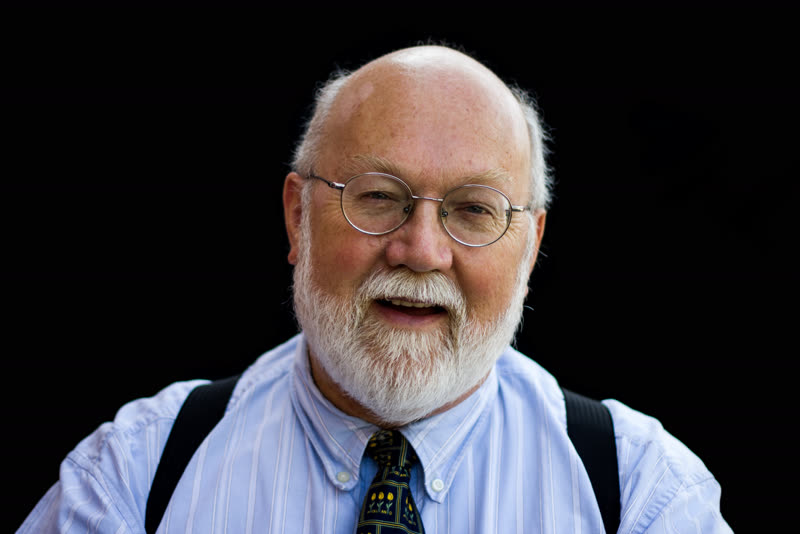 Tim Pasma Sunday AM Hebrews July 10, 2022
Main passage Hebrews 9:15-22
📖 Read the Scripture passage (ESV)
Hebrews 9.15-22 (ESV)
15 Therefore he is the mediator of a new covenant, so that those who are called may receive the promised eternal inheritance, since a death has occurred that redeems them from the transgressions committed under the first covenant. 16 For where a will is involved, the death of the one who made it must be established. 17 For a will takes effect only at death, since it is not in force as long as the one who made it is alive. 18 Therefore not even the first covenant was inaugurated without blood. 19 For when every commandment of the law had been declared by Moses to all the people, he took the blood of calves and goats, with water and scarlet wool and hyssop, and sprinkled both the book itself and all the people, 20 saying, “This is the blood of the covenant that God commanded for you.” 21 And in the same way he sprinkled with the blood both the tent and all the vessels used in worship. 22 Indeed, under the law almost everything is purified with blood, and without the shedding of blood there is no forgiveness of sins.
Transcript
Boy, after a song like that, it's hard to preach. Nevertheless, God calls us to hear His Word. So I ask you to turn to Hebrews chapter 9. You follow as I read the 9th chapter. I want us to get the whole context of what we're saying. Hebrews 9, beginning in verse 1.
Now even the first covenant had regulations for worship, and an earthly place of holiness. For a tent was prepared, the first section in which were the lampstand and the table and the bread of the presence. It is called the holy place. Behind the second curtain was the second section called the most holy place. Having the golden altar of incense and the ark of the covenant covered on all sides with gold, in which was a golden urn holding the manna and Aaron's staff that budded and the tablets of the covenant.
Above it were the cherubim of glory overshadowing the mercy seat. Of these things we cannot now speak in detail. These preparations having thus been made, the priests go regularly into the first section, performing their ritual duties, but into the second only the high priest goes, and he but once a year, and not without taking blood, which he offers for himself and for the unintentional sins of the people.
By this the Holy Spirit indicates that the way into the holy place is not yet opened as long as the first section is still standing, which is symbolic for the present age. According to this arrangement, gifts and sacrifices are offered that cannot perfect the conscience of the worshiper, but deal only with food and drink and various washings, regulations for the body imposed until the time of reformation. But when Christ appeared as a high priest of the good things that have come, then through the greater and more perfect tent, not made with hands, that is not of this creation, he entered once for all into the holy places, not by the means of the blood of goats and calves, but by the means of his own blood, thus securing an eternal redemption.
For if the blood of goats and bulls and the sprinkling of defiled persons with the ashes of a heifer sanctify for the purification of the flesh, how much more will the blood of Christ, who through the eternal spirit offered himself without blemish to God, purify our conscience from dead works to serve the living God. Therefore he is the mediator of a new covenant, so that those who are called may receive the promised eternal inheritance, since a death has occurred that redeems them from the transgressions committed under the first covenant. For where a will is involved, the death of the one who made it must be established.
For a will takes effect only at death, since it is not in force as long as the one who made it is alive. therefore not even the first covenant was inaugurated without blood for when every commandment of the law had been declared by Moses to the people he took the blood of calves and goats with water and scarlet wool and hyssop and sprinkled both the book itself and all the people saying this is the blood of the covenant that God commanded for you and in the same way he sprinkled with the blood both the tent and all the vessels used in worship indeed under this law almost everything is purified with blood and without the shedding of blood there is no forgiveness of sins thus it is necessary for the copies of the heavenly things to be purified with these rights but the heavenly things themselves with better sacrifices than these for Christ has entered not into holy places made with hands which are copies of the true things but into heaven itself now to appear in the presence of God on our behalf. Nor was it to offer himself repeatedly as the high priest enters the holy places every year with blood not his own. For then he would have had to suffer repeatedly since the foundation of the world.
But as it is he has appeared once for all at the end of the ages to put away sin by the sacrifice of himself. And just as it is appointed for man to die once, and after that comes judgment. So Christ, having been offered once to bear the sins of many, will appear a second time, not to deal with sin, but to save those who are eagerly waiting for him. Father, now open the text of your word to our hearts.
It is a living word, and we expect you, Lord, to work. so now we commit this time to you looking forward to the work that you will do in our minds as we understand something of the sacrifice of Jesus and we'll thank you in Jesus name, Amen just about every one of you at some point in his life has signed a contract what happens when you sign on the dotted line Well, it means that you've made an irrevocable promise to fulfill all the obligations that you've agreed to. So when you sign that piece of paper with the bank, you promise to pay the bank back that $125,000 that you've borrowed at $900 a month plus interest within a 30-year span. That's the promise you make.
You say, I'm going to fulfill those obligations. And then you and the loan officer take that piece of paper, go out to the back, take a pigeon out of a cage, cut its neck, and sprinkle it with blood. Right? No. None of you have experienced that. Of course, because your signature, in our culture today, your signature is good enough.
Your signature says, I promise to fulfill all the obligations that I've committed myself to. But when our writer penned this letter to his believing fellow Jews, contracts or covenants were guaranteed by death. They were guaranteed by death. An animal had to die And his blood had to be used in some way in order to make that agreement binding The sign that made it clear that the parties to the covenant were going to fulfill their particular obligations was death not a signature It was death.
So when God made a covenant with Abraham, animals were killed. when Jacob and Laban entered into a covenant animals died and when God made a covenant with Israel according to our text calves and goats died you see death is central to covenants to agreements even wills and we see that in our text this morning and we're going to look at verses 15 through 22 so follow as I read that again therefore he is the mediator of a new covenant so that those who are called may receive the promised eternal inheritance since a death has occurred that redeems them from the transgressions committed under the first covenant. For where a will is involved, the death of the one who made it must be established. For a will takes effect only at death, since it is not in force as long as the one who made it is alive.
Therefore not even the first covenant was inaugurated without blood. For when every commandment of the law had been declared by Moses to all the people, He took the blood of calves and goats with water and scarlet wool and hyssop and sprinkled both the book itself and all the people saying, This is the blood of the covenant that God commanded for you. And in the same way, he sprinkled with the blood both the tent and all the vessels used in worship.
Indeed, under the law, almost everything is purified with blood. And without the shedding of blood, there is no forgiveness of sins. now remember that our Hebrew writer is writing this to us is on a mission and that is to convince you that you must remain steadfast in your faith in your devotion in your loyalty to Jesus because we are tempted to abandon him and to drift away from him if we are not careful and that he then is our only hope. That's what we have to see as we read this book.
He's trying to convince us, don't drift away from Jesus. He is your only hope. Without him, there's no hope. And if you would persevere in that hope, then you have to know the central place that death plays in that hope so what indispensable truths do you need to know about deaths and wills and covenants well let's look at our text this morning the first thing he says to us in verse 15 is understand the necessity of death for new covenant promises understand the necessity of death for new covenant promises verse 15 therefore he is the mediator of a new covenant so that those who are called may receive the promised eternal inheritance since the death that's occurred that redeems them from transgressions committed under the first covenant because of what jesus did we now relate to him by this new covenant now god always relates to us by covenant as you read the bible you see that god always relates to humanity by covenant that is a covenant is an agreement that governs our relationship an agreement that governs our relationship we live with one every day it's called the united states constitution that is a covenant that document governs the way that we relate to the government it says you elect your representatives every two years, the president every four years, the senator every six years, and that's what you have to do.
We agreed to that. All right? It tells us the way the government relates to us. It says, we're going to impose laws on you, but that only can happen if both houses of Congress pass the bill and the president signs it into law, then it becomes your law. We also have a Bill of Rights that governs the way the government relates to us. It says it cannot dictate to you what religion you can belong to.
It does not dictate to that. It does not dictate to you the free exercise of your religion. That's all the way we're supposed to relate to one another. It tells us how the branches of the government relate to one another. It governs that relationship as well. Saying that the legislature is the one that can declare war, for example, and the president can only sign bills.
He cannot legislate. The Supreme Court has to determine what's constitutional. All these sorts of things. That covenant tells us how we relate to one another, how the government relates to us, how it relates to these branches. It governs that relationship. So God related to his people Israel by a covenant that was made at Sinai. this was to govern their relationship there he promised certain blessings for obedience and certain curses for disobedience this is going to this is going to govern our relationship you obey and you receive blessings from me you disobey you will be cursed by me now our relationship to God as we've seen so far as we've seen as we've gone through the book of Hebrews our relationship to God is no longer governed by that agreement.
We are now under what's called a new covenant. The old covenant said we could only approach God through priests who represented us, who had to go into particular sections of the tabernacle or the temple. They had to do particular things, while the high priest is the only one who could go to the Holy of Holies and there to make atonement for the people once a year.
And the people had to go through certain purification rites for certain things and there were certain sacrifices they had to make All those things were governed by that old covenant But we have a better covenant we learned already We have a better covenant with better promises And that's all because of what Jesus did. And thus we see, therefore, he is the mediator of a new covenant. Because Jesus offered his own blood rather than the blood of calves and goats.
Because he enters the true holy place. because he has purified our consciences, not just our bodies, and because he has obtained eternal redemption, because of all those things, he is the mediator of a new covenant. He's changed the whole thing. He now mediates a new covenant. The covenant that governs our relationship with God is now mediated by Jesus.
It is a new covenant that governs our relationship. Now the great benefit of that covenant, he says in verse 15, is that we receive an eternal inheritance under this new covenant. He says the ones called, or the ones that God chose, are to receive that benefit of eternal inheritance. He's talking about the call when he says those who have been called.
He's talking about those whom God calls, who he appeals to, he commands, he says, believe. but it goes beyond that it's a call that's effectual it's a call that accomplishes what it calls you to do the ones that he has called are the ones who hear the call and respond to it all right that's the feel okay theological term here okay as we talk to science school class maybe it's not the words of scripture but they're scriptural in nature we call this the effectual call. It's effective. The call that God goes out takes the people that he has chosen and changes them so that they respond in faith.
So he says those who are called receive this benefit. Now the old covenant mediated by Moses could not give us any kind of eternal inheritance. Remember what our writer said. The most it could do was to make one ceremonially clean in order to worship in order to serve God. They had to be ceremonially clean, but the old covenant never dealt with the depravity of the human heart.
So people could be ceremonially clean and grudgingly worship God. The new covenant, on the other hand, doesn't do that. It deals with our hearts and changes us. The old covenant didn't change anybody. The new covenant does. So the old covenant mediated by Moses could not give any kind of eternal inheritance.
But the new covenant promised that someday God would grant that eternal inheritance. So what's involved in that eternal inheritance? A changed heart, for one thing. It promised that God would write his law on our hearts so that we would now obey willingly and joyfully. We would be given a forgiven status. That is, he would choose to not remember our sins anymore.
He will not bring them up to use against us. That's the promise of the new covenant. We are promised a new relationship where God would be your God and dwell with you. And that is your eternal possession. That's your eternal inheritance. These would be yours always. you see under the old covenant you were forgiven but you had to repeat it and repeat it and repeat it because you wouldn't remain forgiven but with the new covenant for example your forgiveness is forever that status will never change you will always be forgiven we will always have the law of God on our hearts we will always have God that's our eternal inheritance our eternal possession that we have because of this new covenant, he says in verse 15.
But here's the deal. Something had to happen before you took possession of that eternal inheritance. A death had to occur. A death was necessary for you to gain those promises. That's what he says in verse 15, where he says, we receive the eternal promised inheritance since a death has occurred that redeems the call it was a death that must redeem those whom god had called must redeem them from their transgression transgression now notice what he says here it redeems them from the transgressions committed under the first covenant all of you would say to me i didn't commit any transgressions under the old covenant because I'm under the new one.
Well, here's what he's saying. Many were called to salvation during the time when the old covenant was in force. Many were called to salvation. Think of David, Daniel, Hezekiah, Elijah, Asaph. Think of all these people in the Old Testament that give us these wonderful songs of praise for what God has done for them. but the old covenant could never save them they were not saved by the old covenant they were saved by looking to God and in faith looking to his mercy and his grace and calling out to God to do something to save them you remember what David wrote in Psalm 32 Blessed is the one whose transgression is forgiven, whose sin is covered.
Blessed is the man against whom the Lord counts no iniquity, and in whose spirit there is no deceit. The Old Covenant couldn't do that. And he's praising God for doing that. God saved him. But how could God save them since as our writer plainly says the Old Covenant at best could only purify them or the Old Covenant could never I sorry the Old Covenant could never perfect them How is it then that they could be saved?
If the Old Covenant couldn't perfect them, how could God save them? There was nothing in that Old Covenant that would do it. well they were saved because Jesus redeemed them from their transgressions committed under that first covenant when he died you follow God said that he would save them but only on the basis of what Jesus was going to do look back at our scripture reading from this morning in Romans chapter 3 the apostle Paul talks about that in Romans chapter 3 in the last part of verse 25 and 26. This was to show, in other words, he put Jesus forward as a propitiation by his blood to be received by faith.
Okay? Jesus has offered the sacrifice. It turns away the wrath of God so that the wrath of God does not fall on you. That's propitiation. His wrath is satisfied and so he's not going to pour out his wrath on you. But then he says, this was to show God's righteousness because in his divine forbearance, he had passed over former sins.
He had passed over David's sins. He had passed over Hezekiah's sins. How could he do that? Because he sent Jesus as a propitiation. He paid for their sins. When he died, their sins were paid for. and God then because God passing over their sins it would look like where's your justice? where's your justice God?
David doesn't deserve to be forgiven ah but God says I am just and Jesus paid for his sins so that's why he goes on to say it was to show his righteousness at the present time so that he might be just and the justifier of the one who has faith in Jesus. You follow? That's what our writer is saying in Hebrews here. They were redeemed. That redemption goes back.
And they're redeemed from their transgressions. They were saved because Jesus redeemed them from the transgressions committed under the first covenant when he died. and so when Jesus died he paid for the sins committed under that old covenant by God's called ones but you see Jesus also has to redeem Jesus had to redeem people for the future as well he had to redeem you he had to redeem you from your sins as well the point is no matter where you are in history Jesus must die for you to enjoy the promises of the new covenant Jesus must die for you to enjoy those promises so I say to you today do you want the promises of the new covenant do you want your forgiveness do you want to be changed that's only possible because jesus died and the only thing you need to do is with a broken and contrite heart go to him and find that he will give you the promises of that new covenant where god will be your god where you will change right you will be forgiven you know we were talking as the elders met for prayer today one of the things that you know we get to talking and one of the things that came up was the fact that isn't it amazing that God can change I think Pastor Andrew said isn't it amazing that God can change our desires right God can change our desires the new covenant radically changes us and it does that because Jesus die and redeemed he had to redeem us in order for those covenant promises to apply he had to redeem us so understand the necessity of death for the new covenant understand the necessity of death for the new covenant but it doesn't stop there in verses 16 and 17, he says, understand the necessity of a death, of death for a will, for a will. Now you know how a will works, right?
Now you all know that Pastor Tim is incredibly rich, yet rich in books, right? You all know that. I'm rich in books. And I make no apologies for that? Great investment as far as I'm concerned. Best returns you get from any investment.
But I am rich in books. Suppose in my will I said, I, Tim Pasma, being of sound mind, bequeath all my books to Andrew Beebe. And then one Tuesday I walk into our offices and I walk in the door and I see him walking from my office to his office with an arm load full of books. And I'm watching this happen. I go, what? What are you doing, Andrew?
And he says, you said these were mine. And what's my reply going to be? No, not until I'm dead. Right? That's the way a will works. You don't get what the will promises until the person dies.
Isn't that the way it works? It's not in force until somebody dies. It's no good. the promises are good when you're alive so that promise to Andrew of all my books And I haven't written it down yet, okay, so don't get your hopes up Andrew, but anyway. The point is, it's no good until the person dies. And so that's what he says is going on with the New Covenant.
That's the way it is with the promises of the New Covenant. We do not get what it promises until the death of the maker is established. Jesus, the second person of the Trinity, God, made that covenant with his people and said, there's a covenant coming in which I promise these things. Forgiveness, the law in your hearts, change, right? The fact that I will be your God forever.
He's the one who also made that promise. and when he died we now can claim those promises in the will if you if you want to put it that way we now have those promises they're ours because the one who made it has died by the way the writer of the hebrews says nothing about this but i'm going to throw this in this is a freebie you don't have to put this down in your notes but you can if you want do you know that Jesus is not only the one who made the will and so he had to die for the will to come into force he's also the executor you ever think about that he's also the executor of the will that is he's the one who sees that the promises of the will are all fulfilled you know why because he's been raised from the dead so he not only made the will and died so we get its promises he's also the executor. That makes sure that we get him. Okay?
I think that's amazing. But be that as it may. The point is, Jesus, again, he's making the point. Jesus had to die in order for us to receive the promises, that promised eternal inheritance of the new covenant. Jesus had to die for us to get that. Again, necessity of death for us to get the promises.
And then the last thing he says is to understand the necessity of death for any covenant. And now he goes back. He looks back again and says, okay, if you don't get the point, let's look at that first covenant. Let's look at that old covenant. Having established the fact in verse 15 that Jesus' death brought the new covenant into force, he returns to that subject in verse 18.
That's why the therefore is there. I think he's referring back to the fact of the new covenant. And he's saying, he essentially says in verses 18 through 22, the fact that Jesus had to die so that you could receive the promised eternal inheritance should not surprise you. It should not surprise you. That shouldn't surprise you because even the first covenant came into force with blood, with death.
All right? death was necessary to inaugurate even that first covenant now we read the of the covenant ceremony this morning in exodus 24 that's what he's referring to that that story that we read in exodus 24 today now one difference is that our writer has moses sprinkling the book of the covenant rather than the altar and i can explain to you why he included the book but not the altar it may be that it was a common belief at his time but it doesn change anything Moses read the covenant to the people and as one of the parties to it they agreed to live under its conditions, under its promises. And then what did Moses do? He took the blood of the sacrificial animal in the bowls, remember? and then he sprinkled them and the book and according to exodus the altar he sprinkled them now the book represents god as the author of the covenant and the people then were brought under the covenant as they were sprinkled with the blood this brought them under the blessings and the curses of that covenant this then is called the blood of the covenant right but again a death had to occur before that covenant was ratified with blood.
And on that, as we read that, it appears that the defilement of the congregation was removed so that Israel could enter into a covenant relationship with God. You see again, that the covenant relationship requires what? it requires the death of a victim the blood represents that death the sprinkling then happens but not only that as he says to us now he says not only that but the objects used in worship were also sprinkled with blood notice after he talks about about the people he says and in the same way he sprinkled with the blood both the tent and all the vessels used in worship indeed under the law almost everything is purified with blood so the objects used in worship were also sprinkled with the blood of a sacrificial victim under that old covenant the very objects used in worship must be purified by blood so therefore what under that old covenant worship required death. Worship required the death of a victim.
And lastly, he says in verse 22, not only covenant purification and covenant worship, but covenant forgiveness required the shedding of blood. For without the shedding of blood, there is no forgiveness. To have any kind of forgiveness, blood had to be shed something had to die the death of the animal functioned as a substitute for the death of a human being you remember that always in these atonement sacrifices whether it's the one that the person offered or the one that the high priest offered on the day of atonement you will always notice the hands of the person on the head of the victim.
In a metaphorical way, in a symbolic way, transferring the sin of the person to the animal, and the animal then dies and takes the punishment that this person deserves. Alright? That's what's behind all that. And that showed really that showed the seriousness of sin And the great cost of forgiveness You know even back then they understood the great cost I mean again most of you don't have a flock.
There's only a few of you, okay? Look, so we go over. I go over to the parkers see my grandkids every once in a while you know buy some eggs off of clarence see my daughter and my son-in-law so we go over to the parkers every once in a while and over here you hear this noise and it's these goats right they have these goats over there and you go ho hum yeah goats are interesting i like watching them they're fun but consider this consider this do you can i tell you something the parkers love those goats I know they love those goats okay the day that one died and we thought the others were poisoned was just an absolute traumatic day for everyone okay they love those goats now can you imagine Lee having to say I need to I need to go and I need to go and make a sacrifice I have to make you know There were provisions for you know of a sin, you've got to make a sacrifice.
Can you imagine that whole family going over there and saying, which one of those goats are we going to take to the priest to slit his throat and put him on an altar? And to be there when it happens. Right? Listen. It costs. Do you think people back then cared about their animals like that?
And not only that, you took the best one. Now, think about that for a moment. Do you think the cost would register? Sure it would. Sure it would. But guess what?
Even at that great cost, it could never offer ultimate forgiveness. You had to keep doing that over and over and over again. You had to keep doing that. That God was putting in their minds forgiveness costs. Alright? Forgiveness costs. there's no ultimate forgiveness granted through those sacrifices because the high priest had to enter the holy of holies repeatedly year after year after year to do the same thing the covenant required death for forgiveness now of course all of this points to Jesus all of this points to Jesus we too have to be purified and forgiven by by death by blood and there must be blood to ratify this new covenant look over it first peter for a moment first peter chapter 1 verse 1 simeon peter a servant and apostle of jesus christ to those who have obtained a faith of equal standing oh that didn't seem right it's first peter that's second Peter.
Right away it didn't seem right. Peter, an apostle of Jesus Christ to those who are elect exiles of the dispersion in Pontus Galatia Cappadocia Asia and Bithynia according to now you the elect exiles according to the foreknowledge of God the Father, in the sanctification of the Spirit, for obedience to Jesus Christ, and for sprinkling with his blood. you see that blood was necessary to ratify the new covenant his death was necessary for us to have the promises it shouldn't surprise us death was necessary to establish that first covenant it is necessary for the new covenant and jesus is the one who did it now look we all know that death is inevitable you're going to die right death is inevitable but there's only one death that was necessary and you got to see that not our death but the death of Jesus was necessary he must die Jesus had to die for you to enjoy the blessings of that eternal inheritance promised in the new covenant Jesus must die for you to be purified Jesus must die for you to be forgiven. So you see, once more, Jesus is your only hope.
There is no other hope but Him. You've got to know that. And His death underlines, highlights, says unmistakably that His death was necessary for all these good things. And thus, you can't go anywhere else. He is your only hope. Father, thank You for Your Word.
Thank You for the Lord Jesus. Thank You for making it clear to us that His death was absolutely necessary if we would enjoy all the promises of that new covenant. first of all we want to thank you for that new covenant where you give us all these promises as an eternal inheritance and we want to thank you for Jesus who now is the mediator of that covenant because he is the one whose death was necessary for us to possess our inheritance thank you for Jesus and God when we are tempted to drift away when we are tempted to look somewhere else for change or for forgiveness when we're tempted to look somewhere else remind us that Jesus had to die for those things to be accomplished in us help us then to be steadfast in our faith for Your glory and our good. In Jesus' name, Amen.