No Reminders Here!
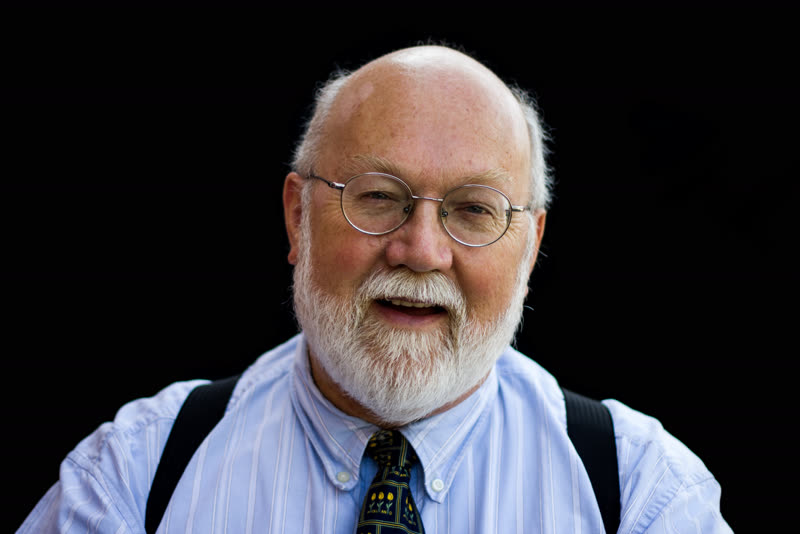 Tim Pasma Sunday AM Hebrews July 24, 2022
Main passage Hebrews 10:1-10
📖 Read the Scripture passage (ESV)
Hebrews 10:1-10 (ESV)
10 For since the law has but a shadow of the good things to come instead of the true form of these realities, it can never, by the same sacrifices that are continually offered every year, make perfect those who draw near. 2 Otherwise, would they not have ceased to be offered, since the worshipers, having once been cleansed, would no longer have any consciousness of sins? 3 But in these sacrifices there is a reminder of sins every year. 4 For it is impossible for the blood of bulls and goats to take away sins.
5 Consequently, when Christ came into the world, he said,
“Sacrifices and offerings you have not desired,
but a body have you prepared for me;
6
in burnt offerings and sin offerings
you have taken no pleasure.
7
Then I said, ‘Behold, I have come to do your will, O God,
as it is written of me in the scroll of the book.’”
8 When he said above, “You have neither desired nor taken pleasure in sacrifices and offerings and burnt offerings and sin offerings” (these are offered according to the law), 9 then he added, “Behold, I have come to do your will.” He does away with the first in order to establish the second. 10 And by that will we have been sanctified through the offering of the body of Jesus Christ once for all.
Transcript
Let's take our Bibles this morning and let's turn once again to Hebrews. We'll be looking today at Hebrews chapter 10 verses 1 through 10, but I'm going to begin reading where the context begins in verse 23, reading through 10 verse 18. You follow. Thus it was necessary for the copies of the heavenly things to be purified with those rites. but the heavenly things themselves with better sacrifices than these.
For Christ has entered not into holy places made with hands, which are copies of the true things, but into heaven itself, now to appear in the presence of God on our behalf. Nor was it to offer himself repeatedly as the high priest enters the holy places every year, with blood not his own. For then he would have had to suffer repeatedly since the foundation of the world.
But as it is, he has appeared once for all. at the end of the ages, to put away sin by the sacrifice of himself. And just as it is appointed for man to die once, and after that comes judgment, so Christ, having been offered once to bear the sins of many, will appear a second time, not to deal with sin, but to save those who are eagerly waiting for him. For since the law has but a shadow of the good things to come, instead of the true form of these realities, it can never, by the same sacrifices that are continually offered every year, make perfect those who draw near.
Otherwise, would they not have ceased to be offered, since the worshipers, having once been cleansed, would no longer have any consciousness of sins? But in these sacrifices there is a reminder of sins every year, for it is impossible for the blood of bulls and goats to take away sins. consequently when Christ came into the world he said sacrifices and offerings you have not desired but a body have you prepared for me in burnt offerings and sin offerings you have taken no pleasure then I said behold I have come to do your will oh God as it is written of me in the scroll of the book when he said above you have neither desired nor taken pleasure in sacrifices and offerings and burnt offerings and sin offerings these are offered according to the law then he added behold I have come to do your will he does away with the first in order to establish the second and by that will we have been sanctified through the offering of the body of Jesus Christ once for all and every priest stands daily at his service offering repeatedly the same sacrifices which can never take away sins but when Christ had offered for all time a single sacrifice for sins he sat down at the right hand of God waiting from that time until his enemy should be made a footstool for his feet for by a single offering he has perfected for all time those who are being sanctified and the Holy Spirit also bears witness to us for after saying this is the covenant that I will make with them after those days declares the Lord I will put my laws on their hearts and write them on their minds. Then he adds, I will remember their sins and their lawless deeds no more.
Where there is forgiveness of these, there is no longer any offering for sin. Let's pray. Father, we thank you for the glorious words that we have just read that teach us of what Jesus has accomplished on our behalf. We confess that we are too often numb to these truths, and yet, Lord as we are here today as we have sung as we have heard your word read we now look at these words and they tell us again of the marvelous grace towards us in our high priest Jesus would you please help us to see the wonder and amazement of it all as we hear your word this day that we might love you more and serve you better.
And we'll thank you in Jesus' name. Amen. I think I'm losing brain power. I'm finding myself forgetting things more and more, as many of you can testify. And I need reminders. I need reminders.
So I write things on my hand. So I remember to do them that day. I write things in my day timer. So I remember to do certain things on certain days. Before I go to bed, I stack things in front of the door. So I don't forget I have to take something somewhere when I get up in the morning.
I've even started keeping a little kind of a diary. so that when someone says, wasn't that a great time we had at Uncle Andy's last year? I can look it up and see what happened, rather than saying, when was that? What did we do? Now, on the other hand, some people hate reminders. Some people hate reminders. You refuse to go by that one restaurant because the girl you once loved broke your heart in that place.
The day November 11th rolls around, but you're not happy about that because that was the day your husband died, and that date just reminds you of that. You avoid the Veterans Memorial because you'd rather forget the year that you spent in Vietnam. Reminders sometimes are things you'd rather avoid. Well, in our text this morning, it speaks about reminders of sin, reminders of how bad we were in God's estimation, reminders of how we were alienated from God.
But our text also declares that we no longer need those awful reminders since Jesus has dealt with them in a decisive way Let look at our text Hebrews 10 1 For since the law has but a shadow of the good things to come instead of the true form of these realities, it can never, by the same sacrifices that are continually offered every year, make perfect those who draw near. Otherwise, would they not have ceased to be offered? Since the worshippers, having once been cleansed, would no longer have any consciousness of sins.
But in these sacrifices, there is a reminder of sins every year. For it is impossible for the blood of bulls and goats to take away sins. Consequently, when Christ came into the world, he said, Sacrifices and offerings you have not desired, but a body you have prepared for me. In burnt offerings and sin offerings you have taken no pleasure. Then I said, Behold, I have come to do your will, O God, as it is written of me in the scroll of the book.
When he said above, You have neither desired nor taken pleasure in sacrifices and offerings and burnt offerings and sin offerings. These are offered according to the law. Then he added, Behold, I have come to do your will. He does away with the first in order to establish the second. And by that will, we have been sanctified through the offering of the body of Jesus Christ once for all.
Now, I want you to remember again who heard this first. These readers were Hebrew or Jewish Christians. And they knew very well, they knew that Jesus was the Messiah and that he had suffered for them and their sins as a sacrifice for sin. But that belief was starting to cost them something. And so to relieve the pressure of persecution, they started going back to the old ways that God had ordained, the sacrifices of the Old Testament.
And this pastor tries to convince them that they cannot have Jesus and the old ways, that if they're putting their hope in the old sacrifices, they are headed down a dangerous path. in essence to do such things is to abandon Jesus and what he had accomplished far surpasses anything that the old sacrifice could ever do so to keep them from turning their backs on Jesus he compares the old covenant sacrifices with the new covenant sacrifice that Jesus offered now he does that he does exactly that in our text and he says two things in this text he says abandon what reminds verses 1 through 4 pursue what perfects verses 5 through 10. So he begins with abandon what reminds abandon what reminds look at what the sacrifices of the law could not do he tells us first of all what the sacrifices could not do they could not perfect the worshiper who would draw near to God. They could not because their shadows of the good things that haven't arrived, their shadows that point to the good things that have yet to arrive, that were yet to come.
Now, you all know what a silhouette is, don't you? You've all done that with your kids. You've done it in certain things. You hang up a curtain or some kind of a sheet and the person stands behind the sheet and the light shines on that person and his silhouette is cast up on that curtain. And the real person sits here and the shadow is cast on the sheet.
That's how these offerings worked. God had, before the foundation of the world, determined that his son was going to die for the sins of his people. That was already it. And so the real thing is casting its shadow on the curtain, on the sheet. Do you see that? And so the reality of those things that were yet to come were casting the shadow up on that sheet.
And you could make out the basic outlines of it. You could see some features of it, but you could never see all the details. And since it's only a shadow of the perfect redemption, it's only a shadow, it cannot perfect the worshiper. no matter how many times the priest offers the sacrifices, no matter how many times that happens, because it's only a shadow, it cannot perfect the worshiper.
If those sacrifices could perfect the worshipers, well then certainly the priests would stop offering them. If it could actually cleanse them, they would stop offering them. If they could have made an adequate payment, sins could be forgiven. People's hearts could be transformed. Ultimate forgiveness could be had. They would be purified, sanctified to stand in the presence of God.
If they had been effective in cleansing, then the worshiper would not have had a consciousness of sin. And he's saying here, the worshiper would not have sins, his conscience tormenting him constantly because of his sin. They would no longer wrestle with a condemning conscience. They would no longer think of themselves as impure or unable or even fearful to stand in the presence of God.
If those sacrifices could do that, then they would have no fear of going to God. Now look, God had a purpose in giving those shadows. He had a purpose in that. The law and its sacrifices are never identified as evil. They are never said to go contrary to the will of God. Yet there is a futility and a frustration in them like a merry that never stops Now why Because the futility and the frustration would awaken a longing for final all forgiveness To get people to look for that.
You see? To prepare them for that. So that they would long for that. To be finally free from sin's defilement. but he doesn't just tell us what the sacrifices could not do he also tells us what they could do what they can do and what can they do remind you of your sins they couldn't perfect you they could never take away your sins but one thing they certainly did and that was to constantly remind you of your sins.
Year after year on the Day of Atonement, as you stood waiting for the high priest to emerge from the tabernacle on the Day of Atonement, you knew that your sins had not been fully removed because you knew you'd be at the same place doing the same thing next year. You knew your sins hadn't been removed. From the time you were a five-year-old child witnessing that ceremony for the first time to the last day of atonement that you witnessed at 72, that ceremony testified to the continuing presence of sin.
You would be reminded, this is dealing with my sins of the past year. But guess what? It's going to have to be offered again next year. A constant reminder that sin was always present. A constant reminder that you did not stack up. to what God required. And one lesson stuck, he says in verse 4, it is impossible for the blood of bulls and goats to take away sins.
It's one lesson you learned. We sacrifice these animals year after year. The priest goes in and offers the blood of the bull for his sins and the sins of his house. He takes the blood of the goat and offers it for the sins of the people. But it's not going to take away our sins. Not finally.
Not ultimately. By the way, it was impossible because of the nature of our condition. And our writer has already told us why. Earlier on, he's already told us why the blood of bulls and goats would not suffice. Look at chapter 2. He's already told us this in chapter 2.
If you look there very quickly, verses 14 and 15. since therefore the children share in flesh and blood he himself likewise partook of the same things that through death he might destroy the one who has the power of death that is the devil and deliver all those who through fear of death were subject to lifelong slavery he's telling us that those enslaved by death could only be saved by a rescuer who shared their flesh and blood. It was necessary. We even touched on it in Sunday school today.
It was necessary for one who was both God and man to deliver us. The blood of bulls and goats will never do the job finally, but the blood of Jesus will. Now listen, the same problem plagues humanity today so that we still pursue inadequate solutions that end up doing nothing more than reminding us of our sins. You know what we do today? This is how we want to deal with sin.
We maximize ourselves. You're not a bad person. Not really. You're not bad. And so you've got to constantly boost your self-esteem. You continue to do bad things.
And you know it. and so you say you know what I'm really a great person I'm not a bad person and so over and over you repeat to yourself when things are looking bad and you're feeling that sense of shame you say to yourself no, really I'm a great person I'm not bad but you have to say that over and over and over again, what starts to dawn on you, if you've got to keep telling yourself that, maybe you're not as great as you think you are. Right? Or sometimes, as our culture is now going headlong down this path, we minimize our sin.
Okay? Okay, so I've got to minimize my sin, and what you choose to do is not bad, if, in fact, that helps you be the real, authentic person that you are. If doing that helps you become the authentic person that you really are, then we can't call it wrong. Then we can't call it wrong. And so what happens is you have to abolish all the definitions of right and wrong, because if it's you, it can't be wrong.
And so, a college swimmer, born as a male, now says he's a female. I've really been a woman trapped in this man's body. And I need to be my authentic self. And so, to be an authentic self, he needs to be a woman swimmer. And no one says, that's wrong. Why are you doing that?
You're not a female. Don't say that. Uh-uh. because authentically he wants to be an authentic person he says he's a female and so we abolish all of what we used to call right and wrong and you know what you can minimize sin all you want but people are constantly reminded of their sin There always this underlying sense of shame this underlying sense of something not right You know what else we've tried?
We've tried psychotherapy and drugs. You're not bad. You just need help. And so you go to the psychotherapist, and every visit you make to the psychotherapist reminds you that you're not the person you ought to be. Else, why would you keep going there? And drugs.
The drugs may take away the anxiety, but every time you swallow the pill, you're reminded something's not right. Inadequate solutions. do nothing but remind you of sin. Abandon reminders. There's no hope in them. But he goes on, doesn't he? In verses 5 through 10, he says, pursue what perfects.
Alright? Now, he begins in verse 5 by saying this. Excuse me. Brain. Consequently, when Christ came into the world, he said, consequently, when Christ came into the world, he said, sacrifices and offerings you have not desired, but a body have you prepared for me, and burnt offerings and sin offerings you have taken no pleasure. Then I said, behold, I have come to do your will, O God, as is written of me in the scroll of the book.
Now notice, consequently, he's saying consequently, Because the law and its sacrifices could not perfect anyone, Jesus makes an announcement when he comes to earth. Lord, you do not desire all these sacrifices, so I have come to do your will. You say, wait a minute. Wait a minute. Those are not the words of Jesus. Those are the words of David.
We read it earlier today in the sermon. Why in the world is he saying, And Jesus said, when David is the one who said it. Well, that's true. David has said it. But you have to always, always keep this in mind. You need to read the Old Testament with Jesus lenses on.
Because Jesus, as he says in Matthew 5, and as he said to the two disciples walking along the road of Emmaus, the whole Old Testament is about me. It's about me. Everything you find in the Old Testament all funnels to Jesus and finds its fulfillment in him. Every prophecy, every story, every psalm, poem, everything, it all finds fulfillment in Jesus. And he is David's greater son.
He is David's greater son. So he's going to fulfill everything. Think of it this way. Someone once explained to me many, many, many, many years ago. for example the psalms like this one tells of a king and the robe of that king is incredible and so everybody's looking for a king to fill that robe no one does and jesus comes along and he fills the robe and so jesus fulfills everything he fulfills in a greater way all that david was all that david did all that david said he is the greater fulfillment and he fulfills it in ways unexpected, but fulfills nevertheless.
And so our writer pastor takes the words of David and says, this is what Jesus announced to his father at the incarnation. This is what Jesus said when he came to earth. He has not come to offer the same sacrifices that the other priests offered. He has not come to do that. Instead, he comes to do the will of God. What is that will?
Well, we find out as our pastor tells us what the words mean in Jesus' mouth. He then goes on to explain it in the remaining verses. Doing the will of the Father was the purpose for Jesus taking on humanity. That's what he says in verses 8 and 9. when he said above you have neither desired nor taken pleasure in sacrifices and offerings and burnt offerings and sin offerings these are offered according to the law then he added behold I have come to do your will now Jesus says that the father neither desires nor takes pleasure in the various and sundry sacrifices the people had been offering for all those centuries so when When David said that, he asserted this.
I am not here to offer sacrifices. You're tired of that. I have come to do your will. And so when Jesus came at the incarnation, Jesus asserts, I am not here to offer the same sacrifices. I have come in order to do your will. Okay?
They're saying the same thing. But then notice, there's a parenthesis there. All of the things that they were offering were required by the law. That little parenthesis, you see that? Those sacrifices were not offered contrary to God's will. God is not saying, don't do what I command you to do anymore.
He's not saying that. They're not offered contrary to God's will. But the fact is, they were provisional, not permanent. They were mandated, but not effective. They couldn't get the job done. and they weren't interested in doing what God said anyway. And so Jesus has come not to offer those sacrifices, but what?
He's come to do the will of God, the will of the Father. Now it's interesting that our writer says, In verse 9, then he added, then he added, they're fulfilled. Fulfilling God's will comes after the era of the law and the sacrifices. After he says that, he says, then he added, he's trying to make a point here, that these came after the era of the law and its sacrifices. he comes to do God's will note in a body prepared for him that will has something to do with that body and he comes to do God's will just as is written in the scroll in the book what could he be referring to well I think here's one let's turn back Isaiah 53 I've come to do your will What is God's will that he do with his body?
Isaiah 53. Let's just take a little slice out of here. Verses 10 and 11. Yet it was the will of the Lord to crush him. He has put him to grief. When his soul makes an offering for guilt, he shall not see his offspring.
He shall prolong his days. The will of the Lord shall prosper in his hand. Out of the anguish of his soul he shall see and be satisfied. By his knowledge shall the righteous one, my servant, make many to be accounted righteous, and he shall bear their iniquities. It's part of the will of God that he bear their iniquities. So here is the will of the Father.
Instead of offering all the old, ineffective sacrifices, he willingly, gladly gave himself to God and surrendered himself to Him as the offering for sin. That was God's will. I've not come to give you all the old sacrifices. I have come to do your will, which is to offer myself as an offering for the sins of your people. I have come to give myself to them. and then he says in the last part of verse 9 note he does away with the first offering those in order to establish the second and ultimate final sacrifice jesus gave himself up in obedience to god offering himself to offering himself on behalf of his people and so there's no going back you see what he's saying there's no going back he's established this is the way don't go back to those god doesn't take god doesn't desire that his son has done his will there's no going back stop your slide into the old so because of the will of god he says in verse 10 that Jesus offered himself on your behalf and because Jesus obeyed that will, you have been sanctified.
You have been sanctified. The offering of Jesus to God in sacrifice sanctifies, sets apart a people for God. Now the basic idea of sanctification, the basic idea of holiness, okay? So let's talk about that word sanctified or holy. you can use that word were holy There a base idea and then other later uses were made of it The basic idea is separated from something and separated to something else Separation is at the heart of the idea of holiness Okay?
So God is holy in two ways. At the basic level, God is holy in the sense He is separated from creation to His own realm. He's totally separate. He's holy in that sense, not in a moral sense, but in the sense that he is totally separated from all that which is not him. OK, but he's also holy in the sense that he's separated from sin to himself. And that's where the that's where the idea of of that idea of holiness comes from.
Now, when he says you're sanctified, he is not talking about what we call around here progressive sanctification, which is to say he's not speaking here of the fact that Jesus sacrificed himself and therefore you are all perfect in what you ought to be. That's not what he's saying. He's not saying the progressive kind of sanctification where you're growing.
Here he speaks of positional sanctification. He speaks here of the holy position that Jesus gained by his death. You have been separated from all the rest of humanity and from sin to be all belonging to God. This is the position that you have. You're holy already. You're separated to God.
You're his people. All right? You separated two guys. Let me put it this way. When I was growing up, I grew up in a household. We didn't have a lot of money.
You know, we just didn't. And so my parents would do things that would, you know, stretch the budget. One of those things was, here are your Sunday clothes, right? The same shirt and the same pants. That's your Sunday clothes. you wear that on Sunday no other day right the idea was you don't want to mess those up we got to buy new clothes you've got to wear that that outfit on Sunday and Sunday alone exclusively set aside for Sunday use you could say that those clothes were holy but not because they were used on a holy day, that wasn't the idea.
That's not the idea I'm trying to communicate. And when my pants and my shirt were hung up in the closet, next to all the other two outfits I had for the rest of the week, when it was hanging up there with my other clothes, it wasn't that my Sunday clothes were morally superior to my other clothes. You know, in the closet, when the doors close, they're going, hey, we're better than you.
Blue jeans, we're better than you. You know, no, no, they are not morally superior. What's the point? The point is that they doubt those clothes had been set aside exclusively for Sunday, which meant I could not wear them on Tuesday when I went out and played baseball with my buddies. They were not meant for that, and I'd get in trouble if I used them for that.
They exclusively belong to that one day. And that's what he's trying to tell you here. You have been set aside. You are God's people. You belong to him, and he sees you as his. Now he says in order for you to achieve that status it a status now it a position Not talking about you know whether you got angry this week He not talking about that He's talking about your position.
Your position is you are part of the people of God. You're a holy people. You belong to God. So in order for you to achieve that status, Jesus had to die. and he only had to die once. He didn't have to die. He didn't have to die again.
He only had to die once for you to be part of the holy people of God. Now, when Israel was a nation, right? Now, listen carefully. As he looks back into the land of the shadows, you need to see this. Israel was a nation set apart from all the other nations. There was Israel and there were all the other nations.
Only this nation, this nation alone, had a special relationship with God. They had been separated from all the other nations to God. They were God's holy people. But you know what? If you didn't go through the proper rituals, if you didn't do something the way God told you to do it, If you did particular things, you could be cut off from the people of God.
If you didn't offer, if you didn't do this particular ritual, you could be cut off from the people of God. No longer part of that holy nation, if you will. You would be cut off, never to be counted as part of the people of God again. But here's what he's saying. And in order to do that, you had to keep doing these purification rituals in order to remain part of the people of God.
Or you would be cut off, never to be counted as part of them. But when Jesus died, that was enough. There's no more rituals for purity. There's nothing to do so that you would remain part of God's people. There's nothing for you to do to remain part of God's people. you've been set aside by the sacrifice of Jesus once for all you belong to him forever and God confers this status of holiness immediately on believers through the forgiveness of their sins so that they can now approach God's holy presence with confidence pursue what perfects abandon what reminds pursue what perfects now look there's no hope in reminders reminders don't give hope it's ridiculous to put your hope in the reminders anytime anytime you try to deal with sin apart from Jesus you're going to end up in the realm of reminders.
Anytime you try to deal with sin anytime you say God you'll accept me because I'm promising I'll do better. Guess what? you're in the realm of reminders now. You're looking to yourself not to Jesus. Look away from Jesus and you will always try something that will end up just reminding you of your sin not dealing with it. Now Christians you need to fix your eyes on Jesus Because if you don you just have reminders and there won be peace You'll be reminded of your sin.
You will forget that you are holy. Now look, I'm looking at you. I know most of your stories. I don't know all your stories. I don't know all of each of your stories. it's very easy to start looking back. It's very easy to look back.
And instead of fixing your eyes on Jesus and saying He took care of all of that, His sacrifice is sufficient. It dealt with every one of my sins. If you don't do that, you're just going to end up being reminded of your sin. now some of you here may have never believed in the Lord Jesus you've never come to him you've never said oh God I am a sinner I deserve nothing but your wrath because I am bad you've never done that you are living in the land of reminders and God offers you a way where you will not be tormented and that way is Jesus.
So no matter what you have done, you're forgiven. Yesterday, yesterday, yesterday, I taught a bunch of men. Some of them, some of them, I told you, Rapists, murderers, guys who have done bad things. And they're sitting there soaking up the word of God and loving it. You know why? Because the offering of Jesus dealt with the sins that they had committed. and they could sit there and rejoice in what they're learning because they know no matter what the crime, their guilt before God is gone.
Abandon what reminds, pursue what perfects. Father, thank you for your word. Thank you for a Savior who, by your mighty grace, has bought for us ultimate and final forgiveness. He has purchased for us a holy status where we can stand before you and know that because of what Jesus did, we will not be cut off. Oh God, the only thing we can say is thank you for Jesus and the offering that he made on our behalf.
Only once to make us your people. Thank you in Jesus' name. Amen.
Also referenced in this sermon
Other passages mentioned, beyond the main text.