Which Mountain?
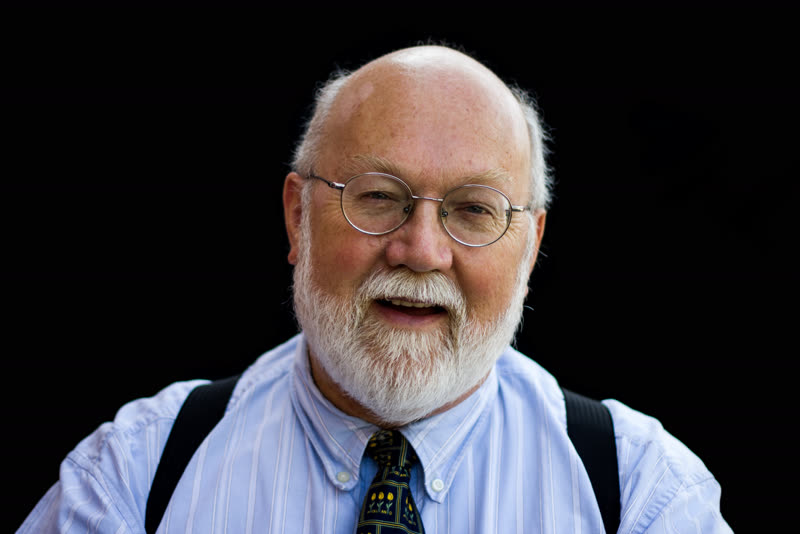 Tim Pasma Sunday AM Hebrews March 26, 2023
Main passage Hebrews 12:18-24
📖 Read the Scripture passage (ESV)
Hebrews 12.18-24 (ESV)
18 For you have not come to what may be touched, a blazing fire and darkness and gloom and a tempest 19 and the sound of a trumpet and a voice whose words made the hearers beg that no further messages be spoken to them. 20 For they could not endure the order that was given, “If even a beast touches the mountain, it shall be stoned.” 21 Indeed, so terrifying was the sight that Moses said, “I tremble with fear.” 22 But you have come to Mount Zion and to the city of the living God, the heavenly Jerusalem, and to innumerable angels in festal gathering, 23 and to the assembly of the firstborn who are enrolled in heaven, and to God, the judge of all, and to the spirits of the righteous made perfect, 24 and to Jesus, the mediator of a new covenant, and to the sprinkled blood that speaks a better word than the blood of Abel.
Transcript
Let's take our Bibles once more and return to the book of Hebrews. Hebrews chapter 12. Hebrews chapter 12. I'm going to be reading verses 18 through 29, which contains our text today of 18 through 24. Please follow as I read. for you have not come to what may be touched a blazing fire and darkness and gloom and a tempest and the sound of a trumpet and a voice whose words made the hearers beg that no further messages be spoken to them for they could not endure the order that was given if even a beast touches the mountain and it shall be stoned.
Indeed, so terrifying was the sight that Moses said, I tremble with fear. But you have come to Mount Zion and to the city of the living God, the heavenly Jerusalem, and to innumerable angels in festal gathering, and to the assembly of the firstborn who are enrolled in heaven, and to God, the judge of all, and to the spirits of the righteous made perfect, and to Jesus, the mediator of a new covenant, and to the sprinkled blood that speaks a better word than the blood of Abel. See that you do not refuse him who is speaking, for if they did not escape when they refused him, who warned them on earth, much less will we escape if we reject him who warns from heaven.
At that time his voice shook the earth, but now he has promised, yet once more I shall shake not only the earth but also the heavens. This phrase yet once more indicates the removal of things that are shaken. That is, things that have been made in order that the things that cannot be shaken may remain. Therefore, let us be grateful for receiving the kingdom that cannot be shaken and thus let us offer to God acceptable worship with reverence and awe for our God is a consuming fire.
Let's pray. Father we embark now on understanding the word of God and this is not just any book but your word living words words that can shape us words that can change us words that will change our attitudes and our thoughts and our behavior a word that offers conviction and hope that offers us help I pray that your word would have its effect on this people granted granted father for your glory and our good and we'll thank you in Jesus name amen two weekends ago Beck and I were in Portland Oregon the Pacific Northwest and when you're in that city, you can look out at different areas and see these gigantic mountains. They stand above all the rest.
And if you were going hiking up there, you might say, well, what mountain do I want to hike on? Well, what should I look for? You could go to Mount Jefferson, which is 10,402 feet above the ground, or Lassen Peak, which is 45 feet shorter. And you say, well, 45 feet isn't much. I'll just go to the one that's closest to the city of Portland. I'll fly to Portland and I'll, either one's fine with me.
What if I told you that Mount Jefferson was a volcano and Mount Lesson was just another mountain? And what if I told you that two days before you got there that Jefferson had erupted and there was lava coming down the sides and things were blowing up off the top of it and there was smoke all over the place and these huge flames shooting up in the air. Which one would you choose to climb?
Well, my guess is you'd probably take the safe one. Steer away from the volcano. In our text this morning, our author describes two mountains that we can come to, Mount Sinai and Mount Zion. One is terrifying, while the other is welcoming. Which one would you choose? Which one would you choose?
But we're not merely talking about mountains here. We're talking about different approaches to God. Now, these two mountains have much to do with endurance or perseverance. They still, our author is still moving us in the direction of understanding our perseverance, our endurance in the face of persecution, and the temptation to relieve the pressure by abandoning Jesus.
And remember that the hearers of this lengthy sermon have experienced imprisonment, ridicule, humiliation, and even the loss of their property because they follow Jesus. And so what does God tell you that will help you to endure in the midst of these kinds of circumstances? Well, we've seen it. He's told us like the heroes of old, you've got to bank on the promises of God.
You've got to live through the trial with the promises of God. You bank on those promises. And like Jesus, he says, you must believe God's promises. And he also says you've got to gain an encouraging perspective in the midst of your trials. that in your trials, God is treating you as a son, and that he's using even persecution to move you closer, to move you towards holiness and righteousness and peace.
He's told us that endurance is a team effort, that we're in this together and we strengthen one another for the battle. He told us as we saw a couple of weeks ago that it requires holiness and peace and vigilance And now we come to verses 18 through 24 Let read them again For you have now come to what may be touched, a blazing fire and darkness and gloom, and a tempest and the sound of a trumpet and a voice whose words may the hearers beg that no further message is to be spoken to them. For they could not endure the order that was given.
If even a beast touches the mountain, it shall be stoned. Indeed, so terrifying was the sight that Moses said, I tremble with fear. But you have come to Mount Zion and to the city of the living God, the heavenly Jerusalem, and to innumerable angels and festal gathering, and to the assembly of the firstborn who are enrolled in heaven, and to God, the judge of all, and to the spirits of the righteous made perfect and to Jesus, the mediator of a new covenant and to the sprinkled blood that speaks a better word than the blood of Abel.
Here he still speaks to us of perseverance, of endurance in the midst of trials and persecution. He says for, for. He says for, that is, in the light of all I've said about persevering because of the fact that you must pursue peace and holiness and rebuff those influences that would lure you away from Jesus, our pastor writer says, you must see endurance in light of these two mountains.
These will determine how you endure. He says, you've not come to Mount Sinai. Now you say, well, it doesn't say Mount Sinai. It doesn't identify it. No, but the description he gives is a description that we read in Ezekiel, I'm sorry, Exodus 19. When they came to Mount Sinai, he describes Mount Sinai here.
This is the mount where God establishes covenant with the people of Israel. He's saying, you haven't come to this covenant. You haven't come to this one. He's just summarizing in these verses. He's just summarizing everything he has said to us in the rest of the book of Hebrews. This is a summary, if you will.
Jesus is superior to the old covenant and he's established the new covenant well what was mount sinai like when he established that covenant with israel well you could touch it you say wait a minute it just said a little bit ago you couldn't touch it well you could touch it in the sense of it was an earthly mountain it was part of the created order that will pass away you see in that sense it could be touched now remember what he told us in chapter nine remember he said things like this not even the first covenant now even the first covenant has regulations for worship and an earthly place of holiness but when christ appeared as a high priest of the good things that have come then through the greater and more perfect tent not made with hands that is not of this creation right thus it was necessary for the copies of the heavenly things to be purified with these rights but the heavenly things themselves with better sacrifices and these for Christ has entered not into holy places made with hands, which are copies of the true things, but into heaven itself now to appear in the presence of God on our behalf. You remember all the way he emphasized that the tabernacle was earthly and would pass away. Same with Mount Sinai.
It's something that's part of the created order. It's going to pass away. He says you have not come to the mount that will pass away. Nevertheless, as God descended in all his holiness, this mountain proved to be dreadful in sight and in sound. Blazing fire. God descended on this mountain with blazing fire.
Fire, like fire erupting from a volcano. As he descended on that mountain, there was darkness, gloom, and tempest. Darkness and gloom as smoke surrounded this mountain. and as a thick cloud surrounded that mountain. Not to mention, he said something about a tempest. There must have been some wind blowing or something was happening that was just frightful.
The people were stunned by the sound of a trumpet that kept getting louder and louder and louder. The people were also given a horrifying message. Don't touch that mountain or you will die. And even if an animal touches that mountain, he must die. That's a horrifying message. And the whole site was disturbing.
It produced this appalling fear on their part. The people were so frightened by the sight and the sound of it all that Moses writes in Exodus 20. Now when all the people saw the thunder and the flashes of lightning and the sound of the trumpet and the mountain smoking, The people were afraid and trembled and they stood far off and said to Moses, you speak to us and we will listen.
But do not let God speak to us lest we die. They were so terrified. They were so frightened that they were saying, if God speaks to us, we're going to die. You talk to us. You tell us what he says. Moses himself, it says in our text, found himself trembling, which is interesting because this is the one that God spoke to face to face. and yet at this site he was horrified in short coming to this mountain was an absolutely terrifying experience it would be like it would be like standing at the foot of a volcano as a tornado passed over you while you're fleeing someone who's threatened to kill you can you imagine that Would you be calm in that kind of a situation?
I don't think so. This is where they found themselves. As they stood at the foot of that mountain. The glory of the Lord consecrated that mountain with His dangerous holiness This was a holiness so dreadful so dreadful and terrifying that it made approaching God impossible. That's what that mountain was like. But isn't that how our pastors described the Old Covenant all the way through the book?
Under the Old Covenant, God was unapproachable, cut off from the people. you approach God through priests and high priests and rituals and sacrifice, except that only the high priest could really come into his presence, and he could only do it once a year. There are barriers to approaching God. And our writer says, you've not come to this mountain. You've not come to that mountain.
That's not the mountain you've come to. Now remember, some of his congregation, in order to relieve the pressure of persecution, were heading back to that mountain. That's part of what he's saying here. Remember, some, in order to relieve the pressure of temptation, of being followers of Jesus, said, well, we'll just go back to the legal religion of Judaism.
At least we'll stay out of trouble that way. But essentially he's saying, oh yeah, you can go that way, but this is the mountain you're going to come to then. They may want to reduce the pressure of persecution, but in so doing they return to this terrifying mountain. Do you want to abandon this gracious Savior for the terror of that old covenant? No, he says.
Dear people, when it comes to living for Jesus, for enduring persecution, you have not come to that mountain. When it comes to the strength that you need to endure in the midst of difficulty and persecution, you have not gone to that mountain. When it comes to persecution, you have a high priest who sympathizes with you. Right? He's walked in your shoes.
He sympathizes with you. And he's the one who represents you to God. When it comes to endurance, you have the promises of God, not the threats. You have the promises of God. When it comes to hardship, you have the fatherly love of God. That's what you have.
You haven't come to this mountain. You've not come to that mountain. When it comes to living for Jesus, you've not come to this mountain. he says instead you have come to mount zion verse 22 but you have come to mount zion and to the city of the living god the heavenly jerusalem and to innumerable angels in festal gathering into the assembly of the firstborn who are enrolled in heaven and to god the judge of all and to the spirits of the righteous made perfect and to jesus the mediator of a new covenant and to the sprinkled blood that speaks a better word than the blood of Abel.
Now what is Mount Zion? What is Mount Zion? You see that scene all the way through the Old Testament, in the Psalms and the Prophets, even in the historical narratives. Mount Zion, well, let's put it this way. The seven years into his reign over Israel, David conquered a Jebusite city called Jerusalem. It belonged to the Jebusites.
He conquered it. He made the capital. capital. Zion was one of the hills on which Jerusalem rested, and soon Jerusalem was also known as Zion or Mount Zion. Solomon built his temple specifically on that particular hill, on Mount Zion. Thus it was identified as the dwelling place of God on earth. On Mount Zion is where he was.
It was the city chosen by God above all the other tribes by which he would put in which he would put his name it was the meeting place between god and man and it became the center of all their religious affection and so you read things like this in psalm 48 great is the lord and greatly to be praised in the city of our god his holy mountain beautiful in elevation is the joy of all the earth mount zion in the far north the city of the great king within her citadels God has made himself known as a fortress let Mount Zion be glad let the daughters of Judah rejoice because of your judgments walk about Zion go around her, number her towers consider well her ramparts go through her citadels that you may tell the next generation that this is God our God forever and ever he will guide us forever this was Zion it was the city of the living God now where have you come? you've come to Zion the city of the living God which he identifies now as the heavenly Jerusalem this now is the heavenly Jerusalem Mount Zion is no longer in a place in the modern day state of Israel even though there is still a Mount Zion there that's not where Zion is any longer it's a heavenly city a heavenly Jerusalem it's the city that will one day descend to earth we heard it already this morning in our New Testament reading I saw a new heaven and a new earth for the first heaven and the first earth had passed away and the sea was no more and I saw the holy city, new Jerusalem coming down out of heaven from God prepared as a bride adorned for her husband Mount Zion has not come down yet is in a spiritual realm but we have already have access to it we have full citizenship in it it is accessible to us it was once the meeting place between God and man for the old covenant people it is now the meeting place for God and man for the new covenant people of God and our writer has already assured us since we have a great high priest over the house of God we can draw near with a true heart in full assurance of faith we have access to this heavenly Zion he says you come to innumerable angels in festal gathering what an incredible picture that is I mean I got a particular picture in my mind when I read that Now, the old covenant, well, look back at chapter 2. Real quick, chapter 2, verse 1. Remember, it's been a long time ago, Pastor Andrew asked me this morning, hey do you remember how you described how Jesus is described in chapter 1 and I said no and I thought well just call everybody else they remember all my sermons that's right that is the right response to that alright but let's look just as a reminder Hebrews 2 therefore we must pay much closer attention to what we've heard lest we drift away from it For since the message declared by angels proved to be reliable, and every transgression or disobedience received a just restribution, how shall we escape if we neglect such a great salvation?
You remember that old covenant message was delivered by angels in all its terror and dread. Angels were there in all that fire and smoke and dread and terror. Angels were there. but now you see them at a heavenly festival you don't see them as they're described in Deuteronomy where they came with that old covenant you see them instead in festival gathering you see angels not pointing you see angels not gathered to punish but rather to party right they're not pointing to judgment they're pointing to celebration now that's the mountain you've come to the place where the angels are celebrating okay you've come to the assembly of the firstborn enrolled in heaven now what's interesting about this is this is an assembly of firstborn you say wait a minute firstborn that's one person that's one person who who's supposed to receive all the blessing in the inheritance.
But you've got a whole bunch of firstborn. How does that work? Simply this. Jesus is the firstborn. Par excellence. He is the firstborn.
Not in terms of firstborn, as we discussed in Sunday school this morning. Not as firstborn of creation in the sense of he's created first. No, not at all. But firstborn in the sense of favor, of the one who will inherit all the blessing. And all who have trusted in Jesus are in union with Him and thus become the firstborn. All the people of Christ are the firstborn in light of that union.
And our birthright, here's the point, it's an assembly of people in which our birthright will never be bartered away as Esau did. Our birthright is guaranteed. Our inheritance is guaranteed. We are the firstborn. and we are enrolled in heaven. Our names are enrolled in the Lamb's book of life. And so he envisions here all the saints from years ago who are now in heaven and us today, all in this great assembly of people of the firstborn who have had their names enrolled in the books of heaven.
We are part of that group. The church at peace and glory, the church militant now on the earth, we are all part of that one assembly. We have come to that assembly. We are part of all those who will inherit glory. He says, you've come to God, the judge of all. Now here he talks about God as the judge.
Yet on this mountain, this judge does not strike terror and fear. I pondered this. Why does he say God is the judge of all? Here in the context of this mountain. The meeting place between God and us. The place of celebration.
The mountain where the heirs of God's riches rejoice in heaven and on earth. Why does he point out that he's the judge of all? Here's what I think. We've come to the God who vindicates and rewards us. We've come to the God who vindicates and rewards us. This is the judge. remember chapter 6 remember this is the judge who is not unjust so as to overlook your work and the love that you have shown for his name in serving the saints this is the judge who looks at you and says i see your service and i've noted it i've noted all the things you've done in serving the saints because you're loving my name by that and i am not going to overlook that i will never overlook any small thing that you have done.
That's the judge. It's the judge that will vindicate us before the world on the day of judgment. He will say to the world, these have always been my people. These are my people. All of you who called them bigots, all of you who called them haters, all of you who called them narrow-minded and intolerant, guess what? They're my people.
That's the God that we have come to. This is the God whose judgment will never be against us, but always for us. You've come to the spirit of the righteous, made perfect. He's referring here now to the Old Testament saints that we've been looking at in chapter 11. All those who've been declared righteous because of their faith. On this mountain you find those Old Testament saints who've gone before us.
Their spirits are in heaven. The resurrection hasn't happened yet. So their spirits are in heaven. They've been declared righteous by their faith, and now they're perfected. We saw earlier, they're perfected along with us when Jesus came and did the work that he did on the cross. We all reached perfection.
Remember, he made perfect those who are being perfected. Not only do we see them in the record of the Old Testament, but God reveals that they're in heaven, waiting for you. This great cloud of witnesses that we look at, they're alive. You ever thought that? You ever thought that thought? They're alive.
They're in heaven. And they're waiting for you. You've come to that mountain. You've come to Jesus, the mediator of a new covenant. we've come to Jesus who's brought into force the new covenant hasn't this been the burden of the entire book he's bringing us to this place where he's summing it up by talking about this great mountain that we've come to and that part of that mountain is that new covenant brought into force by Jesus haven't we been told that we have a high priest who has passed through the heavens Haven't we been told that we can with confidence draw near to the throne of grace because of that covenant?
Haven't we been told that we can draw near to God because of that new covenant? A covenant that does not require rituals and sacrifice and guards the presence of God. Instead, we've come to a covenant that opens the way to God. God's presence is no longer barred to us. His person is no longer guarded. We can run into the throne room of God because of this covenant.
You've come, he says, to the sprinkled blood of Jesus. Just as Moses sprinkled the blood to bring that first covenant into force, so Jesus in the same way sprinkled his blood and brought a new covenant into force a covenant is always brought into force by blood and Jesus blood sprinkled blood is that which has done it It represents the infinitely costly sacrifice of Jesus His death secured the better promises of the new covenant. His death secured our forgiveness.
His death secured the transformation of our hearts and changed us. His death secured access to God. We've come to this mountain where this new covenant is. We have access to God. We've been changed. We've been forgiven.
And it speaks a better word than the blood of Abel. What's that all about? Abel's blood was spilled on the ground through the violence of his brother Cain. And it cried out to God. It cried out to God protesting the murder and appealing for justice. His blood cried out that his murder was unjust and there should be justice.
But the blood of Jesus spilled with the violence of his opponents declares to God that his death, his blood, meets all the demands of justice. And declares a message of forgiveness and cleansing and peace. It's better than the blood of Abel. It's better than the blood of Abel. So he says, you've come to this mountain. This is the mountain you've come to.
If you come to this mountain, you will find the strength to endure. If you realize that this is the mountain you've come to, you realize that you will have the strength to endure. It communicates the power to endure. Here you find the meeting place with God. The God who judges those who stand against you and rewards you for your faithfulness. Here you will find celebration and joy Here you find the firstborn enrolled in the books of heaven Those who along with you have fought the battle And now are at peace.
Here you find those faithful ones who believe the promises of God, revealing that those who believe His promises in the midst of trial will have the strength to endure. Here you find Jesus, the new covenant and the sprinkling of His blood, guaranteeing your welcome from God. You can only persevere when you have hope. And this mountain gives you hope. There's nothing but hope on this mountain.
Why would you trade that for anything else? So he says, you've come to Mount Zion. But this is more than a picture. It's more than a metaphor. It's more than a symbol. You have come to the heavenly Jerusalem.
You are on that mountain. and here on that mountain the atmosphere is grace it's not the acrid smell of smoke and fire here you feel welcome joy freedom and communion with god some of you here have never trusted Jesus. Listen, I want to tell you something. When you come to Jesus by faith, you come to this mountain. This is what God holds out to you. When you say, I am a sinner, I have no claim on you, God.
None. I don't have any. I'm a sinner who deserves your punishment. But I know that Jesus has taken that punishment and His righteousness can be given to me so that I right with you then you come to the place where there freedom and joy there grace access to God Why would you turn away from that Why would you turn away from that So he says you have come to Mount Zion, to the city of the living God.
Father, how we thank you for mountain where the atmosphere is bright and lovely. Where it's grace. We can breathe deeply of that. Father, help us to see this is not merely a metaphor. This is what we truly have through Jesus. Father, help us.
Help us to realize that we are planted on that mountain when hard times come. When we are marginalized, when we may be persecuted, help us to remember the mountain upon which we stand. That we might have the strength through grace to follow Jesus. Father, remind us that this is our dwelling place now. That in every day all of these things are true of us.
Thank you for your grace so magnificently portrayed to us this morning. God, I pray that you would help us to live on this mountain. We thank you then in Jesus' name. Amen.