The Ultimate Test
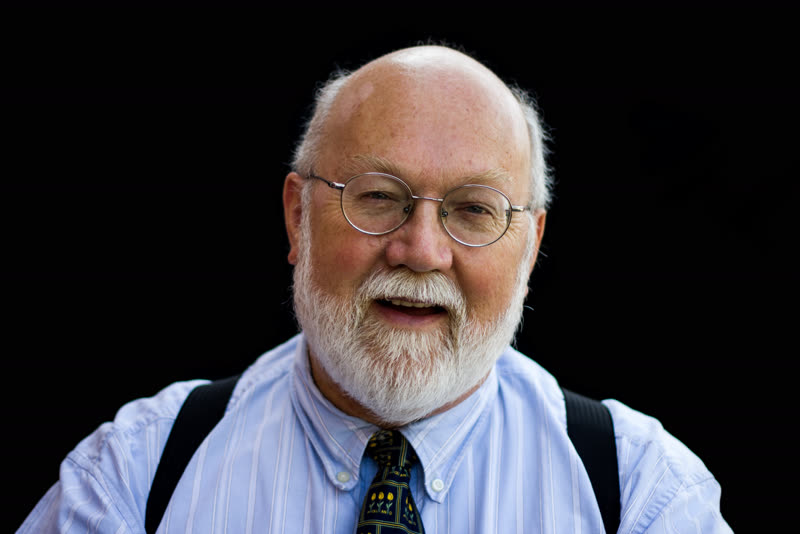 Tim Pasma Sunday AM June 9, 2024
Main passage Genesis 22:1-19
📖 Read the Scripture passage (ESV)
Genesis 22:1-19 (ESV)
22 After these things God tested Abraham and said to him, “Abraham!” And he said, “Here I am.” 2 He said, “Take your son, your only son Isaac, whom you love, and go to the land of Moriah, and offer him there as a burnt offering on one of the mountains of which I shall tell you.” 3 So Abraham rose early in the morning, saddled his donkey, and took two of his young men with him, and his son Isaac. And he cut the wood for the burnt offering and arose and went to the place of which God had told him. 4 On the third day Abraham lifted up his eyes and saw the place from afar. 5 Then Abraham said to his young men, “Stay here with the donkey; I and the boy will go over there and worship and come again to you.” 6 And Abraham took the wood of the burnt offering and laid it on Isaac his son. And he took in his hand the fire and the knife. So they went both of them together. 7 And Isaac said to his father Abraham, “My father!” And he said, “Here I am, my son.” He said, “Behold, the fire and the wood, but where is the lamb for a burnt offering?” 8 Abraham said, “God will provide for himself the lamb for a burnt offering, my son.” So they went both of them together.
9 When they came to the place of which God had told him, Abraham built the altar there and laid the wood in order and bound Isaac his son and laid him on the altar, on top of the wood. 10 Then Abraham reached out his hand and took the knife to slaughter his son. 11 But the angel of the Lord called to him from heaven and said, “Abraham, Abraham!” And he said, “Here I am.” 12 He said, “Do not lay your hand on the boy or do anything to him, for now I know that you fear God, seeing you have not withheld your son, your only son, from me.” 13 And Abraham lifted up his eyes and looked, and behold, behind him was a ram, caught in a thicket by his horns. And Abraham went and took the ram and offered it up as a burnt offering instead of his son. 14 So Abraham called the name of that place, “The Lord will provide”; as it is said to this day, “On the mount of the Lord it shall be provided.”
15 And the angel of the Lord called to Abraham a second time from heaven 16 and said, “By myself I have sworn, declares the Lord, because you have done this and have not withheld your son, your only son, 17 I will surely bless you, and I will surely multiply your offspring as the stars of heaven and as the sand that is on the seashore. And your offspring shall possess the gate of his enemies, 18 and in your offspring shall all the nations of the earth be blessed, because you have obeyed my voice.” 19 So Abraham returned to his young men, and they arose and went together to Beersheba. And Abraham lived at Beersheba.
Transcript
I've determined when I have the pulpit to preach Old Testament stories, and so I'm going to ask you this morning to turn to the story of Abraham and Isaac in Genesis chapter 22. Before we look into this text, let's pray. God of heaven, we are here now to worship by hearing you speak to us. Help us, Lord, to take this seriously. This is your voice we hear.
Help us so that we can become faithful disciples of Jesus, that we can grow in our faith, that we can be what you would have us to be. So now we ask that you would open the text of Scripture to us. We are entirely dependent on you. You must teach us this or we will lose the lesson. So we ask for your help now. In Jesus' name, amen.
Amen. In the spring of 1976, I sat in a small college classroom with six other students. We were waiting for our philosophy professor to show up with the exam. It was the final exam for our class in the history of philosophy. And at last, Professor Jim Greer strode into the room, and after a few words of instruction passed out the exam, had two questions on it, two essay questions.
And I remember the seven of us sitting there for over two hours writing the answers to those questions. And you know what? That was the ultimate test for me, and it felt like an eternity. as we just sat there in that stifling little room for two hours answering two questions on a final exam. And you know, I have to say though, that eternity is nothing compared to the eternity that Abraham must have felt as he walked up the Mount of Moriah to put his son on an altar.
That, without a doubt, was the ultimate test. Take your Bibles and let's look at that in Genesis chapter 22. After these things, God tested Abraham and said to him, Abraham, and he said, here I am. He said, take your son, your only son, Isaac, whom you love, and go to the land of Moriah and offer him there as a burnt offering on one of the mountains of which I shall tell you.
So Abraham rose early in the morning, saddled his donkey, and took two of his young men with him and his son Isaac. And he cut the wood for the burnt offering and arose and went to the place of which God had told him. On the third day, Abraham lifted up his eyes and saw the place from afar. Then Abraham said to his young men, Stay here with the donkey.
I and the boy will go over there and worship and come again to you. And Abraham took the wood of the burnt offering and laid it on Isaac, his son. And he took in his hand the fire and the knife. So they went, both of them, together. And Isaac said to his father Abraham, my father. And he said, here I am, my son.
He said, behold the fire and the wood, but where is the lamb for a burnt offering? Abraham said, God will provide for himself the lamb for burnt offering my son. So they went, both of them, together. When they came to the place of which God had told him, Abraham built the altar there and laid the wood in order and bound Isaac, his son, and laid him on the altar on top of the wood. then Abraham reached out his hand and took the knife to slaughter his son but the angel of the Lord called to him from heaven and said Abraham Abraham and he said here I am he said do not lay your hand on the boy or do anything to him for now I know that you fear God seeing you've not withheld your son your only son from me and Abraham lifted up his eyes and looked and behold behind him was a ram caught in a thicket by his horns and Abraham went and took the ram and offered it up as a burnt offering instead of his son so Abraham called the name of that place the Lord will provide as it was said to this day on the mount of the Lord it shall be provided and the angel of the Lord called to Abraham a second time from heaven and said by myself I have sworn declares the Lord because you have done this and have not withheld your son your only son I will surely bless you and I will surely multiply your offspring as the stars of heaven and as the sand that is on the seashore and your offspring shall possess the gate of his enemies and in your offspring shall all the nations of the earth be blessed because you have obeyed my voice so Abraham returned to his young man and they arose and went together to Beersheba and Abraham lived in Beersheba.
So this is the final test of Abraham's faith. Now the whole story of Abraham is a story of faith of how Abraham was tested through his life as to his faith failing sometimes obeying in others exercising faith in others But now we come to the final most difficult most revealing test of Abraham faith And it ends like it begins. It begins in Genesis chapter 12 with God saying, Go from your country and your kindred and your father's house to the land I will show you.
And it ends with God saying, Take your son, your only son Isaac, whom you love, and go to the land of Moriah and offer him there as a burnt offering on one of the mountains of which I will tell you. so the story begins with a call for Abraham to leave his past with a simple trust in God and now calls him to abandon his future with a simple trust in God so as we near the end of the story the man of faith you find God giving Abraham the ultimate test of his faith now why is this here? Let me say again, as I've said a thousand times in the past, so here's a thousand and one. Whenever you study your Bible, you always ask the question, why is this here?
Why did God include this story? It's more than just narrative. It's more than just telling us a story. God wants to do something, and I think the purpose of this passage is to motivate your faith, is to motivate you to trust in God like Abraham did. The purpose of motivating you to believe like this man, motivating you to true, authentic, bold faith. That's why it's here.
It's not just to tell us the story of Abraham. It's to move you to the same kind of faith. Will you still believe the promises of God when everything else says that those promises don't make any sense? Will you still believe the promises of God when the circumstances cry for you to abandon what looks like the foolishness of God? Will you still believe what God has promised?
So, if you'd exercise this kind of faith, what must you do? Here's the first thing. Count on God testing your faith. Count on it. Count on God testing your faith. Now, Moses immediately clues us into the fact that what follows is a test.
Because he says in verse 1, God tested Abraham. Now, it's clear God doesn't want human sacrifice. He makes that clear. He's doing this to test Abraham. Moses tells us that right out of the gate. Now, God has tested Abraham in the past providentially.
That is, God has organized all the events of his life to move him to places where his faith will be tested. For example, the first one, the famine that moved him to Egypt. Lot taking the best land. The invasion of the foreign armies. The difficulties arising with Hagar and Ishmael. The conflict with Abimelech.
All these, God providentially moves so that Abraham's faith is put in the test. But this time, God directly, directly tests his faith. This test comes straight from God. He commands Abraham, take your son, your only son, whom you love, and go to the land of Moriah and offer him there as a burnt offering on one of the mountains of which I shall tell you.
Wait. Wait a minute. Are you kidding me? Is this a joke, God? This is the son that you promised. My son is the very heart of the promise.
You said you're going to bring nations and kings out of him. That a people as numerous as the stars in the sky and as the seashore, the sands on the seashore. And the one whom you said that through him, all the nations are going to be blessed. What? You want me to kill him? that just does not make any sense at all. Well, what did God expect from Abraham?
He expected Abraham to trust him. That's the bottom line. He wanted Abraham to trust him. And although this seems so contradictory, so absolutely contrary to the promise, he wanted Abraham to still believe the promise that he had made. It goes against. It seems to go directly against what he had promised.
But he still wants them to trust him. He still wants Abraham to trust him. Now look, God will test your faith. You can count on it. You can count on it. In our Bible studies, when we gather around the table, or when you read the Bible with your families, or when you're all in our comfortable homes, we say, I believe God's promises.
I know God is going to be faithful. I know I can count on God. He will remain faithful to His promises. I just know it. But then what happens when your spouse leaves you? Or when your husband doesn't turn out to be the man you thought he was? when death arrives at your doorstep and takes the child that you love and cherish?
Or when the doctor says to you, cancer? What happens then? See, God's going to test your faith. And we can say all we want, I believe the promises of God. I know God is faithful. But what happens when He directly tests your faith What going to happen then and God will test you to the point where the promise of God makes no sense at all He will test you to the point where the promise of God just doesn't seem to make any sense.
What happens when to all appearances it seems that God nullifies the promise? What then? Will you still trust Him? Abraham's trust, look, Abraham's trust must now be weighed against common sense, human affection, lifelong ambition. He must now act against everything earthly. I mean, you talk about a test.
It looks like God's nullifying the promise. Kill the one through whom I've promised all of these things. Is he still going to trust God? is he still going to trust God? So that's the first thing. Right? If you want to be motivated to this kind of a faith, count on the fact that God will test your faith.
Get that in your head. If you'd be moved to trust God like Abraham, then here's the second thing. Know what faith looks like. Know what it looks like. It's interesting to see how the scripture examines his faith in this chapter. Do you notice how the pace of the story slows down dramatically?
Do you notice how it just slows down? In the stories before, we see big pictures. We see Abraham moving to Canaan, then to Egypt. We see armies invading. We see armies invading and Abraham pursuing them. Those are just the major movements.
But now the pace slows to individual scenes. Abraham arises early morning and saddles his donkey. He takes two other servants with him, along with his friends. You see him cutting the wood. You see him traveling for three days to this place. And you see the dialogue with his servants and his sons.
And then it slows down to slow motion. It slows down to slow motion. He lays the wood on his son. He takes the knife and the fire. you hear every word of the conversation between he and Isaac you see the wood on the altar you see him binding Isaac you see him raising the knife you hear a voice speak you see his his eyes shift to the thicket it slows down to slow motion where you see every single action he God wants you to know this man's faith in detail what does this kind of faith look like what is the kind of faith is what is it that we must emulate here's the first thing it's a mundane faith what do i mean by that look at verses three and four um mundane faith so abraham rose early in the morning saddled his donkey and took two of his young men with him and his son isaac and he cut the wood for the burnt offering and arose and went to the place of which god had told him on the third day abraham lifted up his eyes and saw the place from afar.
It's a mundane faith. Now here's what we want to do. We want the power or we want some kind of vision that supernaturally delivers us from any kind of effort in this life of faith. Or we want God to provide all the answers to our questions like, Jesus, I believe your promise when you say the thief comes to kill, steal, and destroy, but you've come to give me an abundant life.
I believe that. So tell me how that all works. Before I do anything, show me how it all works. And God doesn't do that, does he? He says, here's my promise. So what do you see Abraham doing?
Abraham gets up and what does he do? He saddles his donkey. He still cuts the wood. He walks with his son for three days. Imagine this, three days of thinking about what he's got to do. And his resolve never fails.
What if he didn't saddle the donkey? Where would we be? What if after two days he turned around and went back? Right? How could Abraham saddle the donkey? how could he walk for three days how could he cut that wood just the norm how could he plod right do you see him he's just plotting saddle the donkey walk for three days cut the wood how could he even do all that here's how he could do it because he rehearsed the promise of god I will go to that mountain because Isaac is the son of promise and God will remain faithful to raise up descendants from him.
It's mundane. It's confident. Verses 5 through 8. This is, to me, these are amazing verses. Verse 5. Then Abraham said to his young men, Stay here with the donkey.
I and the boy will go over there and worship and come again to you. And Abraham took the wood of the burnt offering and laid it on Isaac, his son, and he took in his hand the fire and the knife. So they went, both of them, together. And Isaac said to his father, Abraham, my father. And he said, Here I am, my son. He said, Behold the fire and the wood, but where is the lamb for a burnt offering?
Abraham said, God will provide for himself the lamb for a burnt offering. My son. So they went, both of them. together it's confident how did Abraham continue that journey climb the mountain and bind his son on the altar how did he do that he could do that because he believed that no matter what no matter what happened this boy will still be the father of nations this boy will still be the father of coming descendants he will still be the one through whom the promise of blessing all the nations of the world will come He was confident that God would keep that promise even though he had no idea how Please note verse 5.
What does he say? He says to the servants, I and the boy will go over there and worship and I and the boy will come again to you. Did you notice that? he's going up to sacrifice his son. He's confident he's coming back with him. Now, the writer to the Hebrews, and you heard it this morning in the New Testament reading, the writer to the Hebrews read that text and he said, Aha, you know what Abraham believed?
Abraham believed that God could raise him from the dead. He was so confident that God's promise would be kept, that God would be faithful to his promise. He was so confident to that, that he said, If I kill my son, God can raise him from the dead. And then in verse 8 what does he say? If God doesn't raise him from the dead he'll provide a sacrifice. Abraham believed.
Right? Can you see that? This was a confident faith. No matter what appears to contradict God's promises no matter what seems to contradict the promises you are confident that God will keep that promise. To me, the greatest promise ever made, well, I'm exaggerating here, it's hyperbole, but one of the greatest promises ever made is that God, what? Is going to work everything for our good.
Right? Right? Do you believe that? What happens when it seems like God contradicts that promise? Right? What happens then?
What happens when your little grandchild lives for ten minutes? Is God still good? is he still good to those parents right what happens do you believe that are you confident that god's going to keep his word so this kind of faith is a confident faith it's an obvious faith verse 12 look at verse 12 do not lay your hand this is the angel speaking do not lay your hand on the boy or do anything to him for now i know that you fear god seeing you have not withheld your son your only son from me it's an obvious faith you might say well wait a minute god is omniscient he knew what was going to happen the whole time that's true but we all know it because abraham steps on the stage of history with these actions it is obvious what's the point faith is obvious not only god will see it everyone else should see it too everyone else this kind of faith is an obvious faith it's clear It's clear, not just to God, it's clear to everyone around you. Verse 12, this is a faith that's fearful, not meaning, or that is, full of the fear of God, which doesn't mean, in fact it goes way beyond being afraid, because no one puts his trust in someone that he's afraid of.
It's not that he's afraid of God, He holds God in such high esteem, such high regard, at a level so highly esteemed that He's going to put all His trust in Him. I know that you fear Me. This faith is full of fear, full of the fear of God, full of holding God in such reverence that you're going to trust Him. And lastly, lastly, this faith is an obedient faith.
Verses 9 through 11. Okay? Notice the disobedience. When they came to the place of which God had told him, Abraham built the altar there and laid the wood in order and bound Isaac, his son, and laid him on the altar on top of the wood. Then Abraham reached out his hand and took the knife to slaughter his son. But the angel of the Lord called to him from heaven and said, Abraham, Abraham.
And he said, Here I am. He said, Do not lay your hand on the boy or do anything to him. For now I know that you fear God, seeing you've not withheld your son, your only son. Drop down to verse 18. And in your offspring shall all the nations of the earth be blessed, because you have obeyed my voice. It's not that Abraham earned anything by obeying his voice.
It's just that faith always results in obedience. How do you know true faith? You know it in obedience. So you're out camping, right? You're out camping. You're off way deep in the woods with your family.
And you and your little girl, you go out for a hike. Now it's getting dark and you come back. You're at the edge of the woods. You know where you're going. And she hesitates. You say, honey, what's wrong?
She says, I'm scared, daddy. I'm really scared. And you say, honey, look, I'll take care of you. I know the way back to the campsite. You can trust me. Do you trust me, honey?
And she goes, yes, dad, I do. And so you start walking. And all of a sudden you feel this tug. of this immovable object whose feet are rooted in the ground. And you say, honey, you can trust me. Come on, I know the way. You can trust me.
And you walk again and you're yanked back and you go, yeah, daddy, I believe. Does she believe? No. You know that she believes that you can get the job done when she goes with you. And that's what's going on with Abraham. anything, how do you know he believes God? Because he obeys.
His faith results in obedience. You can never separate those two. You can distinguish them, right? Faith precedes obedience, but you're not going to know that faith without obedience. Faith inevitably leads to obedience. So, this is the true faith that shows itself in the heat of the test a mundane confident obvious fearful obedient faith that's the kind of faith that Abraham had and that we need well what else must you do if you're going to exercise this kind of faith here's the third thing remember that God remains forever faithful.
Remember that God remains forever faithful. God kept his promise, didn't he? He kept his promise. As Abraham lifts his hand to slaughter his son, God calls him from heaven, and he indeed has believed the promise concerning Isaac. And there in the thicket was a ram, a substitute for Isaac, a sacrifice Abraham could offer in his place. So Abraham names the place the Lord will provide.
And there sits Isaac, alive, able now, clearly, to fulfill the promise. Now, how does God remain faithful? You've got to remember, God's going to remain faithful. How do you know that? Because He provides. He provides.
God remained faithful to his promise to raise up a blessing through Isaac by providing a substitute. God will provide for you. You know that. You can count on that. Here's another way that God remains forever faithful. By greater promises.
What's fascinating, there are greater promises here than what we've seen in the past. okay there's there's greater promises um that we have here look at again uh we've read 11 through 15 let's pick it up at 16 and the angel of the lord called to abraham a second time from heaven he said by myself i have sworn declares the lord because you have done this and have not withheld your son your only son i will surely bless you and i will surely multiply your offspring as the stars of heaven and as the sand that is on the seashore and your offspring shall possess the gate of his enemies and in your offspring shall all the nations of the earth be blessed because you've obeyed my voice so Abraham returned to his young men and they arose and went together to Beersheba and Abraham lived in Beersheba what does he do God promises even greater faithfulness right how God going to remain faithful He promises even greater faithfulness here How so? He swears by himself. Now listen, God cannot grow in faithfulness.
He's a perfect being. He can't get more faithful than he was yesterday. Do you follow? He is perfect. He can't get any more faithful than he was yesterday. He's not going to be any less faithful than he will be tomorrow.
But what does he do to really ensure that Abraham believes his promises? He swears by himself. Because there's no one greater. He says, look, I'm even going to swear by myself so that you know I will always be faithful. And the writer to the Hebrews makes an inspired comment of that in Hebrews chapter 6. If you want to turn there for a moment.
Hebrews chapter 6. Hebrews 6, beginning in verse 16. For people swear by, well, verse 15, and thus Abraham, having patiently waited, obtained the promise. For people swear by something greater than themselves, and in all their disputes an oath is final for confirmation. So when God desired to show more convincingly to the heirs of the promise the unchangeable character of his purpose, he guaranteed it with an oath so that by two unchangeable things in which it is impossible for God to lie, we who have fled for refuge might have strong encouragement to hold fast to the hope set before us.
He's saying God did it for Abraham's sake. You know I'm going to be faithful. Let me tell you, I'm going to swear by myself. so he promises even greater faithfulness and look at verse 17 he promises victory now here is a promise that has not shown up before in all the reiterations of this covenant here he says not only i'm going to give you descendants and all that here's what he says you're going to have victory over your enemies you're going to possess the gates of your you're going to have victory over your enemies.
Now let me ask you, who are the first people to hear this story? Who are the first people to hear this story? The people of Israel on their way to Canaan, the promised land. Why do you think God included that part of the story? To tell them, I will remain faithful and I promise your ancestors that you would have victory over your enemies. Okay, so he's making even greater promises.
He promises victory here, something entirely new. So you can grow in your faith as you remember that God will always remain faithful to his promises right Lastly here the fourth thing If you want this kind of faith recognize that you cannot exercise this kind of faith alone You no doubt are sitting here this morning and saying, I cannot do that. My faith is weak and it falters.
I can't be like Abraham. well that's actually the first step in exercising Abraham's kind of faith is recognizing your weakness you know why I love what Paul Tripp once wrote God is not hampered by your weaknesses God is hampered by your delusions of strength admitting that you're weak is the first step in exercising this kind of faith because God works through weak people and works for weak people that's the first step but then you must recognize this there was another father whose son ascended another mountain the mountain of Calvary. And that father put the wood on his son's back, the wood of the cross. And he went up that mount as an obedient son, like Isaac willingly carried his burden.
But there's one vast difference between this father and son and Abraham and Isaac. Do you know what that difference is? this father, our heavenly father, actually slaughtered his son. The prophet Isaiah, looking forward to Calvary, wrote this, that this latter-day son was smitten by God and afflicted, and the Lord has laid on him the iniquity of us all, and it was the will of the Lord to crush him.
He has put him to grief. There was no substitute waiting at the top of that hill because Jesus was the substitute. Now here is where you must grasp this. For those of you here who have never embraced Jesus as your Savior, who have never recognized that you're a sinner deserving of God's wrath. You need the payment of Jesus. For you, you need to understand that Jesus died as a substitute for sinners so that you can live differently, that you can live by faith in God.
Jesus died to reconcile you to God not only just so that you would enjoy eternity in heaven but he reconciled you to God and paved the way that you can live a life of faith And those of you who have embraced Jesus you need to understand you can live this way because Jesus redeemed a people so that when your faith does falter, there's forgiveness. God's not just going to say, you failed again! He's going to say, look, my son died for that.
I know that you failed in believing me. But understand this. Jesus lived by faith. And he died for you. So that failure of faith, it's forgiven. Now come on.
Let's go. Let's grow in faith. You don't have to stay there. That's forgiven. So let's move on. You see?
You can live this way. Because Jesus died for you to give you a new life. And it's possible to do it. Now all of us here will certainly be tested in our faith. We're going to be tested in our faith in the everyday circumstances of life and in the tragedies that will inevitably come our way in this fallen world. So when you feel the heat of that test, look first to the Lord Jesus who died so that you would be freed from your short-sightedness and can see the promises of God.
And look to Abraham. Learn of his faith. Imitate it as you call on the Father to strengthen you and ask the Spirit to help you. And look to the faith of Jesus. Look to the faith of Jesus who willingly died so that you can live by faith. Remember, God will always remain faithful.
Father, your word is true. Your promises are true. You are faithful. God, our prayer is not that we've just enjoyed a story about Abraham. My prayer, Father, is that that story would lead us to trust you more. You've made us incredible promises.
Help us, energize us to live by faith, to trust you. Thank you for our Lord Jesus who died so that we might be freed from the clutching, grasping power of sin so that we can see the promises and we have been freed to believe. Grow our faith, we pray. In Jesus' name, Amen.